

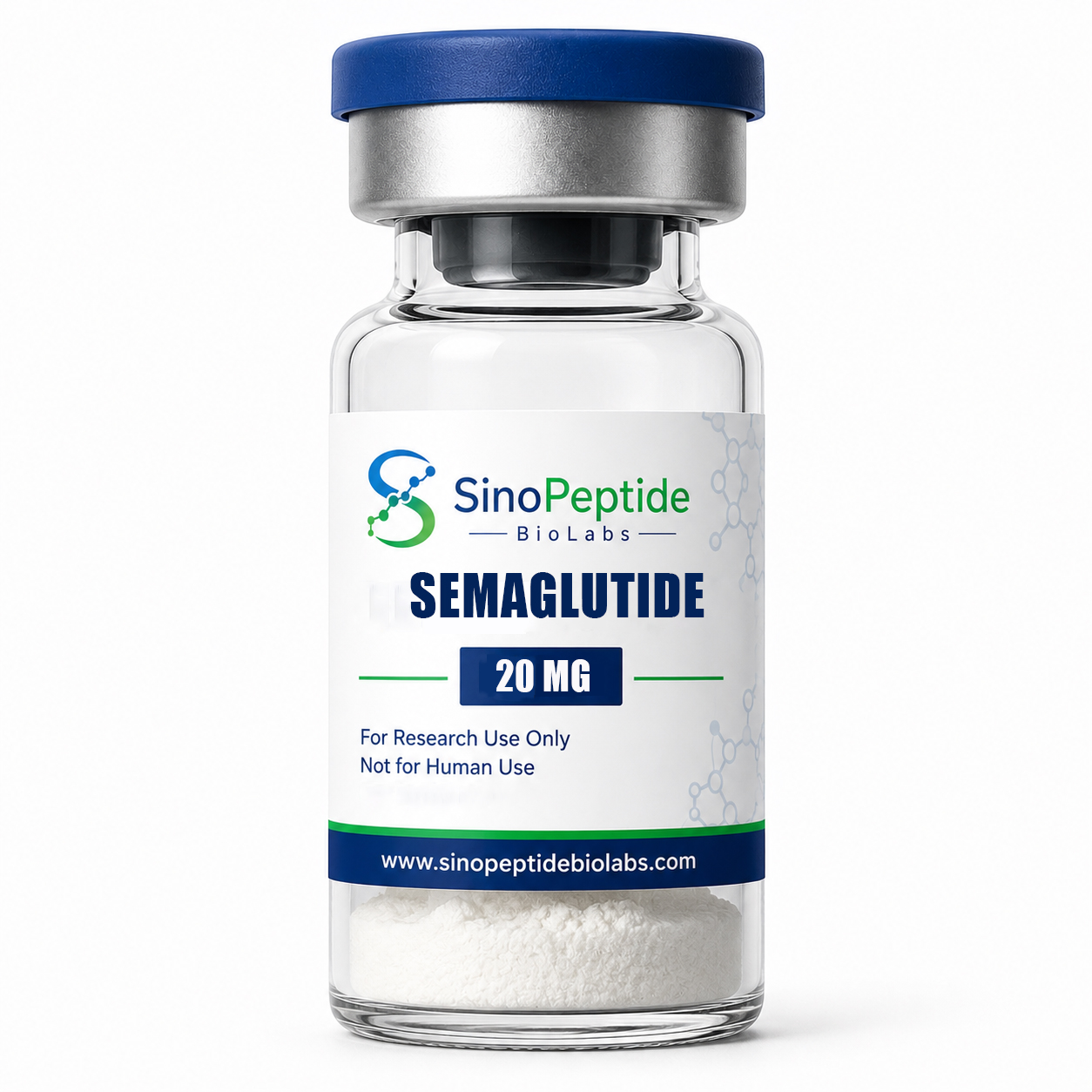
Semaglutide 20mg
$95.00
10Vials/ kits
Semaglutide 20mg: Complete Guide to Research, Uses, Mechanism, Safety & Quality
Semaglutide 20mg is a term increasingly used in online pharmaceutical, peptide, and research-product searches. However, understanding exactly what “20mg” means is important. The number may describe the total amount of semaglutide associated with a particular product presentation rather than an approved clinical dose.
Semaglutide itself is a well-established glucagon-like peptide-1, or GLP-1, receptor agonist. It has been extensively studied for blood-glucose management, body-weight reduction, cardiovascular outcomes, and other metabolic conditions. FDA-approved semaglutide products include Ozempic, Rybelsus, Wegovy, and, since March 2026, Wegovy HD.
At the same time, an independently marketed product labeled “Semaglutide 20mg” should not automatically be described as an FDA-approved drug. Regulatory approval applies to specific products, formulations, manufacturing processes, indications, and labeling.
This guide explains what Semaglutide 20mg means, how semaglutide works, what clinical research has shown, how it differs from branded semaglutide products, what quality testing means, and which safety and regulatory considerations should be addressed when creating an authoritative website page.
What Is Semaglutide?
Semaglutide is a long-acting analogue of the naturally occurring hormone GLP-1.
GLP-1 plays an important role in metabolic regulation. It influences insulin secretion, glucagon regulation, appetite, food intake, and gastrointestinal processes.
Semaglutide activates the GLP-1 receptor and has therefore become an important subject of research and clinical development in metabolic medicine.
Today, semaglutide is associated with several FDA-approved products, including:
- Ozempic
- Rybelsus
- Wegovy
- Wegovy HD
These products contain semaglutide but are not identical in every respect. They can have different formulations, administration routes, approved indications, strengths, and labeling.
FDA’s current approved-drug records list Ozempic, Rybelsus, Wegovy, and Wegovy HD as semaglutide products.
This distinction is essential when discussing Semaglutide 20mg online.
What Does Semaglutide 20mg Mean?
The phrase Semaglutide 20mg generally identifies a product or material described as containing 20mg of semaglutide.
However, the term does not automatically mean that 20mg is a recommended dose for a patient.
This distinction between product quantity and clinical dosage is particularly important for peptide-related websites.
A product can be described according to the total quantity of active substance contained in a vial, container, or other presentation. A clinical dose, on the other hand, is determined by the approved product labeling and the appropriate medical context.
Therefore:
20mg product quantity ≠ automatically 20mg clinical dose.
A website should avoid presenting “Semaglutide 20mg” as though every product with that label corresponds to an approved 20mg administration.
Semaglutide 20mg vs. Clinical Semaglutide Doses
Semaglutide has been studied and approved at specific strengths and dosing regimens.
For example, major obesity trials evaluated semaglutide 2.4mg in adults with overweight or obesity. The STEP 1 trial found substantial weight reduction after 68 weeks compared with placebo.
FDA also approved a higher 7.2mg Wegovy HD formulation in March 2026 for certain adults with obesity or overweight and a weight-related condition.
These facts demonstrate why a product described simply as “Semaglutide 20mg” requires careful interpretation.
The 20mg designation may represent the amount of active ingredient contained in a product rather than a dose established through clinical trials or regulatory labeling.
How Does Semaglutide Work?
Semaglutide works primarily through GLP-1 receptor activation.
The GLP-1 receptor is involved in several physiological pathways associated with glucose regulation and appetite.
Glucose-dependent insulin secretion
GLP-1 receptor activation can increase insulin secretion when blood glucose is elevated.
This glucose-dependent mechanism contributes to improved glycemic control in people with type 2 diabetes.
Glucagon regulation
Semaglutide can also influence glucagon secretion.
Glucagon is a hormone involved in increasing blood glucose, particularly during periods of fasting. Modulation of glucagon contributes to the overall metabolic effects of GLP-1 receptor activation.
Appetite regulation
Semaglutide affects neural pathways associated with appetite and food intake.
Reduced energy intake is considered an important component of the weight reduction observed in clinical studies.
Gastric emptying
GLP-1 receptor agonism can also influence gastric emptying.
Changes in gastric emptying can contribute to fullness and appetite-related effects, particularly during treatment initiation.
Together, these mechanisms help explain the broad clinical interest in semaglutide.
Semaglutide 20mg and Weight-Loss Research
Semaglutide has been extensively studied for chronic weight management.
The STEP clinical trial program provided some of the most influential evidence regarding semaglutide and body-weight reduction.
In STEP 1, adults with overweight or obesity but without diabetes received once-weekly semaglutide 2.4mg alongside lifestyle intervention. At week 68, semaglutide produced substantially greater weight loss than placebo. The trial reported a mean body-weight reduction of approximately 15.3kg with semaglutide compared with 2.6kg with placebo.
A broader review of the STEP 1, 3, 4, and 8 studies found mean weight losses of approximately 14.9% to 17.4% with semaglutide 2.4mg in adults with overweight or obesity without type 2 diabetes.
These findings are important for understanding semaglutide, but they should not be used to imply that a 20mg product has the same clinical evidence.
Semaglutide and Type 2 Diabetes Research
Semaglutide has also been extensively investigated in type 2 diabetes.
The mechanism of GLP-1 receptor activation can improve glycemic control by influencing insulin and glucagon physiology.
Clinical research has evaluated semaglutide alongside lifestyle measures and other glucose-lowering therapies.
In STEP 2, adults with overweight or obesity and type 2 diabetes who received semaglutide 2.4mg experienced greater weight reduction than participants receiving placebo. At 68 weeks, estimated mean weight change was −9.6% with 2.4mg compared with −3.4% with placebo.
This research demonstrates that semaglutide’s effects extend beyond body weight and involve broader metabolic outcomes.
Semaglutide 20mg and Cardiovascular Research
Semaglutide has also been investigated for cardiovascular outcomes.
FDA’s current review information documents cardiovascular indications for specific semaglutide products and populations. For example, Wegovy is indicated to reduce the risk of major adverse cardiovascular events in specified adults with established cardiovascular disease and obesity or overweight.
Ozempic also has cardiovascular and kidney-related indications for certain adults with type 2 diabetes, according to current FDA review information.
This is another reason it is important not to treat all products labeled “Semaglutide 20mg” as interchangeable with approved medicines.
The clinical evidence belongs to specific formulations and studied regimens.
Semaglutide 20mg vs. Ozempic
Ozempic is an FDA-approved prescription product containing semaglutide.
It has approved indications involving type 2 diabetes and cardiovascular risk reduction in specified patients. Current FDA review documentation also describes an indication involving kidney and cardiovascular outcomes for certain adults with type 2 diabetes and chronic kidney disease.
A product marketed independently as “Semaglutide 20mg” should not automatically be described as Ozempic.
Ozempic is a specific pharmaceutical product with an approved application, formulation, manufacturing process, labeling, and quality controls.
Therefore, statements such as “Semaglutide 20mg is generic Ozempic” should be avoided unless the specific product has appropriate regulatory authorization.
Semaglutide 20mg vs. Wegovy
Wegovy is another prescription product containing semaglutide.
It is associated primarily with chronic weight-management indications and has additional FDA-approved indications for specified cardiovascular and liver-related conditions.
In March 2026, FDA approved Wegovy HD, containing a higher 7.2mg semaglutide dose, for certain adults with obesity or overweight and a weight-related condition.
This current regulatory development is particularly relevant to SEO content because older pages may incorrectly describe 2.4mg as the highest approved Wegovy strength.
However, 7.2mg and 20mg should not be conflated.
A product labeled Semaglutide 20mg is not automatically Wegovy HD.
Semaglutide 20mg vs. Rybelsus
Rybelsus is an oral semaglutide tablet.
This is an important distinction because semaglutide exists in different pharmaceutical formulations.
An oral semaglutide product is not automatically equivalent to an injectable semaglutide product simply because both contain the same active ingredient.
FDA identifies Rybelsus as an approved semaglutide product for glycemic control in adults with type 2 diabetes.
Consequently, websites should compare semaglutide products by:
- Formulation
- Route of administration
- Approved strength
- Indication
- Regulatory status
- Clinical evidence
- Manufacturing standards
rather than by milligram quantity alone.
Is Semaglutide 20mg FDA Approved?
This question requires an important distinction.
Semaglutide is an FDA-approved active ingredient in specific prescription medicines.
However, that does not mean every product labeled Semaglutide 20mg is FDA approved.
FDA approval applies to a specific drug product and its approved application.
The FDA’s current approved-drug records identify specific semaglutide products, including Ozempic, Rybelsus, Wegovy, and Wegovy HD.
Therefore, an online product labeled “Semaglutide 20mg” should not be described as FDA approved unless the specific product has an applicable FDA approval.
Research Semaglutide vs. Prescription Semaglutide
The term “research semaglutide” can refer to material supplied for laboratory or scientific research rather than an approved human medicine.
Research applications can include investigation of:
- GLP-1 receptor signaling
- Metabolic pathways
- Appetite regulation
- Glucose homeostasis
- Obesity biology
- Peptide pharmacology
- Analytical chemistry
- Drug discovery
- Formulation research
Research material should be clearly distinguished from prescription medicines.
A website should never imply that a research product has the same quality controls, formulation, sterility standards, or regulatory authorization as an approved prescription product without evidence supporting those claims.
Quality Considerations for Semaglutide 20mg
If a website is describing Semaglutide 20mg as a research material, quality transparency should be a major component of the page.
Certificate of Analysis
A Certificate of Analysis (COA) can provide information about a particular batch.
Depending on the laboratory and product, a COA may include:
- Batch number
- Product identification
- Purity
- Assay or potency
- Testing date
- Analytical method
- Acceptance criteria
- Laboratory identification
A strong product page should use batch-specific documentation where available.
HPLC Analysis
High-performance liquid chromatography (HPLC) is widely used in peptide analysis.
HPLC can help assess the purity profile of a peptide sample and identify chromatographic components.
However, HPLC purity alone does not establish that a product is sterile, endotoxin-free, clinically suitable, or FDA approved.
This distinction is important for responsible SEO content.
Mass Spectrometry
Mass spectrometry can help characterize molecular mass and support peptide identity testing.
When combined with other analytical methods, it can provide a more complete picture of material identity and quality.
Sterility and Endotoxin Testing
Sterility and endotoxin testing are separate from ordinary purity testing.
A product may have a high reported purity percentage while still lacking evidence of sterility or suitability for injection.
Therefore, phrases such as “99% pure means completely safe for injection” should be avoided.
Semaglutide 20mg Storage and Stability
Semaglutide is a peptide-based pharmaceutical compound, and its stability can depend on its formulation and storage conditions.
Storage requirements should always be based on the documentation supplied for the specific product.
Relevant factors can include:
- Temperature
- Light
- Moisture
- Container integrity
- Storage duration
- Formulation
- Reconstitution status
- Freeze-thaw exposure
Approved pharmaceutical products have specific storage instructions in their official labeling.
Research materials may have different documentation.
A website should therefore avoid providing generic storage instructions that could be incorrectly applied to every semaglutide product.
Semaglutide Safety
Semaglutide has been evaluated in large clinical-development programs, but it is not free of adverse effects.
Gastrointestinal reactions are among the most commonly reported effects.
These can include:
- Nausea
- Vomiting
- Diarrhea
- Constipation
- Abdominal discomfort
- Dyspepsia
Clinical trial evidence indicates that gastrointestinal events are particularly common with semaglutide. In STEP 2, gastrointestinal adverse events were reported more frequently in semaglutide-treated groups than with placebo.
The exact safety profile depends on the formulation, indication, patient population, and treatment context.
Semaglutide and Gastrointestinal Effects
Gastrointestinal effects are one of the most important topics to cover in semaglutide SEO content.
The STEP clinical trials reported nausea, diarrhea, vomiting, constipation, and other gastrointestinal symptoms.
In STEP 1, nausea and diarrhea were among the most common adverse events, and most gastrointestinal effects were described as transient and mild to moderate.
However, individual reactions can vary, and approved prescribing information should be consulted for complete safety information.
Semaglutide and the Thyroid C-Cell Warning
Approved semaglutide products include important warnings and contraindications concerning thyroid C-cell tumors.
This warning is based on findings in rodent studies. The relevance of the findings to humans has not been established.
The official labeling for relevant semaglutide products includes contraindications involving personal or family history of medullary thyroid carcinoma and Multiple Endocrine Neoplasia syndrome type 2.
This is one reason semaglutide should be treated as a prescription medicine rather than an ordinary dietary supplement.
What Happens After Semaglutide Is Stopped?
Long-term treatment considerations are important in understanding semaglutide research.
The STEP 1 extension investigated participants after semaglutide treatment was discontinued.
Researchers found that participants regained a substantial portion of their previous weight loss during the following year. At week 120, participants had regained approximately two-thirds of their prior weight loss on average.
This evidence highlights the chronic nature of obesity and the importance of long-term treatment strategies.
It also reinforces why marketing statements such as “permanent weight loss after one course” are not supported by the clinical evidence.
Semaglutide 20mg and Product Quality
A professional Semaglutide 20mg product page should provide transparent information rather than relying on promotional language.
Useful information can include:
Product identity
Clearly state what the product is and what “20mg” represents.
Intended use
Distinguish between:
- Prescription medicine
- Research material
- Compounded preparation
- Other formulations
Analytical documentation
Where available, provide appropriate documentation concerning identity and purity.
Batch information
Batch-specific testing is more useful than a generic certificate unrelated to the product lot.
Regulatory status
Clearly state whether the specific product is FDA approved, compounded, or intended for research.
Safety information
Avoid making absolute safety claims.
Common Misconceptions About Semaglutide 20mg
“Semaglutide 20mg is an approved dose.”
Not necessarily. The label may refer to total product quantity rather than an approved clinical dose.
“Semaglutide 20mg is the same as Ozempic.”
No. Ozempic is a specific FDA-approved pharmaceutical product.
“All semaglutide products are FDA approved.”
No. FDA approval applies to specific products and applications.
“A high-purity COA proves a product is safe for injection.”
No. Purity is only one component of quality assessment.
“20mg means stronger and therefore better.”
A larger amount of active ingredient does not automatically establish greater clinical benefit or safety.
“Semaglutide permanently eliminates excess weight.”
Clinical evidence does not support describing semaglutide as a permanent one-time solution. Weight regain was observed after treatment withdrawal in the STEP 1 extension.
Frequently Asked Questions
What is Semaglutide 20mg?
Semaglutide 20mg generally describes a product or material labeled as containing 20mg of semaglutide. The designation should not automatically be interpreted as a 20mg clinical dose.
Is Semaglutide 20mg FDA approved?
Semaglutide is an FDA-approved active ingredient in specific prescription products, but an independently marketed product labeled “Semaglutide 20mg” is not automatically FDA approved.
What is semaglutide used for?
Different approved semaglutide products have different indications, including type 2 diabetes, chronic weight management, cardiovascular risk reduction in specified populations, and other specific conditions.
How does semaglutide work?
Semaglutide activates GLP-1 receptors, influencing insulin secretion, glucagon regulation, appetite, food intake, and other metabolic processes.
Is Semaglutide 20mg the same as Wegovy?
No. Wegovy is a specific FDA-approved semaglutide product. A separate product labeled Semaglutide 20mg should not automatically be considered Wegovy.
Is Semaglutide 20mg the same as Ozempic?
No. Ozempic is a specific prescription formulation of semaglutide with its own FDA-approved labeling.
What is semaglutide purity?
Purity refers to the proportion of the tested material identified as the desired compound under a particular analytical method. Purity alone does not establish overall pharmaceutical quality.
What is a semaglutide COA?
A COA, or Certificate of Analysis, provides laboratory information about a particular batch. It may include identity, purity, assay, testing method, and other specifications.
What is HPLC testing?
HPLC is an analytical technique commonly used to assess the composition and purity of peptide materials.
Can Semaglutide 20mg be used for research?
The answer depends on the specific product and its labeling. A product explicitly supplied as research material should be treated according to its stated research-use restrictions and should not be represented as an approved medicine.
SEO Best Practices for a Semaglutide 20mg Product Page
To improve organic search visibility, a Semaglutide 20mg page should answer the user’s questions directly and demonstrate topical authority.
Useful content sections include:
- Product overview
- Semaglutide mechanism
- GLP-1 receptor activity
- Clinical research
- Weight-management research
- Type 2 diabetes research
- Safety information
- Regulatory status
- Quality testing
- COA information
- HPLC testing
- FAQ section
The primary keyword should appear naturally in the title, H1, introductory paragraph, selected H2 headings, meta description, URL, and relevant body sections.
Avoid repeating “Semaglutide 20mg” in every sentence.
Search engines increasingly reward useful, comprehensive content rather than simple keyword repetition.
Recommended Internal Links
For a website selling or documenting peptide-related products, relevant internal links could include:
- Semaglutide research
- GLP-1 receptor agonists
- Peptide purity testing
- HPLC analysis
- Certificate of Analysis
- Research peptide quality standards
- Semaglutide clinical research
- Ozempic vs. Wegovy
- Semaglutide safety
- Pharmaceutical quality control
These internal links can create a stronger topical cluster around semaglutide and metabolic research.
Final Thoughts on Semaglutide 20mg
Semaglutide is a highly researched GLP-1 receptor agonist with substantial evidence supporting its role in metabolic medicine. Clinical trials have demonstrated meaningful effects on body weight and metabolic outcomes, particularly with specific studied formulations and doses.
However, the term Semaglutide 20mg requires careful interpretation.
The “20mg” designation may describe the amount of semaglutide associated with a particular product rather than an approved clinical dose. Current FDA records identify specific approved semaglutide medicines, including Ozempic, Rybelsus, Wegovy, and Wegovy HD.
For SEO purposes, the most effective approach is to provide accurate and comprehensive information rather than making exaggerated claims.
A high-quality Semaglutide 20mg page should clearly explain:
- What semaglutide is
- How GLP-1 receptor activation works
- What clinical research has demonstrated
- What “20mg” means
- How approved products differ
- What quality testing can and cannot prove
- What safety considerations exist
- Why product-specific regulatory status matters
This approach creates useful content for readers while reducing the risk of misleading medical or regulatory claims.
Research-use disclaimer: If a specific Semaglutide 20mg product is marketed solely for research or laboratory use, it should not be represented as an FDA-approved medicine or as a treatment for any medical condition. Product-specific regulatory status, labeling, and quality documentation should always be verified independently.
Be the first to review “Semaglutide 20mg”
Related products
Pure Peptides
Pure Peptides
Pure Peptides
Pure Peptides
Pure Peptides
Pure Peptides
Pure Peptides
Pure Peptides
Reviews
There are no reviews yet.