

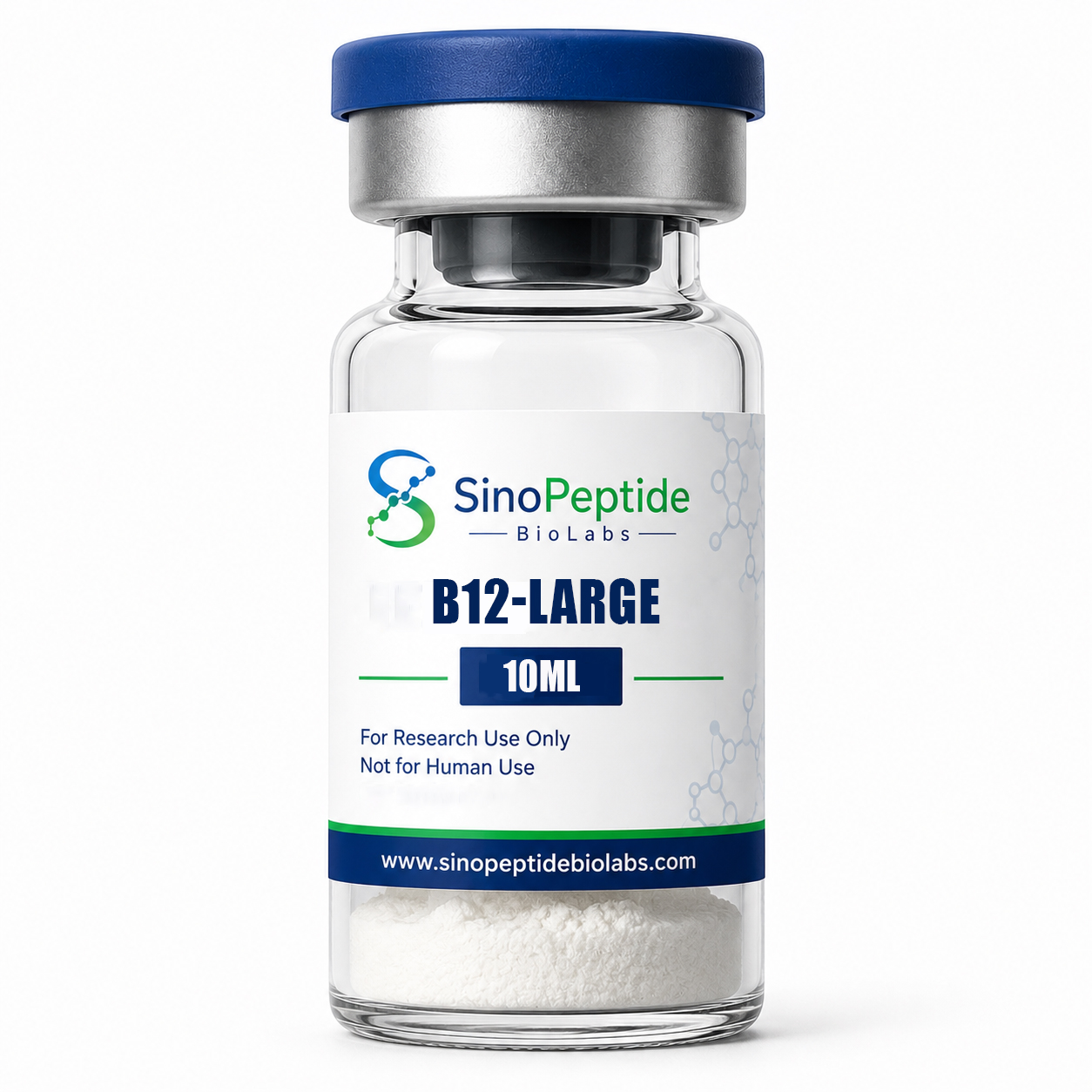
B12 Large Bottle
$30.00
10 Vials/Kits
B12 Large Bottle: Vitamin B12 Benefits, Uses, Types, Safety and Buying Guide
What Is a B12 Large Bottle?
A B12 large bottle generally refers to a vitamin B12 product packaged in a larger bottle or multi-use container. Depending on the product, it may contain vitamin B12 as an oral liquid, drops, tablets, capsules, or another supplement formulation.
Vitamin B12, also called cobalamin, is an essential water-soluble vitamin that plays important roles in red blood cell formation, DNA synthesis, and normal nervous-system function. The body cannot produce vitamin B12 on its own, so it must obtain it through food, fortified products, or supplements.
The phrase “B12 large bottle” does not identify one standardized formulation. Products can differ substantially in the form of B12, concentration, serving size, ingredients, bottle volume, and whether the product is a dietary supplement or prescription medicine.
For this reason, anyone researching a large bottle of vitamin B12 should look beyond the bottle size and check the actual product label.
A larger bottle can be useful when a person regularly uses a B12 supplement and wants a longer-lasting supply. However, the number of milliliters or tablets in the bottle does not automatically indicate the amount of vitamin B12 per serving.
Vitamin B12 Explained
Vitamin B12 is one of the eight B vitamins. It is required for several important biological processes.
According to the National Institutes of Health Office of Dietary Supplements, vitamin B12 is necessary for:
- Normal red blood cell formation
- DNA synthesis
- Normal development and function of the nervous system
- Certain metabolic reactions
- Normal cellular function
Vitamin B12 functions as a cofactor for enzymes involved in methionine metabolism and the metabolism of certain fatty acids and amino acids.
Because vitamin B12 is involved in blood and neurological function, inadequate B12 status can eventually produce symptoms affecting multiple body systems.
However, it is important not to assume that every symptom such as tiredness or weakness is caused by low B12. Many medical conditions can cause similar symptoms, and testing may be necessary to identify the underlying cause.
Why Choose a Large Bottle of Vitamin B12?
A large bottle can be convenient for people who use vitamin B12 regularly. The main advantage is generally packaging convenience rather than increased potency.
Depending on the product, a larger bottle may provide:
1. A longer supply
A larger quantity can reduce how frequently a person needs to purchase another bottle.
2. Convenient daily supplementation
People who have been advised to use vitamin B12 regularly may prefer a product that provides many servings in one container.
3. Liquid formulation options
Some large-bottle B12 products are liquids. Liquid formulations may be convenient for people who have difficulty swallowing tablets or capsules.
4. Flexible serving measurements
Certain liquid supplements allow the serving to be measured using the supplied dropper or measuring device. The correct serving, however, should always be based on the product label or healthcare professional’s advice.
5. Easier supply management
For households, clinics, or individuals who regularly use nutritional supplements, a larger bottle may be practical.
It is important to remember that a larger bottle is not necessarily a stronger B12 product. Concentration and serving size must be considered separately.
What Forms of Vitamin B12 Are Available?
One of the most important factors when comparing a B12 large bottle is the form of vitamin B12.
Common forms include:
- Cyanocobalamin
- Methylcobalamin
- Hydroxycobalamin
- Adenosylcobalamin
Cyanocobalamin is commonly used in dietary supplements, while methylcobalamin, hydroxycobalamin, and adenosylcobalamin are also available. The NIH notes that research has not established one supplemental form as universally superior to the others.
Cyanocobalamin
Cyanocobalamin is a widely used form of vitamin B12 found in supplements and prescription products.
The body can convert cyanocobalamin into biologically active forms of vitamin B12.
Methylcobalamin
Methylcobalamin is one of the metabolically active forms of vitamin B12.
It is commonly marketed in oral supplements and may be found in tablets, capsules, lozenges, or liquid formulations.
Hydroxycobalamin
Hydroxycobalamin is another form of cobalamin. It is also used in prescription vitamin B12 preparations, including injectable medicines in some healthcare settings.
Adenosylcobalamin
Adenosylcobalamin is another biologically active form of vitamin B12 and is sometimes included in specialized supplements.
When comparing products, consumers should focus on the actual label rather than assuming that one form is automatically appropriate for everyone.
B12 Large Bottle: Liquid vs Tablets vs Capsules
A large bottle can contain different types of B12 products. The formulation can be more important than the physical size of the container.
Liquid Vitamin B12
Liquid B12 products are usually supplied in bottles and may contain methylcobalamin, cyanocobalamin, or another form.
Potential advantages include:
- Easy swallowing
- Convenient measuring
- Useful for people who dislike tablets
- Flexible packaging sizes
The concentration can vary considerably between products. For example, two bottles containing the same total volume may provide very different amounts of B12 per serving.
B12 Tablets
Tablets provide a measured amount of vitamin B12 per unit.
They are generally convenient and portable, although some people prefer liquids because they have difficulty swallowing tablets.
B12 Capsules
Capsules are another common oral format. Some B12 supplements contain B12 alone, while others combine it with additional B vitamins or nutrients.
Sublingual B12
Sublingual products are designed to dissolve under the tongue.
Despite marketing differences, the NIH reports that available evidence has not demonstrated a clear efficacy advantage of sublingual B12 over oral forms.
What Does Vitamin B12 Do in the Body?
Vitamin B12 performs several important functions.
Supports Red Blood Cell Formation
Vitamin B12 is required for normal red blood cell production.
A significant deficiency can interfere with red blood cell development and contribute to megaloblastic anemia.
This type of anemia can result in symptoms such as fatigue, weakness, pale skin, and heart palpitations.
Supports the Nervous System
Vitamin B12 is essential for normal neurological function and myelination.
A deficiency can produce neurological symptoms such as numbness and tingling, balance problems, and other changes affecting the nervous system. Neurological effects can sometimes occur even without obvious anemia.
Helps With DNA Synthesis
Vitamin B12 participates in metabolic pathways involved in DNA synthesis and normal cellular function.
Supports Normal Metabolism
B12 functions as a cofactor in important enzymatic reactions involved in cellular metabolism.
This is one reason why maintaining adequate B12 status is important for normal physiological function.
Who May Need Vitamin B12 Supplements?
Not everyone needs a high-dose vitamin B12 supplement.
People at increased risk of inadequate B12 status may include individuals who:
- Eat little or no animal-derived food
- Have conditions that interfere with B12 absorption
- Have pernicious anemia
- Have undergone certain gastrointestinal surgeries
- Have certain gastrointestinal disorders
- Use certain medications for extended periods
- Are older adults with reduced absorption of food-bound B12
The NIH specifically identifies older adults, people with pernicious anemia, people who have undergone certain gastrointestinal procedures, individuals with some digestive disorders, and people following vegetarian or vegan diets as groups that may have an increased risk of inadequate B12 status.
Some medications can also affect B12 status. For example, metformin and acid-suppressing medications have been associated with reduced B12 levels in some people.
This does not mean that everyone taking these medications needs a B12 supplement. A healthcare professional can determine whether testing or supplementation is appropriate.
Vitamin B12 Deficiency
Vitamin B12 deficiency can develop because of inadequate intake, impaired absorption, or certain medical conditions.
Common symptoms can include:
- Fatigue
- Weakness
- Pale skin
- Loss of appetite
- Weight loss
- Heart palpitations
- Numbness or tingling
- Balance problems
- Memory or cognitive changes
- Soreness of the mouth or tongue
However, these symptoms are not specific to B12 deficiency.
For example, fatigue can occur with iron deficiency, sleep disorders, infections, thyroid problems, chronic diseases, and many other conditions.
Therefore, people experiencing persistent or unexplained symptoms should not assume that a B12 supplement is the correct treatment.
How Is Vitamin B12 Deficiency Diagnosed?
Healthcare professionals can use blood testing to assess vitamin B12 status.
The NIH explains that serum or plasma vitamin B12 levels are commonly used. When levels fall into a borderline range, additional testing such as methylmalonic acid (MMA) can help clarify B12 status.
The appropriate testing strategy depends on the individual and the clinical situation.
This is particularly important because neurological complications from B12 deficiency can become serious if deficiency remains untreated.
Vitamin B12 Recommended Intake
Vitamin B12 requirements vary according to age and life stage.
For most adults, the recommended dietary allowance is 2.4 micrograms per day. Requirements are higher during pregnancy and breastfeeding.
Importantly, supplement labels can contain amounts much higher than the daily requirement.
This is possible because the body absorbs only a portion of larger supplemental doses. The NIH notes that absorption decreases substantially at high oral doses because vitamin B12 absorption mechanisms become saturated.
Therefore, seeing a label with hundreds or thousands of micrograms does not mean that the entire amount is absorbed.
Is High-Dose Vitamin B12 Safe?
Vitamin B12 generally has a strong safety profile.
The U.S. National Institutes of Health explains that the Food and Nutrition Board did not establish a tolerable upper intake level for vitamin B12 because of its low potential for toxicity.
However, “generally safe” does not mean that everyone should take large amounts without a reason.
People with medical conditions, those taking medications, pregnant individuals, children, and anyone being treated for a confirmed deficiency should discuss appropriate supplementation with a qualified healthcare professional.
A large bottle also creates a potential storage issue: keeping a supplement for a long period makes proper storage and checking the expiration date particularly important.
B12 Large Bottle and Injectable Vitamin B12: Important Difference
One of the most important distinctions is between an oral B12 supplement and prescription injectable vitamin B12.
These products should not be treated as interchangeable.
Oral B12 products may be sold as dietary supplements, while injectable cyanocobalamin or hydroxycobalamin can be prescription medicines used to treat vitamin B12 deficiency in appropriate clinical situations.
Injectable products require particular attention to:
- Product identity
- Concentration
- Sterility
- Route of administration
- Prescription status
- Storage requirements
- Expiration date
- Clinical indication
A bottle containing a liquid should not automatically be assumed to be suitable for injection.
If a product is labeled for oral use, it should not be injected. Likewise, injectable medicines should be used according to their prescribing information and healthcare professional instructions.
What to Check Before Buying a B12 Large Bottle
Before purchasing a large bottle of vitamin B12, carefully review the product information.
1. Type of Vitamin B12
Check whether the product contains:
- Cyanocobalamin
- Methylcobalamin
- Hydroxycobalamin
- Adenosylcobalamin
2. Amount Per Serving
Do not judge potency by bottle size.
A 100 mL bottle and a 250 mL bottle can have completely different B12 concentrations.
3. Total Number of Servings
A larger bottle is only useful if the serving information makes sense for your intended use.
4. Expiration Date
Check the expiration date before purchasing and again before use.
5. Storage Requirements
Follow the manufacturer’s storage instructions.
Some formulations may have specific requirements regarding temperature, light, moisture, or refrigeration.
6. Ingredient List
Review inactive ingredients, especially if you have known allergies or dietary restrictions.
7. Product Manufacturer
Choose products with clear manufacturer information and traceable labeling.
8. Supplement Facts or Medication Label
The label should clearly identify the active ingredient and amount per serving.
For prescription products, follow the official medication labeling and the instructions supplied by the prescribing healthcare professional.
How to Store a Large Bottle of Vitamin B12
Proper storage helps maintain product quality.
The exact storage conditions depend on the formulation and manufacturer.
In general:
- Keep the bottle tightly closed.
- Store it according to the manufacturer’s instructions.
- Protect it from inappropriate heat or moisture.
- Keep it away from children.
- Avoid using products past their expiration date.
- Do not transfer the product to an unlabeled container.
For liquid B12 products, contamination can also be a concern if the bottle or measuring device is handled improperly.
Always follow the specific instructions printed on the product label.
B12 Large Bottle for Energy: What Does the Evidence Say?
Vitamin B12 is frequently marketed in connection with energy.
There is an important distinction here.
Vitamin B12 is essential for normal metabolism and red blood cell production, and B12 deficiency can cause fatigue and weakness.
However, taking extra B12 does not necessarily provide an energy boost to someone who already has adequate B12 status.
A person experiencing persistent fatigue should therefore avoid assuming that B12 is the explanation.
If fatigue continues, a healthcare professional can evaluate possible causes rather than relying exclusively on supplementation.
B12 Large Bottle for Vegetarians and Vegans
Vitamin B12 deserves particular attention in vegetarian and vegan diets.
Natural vitamin B12 is found primarily in animal-derived foods, while fortified foods and supplements can provide alternative sources.
People who consume little or no animal products may therefore need to pay closer attention to their B12 intake.
The appropriate supplement strategy depends on diet, age, health status, laboratory findings, and professional advice.
A large bottle can be convenient for regular supplementation, but the correct product and serving amount should still be selected based on individual nutritional needs.
B12 and Older Adults
Older adults can be at increased risk of inadequate B12 status because the ability to absorb food-bound B12 may decrease with age.
The NIH recommends that people over 50 obtain most of their B12 from fortified foods and dietary supplements because these sources contain B12 in a form that does not require the initial release from food proteins.
This does not mean that every older adult requires a large bottle or high-dose supplement.
Healthcare professionals can help determine whether supplementation or testing is appropriate.
B12 and Medications
Certain medications can affect vitamin B12 status.
Two important examples are:
Metformin
Long-term metformin use can reduce vitamin B12 concentrations in some people.
Acid-Suppressing Medicines
Proton pump inhibitors and H2-receptor antagonists can reduce stomach acid and may interfere with absorption of food-bound B12.
People taking these medications should not stop prescribed treatment simply because they are concerned about B12.
Instead, discuss B12 testing or supplementation with a healthcare professional.
B12 Large Bottle: Supplement Quality Matters
Not all supplements are identical.
Products can differ in:
- Active ingredient
- Concentration
- Form of B12
- Excipients
- Bottle size
- Serving size
- Manufacturing standards
- Label accuracy
- Storage requirements
The NIH also notes that dietary supplements available commercially may differ from products studied in research.
For that reason, a reputable product should have clear labeling and identifiable manufacturing information.
If purchasing online, consumers should be cautious of products with exaggerated claims such as “cures all fatigue,” “reverses aging,” or “guarantees weight loss.” These claims should not be used as substitutes for established medical evidence.
Frequently Asked Questions About B12 Large Bottle
What is a B12 large bottle?
A B12 large bottle generally refers to a vitamin B12 product supplied in a larger-than-standard bottle or multi-use container. It may contain liquid B12, drops, tablets, capsules, or another formulation.
Is a larger B12 bottle better?
Not necessarily. Bottle size describes the quantity of product, not its medical effectiveness. Always compare the amount of vitamin B12 per serving, formulation, ingredients, expiration date, and manufacturer information.
What is the best form of vitamin B12?
Common forms include cyanocobalamin, methylcobalamin, hydroxycobalamin, and adenosylcobalamin. Current evidence does not establish one supplemental form as universally superior for everyone.
Can I take vitamin B12 every day?
Some B12 supplements are designed for regular use, but the appropriate schedule depends on the product and the individual’s nutritional or medical needs. Follow the product label or healthcare professional’s instructions.
Is vitamin B12 good for energy?
B12 is important for normal metabolism and blood formation. A deficiency can cause fatigue and weakness. However, taking additional B12 does not necessarily increase energy in people who already have adequate B12 levels.
Can a B12 large bottle treat B12 deficiency?
A B12 supplement may be used to help correct certain types of deficiency, but the appropriate formulation and treatment plan depend on the cause and severity of the deficiency.
Some people with severe deficiency or absorption problems may require prescription treatment.
Is liquid B12 better than tablets?
Not necessarily. Liquid B12 may be more convenient for some people, but available evidence does not establish a universal advantage of liquid over other oral forms.
Can vitamin B12 be taken with other vitamins?
B12 is commonly included in multivitamins and B-complex supplements. However, people taking multiple supplements should check the combined ingredients and discuss potential interactions with a healthcare professional when appropriate.
Can I inject a B12 liquid from a large bottle?
Only use a product for injection if it is specifically manufactured, labeled, and prescribed for injectable use. An oral liquid supplement should never be assumed to be sterile or suitable for injection.
How should I store a B12 large bottle?
Follow the manufacturer’s storage instructions. Keep the product properly closed, away from inappropriate heat or moisture, and out of children’s reach.
Does vitamin B12 have an upper limit?
The NIH reports that no tolerable upper intake level has been established for vitamin B12 because it has a low potential for toxicity.
Nevertheless, supplementation should still be appropriate to the individual’s needs.
Final Thoughts on B12 Large Bottle
A B12 large bottle can be a convenient option for people who regularly use vitamin B12 supplements, particularly when they prefer liquid formulations or want a larger supply.
However, bottle size should never be the only factor used to evaluate a B12 product.
The most important details include the form of vitamin B12, amount per serving, ingredients, intended route of administration, manufacturer information, expiration date, and storage requirements.
Vitamin B12 is essential for red blood cell production, DNA synthesis, and normal neurological function. Deficiency can cause anemia and neurological problems, making appropriate diagnosis and treatment important.
For consumers considering a large bottle of B12, the safest approach is to choose a clearly labeled product appropriate for its intended use and follow the manufacturer’s directions.
If symptoms suggestive of B12 deficiency are present, testing and professional medical advice are preferable to simply increasing supplement intake.
Most importantly, an oral B12 supplement and prescription injectable B12 are not automatically interchangeable. Always verify the product’s formulation and intended route before use.
Quick B12 Large Bottle Checklist
Before buying, check:
- Vitamin B12 form: cyanocobalamin, methylcobalamin, hydroxycobalamin, or another form
- Strength: amount of B12 per serving
- Bottle volume: total amount of liquid or number of units
- Servings: estimated number of servings per bottle
- Ingredients: active and inactive ingredients
- Expiration date: ensure adequate remaining shelf life
- Storage: follow the manufacturer’s requirements
- Manufacturer: choose a clearly identified and traceable source
- Intended use: oral supplement versus prescription medication
- Medical needs: consult a healthcare professional when deficiency or absorption problems are suspected
A well-labeled B12 large bottle can be a practical way to maintain a regular supply of vitamin B12, but choosing the right product requires looking at more than the size of the bottle.
B12 Large Bottle B12 Large Bottle B12 Large Bottle B12 Large Bottle B12 Large Bottle B12 Large Bottle B12 Large Bottle B12 Large Bottle B12 Large Bottle B12 Large Bottle B12 Large Bottle B12 Large Bottle B12 Large Bottle B12 Large Bottle B12 Large Bottle B12 Large Bottle B12 Large Bottle B12 Large Bottle B12 Large Bottle B12 Large Bottle B12 Large Bottle B12 Large Bottle
Be the first to review “B12 Large Bottle”
Related products
Pure Peptides
Pure Peptides
Pure Peptides
Pure Peptides
Pure Peptides
Pure Peptides
Pure Peptides
Pure Peptides
Reviews
There are no reviews yet.