

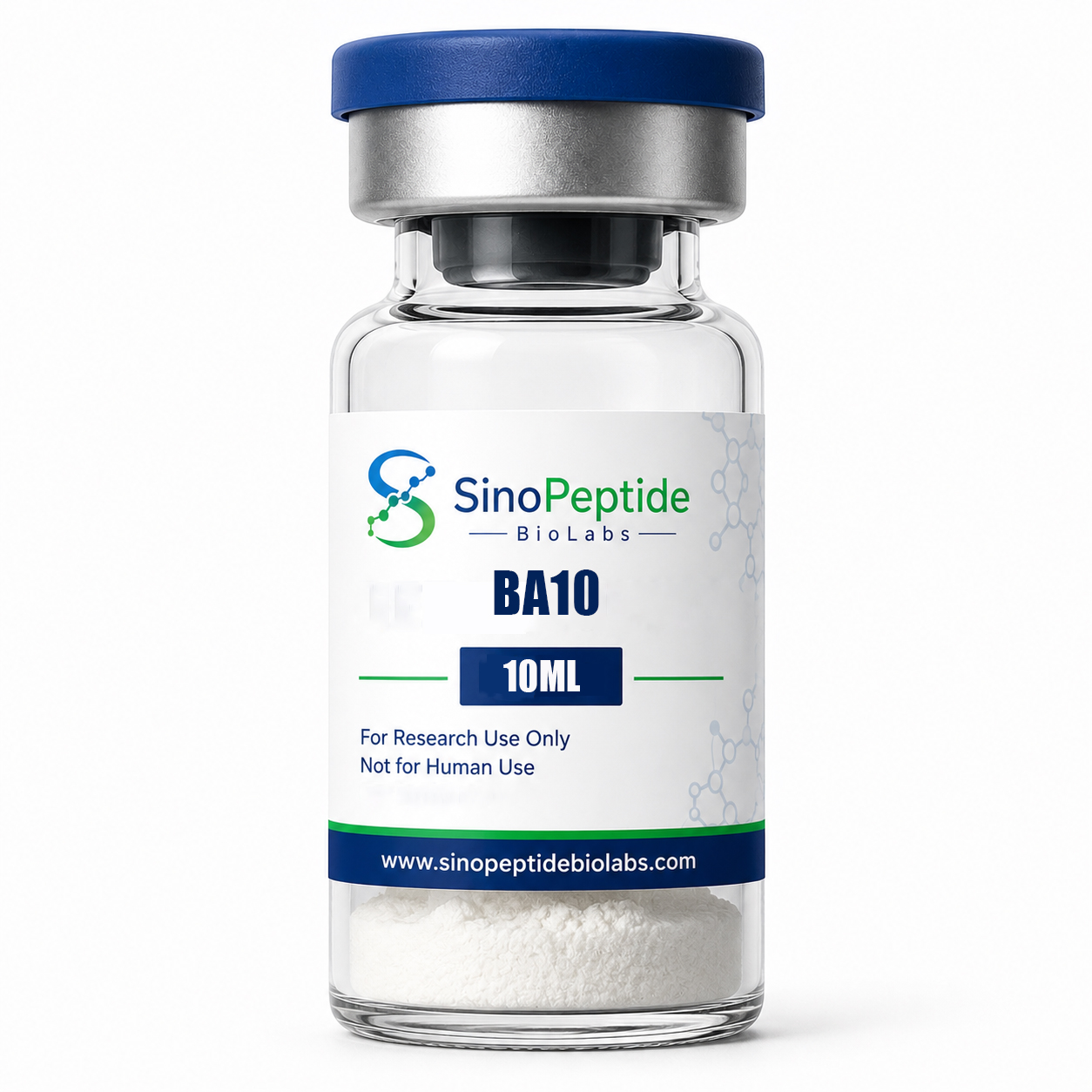
Benzyl Alchohol 0.9% 10ml
$10.00
10 Vials/ Kits
Benzyl Alcohol 0.9% 10ml: Complete Product and Research Guide
Benzyl Alcohol 0.9% 10ml is a small-volume benzyl alcohol formulation commonly encountered in pharmaceutical, laboratory, and research settings. The meaning of the product depends on its exact formulation, labeling, sterility status, and intended application. For this reason, it is important to distinguish a pharmaceutical bacteriostatic preparation from a laboratory-grade 0.9% benzyl alcohol solution.
At a concentration of 0.9%, benzyl alcohol corresponds to approximately 9 mg/mL. A 10 mL container therefore contains approximately 90 mg of benzyl alcohol, assuming the labeled concentration is 0.9% w/v. Official pharmaceutical labels for bacteriostatic water and bacteriostatic sodium chloride use 0.9% benzyl alcohol as a bacteriostatic preservative.
However, concentration alone does not determine whether a product is appropriate for injection or another application. The product’s official label, sterility specifications, manufacturer, intended route, and regulatory status are equally important.
This guide explains Benzyl Alcohol 0.9% 10ml, its composition, common applications, the difference between pharmaceutical and laboratory formulations, quality considerations, storage, safety, and frequently asked questions.
What Is Benzyl Alcohol 0.9% 10ml?
Benzyl alcohol is an aromatic alcohol used in a variety of pharmaceutical, cosmetic, chemical, and laboratory applications. In pharmaceutical formulations, it may function as a preservative, particularly in some multidose preparations.
The term Benzyl Alcohol 0.9% 10ml generally describes three characteristics:
- Benzyl alcohol: the active chemical component or preservative
- 0.9%: the concentration of benzyl alcohol
- 10 mL: the volume of the container
At 0.9%, the concentration is approximately 9 mg of benzyl alcohol per mL. Therefore:
9 mg/mL × 10 mL = approximately 90 mg benzyl alcohol per 10 mL
This calculation describes the amount of benzyl alcohol represented by the concentration and volume. It should not be interpreted as a recommended dose or as instructions for human administration.
Importantly, a 10 mL bottle labeled “0.9% benzyl alcohol” does not by itself tell you whether the product is sterile, injectable, pharmaceutical grade, or intended only for laboratory research.
Understanding the 0.9% Concentration
The 0.9% concentration is significant because it is widely used in certain bacteriostatic pharmaceutical preparations.
For example, official DailyMed labeling for bacteriostatic sodium chloride injection states that each milliliter contains 9 mg/mL benzyl alcohol added as a bacteriostatic preservative. Such products are designed for specific pharmaceutical applications and are supplied as sterile preparations under their respective labeling requirements.
Similarly, bacteriostatic water for injection may contain 0.9% benzyl alcohol as a preservative and is specifically labeled for use as a diluent for medications where the manufacturer’s instructions permit it.
This distinction matters for SEO content as well as consumer safety: “0.9% benzyl alcohol” is a concentration, not a complete product specification.
Benzyl Alcohol 0.9% 10ml Composition
A product marketed as Benzyl Alcohol 0.9% 10ml may contain benzyl alcohol together with a suitable solvent or vehicle.
The exact composition depends on the manufacturer.
A pharmaceutical bacteriostatic formulation may contain:
| Component | Typical role |
|---|---|
| Benzyl alcohol | Bacteriostatic preservative |
| Water for Injection | Pharmaceutical vehicle |
| Other ingredients | May be present depending on formulation |
Some laboratory products may instead contain:
- Benzyl alcohol
- Purified or deionized water
- Additional formulation components depending on the manufacturer
Consequently, buyers should always examine the full ingredient list and official product label rather than relying only on the product name.
Benzyl Alcohol 0.9% 10ml Uses
The uses of benzyl alcohol depend heavily on the formulation.
1. Pharmaceutical Preservation
One established pharmaceutical function of benzyl alcohol is its use as a preservative in certain multidose preparations.
The purpose is to help inhibit microbial growth in appropriately formulated products. For example, official labeling for bacteriostatic sodium chloride describes benzyl alcohol as a bacteriostatic preservative.
The presence of a preservative does not mean that a product is completely resistant to contamination. Proper aseptic handling and adherence to the manufacturer’s instructions remain essential.
2. Bacteriostatic Diluent Applications
Certain pharmaceutical products containing 0.9% benzyl alcohol are designed as bacteriostatic diluents.
Bacteriostatic water for injection, for example, is a sterile preparation containing benzyl alcohol as a preservative and is intended for dilution or dissolution of medications when compatible with the medication manufacturer’s instructions.
This is very different from simply purchasing a bottle labeled “0.9% benzyl alcohol.”
A product must specifically be manufactured and labeled for the intended pharmaceutical application.
3. Laboratory and Research Applications
Benzyl alcohol is also used in laboratory environments.
Depending on the formulation and grade, researchers may use benzyl alcohol-containing solutions in areas such as:
- Laboratory formulation research
- Chemical research
- Solubility investigations
- Analytical experiments
- Formulation development
- Materials research
- In-vitro studies
- Research involving preservatives and solvents
Some commercially listed 0.9% benzyl alcohol solutions are explicitly designated for research or laboratory use only and are not intended for injection, skin application, or oral consumption.
Therefore, laboratory-use products should never automatically be treated as pharmaceutical products.
Benzyl Alcohol 0.9% 10ml for Research
In research environments, benzyl alcohol can be relevant because it has chemical and formulation properties that make it useful in experimental systems.
Researchers may investigate its role as:
A preservative
Benzyl alcohol can be incorporated into certain formulations to help limit microbial growth.
A solvent
Benzyl alcohol has solvent properties and can participate in formulation studies involving compounds with limited water solubility.
A formulation component
Researchers may investigate benzyl alcohol when studying stability, compatibility, solubility, or formulation behavior.
The exact suitability depends on the experimental protocol, concentration, purity, and other formulation components.
Benzyl Alcohol 0.9% vs. Bacteriostatic Water
These terms are sometimes used interchangeably online, but they are not necessarily the same.
Benzyl Alcohol 0.9% describes the concentration of benzyl alcohol.
Bacteriostatic Water for Injection describes a specific pharmaceutical formulation containing sterile water and a bacteriostatic preservative, commonly benzyl alcohol.
An important distinction is:
A solution containing 0.9% benzyl alcohol is not automatically bacteriostatic water for injection.
For a product to be used as an injectable pharmaceutical diluent, its complete formulation and labeling must support that use.
Official bacteriostatic water labeling specifies that it is a sterile preparation intended for use as a diluent and carries a warning against use in neonates.
Benzyl Alcohol 0.9% 10ml vs. Sterile Water
Another important distinction is between benzyl-alcohol-containing preparations and preservative-free sterile water.
Sterile Water for Injection does not contain benzyl alcohol as a preservative.
Bacteriostatic Water for Injection contains a preservative such as benzyl alcohol and is supplied as a multidose preparation under its specific labeling.
The two products are therefore not automatically interchangeable.
The appropriate diluent depends on the medication, route of administration, patient population, and manufacturer’s instructions.
Why Is Benzyl Alcohol Used as a Preservative?
Multidose pharmaceutical containers can present a potential contamination challenge because the container may be accessed more than once.
A suitable preservative can help inhibit microbial growth when the formulation and packaging are appropriately designed.
Benzyl alcohol is one preservative used in certain pharmaceutical products.
However, preservatives are not substitutes for:
- Sterile manufacturing
- Proper aseptic technique
- Appropriate storage
- Correct handling
- Valid expiration dates
- Manufacturer instructions
This is particularly important for products intended for parenteral use.
Is Benzyl Alcohol 0.9% 10ml Injectable?
The answer depends entirely on the specific product.
A pharmaceutical product explicitly labeled as a sterile injectable preparation may have an approved injectable application.
By contrast, a laboratory-use 0.9% benzyl alcohol product may explicitly state:
Not for injection.
For example, a current DailyMed listing for a 0.9% benzyl alcohol solution labeled for laboratory use states that it is intended for research purposes and is not intended for injection, skin application, or oral intake.
Therefore, consumers should never determine injectability solely from:
- The 0.9% concentration
- A 10 mL vial
- The appearance of the liquid
- A seller’s product title
- Online descriptions
- Claims that it is “bacteriostatic”
The official product labeling is the determining reference.
Safety Considerations for Benzyl Alcohol
Benzyl alcohol is generally well characterized as a chemical and pharmaceutical excipient, but exposure considerations depend on concentration, route, formulation, and patient characteristics.
One of the most important safety considerations involves newborns and premature infants.
Official FDA and product labeling warns about serious toxicity associated with benzyl alcohol-containing preparations in neonates and low-birth-weight infants. Historical reports associate exposure with the potentially fatal “gasping syndrome.”
For this reason, pharmaceutical labeling for bacteriostatic preparations commonly carries warnings against use in neonates.
Benzyl Alcohol and Neonates
Newborns, particularly premature and low-birth-weight infants, may have limited capacity to metabolize and eliminate benzyl alcohol.
FDA documentation describes serious adverse reactions associated with benzyl alcohol exposure in this population.
This is one reason preservative-free formulations are preferred for certain neonatal applications.
Parents and caregivers should never substitute a benzyl-alcohol-containing product for a preservative-free product without professional direction.
Potential Adverse Reactions
The potential effects of benzyl alcohol depend on the route and exposure.
Possible concerns may include:
- Local irritation
- Hypersensitivity reactions
- Contact dermatitis
- Toxicity with excessive systemic exposure
- Increased concern in neonates and low-birth-weight infants
FDA review material has also discussed rare hypersensitivity and contact dermatitis associated with benzyl alcohol exposure.
Any unexpected reaction following use of a pharmaceutical product should be discussed with an appropriate healthcare professional.
Benzyl Alcohol 0.9% 10ml Storage
Storage requirements depend on the exact manufacturer and formulation.
A pharmaceutical bacteriostatic preparation should be stored according to its official label.
For example, one current bacteriostatic sodium chloride product is labeled for storage at 20°C to 25°C (68°F to 77°F).
Some laboratory-use products may instead instruct users to keep the container sealed and store it in a cool, dark location.
Therefore, there is no universal storage rule for every product sold under the name “Benzyl Alcohol 0.9% 10ml.”
Always follow the storage instructions supplied with the specific product.
How to Evaluate the Quality of Benzyl Alcohol 0.9% 10ml
If purchasing benzyl alcohol for laboratory or pharmaceutical-related purposes, quality verification is important.
1. Check the concentration
The label should clearly state the concentration.
For a 0.9% formulation, the expected concentration is approximately:
9 mg/mL
A 10 mL container therefore represents approximately:
90 mg total benzyl alcohol
assuming 0.9% w/v.
2. Verify the intended use
Look for clear labeling such as:
- Pharmaceutical use
- Bacteriostatic diluent
- Laboratory use
- Research use only
- Not for injection
The intended use should be unmistakable.
3. Review the Certificate of Analysis
For research and laboratory purchases, a Certificate of Analysis (COA) can provide useful information about the batch.
Depending on the manufacturer, a COA may include:
- Product identity
- Batch number
- Assay
- Purity
- Appearance
- Testing methods
- Manufacturing date
- Expiration or retest information
4. Verify packaging integrity
Check that:
- The container is intact.
- The seal has not been compromised.
- The label is readable.
- The lot or batch number is available.
- The expiration date is visible where applicable.
For pharmaceutical products, packaging integrity is particularly important.
Benzyl Alcohol 0.9% 10ml and Peptide Research
Benzyl alcohol is sometimes discussed in online peptide communities because certain pharmaceutical bacteriostatic diluents contain benzyl alcohol.
However, this does not mean that every benzyl alcohol product is appropriate for peptide reconstitution.
A laboratory-grade or research-only benzyl alcohol solution should not be represented as an injectable diluent merely because it contains the same concentration of benzyl alcohol as a pharmaceutical product.
When working with research peptides, researchers should follow the validated experimental protocol and the manufacturer’s specifications for the particular research material.
Factors such as:
- pH
- sterility
- osmolality
- peptide stability
- container compatibility
- preservative concentration
- formulation compatibility
can all influence experimental results.
Pharmaceutical Grade vs. Laboratory Grade
Understanding the difference between grades is essential.
| Feature | Pharmaceutical formulation | Laboratory formulation |
|---|---|---|
| Intended purpose | Specific medical/pharmaceutical use | Research or laboratory use |
| Sterility | May be sterile when labeled as such | Depends on product |
| Regulatory requirements | Subject to applicable pharmaceutical standards | Depends on jurisdiction/product |
| Injection suitability | Only when specifically labeled | Usually not unless explicitly labeled |
| COA | Commonly available | Often available |
| Preservative | May contain benzyl alcohol | May contain benzyl alcohol |
| Product labeling | Detailed pharmaceutical instructions | Research/laboratory instructions |
The words “benzyl alcohol 0.9%” alone do not establish pharmaceutical quality.
Common Misconceptions About Benzyl Alcohol 0.9% 10ml
Myth 1: Every 0.9% benzyl alcohol solution is injectable
Incorrect.
Some 0.9% benzyl alcohol products are specifically labeled for laboratory use and not for injection.
Myth 2: Benzyl alcohol makes any solution sterile
Incorrect.
A preservative can inhibit microbial growth, but it does not transform a nonsterile product into a sterile injectable preparation.
Myth 3: A 10 mL vial means it is intended for repeated injection
Incorrect.
Container size does not establish route of administration or intended use.
Myth 4: Benzyl alcohol is harmless because it is widely used
Incorrect.
Its safety depends on exposure, route, formulation, and patient population. Particular caution is required for neonates and low-birth-weight infants.
Myth 5: Laboratory-grade and pharmaceutical-grade products are interchangeable
Incorrect.
The manufacturing standards, sterility specifications, intended uses, and regulatory requirements may differ substantially.
Frequently Asked Questions
What is Benzyl Alcohol 0.9% 10ml?
It is a 10 mL product containing benzyl alcohol at a concentration of 0.9%. At that concentration, the formulation represents approximately 9 mg/mL benzyl alcohol, or about 90 mg in 10 mL.
What does 0.9% benzyl alcohol mean?
A 0.9% concentration corresponds to approximately 9 mg of benzyl alcohol per mL when expressed as 0.9% w/v.
What is benzyl alcohol used for?
Depending on the formulation, benzyl alcohol may be used as a pharmaceutical preservative, solvent, or laboratory formulation component.
Is Benzyl Alcohol 0.9% 10ml bacteriostatic?
Some pharmaceutical formulations use 0.9% benzyl alcohol as a bacteriostatic preservative. However, the product must be specifically formulated and labeled for that purpose.
Can Benzyl Alcohol 0.9% 10ml be injected?
Not necessarily. Only products specifically manufactured and labeled for injection should be considered injectable. Some 0.9% benzyl alcohol laboratory products explicitly state that they are not for injection.
Is benzyl alcohol safe for babies?
Benzyl alcohol-containing pharmaceutical products can pose serious risks to neonates and low-birth-weight infants. Preservative-free alternatives are used for certain neonatal applications.
How much benzyl alcohol is in 10 mL of a 0.9% solution?
Assuming a 0.9% w/v concentration, there are approximately 90 mg of benzyl alcohol in 10 mL.
Is Benzyl Alcohol 0.9% the same as bacteriostatic water?
No. Benzyl alcohol is an ingredient, whereas bacteriostatic water is a specific pharmaceutical formulation that contains water plus a bacteriostatic preservative.
How should Benzyl Alcohol 0.9% 10ml be stored?
Follow the specific manufacturer’s storage instructions. Different pharmaceutical and laboratory formulations may have different storage requirements.
Can benzyl alcohol be used in research?
Yes, benzyl alcohol has applications in laboratory and formulation research. However, researchers should use a product appropriate for the particular experimental protocol and follow its stated intended use.
Why Product Labeling Matters
When buying Benzyl Alcohol 0.9% 10ml online, the product title is not enough.
A reliable product description should identify:
- Exact concentration
- Total volume
- Intended use
- Manufacturer
- Lot or batch information
- Expiration or retest date
- Storage requirements
- Sterility status, where applicable
- Regulatory classification
- Certificate of Analysis, when appropriate
These details help distinguish a properly characterized product from an inaccurately described or unsuitable formulation.
Final Thoughts on Benzyl Alcohol 0.9% 10ml
Benzyl Alcohol 0.9% 10ml describes a small-volume formulation containing benzyl alcohol at a concentration of approximately 0.9%. Benzyl alcohol has established uses as a preservative in certain pharmaceutical preparations and has additional applications in laboratory and formulation research.
However, the concentration and vial size do not determine the product’s intended use.
A pharmaceutical bacteriostatic preparation may contain 0.9% benzyl alcohol as a preservative, while another product containing the same concentration may be labeled strictly for laboratory or research use and explicitly prohibited from injection.
For this reason, anyone evaluating Benzyl Alcohol 0.9% 10ml should examine the complete product specification rather than relying on the name alone.
For pharmaceutical applications, use only products that are appropriately labeled and approved or authorized for the intended purpose. For laboratory research, use products that meet the requirements of the relevant experimental protocol.
Important: This article is educational and does not provide instructions for human administration, dosing, injection, or preparation of medicines. Always follow the official product labeling and consult a qualified healthcare professional or pharmacist when a product is intended for medical use.
Benzyl Alcohol 0.9% 10ml Benzyl Alcohol 0.9% 10ml Benzyl Alcohol 0.9% 10ml Benzyl Alcohol 0.9% 10ml Benzyl Alcohol 0.9% 10ml Benzyl Alcohol 0.9% 10ml Benzyl Alcohol 0.9% 10ml Benzyl Alcohol 0.9% 10ml Benzyl Alcohol 0.9% 10ml Benzyl Alcohol 0.9% 10ml Benzyl Alcohol 0.9% 10ml
Be the first to review “Benzyl Alchohol 0.9% 10ml”
Related products
Pure Peptides
Pure Peptides
Pure Peptides
Pure Peptides
Pure Peptides
Pure Peptides
Pure Peptides
Pure Peptides
Reviews
There are no reviews yet.