
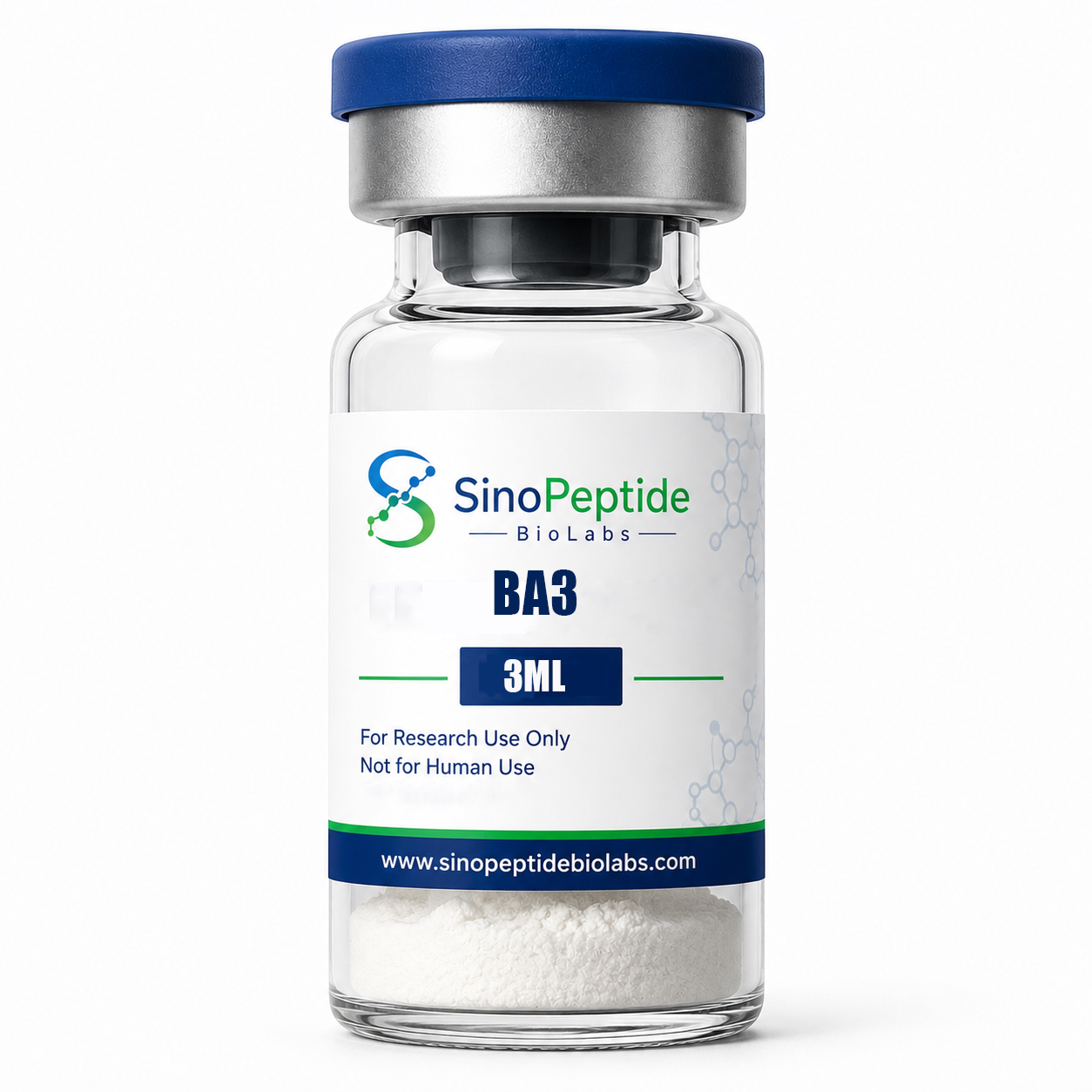
Benzyl Alcohol 0.9% 3ml
$5.00
10 Vials/ Kits
Benzyl Alcohol 0.9% 3ml: Complete Research and Laboratory Guide
Benzyl Alcohol 0.9% 3ml is a small-volume benzyl alcohol solution commonly associated with laboratory, formulation, preservation, and research applications. The exact purpose of a 3 mL product depends on its formulation and labeling. Some products containing 0.9% benzyl alcohol are marketed for laboratory research, while Bacteriostatic Water for Injection, USP is a specific pharmaceutical preparation containing benzyl alcohol as a bacteriostatic preservative.
This distinction is important because not every product labeled “Benzyl Alcohol 0.9%” is an injectable diluent. Current DailyMed labeling, for example, identifies certain 0.9% benzyl alcohol laboratory solutions as research-only products and specifically states that they are not intended for injection, skin application, or oral intake.
Benzyl alcohol itself is an aromatic alcohol used in pharmaceutical, cosmetic, laboratory, and industrial formulations. At an appropriate concentration, it can function as a preservative or formulation ingredient. In bacteriostatic preparations, benzyl alcohol is used to inhibit microbial growth under specified conditions.
For researchers, laboratories, pharmacies, and buyers, understanding the concentration, formulation, intended use, container size, sterility, and regulatory status is more important than relying on the product name alone.
This guide explains what Benzyl Alcohol 0.9% 3ml means, how 0.9% concentration is expressed, its research and formulation applications, how it differs from bacteriostatic water, quality considerations, storage, safety considerations, and frequently asked questions.
What Is Benzyl Alcohol 0.9%?
Benzyl alcohol 0.9% refers to a formulation containing benzyl alcohol at a concentration of 0.9%, although the exact concentration expression can depend on the product’s labeling convention.
In pharmaceutical bacteriostatic preparations, official labeling commonly expresses the concentration as 0.9% or 9 mg/mL. For example, DailyMed describes Bacteriostatic Water for Injection, USP as containing 0.9% (9 mg/mL) benzyl alcohol as a bacteriostatic preservative.
However, a product simply labeled “Benzyl Alcohol 0.9% 3ml” should not automatically be assumed to have the same formulation.
The product’s label should identify:
- Benzyl alcohol concentration
- Solvent or vehicle
- Intended use
- Sterility status
- Container volume
- Storage requirements
- Manufacturer
- Lot or batch number
- Expiration or retest date
- Regulatory classification
These details determine whether a product is appropriate for a particular laboratory application.
What Does 3ml Mean?
The 3ml designation refers to the nominal volume of liquid contained in the container.
It does not indicate:
- 3 mg of benzyl alcohol
- 3% benzyl alcohol
- 3 mL of pure benzyl alcohol
- an injectable dose
- a recommended human dose
If a formulation is genuinely 0.9% and the concentration is expressed as 9 mg/mL, a 3 mL quantity corresponds mathematically to approximately 27 mg of benzyl alcohol.
However, concentration calculations should always be based on the manufacturer’s stated units and formulation because percentage notation can differ between products.
The 3 mL size is particularly relevant for laboratory workflows requiring a small quantity of solution without purchasing a larger container.
Benzyl Alcohol vs Bacteriostatic Water
One of the most important distinctions for SEO content involving this product is the difference between benzyl alcohol solution and Bacteriostatic Water for Injection.
They should not automatically be treated as interchangeable.
Bacteriostatic Water for Injection
Official DailyMed labeling describes Bacteriostatic Water for Injection, USP as a sterile, nonpyrogenic preparation containing water for injection and benzyl alcohol as a bacteriostatic preservative. The product is supplied in a multiple-dose container and is designed for use after addition of medications that require dilution or dissolution before injection.
The labeling also carries a warning that it is not for use in neonates because of benzyl alcohol exposure.
Benzyl Alcohol 0.9% Laboratory Solution
A separate category consists of products marketed specifically for research or laboratory use.
A current DailyMed-listed 0.9% benzyl alcohol laboratory solution states that it is intended for research applications and is not for injection, skin application, or oral intake.
Therefore, the phrase “0.9% benzyl alcohol” alone does not establish that a product is sterile, injectable, pharmaceutical-grade, or suitable for reconstituting medication.
Always check the actual product label.
Why Is Benzyl Alcohol Used?
Benzyl alcohol has several useful chemical and formulation properties.
Depending on the formulation, it can function as:
- a preservative
- a solvent
- a formulation aid
- a component of bacteriostatic preparations
- a laboratory reagent
- a solubilizing agent
- an ingredient in certain topical and cosmetic formulations
Its role depends on the concentration and the complete formulation.
In bacteriostatic pharmaceutical preparations, benzyl alcohol is specifically used as a bacteriostatic preservative. Official labeling for bacteriostatic 0.9% sodium chloride states that 0.9% benzyl alcohol is added as the bacteriostatic preservative.
Benzyl Alcohol 0.9% 3ml for Laboratory Research
A small-volume 0.9% benzyl alcohol solution may be useful in laboratory environments where researchers need a controlled formulation containing benzyl alcohol.
Depending on the product specification, laboratory applications can include:
Formulation Research
Researchers may investigate the effect of benzyl alcohol on:
- solubility
- formulation stability
- phase separation
- compatibility
- preservative performance
- physical characteristics of solutions
Solubility Studies
Benzyl alcohol has solvent properties that can be relevant when investigating the behavior of compounds with limited water solubility.
In research settings, the appropriate solvent system depends on the chemical being investigated.
Preservative Research
Benzyl alcohol can be evaluated as part of preservative systems designed to reduce microbial growth.
The performance of a preservative cannot be assumed solely from its concentration. Researchers may need to consider:
- formulation pH
- microbial species
- concentration
- temperature
- packaging
- exposure conditions
- interactions with other ingredients
Peptide Formulation Research
Some laboratory suppliers describe 0.9% benzyl alcohol solutions as research materials that may be used as bacteriostatic aqueous solutions or formulation aids for peptide-related research. However, such a laboratory product should not automatically be treated as a pharmaceutical diluent.
For peptide research, compatibility should be evaluated experimentally and according to the relevant research protocol.
Benzyl Alcohol 0.9% Concentration Explained
Concentration is one of the most frequently misunderstood aspects of benzyl alcohol products.
A label reading 0.9% does not necessarily mean that 0.9 mL of benzyl alcohol is added to every 1 mL of final solution.
The manufacturer’s stated concentration basis matters.
For example, official Bacteriostatic Water for Injection labeling specifies 0.9% (9 mg/mL) benzyl alcohol.
Therefore:
9 mg/mL × 3 mL = 27 mg
This mathematical relationship applies when the product’s stated concentration is 9 mg/mL.
Researchers should use the concentration printed on the actual certificate or label rather than making assumptions based only on the product name.
Benzyl Alcohol 0.9% 3ml: Product Specifications
A well-documented product page should provide as much of the following information as applicable:
| Specification | Information to verify |
|---|---|
| Product name | Benzyl Alcohol 0.9% |
| Volume | 3 mL |
| Concentration | 0.9% |
| Chemical ingredient | Benzyl alcohol |
| Vehicle | Manufacturer-specific |
| Intended use | Laboratory, pharmaceutical, or other labeled purpose |
| Sterility | Confirm from product documentation |
| Container | Vial, ampoule, or bottle |
| Lot number | Should be traceable |
| Expiration | Manufacturer-specific |
| Storage | Follow current label |
| COA | Where provided |
This type of information improves both user confidence and search-engine understanding of the product.
Benzyl Alcohol 0.9% and Peptide Research
Benzyl alcohol is frequently encountered in discussions surrounding peptide research because some bacteriostatic preparations use benzyl alcohol as a preservative.
However, it is important to distinguish between:
A. A pharmaceutical bacteriostatic diluent
and
B. A research-grade benzyl alcohol solution.
A pharmaceutical bacteriostatic diluent has a defined formulation, sterility requirements, manufacturing controls, and labeled intended use.
A research-only benzyl alcohol solution may have a completely different specification.
Researchers should therefore never assume that a product is appropriate for pharmaceutical or parenteral use simply because the label says “0.9% benzyl alcohol.”
Benzyl Alcohol 0.9% vs Sterile Water
These products are not equivalent.
Sterile Water for Injection is a preservative-free pharmaceutical preparation intended for specific medication-reconstitution or dilution applications when its labeling permits.
Bacteriostatic Water for Injection contains benzyl alcohol as a bacteriostatic preservative.
FDA labeling for certain medications specifically distinguishes between preservative-free sterile water and bacteriostatic water containing 0.9% benzyl alcohol. For example, the LEUKINE label instructs that preservative-free sterile water should be used for neonates or infants to avoid benzyl alcohol exposure.
This illustrates why the choice of diluent is formulation-specific and should follow the medication’s approved instructions.
Benzyl Alcohol Safety Considerations
Benzyl alcohol should be handled according to the product’s intended use and safety documentation.
The risks associated with benzyl alcohol depend on factors including:
- concentration
- route of exposure
- total exposure
- age
- formulation
- duration
- individual sensitivity
One especially important safety consideration concerns neonates and young infants.
Official pharmaceutical labeling warns against the use of benzyl-alcohol-containing bacteriostatic preparations in neonates because of the risk associated with benzyl alcohol exposure.
This is a major reason why healthcare products must not be substituted based solely on similar-sounding names.
Skin Exposure
A laboratory product labeled specifically for research use should not automatically be applied to skin.
For example, a current DailyMed-listed 0.9% benzyl alcohol laboratory product explicitly states that it is not intended for injection, skin application, or oral intake.
The intended route of use is therefore determined by the actual product label.
Injection Safety
A product should never be assumed to be injectable simply because it is a liquid containing benzyl alcohol.
For injection-related applications, the product must be specifically labeled and manufactured for that purpose, including applicable sterility and quality requirements.
A laboratory-grade 0.9% benzyl alcohol solution should not be substituted for an approved sterile diluent.
Is Benzyl Alcohol 0.9% 3ml Injectable?
Not necessarily.
This is one of the most important corrections for product SEO.
“Benzyl Alcohol 0.9% 3ml” describes concentration and volume. It does not, by itself, establish a route of administration.
Some pharmaceutical products containing 0.9% benzyl alcohol are specifically designed for parenteral use, while other products with the same nominal concentration may be labeled exclusively for laboratory research.
Therefore, the correct product description should state the actual intended use shown on the manufacturer’s label.
Quality Control for Benzyl Alcohol 0.9% 3ml
Quality control is essential when purchasing laboratory materials.
A reputable supplier should provide clear product identification and, where appropriate, analytical documentation.
Important quality parameters may include:
Identity Testing
Identity testing helps confirm that the chemical ingredient matches the declared substance.
Concentration Verification
Analytical testing can verify that the benzyl alcohol concentration corresponds to the manufacturer’s specification.
Purity
Purity testing can identify unwanted chemical impurities.
Microbial Testing
For products intended for specific laboratory applications, microbial testing may be relevant.
Sterility
Sterility is particularly important for pharmaceutical products intended for injection.
A research solution should never be assumed to be sterile unless the manufacturer specifically documents it.
Certificate of Analysis for Benzyl Alcohol 0.9%
A Certificate of Analysis (COA) can provide useful information about a particular production lot.
A good COA may include:
- product name
- batch number
- manufacturing date
- testing date
- specification
- test method
- analytical result
- acceptance criteria
- laboratory or manufacturer
- authorized approval
The COA should correspond to the actual lot being purchased.
A generic certificate from another batch is less useful for verifying the current product.
Storage of Benzyl Alcohol 0.9% 3ml
Storage requirements vary according to the formulation.
The product label should be treated as the primary reference.
Factors that can affect formulation stability include:
- temperature
- light
- moisture
- container closure
- contamination
- repeated opening
- chemical compatibility
Some research-only 0.9% benzyl alcohol products are labeled for storage in a cool, dark location and instruct users to keep the container sealed.
Pharmaceutical products have their own specific storage requirements, which can differ substantially.
Therefore, a generic storage recommendation should not replace the manufacturer’s instructions.
Benzyl Alcohol 0.9% 3ml for Formulation Studies
The small 3 mL presentation can be convenient for laboratories performing limited-volume experiments.
Potential research areas include:
- solvent screening
- preservative studies
- peptide formulation research
- solubility experiments
- compatibility testing
- stability studies
- analytical method development
- formulation optimization
The suitability of a particular benzyl alcohol solution depends on the research protocol and the specifications of the material.
Benzyl Alcohol 0.9% and Peptide Reconstitution
Online product descriptions sometimes associate benzyl alcohol-containing solutions with peptide reconstitution.
This requires careful qualification.
A pharmaceutical product’s approved labeling may specify a particular diluent for a particular medication. For example, FDA-approved product labeling distinguishes between sterile water and bacteriostatic water containing benzyl alcohol and provides specific instructions for particular products.
Researchers should therefore avoid general statements such as:
“Benzyl Alcohol 0.9% can be used to reconstitute any peptide.”
That is not scientifically or pharmaceutically appropriate.
Instead:
“A benzyl-alcohol-containing diluent may be appropriate for specific formulations when compatibility and intended use have been established.”
This is more accurate and protects readers from treating a general laboratory product as a universal diluent.
Benzyl Alcohol 0.9% 3ml vs Bacteriostatic Water 3ml
| Feature | Benzyl Alcohol 0.9% 3ml | Bacteriostatic Water for Injection |
|---|---|---|
| Main ingredient | Benzyl alcohol in a specified formulation | Water for Injection + benzyl alcohol |
| Typical concentration | Product-specific | Commonly 0.9% or 9 mg/mL |
| Volume | 3 mL | Manufacturer-specific |
| Sterility | Must be verified | Pharmaceutical sterile preparation |
| Intended use | Depends on label | Parenteral diluent when labeled |
| Multiple-dose use | Product-specific | Certain products are multiple-dose |
| Neonatal use | Product-specific | Not for neonates |
| Research use | Depends on label | Pharmaceutical preparation, not simply a research reagent |
The comparison demonstrates why product identity matters more than concentration alone.
How to Choose Benzyl Alcohol 0.9% 3ml
When purchasing this type of product, consider the following checklist.
1. Verify the Product Identity
Make sure the product name matches the intended laboratory or pharmaceutical application.
2. Check the Concentration
Confirm whether the label states 0.9%, 9 mg/mL, or another equivalent specification.
3. Confirm the Volume
For this product keyword, verify that the container contains the stated 3 mL volume.
4. Determine Intended Use
Look for wording such as:
- research use only
- laboratory use
- pharmaceutical use
- bacteriostatic water for injection
These terms have very different implications.
5. Verify Sterility
Never assume sterility.
6. Review the COA
A lot-specific COA provides greater confidence in product identity and quality.
7. Review Storage Requirements
Follow the manufacturer’s storage conditions.
Common Misconceptions About Benzyl Alcohol 0.9% 3ml
Myth 1: 0.9% Means Injectable
Reality: Concentration does not establish route of administration.
Myth 2: Every 0.9% Benzyl Alcohol Product Is Bacteriostatic Water
Reality: Bacteriostatic Water for Injection is a specific pharmaceutical formulation. Other products may be laboratory-only materials.
Myth 3: 3ml Means 3mg
Reality: Milliliters measure volume; milligrams measure mass.
Myth 4: Benzyl Alcohol Is the Same as Benzyl Benzoate
Reality: They are chemically different compounds and should not be treated as interchangeable.
Myth 5: Research-Grade Means Pharmaceutical-Grade
Reality: A research product may have specifications that are not appropriate for clinical or parenteral applications.
Frequently Asked Questions
What is Benzyl Alcohol 0.9% 3ml?
It is a small-volume product containing benzyl alcohol at a stated concentration of 0.9%. Its exact formulation and intended use depend on the manufacturer and product label.
What is benzyl alcohol used for?
Benzyl alcohol can serve as a preservative, solvent, formulation ingredient, or laboratory reagent depending on the product.
What does 0.9% benzyl alcohol mean?
In certain pharmaceutical preparations, 0.9% corresponds to 9 mg/mL. Official Bacteriostatic Water for Injection labeling uses this concentration.
What does 3ml mean?
3 mL refers to the nominal volume of liquid in the container.
Is Benzyl Alcohol 0.9% 3ml the same as bacteriostatic water?
No. A 0.9% benzyl alcohol solution and Bacteriostatic Water for Injection are not automatically the same product.
Can Benzyl Alcohol 0.9% 3ml be injected?
Only if the specific product is manufactured, labeled, and approved for injection. A laboratory-only product should not be used for injection. Current DailyMed labeling for one laboratory 0.9% benzyl alcohol product explicitly states that it is not for injection.
Can it be used for peptide research?
Some benzyl alcohol-containing laboratory formulations are marketed for research applications involving formulation or peptide-related work. However, compatibility depends on the specific experimental system and product specifications.
Is Benzyl Alcohol 0.9% safe for neonates?
Benzyl-alcohol-containing bacteriostatic pharmaceutical preparations carry warnings against use in neonates because of benzyl alcohol exposure.
How should it be stored?
Storage depends on the product. Follow the manufacturer’s current label. Some research-only products specify cool, dark storage and keeping the container sealed.
Does 0.9% benzyl alcohol preserve a solution indefinitely?
No. A preservative does not make a formulation indefinitely stable or sterile. Stability and microbial control depend on the complete formulation, packaging, handling, and validated conditions.
What should I look for in a COA?
Look for product identity, lot number, concentration, analytical method, results, specifications, testing date, and manufacturer or laboratory information.
Conclusion
Benzyl Alcohol 0.9% 3ml is a useful search term for a category of small-volume benzyl alcohol products, but the exact identity of the product must be established from its formulation and labeling.
Benzyl alcohol can serve as a preservative, solvent, or formulation component. In pharmaceutical preparations such as Bacteriostatic Water for Injection, 0.9% benzyl alcohol is used as a bacteriostatic preservative, with official labeling identifying the concentration as 9 mg/mL.
At the same time, products carrying similar 0.9% benzyl alcohol terminology can be intended exclusively for laboratory research. One current DailyMed-listed product is explicitly labeled for research use and states that it is not intended for injection, skin application, or oral intake.
For this reason, the most accurate way to evaluate Benzyl Alcohol 0.9% 3ml is to examine the complete product specification rather than relying on the concentration and volume alone.
Researchers and purchasers should verify the concentration, solvent, intended use, sterility, lot number, COA, storage conditions, and regulatory status before incorporating the material into a laboratory or pharmaceutical workflow.
The central SEO message should therefore be clear: Benzyl Alcohol 0.9% 3ml describes a concentration and volume, not automatically an injectable product or a universal peptide diluent.
Important disclaimer: This article is provided for educational and research-information purposes. It does not provide instructions for self-injection, medication preparation, or human dosing. Always follow the official labeling and applicable professional or laboratory protocols for the specific product being used.
Benzyl Alcohol 0.9% 3ml Benzyl Alcohol 0.9% 3ml Benzyl Alcohol 0.9% 3ml Benzyl Alcohol 0.9% 3ml Benzyl Alcohol 0.9% 3ml Benzyl Alcohol 0.9% 3ml Benzyl Alcohol 0.9% 3ml Benzyl Alcohol 0.9% 3ml Benzyl Alcohol 0.9% 3ml Benzyl Alcohol 0.9% 3ml Benzyl Alcohol 0.9% 3ml
Be the first to review “Benzyl Alcohol 0.9% 3ml”
Related products
Pure Peptides
Pure Peptides
Pure Peptides
Pure Peptides
Pure Peptides
Pure Peptides
Pure Peptides
Pure Peptides
Reviews
There are no reviews yet.