
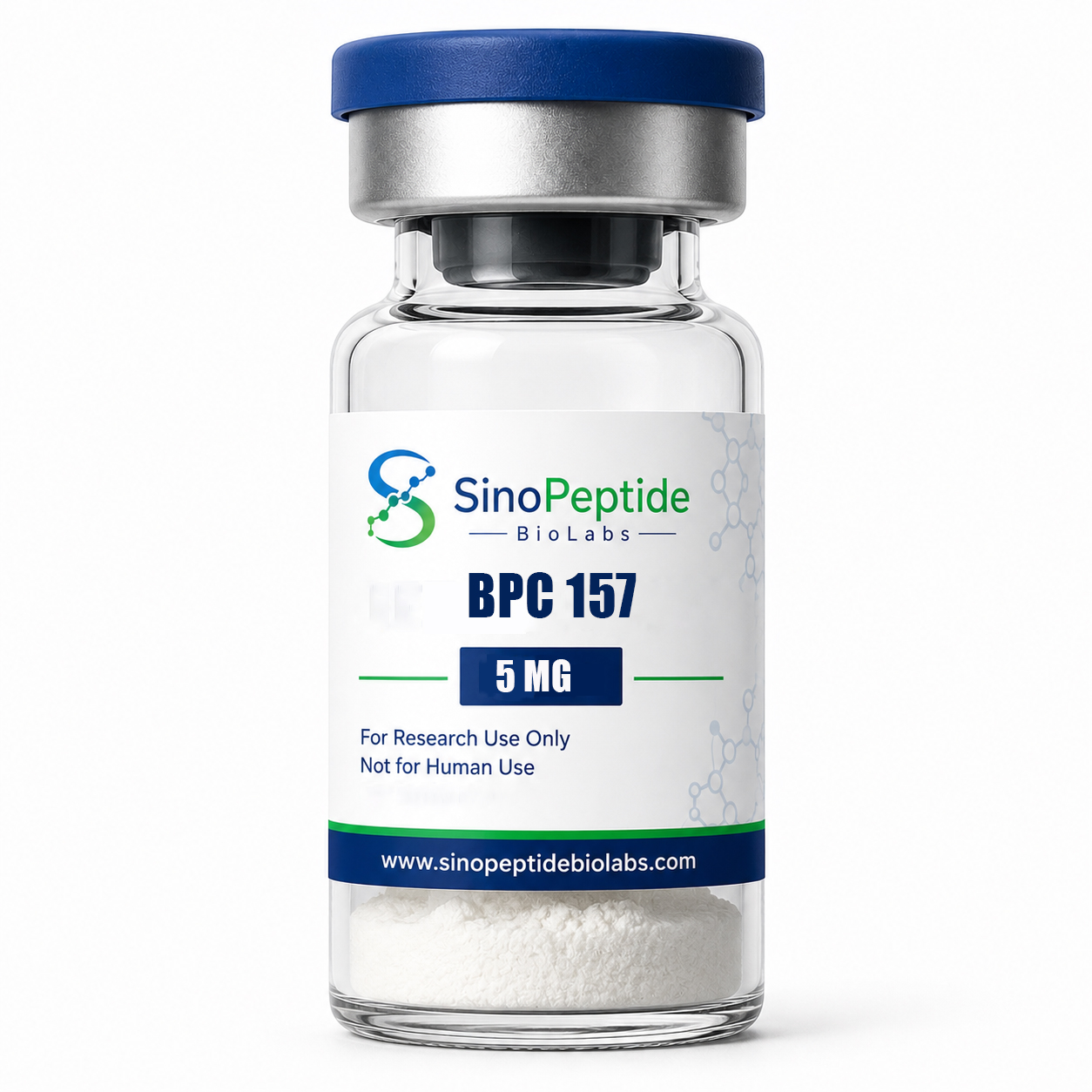
BPC 157 5mg
$48.00
BPC 157 5mg: Uses, Research, Safety, Benefits and Complete Guide
BPC 157 5mg is a peptide product commonly discussed in the research-peptide and regenerative-medicine space. BPC-157 has generated considerable scientific interest because laboratory and animal studies have investigated its potential effects on tissue repair, inflammation, gastrointestinal health, tendons, ligaments, muscles, blood vessels, and other biological processes.
However, it is important to distinguish scientific interest from established medical use. BPC-157 is not an FDA-approved medicine, and there is no FDA-approved human dosing regimen for BPC-157. Recent reviews continue to describe the compound as investigational, with most evidence coming from preclinical studies rather than well-controlled human clinical trials.
The term “5mg” refers to the stated amount of peptide in a particular product, not to a clinically validated dose. This distinction is particularly important because online content sometimes incorrectly presents a vial size as a recommended treatment amount.
This complete guide explains what BPC-157 is, what BPC 157 5mg means, current research findings, potential research applications, safety considerations, regulatory status, product quality, and frequently asked questions.
What Is BPC-157?
BPC-157, short for Body Protection Compound-157, is a synthetic pentadecapeptide consisting of 15 amino acids.
BPC-157 has been investigated for several decades in laboratory and animal research. Researchers have examined its potential biological activity in models involving:
- Tissue repair
- Tendon injuries
- Ligament injuries
- Muscle injuries
- Bone healing
- Gastrointestinal injury
- Inflammatory responses
- Blood-vessel formation
- Wound repair
- Cellular protection
- Vascular function
A 2025 systematic review examining BPC-157 in orthopaedic sports medicine identified 36 relevant studies. Of these, 35 were preclinical studies and only one was a clinical study. The authors reported promising findings in experimental muscle, tendon, ligament, and bone injury models while emphasizing the lack of adequate human clinical safety evidence.
Therefore, BPC-157 is best described as an investigational peptide rather than an established treatment for injuries or disease.
What Does BPC 157 5mg Mean?
The phrase BPC 157 5mg generally indicates that a product contains a stated quantity of 5 milligrams of BPC-157.
The number “5mg” describes the amount of material, not an approved therapeutic dose.
This is an important distinction.
A 5mg vial does not automatically mean:
- 5mg per day
- 5mg per injection
- 5mg per treatment
- 5mg is the optimal dose
- 5mg is clinically proven
No FDA-approved BPC-157 prescribing label establishes 5mg as a standard human treatment dose.
A 2026 review specifically noted that BPC-157 currently lacks a validated dosing regimen and an approved pharmaceutical formulation.
BPC 157 5mg Research Overview
Interest in BPC 157 comes primarily from experimental research.
Scientists have investigated the peptide in models involving:
- Tissue repair
- Tendon and ligament recovery
- Muscle injury
- Gastrointestinal injury
- Inflammation
- Angiogenesis
- Wound healing
- Bone and joint research
- Vascular biology
- Cellular signaling
Some experimental findings have been encouraging. However, preclinical results cannot automatically be translated into proven human benefits.
This distinction is especially important for SEO content because terms such as “BPC 157 benefits” and “BPC 157 uses” can imply established clinical effectiveness when the underlying evidence remains preliminary.
A medically responsible article should therefore describe these areas as research applications or potential biological effects, not proven medical indications.
Potential BPC 157 5mg Benefits Under Research
1. BPC-157 and Tissue Repair Research
One of the most frequently investigated areas of BPC-157 research is tissue repair.
Animal studies have examined whether BPC-157 can influence processes involved in recovery from experimental tissue injury.
Researchers have investigated possible effects involving:
- Angiogenesis
- Fibroblast activity
- Vascular function
- Inflammatory signaling
- Cellular survival
- Tissue remodeling
- Nitric oxide pathways
A recent review described experimental evidence involving angiogenesis, fibroblast activity, collagen-related processes, and nitric oxide signaling.
These findings provide a rationale for further investigation but do not demonstrate that BPC-157 is a proven human tissue-repair treatment.
2. BPC 157 5mg and Tendon Research
Tendons are an important focus of BPC-157 research.
Because tendons generally have relatively limited vascularity compared with many other tissues, tendon repair can be slow. Researchers have therefore investigated whether BPC-157 might influence processes associated with tendon recovery.
Experimental studies have examined:
- Fibroblast activity
- Collagen organization
- Blood-vessel development
- Inflammatory signaling
- Tissue remodeling
- Mechanical recovery
The 2025 systematic review found that preclinical studies reported improvements in functional, structural, and biomechanical outcomes in several musculoskeletal injury models.
However, this evidence is predominantly preclinical.
BPC-157 should therefore not be marketed as a clinically proven treatment for torn tendons, tendonitis, or other tendon disorders.
3. BPC-157 and Muscle Research
Muscle injury and recovery are another area of BPC-157 research.
Experimental models have examined whether the peptide can influence biological processes associated with muscle repair.
Potential mechanisms investigated include:
- Inflammatory modulation
- Angiogenesis
- Cellular signaling
- Tissue remodeling
- Microvascular function
- Fibroblast activity
Animal studies have reported potentially favorable outcomes, but these findings do not establish an equivalent clinical effect in humans.
A systematic review of BPC-157 research in sports medicine concluded that the available evidence shows promise but remains dominated by preclinical studies.
BPC 157 5mg and Gastrointestinal Research
BPC-157 was originally associated with research into gastrointestinal and mucosal protection, making the gastrointestinal system one of the most important areas of investigation.
Researchers have examined BPC-157 in experimental models involving:
- Gastrointestinal injury
- Mucosal integrity
- Inflammatory responses
- Vascular function
- Tissue protection
FDA’s 2026 Pharmacy Compounding Advisory Committee materials specifically reviewed BPC-157-related substances in connection with proposed use for ulcerative colitis. However, FDA concluded that available clinical safety information was insufficient to characterize the safety profile of BPC-157 and identified important gaps in human evidence.
Consequently, BPC-157 should not be described as an FDA-approved treatment for ulcerative colitis or other gastrointestinal diseases.
BPC 157 5mg and Inflammation Research
Inflammation is another major subject in BPC-157 research.
Preclinical studies have investigated whether BPC-157 influences inflammatory signaling and cytokine-related pathways.
These findings have contributed to interest in the peptide’s possible role in tissue protection and recovery.
However, inflammation is a complex biological process involving numerous pathways.
Therefore, it would be inaccurate to state that BPC-157 “cures inflammation.”
A more scientifically appropriate description is:
“Preclinical studies have investigated BPC-157 for potential effects on inflammatory pathways.”
This wording distinguishes experimental research from an established medical claim.
BPC-157 and Angiogenesis Research
Angiogenesis refers to the formation of new blood vessels.
This process can be important in tissue remodeling and repair. BPC-157 research has investigated potential effects on vascular biology and angiogenic signaling.
Some experimental studies suggest that BPC-157 may influence pathways associated with endothelial cells and blood-vessel development.
A recent review identified angiogenesis as one of the recurring mechanisms investigated in BPC-157 research.
Nevertheless, these observations remain primarily preclinical and should not be interpreted as evidence that BPC 157 5mg has a proven vascular or healing effect in humans.
How Does BPC-157 Work?
The exact mechanism of BPC-157 remains incompletely understood.
Researchers have proposed interactions with several biological pathways, including pathways associated with:
- Nitric oxide signaling
- Angiogenesis
- ERK-related signaling
- Vascular function
- Fibroblast activity
- Inflammatory mediators
- Cellular repair
- Growth-factor signaling
A 2026 review noted that BPC-157 demonstrates biological activity in several experimental systems but also emphasized major gaps in pharmacokinetic characterization and pharmaceutical development.
This is an important scientific distinction.
Demonstrating activity in an animal model does not establish that the same mechanism produces a meaningful clinical benefit in humans.
Is BPC 157 5mg FDA Approved?
No. BPC-157 is not an FDA-approved medicine.
FDA’s current materials identify BPC-157 as a substance for which significant safety and characterization questions remain.
In its 2026 briefing, FDA stated that there was insufficient clinical safety information to characterize the safety profile of BPC-157 free base and BPC-157 acetate. FDA also noted that it found no studies administering BPC-157 to humans through several proposed routes, including oral, subcutaneous, nasal, or transdermal administration.
FDA has also identified concerns involving:
- Potential immunogenicity
- Peptide-related impurities
- Active pharmaceutical ingredient characterization
- Limited clinical safety information
Therefore, websites should avoid claims such as:
- “FDA-approved BPC-157”
- “FDA-approved BPC 157 5mg”
- “FDA-approved healing peptide”
- “FDA-approved BPC-157 injection”
Such claims could mislead readers about the regulatory status of the substance.
Is BPC 157 5mg Safe?
The long-term safety of BPC-157 in humans has not been adequately established.
This is one of the most important facts to communicate when writing about BPC 157 5mg.
FDA’s 2026 assessment found insufficient clinical safety information for BPC-157 and raised concerns about possible immunogenicity and peptide-related impurities.
The limited human evidence available does not provide enough information to establish safety across different formulations, routes, doses, populations, or durations of use.
Therefore, statements such as:
- “BPC-157 has no side effects”
- “BPC-157 is completely safe”
- “BPC-157 is risk-free”
should be avoided.
The more accurate statement is:
“Human safety data for BPC-157 remain limited, and long-term safety has not been established.”
What Human Studies Have Been Conducted?
Human research on BPC-157 remains limited.
The 2025 systematic review of orthopaedic sports medicine identified 36 studies, of which only one was clinical. The authors noted that clinical safety data were not available.
A later review identified only a small number of pilot human studies involving BPC-157 and emphasized that rigorous, larger-scale clinical trials remain necessary.
A 2026 review similarly reported that available clinical data come from fewer than 30 participants across three uncontrolled pilot studies and noted the absence of a completed Phase II clinical trial.
This means that human evidence should currently be described as early and limited, rather than definitive.
BPC 157 5mg Dosage: What Does the Research Say?
One of the most common searches associated with this keyword is “BPC 157 5mg dosage.”
However, there is currently no FDA-approved human dosing regimen for BPC-157.
Therefore, the term 5mg should not be presented as a recommended dose.
A 5mg product simply indicates a stated quantity of peptide.
It does not establish:
- How much a person should use
- How frequently it should be administered
- How long it should be used
- Which route should be used
- Whether 5mg is therapeutically effective
A recent review specifically identified the absence of a validated dosing regimen as one of the major barriers to BPC-157’s clinical development.
For this reason, responsible SEO content should explain the meaning of 5mg without publishing an unsupported treatment schedule.
BPC 157 5mg Reconstitution
The phrase “BPC 157 5mg reconstitution” is another common search query.
However, there is no single universal preparation method that applies to every BPC-157 product.
Different products may vary in:
- Formulation
- Salt form
- Excipients
- Container
- Intended research use
- Sterility status
- Manufacturer specifications
Consequently, websites should not provide one generic preparation protocol and imply that it is an approved human-use procedure.
Any research material should be handled according to the manufacturer’s technical documentation and applicable laboratory requirements.
Most importantly, a product labeled “research use only” should not automatically be assumed to be suitable for human administration.
BPC 157 5mg Storage
Storage requirements can vary depending on the formulation and manufacturer’s specifications.
There is no universal storage instruction that should be applied to every BPC 157 5mg product without checking the product documentation.
When evaluating a research peptide, useful documentation may include:
- Recommended storage conditions
- Batch or lot number
- Manufacturing date
- Retest or expiration information
- Certificate of Analysis
- Purity information
- Identity testing
- Packaging specifications
A website should not invent a storage temperature or expiration period if the manufacturer has not provided one.
BPC 157 5mg Purity and Quality
The label “BPC 157 5mg” does not by itself establish product quality.
Quantity and quality are separate characteristics.
For research purposes, investigators should look for documentation supporting:
Peptide identity
Analytical testing should establish that the material corresponds to the claimed peptide.
Purity
Testing can help determine the proportion of the desired peptide relative to other substances.
Batch information
A lot or batch number helps connect the product to specific analytical documentation.
Certificate of Analysis
A COA can provide information about analytical testing performed on a particular batch.
Impurity characterization
Peptide-related impurities can be important when evaluating experimental materials.
Sterility information
Sterility should never be assumed merely because a product comes in a sealed vial or is marketed using pharmaceutical-style terminology.
FDA has specifically raised concerns about peptide-related impurities, API characterization, and potential immunogenicity in relation to BPC-157.
BPC 157 5mg vs BPC 157 10mg
The most obvious difference between BPC 157 5mg and BPC 157 10mg is the stated quantity.
| Feature | BPC 157 5mg | BPC 157 10mg |
|---|---|---|
| Peptide | BPC-157 | BPC-157 |
| Stated amount | 5mg | 10mg |
| Regulatory status | Investigational | Investigational |
| FDA-approved medicine | No | No |
| Validated human dose | No | No |
| Clinical evidence | Limited | Limited |
| Quantity | Lower | Higher |
A 10mg presentation should not automatically be considered twice as effective as a 5mg presentation.
Likewise, the larger quantity does not establish superior clinical outcomes.
The difference is primarily the stated amount of material in the product.
BPC 157 5mg vs Other Peptides
BPC-157 is sometimes compared with other research peptides such as TB-500, KPV, and GHK-Cu.
These substances are not interchangeable.
Each has its own:
- Chemical structure
- Amino-acid sequence
- Biological activity
- Research history
- Pharmacokinetics
- Safety evidence
- Regulatory status
BPC-157’s research profile is particularly associated with experimental tissue repair, gastrointestinal models, vascular biology, and inflammation.
However, comparing two research peptides based solely on claims such as “healing,” “recovery,” or “regeneration” can be misleading.
Scientific comparisons should instead consider the quality and type of evidence available for each substance.
BPC-157 for Tendons, Muscles and Sports Recovery
The term “BPC 157 for recovery” is popular online, particularly among athletes and fitness communities.
Preclinical research has investigated BPC-157 in muscle, tendon, ligament, and bone injury models. Some studies reported improvements in experimental outcomes.
However, the human evidence remains insufficient to establish BPC-157 as a standard sports-recovery treatment.
Athletes should also be aware of anti-doping rules.
The 2026 World Anti-Doping Agency Prohibited List specifically includes BPC-157 under the S0 category for non-approved substances.
Therefore, competitive athletes should verify the rules applicable to their sport before considering any substance marketed as BPC-157.
BPC 157 5mg and Research Use
BPC 157 5mg products may be marketed for laboratory or research purposes.
When evaluating such a product, it is useful to distinguish between:
Product quantity:
The stated amount, such as 5mg.
Product identity:
Evidence that the material is actually BPC-157.
Product purity:
Analytical evidence concerning contaminants and related substances.
Product quality:
Manufacturing, packaging, documentation, and batch traceability.
Clinical approval:
Regulatory authorization for human medical use.
These are different concepts.
A research-use product does not become an approved medicine simply because it has a COA or a high stated purity.
Why Is BPC-157 Scientifically Interesting?
BPC-157 remains interesting because preclinical research has produced findings across several biological systems.
Researchers are particularly interested in its potential relationship with:
- Tissue repair
- Angiogenesis
- Vascular signaling
- Inflammation
- Fibroblast activity
- Gastrointestinal protection
- Muscle and tendon biology
- Cellular signaling
The 2026 biopharmaceutical review described BPC-157 as biologically promising but pharmaceutically underdeveloped, highlighting major gaps in formulation science, pharmacokinetics, dosing, and clinical development.
This makes BPC-157 an interesting research subject while simultaneously explaining why it should not yet be presented as an established medicine.
Common Misconceptions About BPC 157 5mg
Myth 1: “5mg is the standard BPC-157 dose.”
Fact: 5mg describes the stated quantity of a product. It is not an FDA-approved human dose.
Myth 2: “BPC-157 is FDA approved.”
Fact: BPC-157 is not an FDA-approved medicine. FDA has identified insufficient clinical safety information and several unresolved concerns.
Myth 3: “BPC-157 is proven to heal injuries.”
Fact: Animal and laboratory studies have produced promising findings, but robust human clinical evidence remains limited.
Myth 4: “BPC-157 has no side effects.”
Fact: Human safety data are insufficient to support such a statement.
Myth 5: “A research-grade label means it is safe for people.”
Fact: Research-use labeling does not establish human safety or regulatory approval.
How to Write Accurate SEO Content About BPC 157 5mg
Websites targeting this keyword should balance search optimization with medical accuracy.
Good phrases include:
- BPC 157 5mg research
- BPC-157 peptide research
- BPC 157 potential benefits
- BPC 157 preclinical studies
- BPC 157 safety research
- BPC 157 clinical evidence
- BPC 157 research peptide
- BPC 157 5mg product information
Avoid unsupported phrases such as:
- BPC 157 cures injuries
- BPC 157 guaranteed healing
- BPC 157 completely safe
- FDA-approved BPC 157
- proven BPC 157 treatment
- BPC 157 5mg guaranteed dose
This approach creates content that is both more trustworthy and more defensible.
Frequently Asked Questions About BPC 157 5mg
What is BPC 157 5mg?
BPC 157 5mg generally refers to a product containing a stated quantity of 5 milligrams of BPC-157. The 5mg amount describes product quantity and should not be interpreted as an established human treatment dose.
What is BPC-157 used for?
BPC-157 is an investigational peptide studied in laboratory and animal models involving tissue repair, gastrointestinal injury, inflammation, muscles, tendons, ligaments, vascular biology, and other biological processes.
Is BPC 157 5mg FDA approved?
No. BPC-157 is not an FDA-approved medicine. FDA’s 2026 review identified insufficient clinical safety information for BPC-157 and significant questions concerning its pharmaceutical characterization and potential immunogenicity.
Is 5mg BPC-157 a standard dose?
No. There is no universally established FDA-approved human dosage for BPC-157. The “5mg” designation refers to the quantity of peptide in a product.
Does BPC-157 help tendon injuries?
Preclinical studies have investigated BPC-157 in tendon and other musculoskeletal injury models. However, current human evidence is insufficient to establish it as a proven tendon treatment.
Does BPC-157 help muscle recovery?
Animal and laboratory studies have investigated BPC-157 in experimental muscle-injury models. Human clinical evidence remains limited, so it should not be presented as an established muscle-recovery treatment.
Is BPC-157 safe?
Its long-term safety in humans has not been adequately established. FDA has identified insufficient clinical safety information and potential concerns involving immunogenicity and peptide-related impurities.
Has BPC-157 been studied in humans?
Yes, a small number of human studies have been reported. However, the clinical evidence remains very limited, and larger controlled studies are needed.
Is BPC-157 banned for athletes?
BPC-157 is included in the 2026 WADA Prohibited List under the S0 category for non-approved substances.
What should I check when evaluating BPC 157 5mg?
For legitimate research purposes, consider documentation covering identity, purity, batch/lot information, analytical testing, manufacturer information, storage requirements, and a certificate of analysis.
Is BPC 157 5mg the same as BPC 157 10mg?
They contain different stated quantities. A 5mg product contains half the stated amount of a 10mg product, but neither quantity represents an FDA-approved human dose.
Is BPC-157 a healing peptide?
BPC-157 is sometimes called a “healing peptide” because of findings from preclinical research. However, this marketing term should not be interpreted as proof that the peptide clinically heals injuries in humans.
Final Thoughts on BPC 157 5mg
BPC 157 5mg is an increasingly searched term within the research-peptide market. BPC-157 has attracted scientific interest because experimental research has investigated its potential effects on tissue repair, inflammation, gastrointestinal systems, tendons, ligaments, muscles, vascular biology, and other processes.
The most important point is that 5mg describes the quantity of peptide in a product; it does not represent an established therapeutic dose.
Current evidence remains largely preclinical. Although a small number of human studies have been reported, there is not yet enough evidence to establish BPC-157 as a standard treatment or to determine its long-term safety with confidence.
FDA’s 2026 review further emphasizes the uncertainty, reporting insufficient clinical safety information and concerns involving immunogenicity, peptide-related impurities, and characterization of BPC-157 products.
For a website targeting BPC 157 5mg, the strongest SEO strategy is therefore not to exaggerate the peptide’s benefits. Instead, provide a comprehensive resource that clearly explains:
- What BPC-157 is
- What 5mg means
- Current research
- Potential research applications
- Human evidence
- Safety limitations
- FDA status
- Product-quality considerations
- Research-use terminology
- Athletic regulations
- Frequently asked questions
This evidence-based approach provides useful information for readers while avoiding unsupported medical claims.
Be the first to review “BPC 157 5mg”
Related products
Uncategorized
Reviews
There are no reviews yet.