

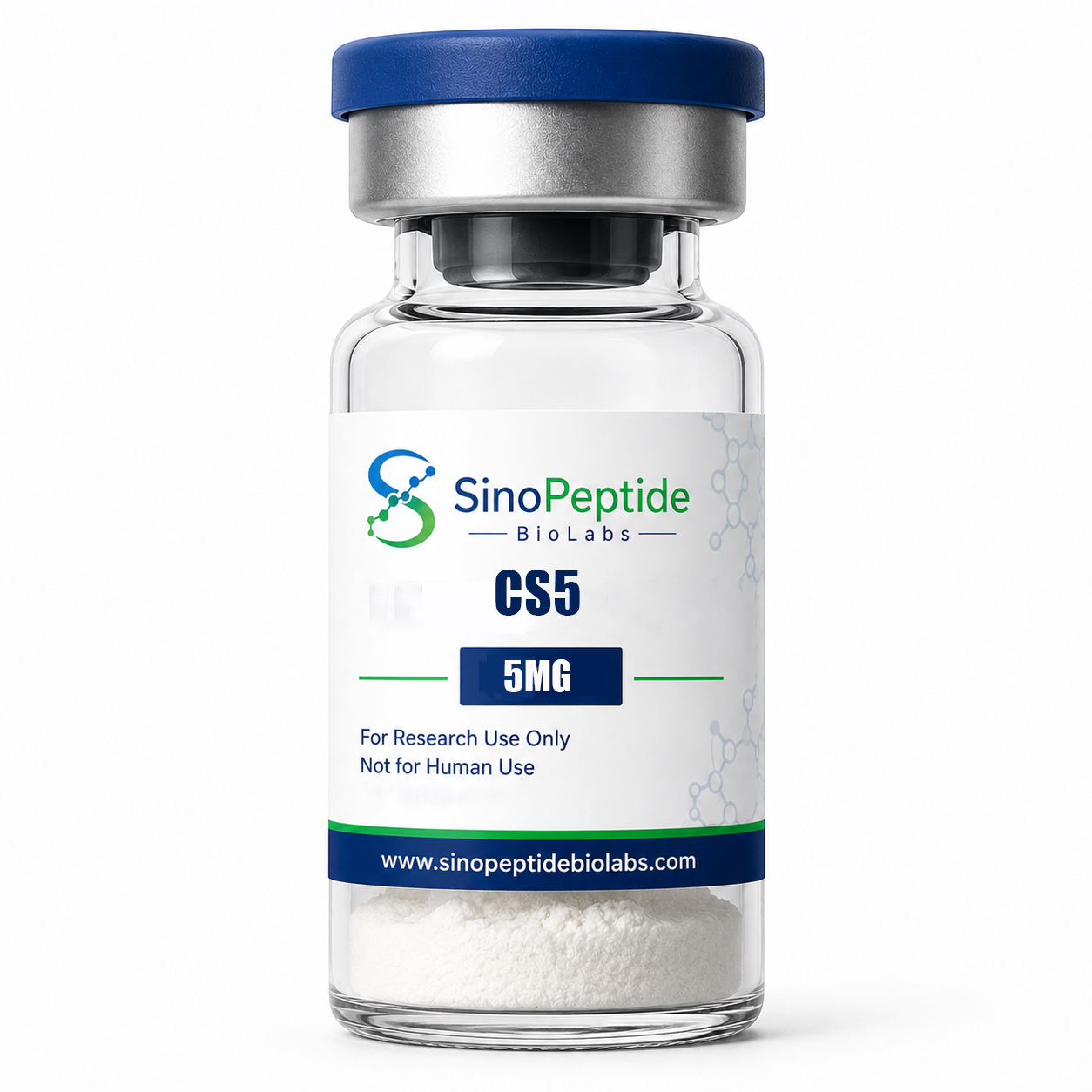
Cagrilintide 2.5mg + Semaglutide 2.5mg
$80.00
10 Vials/ Kits
Cagrilintide 2.5mg + Semaglutide 2.5mg: Complete Research Guide
Cagrilintide 2.5mg + Semaglutide 2.5mg is a product description referring to a combination of two peptide-based compounds: cagrilintide and semaglutide. The combination is often associated with the development program known as CagriSema, an investigational fixed-dose combination designed to target complementary biological pathways involved in appetite regulation, satiety, and body-weight management.
There is an important distinction between the product keyword “Cagrilintide 2.5mg + Semaglutide 2.5mg” and the formulation studied in major clinical trials. The pivotal REDEFINE trials evaluated 2.4 mg cagrilintide + 2.4 mg semaglutide, rather than 2.5 mg of each compound.
Consequently, research or commercial content should not describe a 2.5 mg + 2.5 mg product as though it were identical to the clinical-trial formulation.
Cagrilintide is a long-acting amylin analogue, while semaglutide is a GLP-1 receptor agonist. The scientific rationale behind combining them is that the two molecules act through complementary pathways related to appetite, food intake, satiety, and metabolic regulation.
This article explains what Cagrilintide 2.5mg + Semaglutide 2.5mg means, how the two compounds work, what CagriSema research has shown, how the 2.5 mg product differs from studied 2.4 mg doses, quality considerations, regulatory status, safety considerations, and frequently asked questions.
What Is Cagrilintide 2.5mg + Semaglutide 2.5mg?
Cagrilintide 2.5mg + Semaglutide 2.5mg describes a combination containing two separate active peptide compounds.
The two components are:
- Cagrilintide — 2.5 mg
- Semaglutide — 2.5 mg
- Combined labeled amount — 5 mg
However, the numerical label should not be confused with the doses used in pivotal CagriSema clinical trials.
The phase 3 REDEFINE program evaluated a fixed combination of 2.4 mg cagrilintide and 2.4 mg semaglutide administered once weekly.
Therefore, a product labeled 2.5 mg + 2.5 mg should be described as a separate formulation or product specification unless its manufacturer provides evidence establishing equivalence to the clinical-trial product.
What the two ingredients contribute
Cagrilintide is an amylin analogue designed to activate amylin-related biology.
Semaglutide is a GLP-1 receptor agonist already used in approved medicines for conditions including type 2 diabetes and obesity-related weight management.
The combination is scientifically interesting because the mechanisms are complementary rather than identical.
Cagrilintide: What Is It?
Cagrilintide is a long-acting amylin analogue developed for metabolic and obesity research.
Amylin is a peptide hormone produced by pancreatic beta cells and released alongside insulin following meals. It participates in the regulation of appetite, food intake, gastric emptying, and post-meal glucose physiology.
Cagrilintide was designed to provide prolonged amylin-receptor-related activity.
Researchers have investigated cagrilintide as:
- A standalone obesity-treatment candidate
- A combination partner for semaglutide
- A regulator of appetite and satiety
- A metabolic research compound
- A potential component of future weight-management therapies
Cagrilintide itself remains investigational. The FDA currently states that cagrilintide is not a component of an FDA-approved drug and cannot be used in compounding under federal law.
Semaglutide: What Is It?
Semaglutide is a long-acting glucagon-like peptide-1 receptor agonist, commonly abbreviated as a GLP-1 receptor agonist.
Unlike cagrilintide, semaglutide is an established pharmaceutical ingredient with FDA-approved products.
Current FDA documentation identifies semaglutide in products including Wegovy, Ozempic, and Rybelsus, with approved indications depending on the specific product and formulation.
Semaglutide has been extensively studied in:
- Type 2 diabetes
- Obesity
- Weight management
- Cardiovascular risk reduction in certain populations
- Metabolic disease
Its established clinical history provides an important contrast with cagrilintide.
How Does Cagrilintide + Semaglutide Work?
The scientific rationale for CagriSema is based on combining two complementary pathways.
Cagrilintide and Amylin Signaling
Cagrilintide is an analogue of amylin-related signaling.
Amylin biology is associated with:
- Satiety
- Appetite regulation
- Food intake
- Gastric emptying
- Postprandial metabolic responses
Activation of amylin-related pathways can contribute to reduced food intake and increased feelings of fullness.
Semaglutide and GLP-1 Signaling
Semaglutide activates the GLP-1 receptor.
GLP-1 signaling influences:
- Appetite
- Satiety
- Glucose-dependent insulin secretion
- Glucagon regulation
- Gastric emptying
- Energy intake
The combination therefore targets both GLP-1 and amylin-related pathways.
Why Combine the Two?
The research hypothesis is that simultaneously engaging complementary pathways may produce greater effects on appetite and body weight than either pathway alone.
This hypothesis has been evaluated in randomized clinical trials.
The results have been substantial enough for CagriSema to progress through phase 3 development and into regulatory review.
CagriSema: Cagrilintide and Semaglutide Combination
CagriSema is the name used for the investigational fixed-dose combination of cagrilintide and semaglutide.
The pivotal formulation used in the REDEFINE program was:
Cagrilintide 2.4 mg + Semaglutide 2.4 mg
rather than 2.5 mg + 2.5 mg.
This distinction is particularly important for SEO because searches for “Cagrilintide 2.5mg + Semaglutide 2.5mg” may lead users to assume that the exact formulation has been clinically studied.
A scientifically accurate page should state the distinction clearly.
Cagrilintide 2.5mg + Semaglutide 2.5mg vs CagriSema 2.4mg + 2.4mg
| Feature | 2.5 mg + 2.5 mg product | Clinical CagriSema formulation |
|---|---|---|
| Cagrilintide | 2.5 mg | 2.4 mg |
| Semaglutide | 2.5 mg | 2.4 mg |
| Total labeled amount | 5 mg | 4.8 mg |
| Relationship to REDEFINE trials | Not the exact studied dose | Studied formulation |
| Product identity | Depends on manufacturer | Investigational CagriSema |
| Clinical evidence | Should not be assumed equivalent | Phase 3 evidence available |
| Regulatory status | Product-specific | Investigational in latest sources |
This table is important because it prevents an SEO product page from incorrectly transferring clinical-trial evidence from one formulation to another.
REDEFINE 1: Clinical Research
One of the most important studies of cagrilintide and semaglutide was REDEFINE 1.
This phase 3a trial included adults with obesity or overweight and at least one obesity-related complication, without type 2 diabetes.
Participants were followed for 68 weeks.
The trial compared CagriSema with placebo and with the individual components.
The published NEJM results reported an estimated mean body-weight change of −20.4% with cagrilintide–semaglutide compared with −3.0% with placebo at week 68 using the treatment-policy estimand.
The study also reported substantially greater proportions of participants reaching predefined weight-loss thresholds with the combination.
Gastrointestinal adverse events were common, including nausea, vomiting, diarrhea, constipation, and abdominal pain. The investigators reported that these events were mainly transient and mild-to-moderate.
These results provide important evidence for the 2.4 mg + 2.4 mg investigational formulation, not automatically for a 2.5 mg + 2.5 mg commercial product.
REDEFINE 2: Cagrilintide + Semaglutide in Type 2 Diabetes
REDEFINE 2 examined CagriSema in adults with overweight or obesity and type 2 diabetes.
The phase 3a study included 1,206 participants and evaluated once-weekly cagrilintide–semaglutide at 2.4 mg of each component versus placebo for 68 weeks.
The published results showed:
- Mean body-weight change: −13.7% with cagrilintide–semaglutide
- Mean body-weight change: −3.4% with placebo
- Estimated treatment difference: −10.4 percentage points
- 72.5% experienced gastrointestinal adverse events in the combination group
- 34.4% experienced gastrointestinal adverse events in the placebo group
The trial also found a substantially greater proportion of participants reaching an HbA1c level of 6.5% or less with the combination.
Again, these findings apply to the studied CagriSema formulation and trial population.
What Does 2.5mg + 2.5mg Mean?
For a product labeled:
Cagrilintide 2.5mg + Semaglutide 2.5mg
the most straightforward interpretation is:
- 2.5 mg cagrilintide
- 2.5 mg semaglutide
- 5 mg combined labeled content
But the label should be interpreted carefully.
It does not mean that the product has been studied in exactly the same form as the 2.4 mg + 2.4 mg CagriSema formulation.
A 0.1 mg difference per component may appear small, but clinical-trial results should never be transferred automatically to a different formulation without appropriate evidence.
Cagrilintide + Semaglutide Research Applications
The combination is relevant to several areas of metabolic research.
1. Obesity Research
CagriSema is being investigated primarily as a potential treatment approach for obesity and overweight with associated complications.
REDEFINE trials provide substantial phase 3 evidence for the combination.
2. Appetite Research
Because both amylin and GLP-1 pathways participate in appetite regulation, the combination is relevant to research into:
- Hunger
- Satiety
- Food intake
- Energy balance
- Meal size
- Appetite signaling
3. Metabolic Research
Researchers may investigate the combination in relation to:
- Glucose metabolism
- Insulin physiology
- Body weight
- Energy intake
- Metabolic biomarkers
4. Type 2 Diabetes Research
REDEFINE 2 specifically investigated cagrilintide–semaglutide in adults with type 2 diabetes and overweight or obesity.
5. Cardiovascular Outcomes Research
The CagriSema development program also includes cardiovascular outcomes research.
Novo Nordisk has described REDEFINE 3 as an event-driven phase 3 cardiovascular outcomes trial involving approximately 7,000 adults with established cardiovascular disease, with or without type 2 diabetes.
Cagrilintide vs Semaglutide
Although these compounds are combined in CagriSema, they are pharmacologically distinct.
| Characteristic | Cagrilintide | Semaglutide |
|---|---|---|
| Main pathway | Amylin-related | GLP-1 receptor |
| Drug class | Long-acting amylin analogue | GLP-1 receptor agonist |
| Research status | Investigational | Established pharmaceutical |
| Appetite effects | Satiety/appetite pathway | Appetite/satiety pathway |
| Diabetes research | Investigational | Established clinical use |
| Obesity research | Investigational | Established clinical use |
| CagriSema role | Combination component | Combination component |
The complementary mechanisms are the central scientific rationale behind combining them.
CagriSema vs Semaglutide Alone
Semaglutide alone has extensive clinical evidence and approved indications in multiple markets.
CagriSema adds an amylin analogue to the GLP-1 pathway.
In REDEFINE 1, the combination was compared directly with semaglutide 2.4 mg and cagrilintide 2.4 mg monotherapies as well as placebo.
The combination produced substantial weight loss in the trial.
However, an SEO article should not simply state that CagriSema “is better than semaglutide” without specifying the study population, treatment duration, estimand, and comparison.
The published trial results provide the appropriate evidence without requiring unsupported generalizations.
Cagrilintide 2.5mg + Semaglutide 2.5mg Quality Considerations
For a research product, quality control is critical.
A product page should provide transparent information about:
- Exact composition
- Peptide identity
- Individual component amounts
- Lot number
- Manufacturing information
- Purity testing
- Analytical methodology
- Storage requirements
- Intended use
- Regulatory classification
Because the two compounds have different molecular identities, a meaningful quality assessment should confirm both components rather than relying on a generic “peptide purity” statement.
HPLC Testing
High-performance liquid chromatography can help assess chromatographic purity and related substances.
A useful report should identify:
- Sample
- Lot number
- Testing method
- Purity result
- Specification
- Laboratory
- Testing date
Mass Spectrometry
Mass spectrometry can help verify molecular identity by comparing observed molecular mass with expected values.
For a two-component formulation, identity confirmation is especially valuable.
Lot-Specific COA
A Certificate of Analysis should correspond to the specific batch being supplied.
A generic COA from a different lot does not establish the characteristics of the current product.
Cagrilintide + Semaglutide Storage
Storage requirements depend on the formulation and manufacturer.
Research products should be stored according to their current product specification.
Important factors may include:
- Temperature
- Light exposure
- Moisture
- Container closure
- Freeze-thaw exposure
- Time in solution
- Formulation conditions
A product should not be assumed to have the same stability profile as the pharmaceutical formulation used in clinical trials.
This is another reason to separate research-product specifications from clinical-trial evidence.
Regulatory Status of Cagrilintide and CagriSema
Regulatory status is particularly important for this product.
Novo Nordisk announced in December 2025 that it had submitted a U.S. New Drug Application for CagriSema containing 2.4 mg cagrilintide + 2.4 mg semaglutide. The company stated that CagriSema was not approved in the United States or European Union at that time.
Current FDA information also states that cagrilintide is not a component of an FDA-approved drug and cannot be used in compounding under federal law.
The FDA has separately warned that unapproved cagrilintide products marketed in the United States may constitute unapproved new drugs.
Therefore, websites should avoid describing an online 2.5 mg + 2.5 mg product as an FDA-approved version of CagriSema.
Cagrilintide 2.5mg + Semaglutide 2.5mg: Important Labeling Distinction
A scientifically accurate product description should say:
“Cagrilintide 2.5mg + Semaglutide 2.5mg is a product formulation containing the two compounds at the stated quantities. The major CagriSema phase 3 trials studied 2.4 mg of each compound, so results from those trials should not automatically be interpreted as evidence for a 2.5 mg + 2.5 mg formulation.”
This statement provides valuable search-engine content while preventing an unsupported clinical equivalence claim.
Safety Considerations
Cagrilintide–semaglutide research has demonstrated gastrointestinal adverse events as an important safety consideration.
In REDEFINE 1, gastrointestinal adverse events occurred in 79.6% of participants receiving cagrilintide–semaglutide versus 39.9% receiving placebo. The events were reported as mainly transient and mild-to-moderate.
In REDEFINE 2, gastrointestinal adverse events occurred in 72.5% of participants receiving the combination compared with 34.4% receiving placebo.
Reported gastrointestinal effects in these studies included:
- Nausea
- Vomiting
- Diarrhea
- Constipation
- Abdominal discomfort
The safety profile of a specific 2.5 mg + 2.5 mg product cannot be inferred simply from these trial results.
A different formulation, manufacturing process, concentration, or source may have different characteristics.
Cagrilintide 2.5mg + Semaglutide 2.5mg Is Not Automatically CagriSema
This distinction deserves its own section because it is likely to be important for search intent.
CagriSema is the investigational fixed-dose combination developed by Novo Nordisk.
The pivotal trials used:
2.4 mg cagrilintide + 2.4 mg semaglutide.
A commercially labeled:
2.5 mg cagrilintide + 2.5 mg semaglutide
has a different nominal amount.
Therefore, the product should not be described as “the FDA-approved CagriSema 2.5 mg” or as though it were identical to the trial formulation.
Common Misconceptions
Myth 1: Cagrilintide 2.5mg + Semaglutide 2.5mg Is the Same as the Clinical Trial Dose
Reality: Major phase 3 CagriSema trials used 2.4 mg of each component.
Myth 2: Cagrilintide Is Already FDA Approved
Reality: FDA information states that cagrilintide is not a component of an FDA-approved drug.
Myth 3: Semaglutide and Cagrilintide Are the Same Type of Drug
Reality: Semaglutide is a GLP-1 receptor agonist, whereas cagrilintide is an amylin analogue.
Myth 4: Clinical Results Automatically Apply to Any Online Cagrilintide/Semaglutide Blend
Reality: Clinical evidence applies to the formulation, dose, population, and conditions studied.
Myth 5: 2.5mg + 2.5mg Means 5mg of One Active Ingredient
Reality: The 5 mg total represents the combined nominal quantity of two different compounds.
Frequently Asked Questions
What is Cagrilintide 2.5mg + Semaglutide 2.5mg?
It is a product formulation containing 2.5 mg cagrilintide and 2.5 mg semaglutide according to the stated product specification.
What is CagriSema?
CagriSema is the investigational combination of cagrilintide and semaglutide developed by Novo Nordisk. The pivotal REDEFINE program studied 2.4 mg of each component.
Is 2.5mg + 2.5mg the CagriSema clinical-trial dose?
No. The major phase 3 trials evaluated 2.4 mg cagrilintide + 2.4 mg semaglutide.
What is cagrilintide?
Cagrilintide is a long-acting amylin analogue being investigated for metabolic and obesity-related applications.
What is semaglutide?
Semaglutide is a GLP-1 receptor agonist used in several approved pharmaceutical products for indications that vary by product and jurisdiction.
Why are cagrilintide and semaglutide combined?
The two compounds act through complementary pathways. Cagrilintide targets amylin-related biology, while semaglutide activates GLP-1 receptors.
Has CagriSema been studied in clinical trials?
Yes. REDEFINE 1 and REDEFINE 2 were large phase 3a randomized trials evaluating the combination.
What did REDEFINE 1 find?
The published trial reported an estimated mean body-weight reduction of 20.4% with cagrilintide–semaglutide versus 3.0% with placebo at week 68 using the treatment-policy estimand.
What did REDEFINE 2 find?
In adults with overweight or obesity and type 2 diabetes, mean body weight changed by −13.7% with the combination versus −3.4% with placebo at week 68.
Is cagrilintide FDA approved?
The FDA currently states that cagrilintide is not a component of an FDA-approved drug and cannot be used in compounding under federal law.
Is CagriSema FDA approved?
The latest FDA information reviewed for this article does not identify CagriSema as an FDA-approved drug. Novo Nordisk submitted an NDA in December 2025, describing CagriSema as investigational at that time.
Can research results for CagriSema be applied to a 2.5mg + 2.5mg product?
Not automatically. The principal phase 3 trials used 2.4 mg of each component, so a 2.5 mg + 2.5 mg formulation should be treated as a distinct product unless equivalence has been demonstrated.
What should a research buyer check?
Important information includes product identity, individual component quantities, lot number, purity, analytical testing, storage requirements, and a current lot-specific Certificate of Analysis.
Conclusion
Cagrilintide 2.5mg + Semaglutide 2.5mg describes a combination product containing two distinct peptide-based compounds: the amylin analogue cagrilintide and the GLP-1 receptor agonist semaglutide.
The combination has attracted substantial scientific interest because the two molecules act through complementary biological pathways related to appetite, satiety, energy intake, and metabolic regulation.
Clinical evidence for the combination is now extensive. In REDEFINE 1, a phase 3a trial in adults with overweight or obesity without diabetes, the studied 2.4 mg + 2.4 mg combination produced a mean body-weight change of −20.4% at week 68 compared with −3.0% with placebo using the treatment-policy estimand.
REDEFINE 2 evaluated the same 2.4 mg + 2.4 mg formulation in adults with overweight or obesity and type 2 diabetes and reported a mean weight change of −13.7% versus −3.4% with placebo.
However, those results should not be presented as clinical evidence for every product labeled Cagrilintide 2.5mg + Semaglutide 2.5mg.
The difference is important for accurate SEO, scientific communication, and regulatory compliance.
As of the latest FDA information reviewed, cagrilintide remains outside FDA-approved drug products, and FDA states that it cannot be used in compounding under federal law.
For a research-oriented product page, the strongest approach is therefore to explain the composition, mechanisms, clinical evidence, dose distinction, quality standards, regulatory status, and limitations of extrapolating trial results.
This creates a more authoritative resource than simply describing the combination as a proven weight-loss treatment.
Research and regulatory disclaimer: This article is for educational and research-information purposes. It does not provide personal dosing, injection, reconstitution, or treatment instructions. Clinical trial findings apply to the specific formulations, populations, and protocols studied and should not automatically be extrapolated to commercially labeled research products.
Cagrilintide 2.5mg + Semaglutide 2.5mg Cagrilintide 2.5mg + Semaglutide 2.5mg Cagrilintide 2.5mg + Semaglutide 2.5mg Cagrilintide 2.5mg + Semaglutide 2.5mg Cagrilintide 2.5mg + Semaglutide 2.5mg Cagrilintide 2.5mg + Semaglutide 2.5mg Cagrilintide 2.5mg + Semaglutide 2.5mg Cagrilintide 2.5mg + Semaglutide 2.5mg Cagrilintide 2.5mg + Semaglutide 2.5mg Cagrilintide 2.5mg + Semaglutide 2.5mg Cagrilintide 2.5mg + Semaglutide 2.5mg Cagrilintide 2.5mg + Semaglutide 2.5mg Cagrilintide 2.5mg + Semaglutide 2.5mg Cagrilintide 2.5mg + Semaglutide 2.5mg Cagrilintide 2.5mg + Semaglutide 2.5mg Cagrilintide 2.5mg + Semaglutide 2.5mg Cagrilintide 2.5mg + Semaglutide 2.5mg Cagrilintide 2.5mg + Semaglutide 2.5mgCagrilintide 2.5mg + Semaglutide 2.5mg Cagrilintide 2.5mg + Semaglutide 2.5mg Cagrilintide 2.5mg + Semaglutide 2.5mg Cagrilintide 2.5mg + Semaglutide 2.5mg Cagrilintide 2.5mg + Semaglutide 2.5mg Cagrilintide 2.5mg + Semaglutide 2.5mg
Be the first to review “Cagrilintide 2.5mg + Semaglutide 2.5mg”
Related products
Pure Peptides
Pure Peptides
Pure Peptides
Pure Peptides
Pure Peptides
Pure Peptides
Pure Peptides
Pure Peptides
Reviews
There are no reviews yet.