
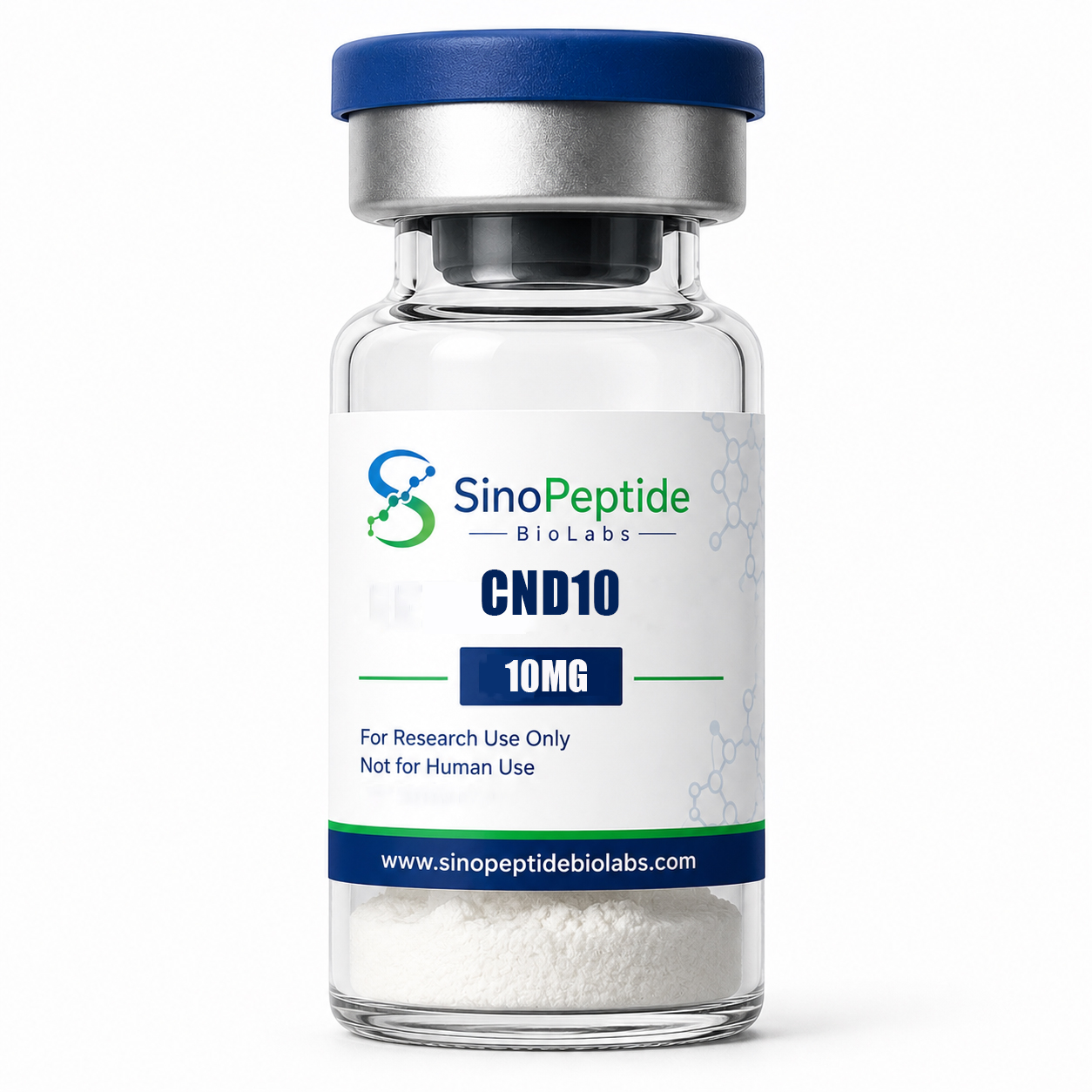
CJC 1295 no DAC 10mg
$135.00
10 Vials/ Kits
CJC 1295 No DAC 10mg: Complete Research Peptide Guide
CJC 1295 No DAC 10mg is a research peptide commonly described as a modified growth hormone-releasing hormone (GHRH) analogue. It is also frequently referred to as CJC-1295 without DAC, CJC-1295 No-DAC, Modified GRF 1-29, or Mod GRF 1-29.
Unlike the longer-acting DAC version of CJC-1295, the no-DAC form does not contain the Drug Affinity Complex responsible for prolonged albumin binding. This distinction is important because the two forms have substantially different pharmacokinetic characteristics and should not be treated as interchangeable compounds.
The 10mg designation describes the quantity of peptide in the product, not a recommended human dose. Products sold under this description are commonly marketed for laboratory or research purposes rather than as approved medicines.
This guide explains what CJC 1295 No DAC 10mg is, how the molecule is described scientifically, how it differs from CJC-1295 with DAC, what is known about GHRH signaling, how researchers evaluate peptide quality, and why claims about human performance, body composition, recovery, or anti-aging should be interpreted cautiously.
What Is CJC 1295 No DAC 10mg?
CJC 1295 No DAC is generally used to describe a short-acting analogue of the biologically active N-terminal portion of growth hormone-releasing hormone.
GHRH is a naturally occurring hypothalamic hormone involved in regulating growth hormone secretion from the anterior pituitary. Synthetic GHRH analogues are studied because they can interact with the GHRH receptor and influence growth hormone signaling.
The term “No DAC” is particularly important.
DAC stands for Drug Affinity Complex. The DAC modification was designed to produce prolonged activity by facilitating binding to circulating albumin. Removing this component produces a substantially shorter-acting form.
CJC 1295 No DAC is also commonly associated with the name Modified GRF 1-29. The “1-29” designation refers to the biologically active N-terminal region of GHRH containing 29 amino acids.
The 10mg specification simply describes the amount of material contained in the stated product presentation. It should not be interpreted as a clinical dose, treatment recommendation, or evidence that 10mg has been evaluated as a human dose of the no-DAC compound.
CJC 1295 No DAC vs CJC 1295 DAC
One of the most common SEO and product-description problems surrounding CJC-1295 is the failure to distinguish the DAC and no-DAC versions.
Although they are closely related, their pharmacokinetic behavior is different.
| Feature | CJC 1295 No DAC | CJC 1295 With DAC |
|---|---|---|
| Common name | Modified GRF 1-29 | CJC-1295 DAC |
| DAC component | Absent | Present |
| General class | GHRH analogue | Long-acting GHRH analogue |
| Pharmacokinetic profile | Short acting | Long acting |
| Albumin-binding modification | No | Yes |
| Research interest | Short-duration GHRH signaling | Sustained GHRH signaling |
| Human clinical evidence | Very limited specifically for no-DAC | Published early clinical studies |
| Regulatory approval | Not an approved therapy | Not an approved therapy |
| 10mg designation | Product quantity | Product quantity |
The distinction matters because published human studies often cited in online CJC-1295 discussions evaluated the long-acting DAC form, not the short-acting no-DAC product.
Therefore, it would be inaccurate to take results from DAC studies and automatically describe them as clinical evidence for CJC 1295 No DAC.
How Does CJC 1295 No DAC Work?
CJC 1295 No DAC is generally described as a GHRH receptor agonist or analogue.
GHRH binds to receptors on somatotroph cells in the anterior pituitary. Activation of the GHRH receptor initiates intracellular signaling that can promote growth hormone synthesis and secretion.
The basic research pathway can be summarized as:
GHRH analogue → GHRH receptor activation → intracellular signaling → growth hormone secretion → downstream IGF-1 signaling
Growth hormone itself has multiple physiological functions, while some of its downstream effects involve stimulation of insulin-like growth factor 1 (IGF-1), particularly through hepatic signaling.
However, this pathway should not be interpreted as proof that a research peptide improves athletic performance, builds muscle, reduces body fat, reverses aging, or produces a particular clinical outcome.
Those are separate questions requiring controlled human evidence.
Why the “No DAC” Form Matters
The absence of the Drug Affinity Complex changes the expected duration of activity.
The DAC technology was specifically developed to extend the persistence of CJC-1295 in circulation. Without the albumin-binding component, CJC 1295 No DAC is generally characterized as a much shorter-acting GHRH analogue.
This difference creates two distinct research models.
Short-duration GHRH signaling
Researchers interested in transient GHRH receptor stimulation may distinguish no-DAC compounds from long-acting analogues.
Sustained GHRH signaling
The DAC form was designed to produce much longer exposure and therefore represents a different pharmacological model.
This is why the terms CJC 1295 No DAC and CJC 1295 DAC should never be used interchangeably in scientific or commercial content.
CJC 1295 No DAC 10mg and Growth Hormone Research
Growth hormone research is one of the principal scientific contexts associated with CJC-1295.
GHRH signaling is naturally involved in the regulation of pulsatile growth hormone secretion. Researchers therefore study GHRH analogues to better understand the relationship between:
- GHRH receptor activity
- Growth hormone release
- IGF-1 production
- Pituitary function
- Endocrine feedback
- Metabolic signaling
- Hormonal pulsatility
However, the strongest published human pharmacology data associated with CJC-1295 involve the DAC form.
In a controlled human study, CJC-1295 administration produced dose-dependent increases in growth hormone and IGF-1, with prolonged effects lasting days. The researchers were evaluating the long-acting GHRH analogue rather than establishing clinical efficacy for the commercially marketed no-DAC form.
That distinction is essential when creating accurate SEO content.
What Does the Research Actually Show?
A 2006 human study investigated the pharmacokinetic and pharmacodynamic effects of CJC-1295 in healthy adults. The study reported sustained increases in growth hormone and IGF-1 following administration of the long-acting compound.
The study demonstrated that CJC-1295 could influence the GH/IGF-1 axis in humans under controlled research conditions.
However, these results should not be automatically attributed to CJC 1295 No DAC 10mg.
Recent scientific reviews specifically note that CJC-1295 without DAC remains poorly characterized in controlled human research. Much of the information circulating online about its effects is based on extrapolation from related GHRH analogues, laboratory research, or non-peer-reviewed sources.
This is one of the most important corrections for a scientifically responsible CJC-1295 article.
Potential Research Applications
CJC 1295 No DAC may be encountered in laboratory research involving the GH/IGF-1 axis.
Potential research areas include:
1. GHRH receptor research
The compound can be studied in models investigating GHRH receptor signaling and pituitary endocrine physiology.
2. Growth hormone secretion
Researchers may investigate how GHRH receptor stimulation influences growth hormone release.
3. GH/IGF-1 signaling
The relationship between growth hormone and downstream IGF-1 signaling is an important area of endocrinology research.
4. Endocrine physiology
GHRH analogues can be used as experimental tools for understanding hypothalamic-pituitary regulation.
5. Peptide pharmacology
Researchers can investigate peptide stability, receptor interactions, metabolism, clearance, and structure-function relationships.
6. Comparative GHRH research
CJC 1295 No DAC may be compared experimentally with other GHRH-related compounds to investigate differences in receptor activity and duration of action.
These research applications should not be confused with approved medical indications.
CJC 1295 No DAC and Bodybuilding Claims
CJC 1295 No DAC is frequently discussed online in bodybuilding and physique-oriented communities.
Claims may include potential effects on:
- Muscle growth
- Fat loss
- Recovery
- Sleep
- Skin appearance
- Athletic performance
- “Anti-aging”
- Body composition
However, these claims should not be presented as established clinical facts.
There is insufficient high-quality human evidence to conclude that CJC 1295 No DAC produces reliable improvements in these outcomes.
In particular, researchers and content creators should avoid presenting anecdotal experiences as equivalent to randomized controlled clinical evidence.
A strong SEO article should distinguish between:
Documented mechanism: GHRH receptor signaling.
Research hypothesis: Potential influence on the GH/IGF-1 axis.
Unverified claim: Guaranteed muscle gain, fat loss, enhanced recovery, or anti-aging effects.
This distinction improves both scientific accuracy and content credibility.
CJC 1295 No DAC 10mg: Understanding the 10mg Label
The phrase CJC 1295 No DAC 10mg contains three useful pieces of information.
CJC 1295
This identifies the peptide family or analogue.
No DAC
This indicates that the product does not contain the Drug Affinity Complex associated with the long-acting version.
10mg
This indicates the stated quantity of peptide in the product.
Importantly, 10mg does not mean that 10mg is a recommended human administration amount.
A product quantity and a clinical dose are entirely different concepts.
For research products, the stated amount may simply identify the total material contained within the vial or package.
CJC 1295 No DAC Molecular Identity
When evaluating a research peptide, the name alone is not enough to establish identity or quality.
A professional laboratory evaluation may consider:
- Peptide sequence
- Molecular mass
- Chemical form
- Purity
- Identity
- Related substances
- Residual solvents
- Water content
- Counterions
- Batch consistency
Because peptide nomenclature can be inconsistent between suppliers, documentation is particularly important.
A product labeled “CJC-1295” should not automatically be assumed to be the no-DAC form.
The product documentation should clearly identify whether the compound is:
CJC-1295 without DAC / Modified GRF 1-29
or
CJC-1295 with DAC.
How to Evaluate CJC 1295 No DAC Quality
For research purposes, analytical documentation is more valuable than marketing language.
Certificate of Analysis
A Certificate of Analysis (COA) should ideally identify:
- Product name
- Batch number
- Test date
- Purity
- Identity
- Analytical method
- Laboratory information
- Specification limits
HPLC Testing
High-performance liquid chromatography can be used to assess peptide purity and identify related peaks or impurities.
A stated purity percentage should always be interpreted together with the analytical method and documentation supporting the result.
Mass Spectrometry
Mass spectrometry can help confirm molecular identity by comparing measured molecular mass with the expected value.
HPLC and mass spectrometry answer different analytical questions and can therefore provide complementary information.
Batch Traceability
Reliable research materials should be traceable to a specific manufacturing batch.
Batch-level documentation is particularly useful when comparing experimental results across different lots.
Storage and Stability Considerations
Peptides can be sensitive to environmental conditions, and storage requirements depend on the specific formulation and manufacturer’s validated stability data.
Relevant factors may include:
- Temperature
- Moisture
- Light
- Container closure
- Freeze-thaw exposure
- Solution stability
- Handling conditions
Lyophilized peptide and reconstituted peptide should not automatically be assumed to have identical stability profiles.
For laboratory research, the manufacturer’s technical documentation should take precedence over generic internet recommendations.
Avoid publishing unsupported claims such as a universal shelf life or guaranteed stability period unless the manufacturer has validated those specifications.
CJC 1295 No DAC Safety Considerations
Safety is an important consideration because CJC-1295 is not an established consumer wellness supplement.
FDA has identified CJC-1295 among substances for which compounded products may present safety concerns, including potential immunogenicity, peptide-related impurities, and limited clinical safety information. FDA also identified serious adverse events associated with CJC-1295, including increased heart rate and systemic vasodilatory reactions.
This reinforces the importance of distinguishing laboratory research from human treatment.
The safety profile of a research-grade product can also differ from that of a pharmaceutical product because factors such as manufacturing controls, purity, sterility, endotoxin levels, container closure, and formulation may vary.
Is CJC 1295 No DAC FDA Approved?
CJC 1295 No DAC should not be described as an FDA-approved medication.
It is important to distinguish a research compound from an approved pharmaceutical product.
FDA materials also show that CJC-1295 products have been marketed online in both DAC and no-DAC forms, including products described as research-use products.
The regulatory status of a specific product can depend on its intended use, labeling, formulation, jurisdiction, and marketing claims.
Therefore, businesses publishing CJC 1295 content should avoid statements such as:
- “FDA-approved CJC 1295”
- “FDA-approved peptide therapy”
- “Clinically proven anti-aging peptide”
- “FDA-approved muscle-building peptide”
unless a specific product and indication genuinely have such approval.
CJC 1295 No DAC vs Sermorelin
CJC 1295 No DAC and sermorelin are related conceptually because both are associated with GHRH signaling.
However, they are not identical compounds.
Sermorelin corresponds to a form of GHRH(1-29), whereas CJC 1295 No DAC is commonly described as a modified GHRH(1-29) analogue.
The modifications are intended to alter peptide stability and pharmacological characteristics.
For research purposes, comparing these molecules can help investigators understand how sequence modifications influence receptor activity, enzymatic degradation, and pharmacokinetics.
CJC 1295 No DAC vs Ipamorelin
Another common comparison is between CJC 1295 No DAC and ipamorelin.
They operate through different receptor pathways.
CJC 1295 No DAC is associated with the GHRH receptor.
Ipamorelin is a growth hormone secretagogue associated with the ghrelin receptor pathway.
Because these pathways are biologically distinct, researchers sometimes investigate them separately or in combination.
However, online claims about combining peptides to guarantee specific body-composition or performance outcomes should not be confused with established clinical evidence.
CJC 1295 No DAC vs CJC 1295 DAC
The distinction can be summarized simply:
CJC 1295 No DAC: short-acting GHRH analogue without the albumin-binding DAC modification.
CJC 1295 DAC: long-acting CJC-1295 formulation incorporating the Drug Affinity Complex.
This difference has major implications for pharmacokinetics.
One of the biggest mistakes in online peptide content is taking human data from the DAC version and presenting it as evidence for the no-DAC version.
For SEO content that aims to demonstrate expertise and trustworthiness, clearly explaining this distinction is highly valuable.
Common Misconceptions About CJC 1295 No DAC
Myth 1: CJC 1295 No DAC is the same as CJC 1295 DAC
Not exactly. The absence or presence of the Drug Affinity Complex creates substantially different pharmacokinetic characteristics.
Myth 2: 10mg is a standard human dose
No. Ten milligrams describes product quantity, not an established clinical dose.
Myth 3: CJC 1295 No DAC is an approved anti-aging medicine
There is no basis for describing it this way.
Myth 4: Human CJC-1295 studies prove the no-DAC product works
The important human studies commonly cited in discussions of CJC-1295 evaluated the long-acting DAC form. They should not automatically be generalized to no-DAC products.
Myth 5: Higher purity guarantees safety
Purity is important but does not establish clinical safety or efficacy.
A peptide can have high analytical purity while still lacking sufficient evidence for human therapeutic use.
Frequently Asked Questions
What is CJC 1295 No DAC 10mg?
CJC 1295 No DAC 10mg is a product designation generally referring to a 10mg quantity of the short-acting GHRH analogue commonly called Modified GRF 1-29.
What does “No DAC” mean?
“No DAC” means the compound does not contain the Drug Affinity Complex associated with the long-acting version of CJC-1295.
Is CJC 1295 No DAC the same as Modified GRF 1-29?
The terms are commonly used interchangeably in research and commercial contexts to describe the no-DAC form of the modified GHRH(1-29) analogue.
What does 10mg mean?
It refers to the stated quantity of peptide in the product presentation. It does not establish a recommended human dose.
Does CJC 1295 No DAC increase growth hormone?
It is designed as a GHRH analogue capable of interacting with the GHRH receptor. However, direct controlled human evidence specifically evaluating the no-DAC form remains limited.
Is CJC 1295 No DAC FDA approved?
No. It should not be marketed as an FDA-approved therapeutic product.
Is CJC 1295 No DAC the same as sermorelin?
No. Both relate to GHRH signaling, but CJC 1295 No DAC is a modified analogue while sermorelin is based on GHRH(1-29).
How should research CJC 1295 be evaluated?
Researchers should examine identity, purity, analytical testing, batch traceability, certificate of analysis, molecular characterization, and appropriate storage documentation.
Can CJC 1295 No DAC be described as an anti-aging treatment?
It is better described as an experimental GHRH analogue investigated in relation to growth hormone signaling. Claims of established anti-aging treatment are not supported by adequate clinical evidence.
Research-Use Disclaimer
CJC 1295 No DAC is discussed here for educational and research-information purposes. This article does not establish that a particular commercial product is safe, sterile, effective, or suitable for human administration.
CJC-1295 should not be presented as an approved treatment for aging, obesity, muscle growth, athletic performance, recovery, or other medical conditions without appropriate regulatory and clinical evidence.
Researchers should rely on institutional procedures, applicable regulations, validated analytical documentation, and qualified scientific or medical professionals when working with experimental peptide materials.
Conclusion
CJC 1295 No DAC 10mg is commonly described as a short-acting analogue of GHRH and is frequently associated with the alternative name Modified GRF 1-29.
The most important fact to understand is the distinction between CJC 1295 No DAC and CJC 1295 with DAC. The DAC form was specifically designed for prolonged activity, while the no-DAC form lacks the albumin-binding Drug Affinity Complex and is generally characterized as short acting.
CJC 1295 No DAC has research relevance because GHRH signaling plays an important role in growth hormone physiology. However, the direct human evidence base for the no-DAC compound is substantially more limited than online marketing content often suggests.
The well-known controlled human CJC-1295 studies should also be interpreted correctly: they primarily concern the long-acting DAC compound rather than proving the clinical efficacy of CJC 1295 No DAC.
For a high-quality research product page, accuracy is more valuable than exaggerated claims. Clearly identifying the compound, distinguishing it from the DAC form, explaining the 10mg quantity, discussing analytical quality, and acknowledging regulatory and evidence limitations can create more useful and trustworthy content while naturally targeting searches such as CJC 1295 No DAC 10mg, CJC 1295 without DAC, Modified GRF 1-29, CJC 1295 research peptide, and CJC 1295 No DAC research.
CJC 1295 No DAC 10mg CJC 1295 No DAC 10mg CJC 1295 No DAC 10mg CJC 1295 No DAC 10mg CJC 1295 No DAC 10mg CJC 1295 No DAC 10mg CJC 1295 No DAC 10mg CJC 1295 No DAC 10mg CJC 1295 No DAC 10mg CJC 1295 No DAC 10mg CJC 1295 No DAC 10mg CJC 1295 No DAC 10mg CJC 1295 No DAC 10mg CJC 1295 No DAC 10mg CJC 1295 No DAC 10mg CJC 1295 No DAC 10mg CJC 1295 No DAC 10mg CJC 1295 No DAC 10mg CJC 1295 No DAC 10mg CJC 1295 No DAC 10mg
Be the first to review “CJC 1295 no DAC 10mg”
Related products
Pure Peptides
Pure Peptides
Pure Peptides
Pure Peptides
Pure Peptides
Pure Peptides
Pure Peptides
Pure Peptides
Reviews
There are no reviews yet.