

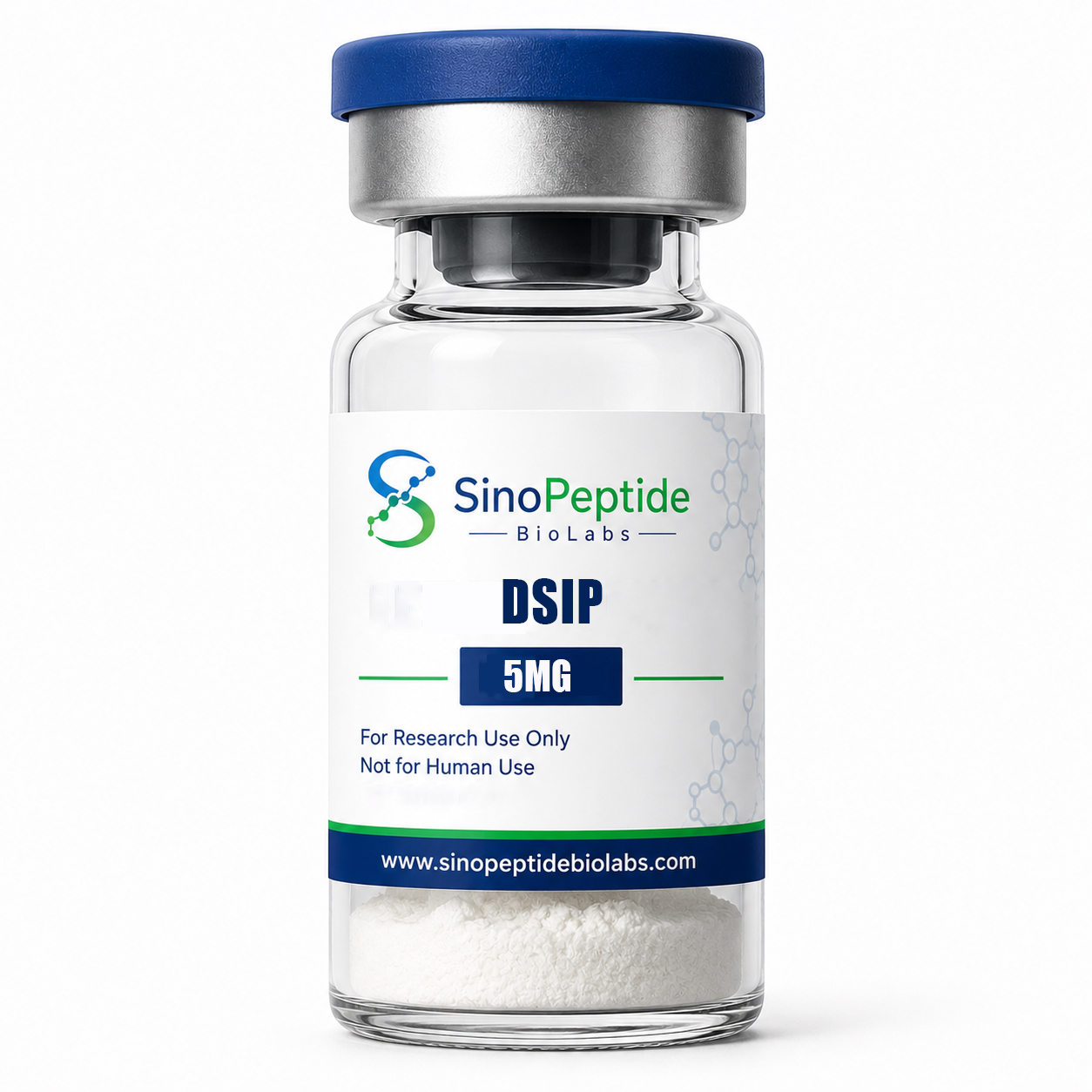
DSIP 5mg
$45.00
10 Vials/ Kits
DSIP 5mg: Benefits, Mechanism, Sleep Research, Safety & Uses
Introduction to DSIP 5mg
DSIP 5mg, commonly associated with Delta Sleep-Inducing Peptide, is a synthetic nonapeptide that has been investigated for its potential role in sleep regulation, neuroendocrine signaling, and physiological responses associated with sleep.
DSIP has attracted scientific interest for decades because early experimental studies suggested that the peptide could influence sleep patterns, particularly slow-wave or delta sleep. Researchers subsequently investigated DSIP in humans, including studies involving healthy volunteers and people with chronic insomnia. However, the overall evidence has remained limited and inconsistent, and later reviews have questioned whether DSIP should be regarded as an established endogenous sleep-regulating factor.
The distinction between scientific research and proven medical treatment is especially important for DSIP. Although several older human studies reported changes in sleep following experimental DSIP administration, other controlled research concluded that the clinical benefits were weak or of limited significance.
Current regulatory information also warrants careful consideration. The U.S. Food and Drug Administration (FDA) refers to DSIP as emideltide and has evaluated both emideltide and emideltide acetate. FDA states that neither substance is a component of an FDA-approved drug and that available safety information for proposed compounding routes is insufficient.
This guide provides an evidence-based overview of DSIP 5mg, including what DSIP is, how it has been studied, its proposed relationship with sleep, potential physiological effects, safety considerations, regulatory status, product-quality considerations, and frequently asked questions.
What Is DSIP?
DSIP stands for Delta Sleep-Inducing Peptide. It is a synthetic nonapeptide that was identified and studied because of observations suggesting that certain biological factors could influence sleep.
The early research literature described DSIP as a peptide capable of influencing sleep, with effects varying between animal species and experimental conditions. A classic review described DSIP as a nine-amino-acid peptide and summarized evidence suggesting effects on delta sleep as well as electrophysiological activity, neurotransmitter levels, circadian patterns, hormonal levels, and other physiological processes.
Later research produced a more cautious interpretation.
A 2006 review described DSIP as a still-unresolved biological question, noting that the hypothesis that DSIP itself functions as a physiological sleep factor remained poorly documented.
Consequently, DSIP is best understood as a research peptide investigated for sleep and neuroendocrine physiology, rather than as an established sleep medication.
What Does the 5mg Label Mean?
A product described as DSIP 5mg generally indicates that the labeled product contains 5 milligrams of DSIP or the specified DSIP-related material.
The number 5mg should not automatically be interpreted as a recommended medical dose.
This distinction is important because research studies have used different experimental quantities, formulations, routes, and study designs. For example, older human DSIP studies cited doses in nanomoles per kilogram rather than simply describing a commercially labeled 5mg product.
Therefore:
- 5mg is a product quantity.
- It is not automatically a therapeutic dose.
- It does not establish safety at that quantity.
- It does not establish effectiveness for insomnia.
- It should not be converted into personalized dosing instructions without appropriate clinical and pharmaceutical context.
A responsible product page should clearly separate product specification from clinical dosing.
DSIP and Sleep Research
Sleep is the area most strongly associated with DSIP research.
Early investigators proposed that sleep could be influenced by endogenous chemical factors and investigated peptides that might contribute to sleep regulation. DSIP became one of the better-known candidates.
Animal experiments suggested that DSIP could influence slow-wave or delta sleep under certain conditions. Early reviews also noted that responses varied between species, which makes direct translation from animal findings to humans difficult.
Human research followed.
One early controlled study involved six healthy volunteers and reported changes in sleep behavior after intravenous administration of synthetic DSIP. The investigators reported increased sleep during the observation period and changes in subsequent nighttime sleep. They also reported that the compound did not produce conventional pharmacological sedation in that experimental setting.
These findings helped establish DSIP as an interesting research compound, but they were based on a very small sample.
DSIP and Insomnia Research
Researchers have also examined DSIP in people with chronic insomnia.
A double-blind study involving 16 chronic insomnia patients compared DSIP with placebo. The investigators observed higher sleep efficiency and shorter sleep latency with DSIP on certain objective measures. However, the authors described the effects as weak and noted that some differences could have resulted from changes in the placebo group. They concluded that short-term DSIP treatment was unlikely to provide major therapeutic benefit for chronic insomnia.
Another clinical study investigated DSIP in patients with disturbed sleep and reported longer sleep duration and fewer interruptions after administration. However, the research involved only six chronic insomniacs, and the results were based on an early experimental protocol.
A later controlled trial involving chronic insomniacs reported some changes in total sleep and NREM sleep but concluded that the improvement had little clinical significance.
These results demonstrate why DSIP should not be marketed as a proven insomnia treatment.
Does DSIP Improve Sleep?
The most accurate answer is that research has reported potential effects on sleep, but evidence is insufficient to establish DSIP as a reliable treatment for sleep disorders.
Some older human studies reported:
- Changes in sleep duration
- Changes in sleep efficiency
- Changes in sleep latency
- Changes in NREM sleep
- Changes in sleep architecture
- Subjective or physiological responses related to sleep
However, studies were generally small, old, and used experimental administration protocols.
Importantly, not all studies produced consistent results. Some investigators concluded that the effects were weak or of limited clinical significance.
A later review also questioned the fundamental hypothesis that DSIP itself is a naturally occurring sleep-regulating factor.
Therefore, SEO content should avoid claims such as:
“DSIP cures insomnia.”
or:
“DSIP guarantees deep sleep.”
A scientifically responsible description is that DSIP has been investigated for its potential influence on sleep and sleep-related physiology.
How Might DSIP Work?
The exact mechanism of DSIP remains incompletely understood.
Unlike many modern pharmaceutical compounds for which a specific molecular target has been extensively characterized, DSIP has a relatively uncertain biological mechanism.
Early research proposed that DSIP could influence neurochemical and neuroendocrine pathways associated with sleep. Reviews have discussed possible effects involving neurotransmitters, circadian rhythms, hormonal regulation, and autonomic or physiological processes.
However, researchers have not established a simple mechanism that can adequately explain all reported effects.
A 1986 review noted that a possible mechanism involving modulation of adrenergic transmission had been proposed, while emphasizing that physiological functions and mechanisms still needed to be established.
This uncertainty is important when evaluating commercial descriptions of DSIP.
DSIP and Neuroendocrine Signaling
DSIP has also been studied in relation to hormonal regulation.
For example, one human study examined the effects of intravenous DSIP on the hypothalamic-pituitary-adrenal axis. Researchers observed a reduction in ACTH-like immunoreactivity after DSIP administration, while plasma cortisol levels were not significantly altered.
This finding illustrates that DSIP may interact with neuroendocrine signaling rather than simply acting as a conventional sedative.
Nevertheless, a single physiological effect should not be interpreted as proof of a clinical benefit.
More extensive and modern research would be needed to establish whether DSIP has a meaningful therapeutic role in endocrine or sleep disorders.
Potential DSIP Benefits: What Does Research Support?
Online searches for DSIP benefits frequently include sleep, relaxation, recovery, stress reduction, and other claims.
It is important to separate established observations from hypotheses.
1. Sleep Research
The strongest historical research interest concerns sleep.
Experimental human studies have reported changes in sleep patterns after DSIP administration. However, results are not sufficiently consistent to establish DSIP as a clinically proven sleep treatment.
2. Slow-Wave Sleep Research
DSIP was initially investigated partly because of its apparent relationship with delta or slow-wave sleep.
Animal research provided some of the strongest early observations, but species-specific effects make translation to human sleep physiology uncertain.
3. Neuroendocrine Research
Studies have explored DSIP’s potential influence on neuroendocrine pathways, including ACTH-related signaling.
This remains an area of scientific interest rather than an established clinical application.
4. Stress and Physiological Research
Historical research has examined DSIP in relation to stress responses, neurotransmitter systems, and other physiological processes.
However, evidence is not sufficient to describe DSIP as a proven treatment for anxiety, stress, depression, or other psychiatric conditions.
5. Withdrawal Research
Older experimental research also investigated DSIP in people experiencing alcohol- or opioid-related withdrawal symptoms. One study reported beneficial effects, but the study had substantial limitations, including participants lost or unsuitable for evaluation.
Such historical findings should not be interpreted as evidence that DSIP is an established treatment for substance withdrawal.
DSIP 5mg Safety Considerations
Safety is one of the most important sections of any DSIP 5mg product page.
Current FDA information identifies emideltide (DSIP) among substances that may present significant safety concerns in certain compounding contexts. FDA states that compounded drugs containing emideltide may pose immunogenicity risks for certain routes because of potential peptide aggregation and peptide-related impurities. FDA also states that it has not identified sufficient safety-related information for the proposed route of administration to determine whether the substance could cause harm in humans.
This is particularly important because modern peptide manufacturing can involve challenges related to:
- Peptide purity
- Aggregation
- Degradation products
- Residual impurities
- Identity confirmation
- Sterility
- Endotoxin contamination
- Formulation stability
A product’s label alone does not establish that all of these quality characteristics have been adequately evaluated.
DSIP and Immunogenicity
Immunogenicity refers to the ability of a substance to trigger an immune response.
Peptides can potentially produce immune responses, particularly when impurities, aggregates, degradation products, or formulation-related factors are involved.
FDA specifically identifies potential immunogenicity concerns for compounded emideltide/DSIP for certain routes of administration.
This does not mean that every DSIP product will produce an immune reaction.
It does mean that product quality and manufacturing controls are important considerations when evaluating peptide materials.
For legitimate research purposes, documentation such as analytical testing and batch-specific quality information can be valuable.
DSIP and Product Quality
For a product such as DSIP 5mg, product quality should be evaluated separately from the scientific claims surrounding DSIP itself.
A high-quality research product should ideally have appropriate documentation supporting its identity and analytical characteristics.
Certificate of Analysis
A certificate of analysis, or COA, can provide information about a specific production batch.
Useful documentation may include:
- Product identification
- Batch number
- Testing date
- Purity analysis
- Identity testing
- Analytical methodology
- Testing laboratory
- Relevant quality-control results
A COA is useful, but the existence of a document labeled “COA” does not automatically prove that the product is suitable for human administration.
Peptide Identity
Identity testing helps establish that the material corresponds to the labeled peptide.
This is particularly relevant because FDA’s current DSIP-related documents distinguish between emideltide free base and emideltide acetate.
Purity
Purity testing can help identify the proportion of the desired peptide relative to detectable impurities.
However, purity is only one aspect of quality.
A high purity percentage alone does not establish sterility, endotoxin status, stability, or clinical safety.
DSIP Free Base vs. DSIP Acetate
An important technical point is that DSIP can be described in different chemical forms.
FDA’s 2026 materials specifically discuss both emideltide (free base) and emideltide acetate. FDA noted that nomination documents had inconsistently identified which substance was being proposed for compounding evaluation.
This distinction matters for accurate product descriptions.
A website should avoid treating every DSIP-related product as chemically identical without confirming the actual material being offered.
For a product specifically labeled DSIP 5mg, the supplier should clearly identify the chemical form and provide appropriate documentation.
Is DSIP 5mg FDA Approved?
No FDA-approved drug containing emideltide/DSIP has been established in the current FDA materials reviewed.
FDA’s 2026 Pharmacy Compounding Advisory Committee materials state that neither emideltide free base nor emideltide acetate is a component of an FDA-approved drug. The materials also note that there is no applicable USP or National Formulary drug-substance monograph for either form.
FDA’s separate safety assessment states that available safety information for emideltide for proposed compounding routes is insufficient.
Consequently, a website should not describe DSIP 5mg as:
- FDA-approved DSIP
- An FDA-approved insomnia medication
- An FDA-approved sleep peptide
- An approved treatment for sleep disorders
Accurate regulatory language is important for both consumers and healthcare SEO.
DSIP 5mg for Research
DSIP may be relevant to scientific research involving:
Sleep Physiology
Researchers can investigate how experimental peptides influence sleep architecture, sleep latency, and NREM or slow-wave sleep.
Neuroendocrine Signaling
DSIP has been investigated in relation to hormonal pathways, including ACTH-related responses.
Circadian Biology
Historical reviews have described effects associated with circadian and locomotor patterns, although the precise physiological significance remains uncertain.
Peptide Pharmacology
DSIP provides an example of a peptide whose biological effects have been studied extensively while its precise physiological role remains unresolved.
Sleep-Related Research
Researchers can use DSIP-related materials to investigate hypotheses concerning neuropeptides and the regulation of sleep.
DSIP 5mg vs. Conventional Sleep Medications
DSIP should not be treated as interchangeable with conventional sleep medications.
Approved sleep medicines generally undergo defined regulatory evaluation for specific indications, including assessments of safety, efficacy, manufacturing quality, and labeling.
DSIP has a different status.
Historical studies explored whether DSIP could influence sleep, but the available evidence is not sufficient to establish it as a standard treatment for insomnia. One controlled trial specifically concluded that short-term treatment was unlikely to provide major therapeutic benefit.
This distinction is useful for consumers searching for terms such as DSIP vs sleeping pills or DSIP for insomnia.
DSIP 5mg and Sleep Quality: What Should Consumers Know?
The phrase “sleep quality” can refer to several different outcomes.
Researchers may evaluate:
- Total sleep time
- Sleep latency
- Sleep efficiency
- Number of awakenings
- NREM sleep
- Slow-wave sleep
- REM sleep
- Daytime alertness
- Subjective sleep quality
A compound may influence one of these measures without improving overall sleep quality in a clinically meaningful way.
This distinction appeared in DSIP research. For example, one insomnia study observed improvements in selected objective measures but concluded that the overall therapeutic benefit was weak.
Therefore, DSIP should not be promoted as a guaranteed method for achieving deeper or more restorative sleep.
Why DSIP Research Remains Relevant
Although DSIP is an old research peptide, it continues to attract interest because sleep regulation involves a complex network of neuropeptides, neurotransmitters, endocrine signals, and circadian mechanisms.
The history of DSIP research illustrates an important principle in biomedical science:
A biological effect observed in an experiment does not automatically establish a clinically useful therapy.
Researchers initially proposed that DSIP might function as an endogenous sleep factor. Later reviews questioned whether this hypothesis had been adequately demonstrated.
This makes DSIP an interesting research subject precisely because its biological role remains incompletely resolved.
How to Choose a DSIP 5mg Research Product
When evaluating a DSIP 5mg product for legitimate research purposes, consider the available documentation.
1. Verify the Exact Compound
Confirm whether the product is:
- DSIP
- Emideltide
- Emideltide acetate
- Another DSIP-related material
The chemical form should be clearly identified.
2. Review Batch Documentation
Look for batch-specific analytical documentation rather than relying only on generic product descriptions.
3. Check Identity and Purity Testing
Identity and purity are separate analytical questions and should not be conflated.
4. Evaluate Manufacturer Transparency
Transparent suppliers should provide appropriate information about the material and its analytical characteristics.
5. Avoid Unsupported Medical Claims
A supplier making guaranteed claims about insomnia, anxiety, anti-aging, recovery, or other medical outcomes should be evaluated carefully.
SEO Strategy for a DSIP 5mg Product Page
A high-quality page targeting DSIP 5mg should satisfy several different search intents.
Informational Search Intent
Users may want to know:
- What is DSIP?
- What does DSIP do?
- How does DSIP work?
- What is DSIP used for in research?
Safety Search Intent
Users may search:
- Is DSIP safe?
- What are DSIP side effects?
- Is DSIP FDA approved?
- Is DSIP legal?
- What are the risks of DSIP?
Product Search Intent
Users may search:
- DSIP 5mg
- DSIP peptide 5mg
- DSIP research peptide
- DSIP acetate
- DSIP COA
A strong SEO page should address all three categories without turning scientific information into unsupported medical advertising.
Secondary Keywords for DSIP 5mg
The following semantic keywords can be incorporated naturally throughout the website:
- DSIP 5mg
- DSIP peptide
- Delta Sleep-Inducing Peptide
- DSIP sleep peptide
- DSIP research peptide
- DSIP 5mg peptide
- DSIP mechanism
- DSIP benefits
- DSIP safety
- DSIP side effects
- DSIP insomnia research
- DSIP sleep research
- DSIP clinical studies
- DSIP human studies
- DSIP FDA status
- emideltide
- emideltide acetate
- emideltide research
- sleep peptide research
- neuropeptide research
- peptide research products
- DSIP COA
Use these terms naturally. Excessive repetition of the exact keyword can make content less readable and may weaken rather than improve the page.
Frequently Asked Questions About DSIP 5mg
What is DSIP 5mg?
DSIP 5mg refers to a product labeled as containing 5 milligrams of Delta Sleep-Inducing Peptide or the specified DSIP-related material. DSIP is a synthetic nonapeptide that has been investigated primarily in relation to sleep and neuroendocrine physiology.
What does DSIP stand for?
DSIP stands for Delta Sleep-Inducing Peptide. FDA’s more recent materials refer to DSIP as emideltide.
Does DSIP help with sleep?
Some older human studies reported changes in sleep following experimental DSIP administration. However, the evidence is limited and inconsistent, and at least one controlled study concluded that short-term treatment was unlikely to provide major therapeutic benefit for chronic insomnia.
Is DSIP a sleeping pill?
No. DSIP is a peptide that has been investigated for effects on sleep physiology. It should not be automatically classified as a conventional sleeping medication.
Is DSIP FDA approved?
Current FDA materials state that neither emideltide free base nor emideltide acetate is a component of an FDA-approved drug.
Is DSIP the same as emideltide?
FDA materials identify emideltide as another name for Delta Sleep-Inducing Peptide (DSIP). FDA separately discusses emideltide free base and emideltide acetate.
Is 5mg the recommended DSIP dose?
No. The 5mg label indicates the quantity of material in the product. It should not automatically be interpreted as a recommended clinical dose.
Has DSIP been studied in humans?
Yes. Human studies have investigated DSIP in healthy volunteers and individuals with insomnia, including controlled studies examining sleep behavior and sleep architecture.
Does DSIP cure insomnia?
There is insufficient evidence to make that claim. Historical studies have produced mixed findings, and some investigators concluded that the clinical significance of observed sleep improvements was limited.
What are the main DSIP research areas?
Research has focused on sleep physiology, slow-wave sleep, neuroendocrine signaling, circadian processes, neurotransmitter systems, and other physiological effects.
What should I look for in a DSIP 5mg COA?
A batch-specific COA may include information about identity, purity, testing methodology, laboratory details, and the tested lot number. A COA should not, by itself, be interpreted as proof of clinical safety or suitability for human administration.
Suggested Internal Links for DSIP 5mg
To strengthen topical authority and create a useful peptide information cluster, consider linking the DSIP 5mg page to related educational pages such as:
- Peptide Research Guide
- DSIP Safety and Regulatory Information
- Certificate of Analysis Guide
- Peptide Storage and Stability Guide
- Sleep Peptides: Scientific Research Overview
- GHRP-6 Acetate 5mg
- GHRP-2 Acetate 5mg
- CJC-1295 No DAC 5mg
- Thymalin 10mg
- Peptide Quality and Purity Testing
Use descriptive anchor text rather than repeatedly linking the same exact keyword.
Final Thoughts on DSIP 5mg
DSIP 5mg, also known as Delta Sleep-Inducing Peptide or emideltide, is a synthetic peptide that has been investigated for decades because of its potential relationship with sleep and neuroendocrine physiology.
Historical human research has reported effects on sleep behavior, sleep efficiency, sleep latency, and other sleep-related measures. However, these studies were generally small and conducted decades ago, and the findings have not established DSIP as a consistently effective clinical treatment for insomnia or other sleep disorders.
The biological role of DSIP itself also remains uncertain. Later scientific reviews have questioned whether the evidence adequately supports the original hypothesis that DSIP functions as a natural sleep factor.
Current regulatory information provides another important consideration. FDA identifies emideltide/DSIP as a substance for which available safety information is insufficient for certain proposed compounding routes and highlights potential immunogenicity and peptide-related impurity concerns. FDA’s 2026 materials also state that neither emideltide free base nor emideltide acetate is a component of an FDA-approved drug.
For these reasons, a scientifically responsible DSIP 5mg product page should focus on accurate research information rather than promising guaranteed sleep improvement, insomnia treatment, anti-aging effects, stress relief, or other unproven outcomes.
The strongest approach is to explain what DSIP is, describe the historical human evidence, acknowledge the limitations of that evidence, distinguish product quantity from clinical dosing, explain current regulatory information, and provide transparent product-quality information.
That combination creates useful content for readers while supporting a more credible SEO strategy based on relevance, expertise, transparency, and evidence.
Medical and research disclaimer: This article is provided for educational and research-information purposes only. It does not constitute medical advice, diagnosis, or a recommendation to use DSIP. DSIP/emideltide should not be represented as an FDA-approved treatment for insomnia or another medical condition. Anyone considering a peptide for personal medical use should consult an appropriately qualified healthcare professional and follow applicable laws and regulatory requirements.
DSIP 5mg DSIP 5mg DSIP 5mg DSIP 5mg DSIP 5mg DSIP 5mg DSIP 5mg DSIP 5mg DSIP 5mg DSIP 5mg DSIP 5mg DSIP 5mg DSIP 5mg DSIP 5mg
Be the first to review “DSIP 5mg”
Related products
Pure Peptides
Pure Peptides
Pure Peptides
Pure Peptides
Pure Peptides

Pure Peptides
Pure Peptides
Pure Peptides
Reviews
There are no reviews yet.