

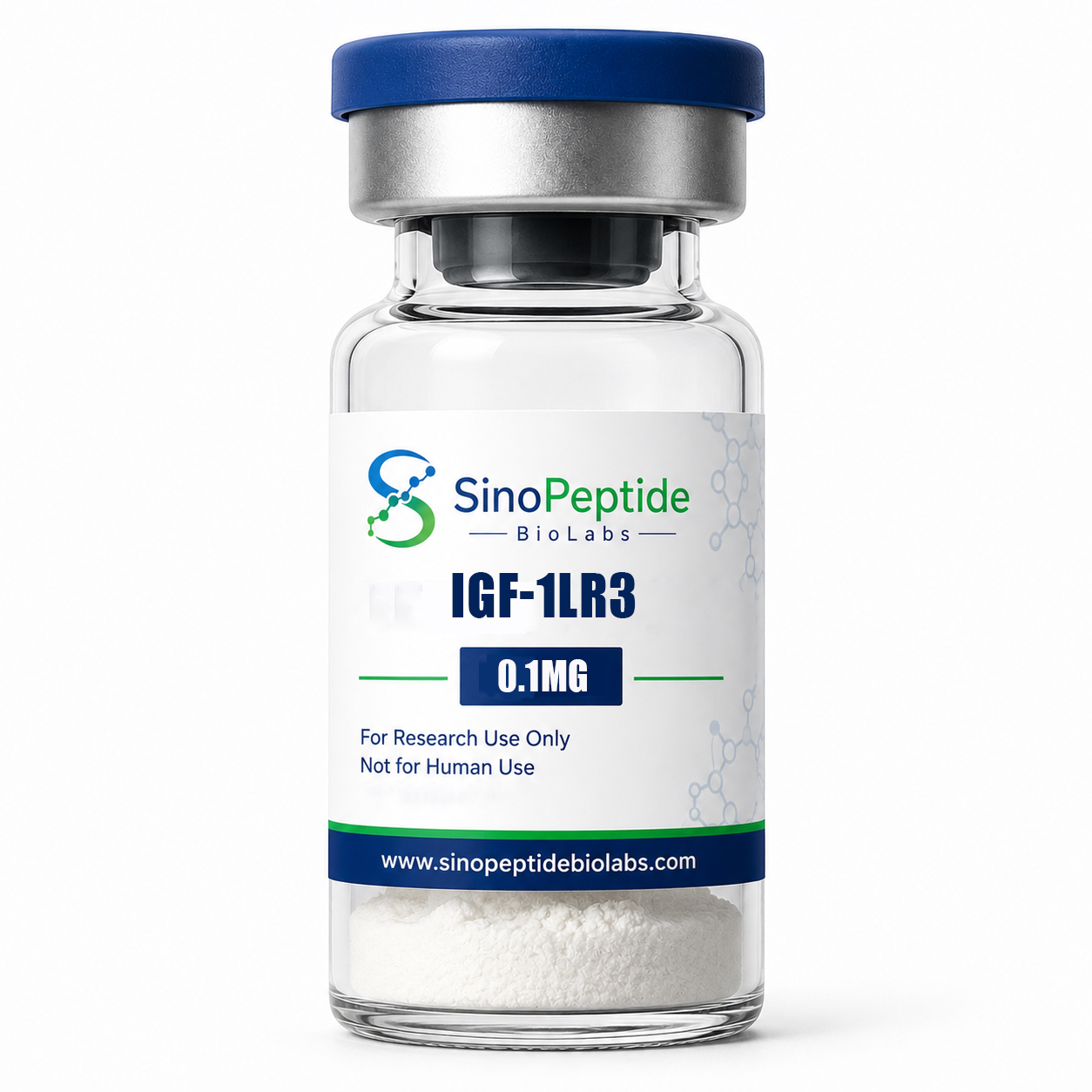
IGF-1LR3 0.1mg
$35.00
10 Vials/ Kits
IGF-1 LR3 0.1mg: Research, Mechanism, Benefits, Safety & Regulatory Guide
Introduction to IGF-1 LR3 0.1mg
IGF-1 LR3 0.1mg refers to a product labeled with 0.1 milligrams of Long R3 IGF-1, a modified analogue of insulin-like growth factor 1 (IGF-1).
IGF-1 is an important peptide hormone involved in growth, cellular signaling, metabolism, and tissue biology. The body’s natural IGF-1 system works closely with growth hormone, IGF-binding proteins, and IGF receptors to regulate a wide range of physiological processes.
Long R3 IGF-1, often written as LR3-IGF-1 or Long(R3)-IGF-I, is a modified form of IGF-1 developed for experimental research. Scientific studies have examined its molecular structure, receptor activity, interactions with IGF-binding proteins, biological effects, and pharmacokinetic characteristics.
One important characteristic of Long R3 IGF-1 is that structural modifications alter its interaction with IGF-binding proteins. Research has shown that R3 and Long R3 modifications substantially reduce binding to certain IGF-binding proteins while retaining activity at the IGF-1 receptor.
However, IGF-1 LR3 is not the same product as pharmaceutical recombinant human IGF-1 (mecasermin). This distinction is important when discussing regulatory status, clinical evidence, safety, and potential applications.
The “0.1mg” designation also requires clarification. It describes a quantity of material in a product; it should not automatically be interpreted as a recommended human dose or a clinically validated treatment amount.
This comprehensive guide explains what IGF-1 LR3 is, how it differs from native IGF-1, what researchers have learned about its biology, potential research applications, safety considerations, product-quality issues, and regulatory status.
What Is IGF-1 LR3?
IGF-1 LR3, also known as Long R3 IGF-1 or Long R3 IGF-I, is a synthetic analogue of insulin-like growth factor 1.
Native human IGF-1 is a 70-amino-acid peptide involved in the growth hormone/IGF axis. Pharmaceutical mecasermin is recombinant human IGF-1 and has the same amino-acid sequence as endogenous human IGF-1.
Long R3 IGF-1, by contrast, contains structural modifications designed to alter its interaction with IGF-binding proteins.
Research examining IGF-1 analogues found that the R3 modification involves an amino-acid substitution at position 3, while the “Long” modification involves an N-terminal extension. These changes substantially reduce binding to IGF-binding proteins while retaining activity at the IGF-1 receptor.
This makes Long R3 IGF-1 scientifically interesting for studying how IGF-1 receptor signaling changes when interactions with binding proteins are altered.
What Does IGF-1 LR3 0.1mg Mean?
The term 0.1mg means that the product is labeled as containing 0.1 milligrams of IGF-1 LR3.
It is important not to confuse product quantity with clinical dosing.
0.1mg Is a Product Quantity
A 0.1mg label does not automatically establish:
- A medically approved dosage
- A recommended human dose
- A treatment schedule
- A validated administration protocol
- A safe amount for self-use
- A clinically established exposure level
This distinction is particularly important with experimental peptide analogues.
For SEO content, product pages should describe IGF-1 LR3 0.1mg as a quantity designation and avoid presenting the number as a standardized clinical dosage.
Understanding the IGF-1 System
To understand Long R3 IGF-1, it is helpful to understand the natural IGF-1 signaling system.
The IGF system includes several major components:
- IGF-1
- IGF-2
- IGF-1 receptor
- IGF-2 receptor
- IGF-binding proteins
- Growth hormone
- Intracellular signaling pathways
The system is involved in communication between hormones, tissues, and cells.
Growth hormone stimulates production of IGF-1 in multiple tissues, with the liver being a major source of circulating IGF-1. IGF-1 then interacts with its receptor in target tissues.
The result is a complex network controlling cellular growth, differentiation, metabolism, and survival.
Because this system is biologically important, experimental manipulation of IGF signaling requires careful consideration.
How Does IGF-1 LR3 Work?
Long R3 IGF-1 retains activity at the type 1 IGF receptor (IGF-1R).
The IGF-1 receptor is a transmembrane receptor involved in intracellular signaling.
When activated, IGF-1R can initiate signaling pathways associated with:
- Cellular growth
- Cellular survival
- Protein synthesis
- Differentiation
- Metabolic activity
- Tissue development
Research examining Long R3 IGF-1 has specifically investigated its ability to activate IGF-1 receptor signaling.
A comparative experimental study examining Long R3 IGF-1 found that it stimulated IGF-1 receptor activity and could be evaluated alongside native IGF-1 and other growth-factor-related peptides.
This receptor activity is one reason Long R3 IGF-1 has become an important experimental molecule in growth-factor research.
IGF-1 LR3 and IGF-Binding Proteins
One of the most important differences between native IGF-1 and Long R3 IGF-1 involves IGF-binding proteins, commonly abbreviated as IGFBPs.
In the body, IGF-1 does not simply circulate freely. It interacts with a family of binding proteins that influence its distribution, stability, receptor access, and biological activity.
There are six major IGF-binding proteins:
- IGFBP-1
- IGFBP-2
- IGFBP-3
- IGFBP-4
- IGFBP-5
- IGFBP-6
Long R3 IGF-1 was specifically developed with structural modifications that reduce its affinity for many IGF-binding proteins.
Research has reported that these structural changes can dramatically reduce IGFBP binding while maintaining IGF-1 receptor activity.
This property is central to the scientific interest surrounding LR3 IGF-1.
Why Is Long R3 IGF-1 Different From Native IGF-1?
Native IGF-1 is part of the body’s tightly regulated endocrine system.
Long R3 IGF-1 is a synthetic analogue.
The structural differences can alter:
- Binding-protein interactions
- Pharmacokinetic behavior
- Receptor activity
- Tissue exposure
- Biological responses
Therefore, information about pharmaceutical recombinant IGF-1 should not automatically be applied to Long R3 IGF-1.
This is especially important when discussing safety and regulatory status.
IGF-1 LR3 Research
Long R3 IGF-1 has been investigated in a range of experimental settings.
Research has examined its:
- Molecular structure
- Receptor activity
- Interaction with IGFBPs
- Pharmacokinetic characteristics
- Effects on growth-related signaling
- Effects in animal models
- Detectability in biological samples
- Potential research applications in tissue and cellular biology
Studies have involved different animal models and laboratory systems.
For example, experimental studies have investigated Long R3 IGF-1 in pigs, guinea pigs, calves, cattle, and other research systems.
The findings demonstrate that IGF signaling is highly context-dependent.
This is an important point for responsible SEO writing: results in animals or laboratory systems cannot automatically be translated into human therapeutic benefits.
IGF-1 LR3 and Growth Research
Because IGF-1 plays a major role in growth biology, Long R3 IGF-1 has been examined in experimental growth studies.
Some animal research has shown significant physiological effects from Long R3 IGF-1, while other studies have produced more complicated or unexpected results.
For example, research in pigs found that Long R3 IGF-1 administration reduced circulating IGF-I, IGFBP-3, insulin, and growth hormone concentrations and did not produce the simple growth-promoting effect that might be expected from the molecule’s receptor activity.
This illustrates an important principle:
Activating a growth-related receptor does not guarantee increased overall growth.
Hormonal systems operate through feedback loops, binding proteins, tissue-specific signaling, and endocrine regulation.
IGF-1 LR3 and Tissue Research
IGF signaling is involved in the biology of many tissues.
Researchers have therefore investigated Long R3 IGF-1 in areas involving:
- Skeletal muscle
- Bone
- Connective tissue
- Nervous tissue
- Gastrointestinal tissue
- Reproductive biology
- Cellular growth
- Tissue repair models
These studies are useful for understanding IGF receptor signaling.
However, research observations should not be interpreted as evidence that Long R3 IGF-1 is an established treatment for muscle growth, injury recovery, aging, or other human conditions.
IGF-1 LR3 and Muscle Research
IGF-1 is closely associated with skeletal-muscle biology.
Research into the IGF system has examined pathways involved in:
- Protein synthesis
- Muscle-cell growth
- Satellite-cell activity
- Cellular survival
- Differentiation
Because Long R3 IGF-1 activates IGF-1 receptors, it has been used as an experimental tool for investigating these mechanisms.
However, claims that IGF-1 LR3 is a clinically proven muscle-building compound are not supported by the evidence base.
Animal and cellular experiments cannot establish the effectiveness or safety of an experimental IGF-1 analogue for human physique enhancement.
IGF-1 LR3 and Neuroscience Research
IGF-1 signaling is also important in neuroscience.
Researchers have investigated IGF-1 in relation to:
- Neuronal survival
- Neurogenesis
- Synaptic biology
- Brain aging
- Neurodegenerative disease
More recent research has examined Long R3 IGF-1 in animal models of neurodegenerative disease.
For example, a study published in 2025 examined long R3 IGF-1 delivered intranasally in a mouse model of Alzheimer’s disease. The researchers reported changes in some pathological measures but did not observe significant preservation of cognitive function in the model.
This is a useful example of why research findings should be described precisely.
A laboratory or animal finding may justify additional investigation without demonstrating a human treatment benefit.
IGF-1 LR3 and Protein Metabolism
IGF signaling plays a significant role in protein metabolism.
Experimental research has therefore investigated Long R3 IGF-1 in relation to:
- Amino-acid metabolism
- Protein retention
- Muscle protein turnover
- Nutrient utilization
- Growth-related metabolism
In a study involving beef heifers experiencing weight loss from restricted feeding, Long R3 IGF-1 administration was associated with changes in whole-body and skeletal-muscle protein metabolism. The study also observed substantial reductions in plasma amino-acid and glucose concentrations.
Again, these findings are from an animal study and should not be interpreted as evidence of a validated human metabolic treatment.
IGF-1 LR3 and Pharmacokinetics
Pharmacokinetics refers to how a compound behaves in the body, including:
- Absorption
- Distribution
- Metabolism
- Elimination
Long R3 IGF-1 has attracted attention because structural modifications can alter its interactions with binding proteins and potentially influence its pharmacokinetic characteristics.
Researchers have developed analytical methods capable of detecting Long R3 IGF-1 and related IGF analogues in biological samples.
These analytical methods are useful in:
- Pharmacological research
- Clinical research
- Anti-doping testing
- Toxicology
- Research involving peptide analogues
IGF-1 LR3 and Anti-Doping Research
Long R3 IGF-1 is particularly relevant to sports-science research because IGF-1 and synthetic IGF-1 analogues are prohibited in sport under anti-doping rules.
A peer-reviewed analytical study specifically notes that IGF-1 and synthetic analogues including Long R3 IGF-1 are prohibited substances in sport and describes methods for detecting these compounds in biological samples.
This makes accurate product identification particularly important for sports organizations and laboratories.
Athletes subject to anti-doping rules should consult the current rules of their governing organization rather than relying on commercial peptide descriptions.
Is IGF-1 LR3 FDA Approved?
Long R3 IGF-1 should not be confused with FDA-approved mecasermin.
The FDA has approved mecasermin (Increlex), a recombinant human IGF-1 product, for a specific pediatric indication involving severe primary IGF-1 deficiency or growth hormone gene deletion with neutralizing antibodies to growth hormone.
That approval does not mean Long R3 IGF-1 is FDA approved.
Mecasermin and Long R3 IGF-1 are different molecular products.
The FDA’s current listing identifies Increlex as mecasermin and describes its approved indication and licensed pharmaceutical formulation.
Therefore, an online product labeled IGF-1 LR3 0.1mg should not be marketed as though it were the same product as FDA-approved Increlex.
IGF-1 LR3 vs. Mecasermin
Understanding the difference is essential for accurate SEO content.
| Feature | IGF-1 LR3 | Mecasermin |
|---|---|---|
| Molecular category | Modified IGF-1 analogue | Recombinant human IGF-1 |
| Research status | Experimental/research compound | FDA-approved medicine |
| Structure | Modified IGF-1 analogue with Long/R3 modifications | Human IGF-1 sequence |
| IGF-1 receptor activity | Yes | Yes |
| IGFBP interactions | Altered compared with native IGF-1 | Physiological IGF-1 interactions |
| FDA-approved as the same product? | No | Yes |
| Approved indication | None established for LR3 | Specific pediatric severe primary IGF-1 deficiency indication |
The distinction prevents one of the most common errors in IGF-1-related product content: treating all IGF-1 molecules as interchangeable.
Potential Research Benefits of IGF-1 LR3
When discussing the “benefits” of IGF-1 LR3 for SEO purposes, it is more accurate to discuss research applications and biological properties rather than guaranteed human outcomes.
Potential research interests include:
IGF-1 Receptor Signaling
Long R3 IGF-1 provides a tool for studying activation of the IGF-1 receptor.
IGF-Binding Protein Research
Its altered interaction with IGFBPs makes it useful for studying how binding proteins regulate IGF signaling.
Growth-Factor Biology
Researchers can use IGF-1 analogues to investigate cellular growth and differentiation.
Muscle Biology
IGF-1 signaling is relevant to skeletal-muscle research.
Tissue Biology
IGF pathways are involved in numerous tissue processes.
Neuroscience
IGF-1 signaling is an active area of research in neuronal and brain biology.
Analytical Science
Long R3 IGF-1 has been studied in connection with analytical detection and anti-doping methods.
These are scientifically supportable research areas without promising a clinical outcome.
IGF-1 LR3 0.1mg Safety Considerations
IGF signaling is biologically powerful, which makes safety an important consideration.
The safety profile of an experimental Long R3 IGF-1 product cannot simply be inferred from the safety profile of approved mecasermin.
The FDA-approved IGF-1 product Increlex carries clinically significant warnings, including hypoglycemia, hypersensitivity and allergic reactions, intracranial hypertension, lymphoid tissue hypertrophy, slipped capital femoral epiphysis, scoliosis progression, and malignant neoplasia considerations.
These warnings apply to the approved drug and demonstrate that manipulating the IGF-1 pathway can have important physiological consequences.
They should not be interpreted as a direct clinical safety profile for Long R3 IGF-1, because LR3 is a different molecular entity.
Why IGF-1 LR3 Requires Careful Quality Control
Experimental peptides can present quality-control challenges.
For a product labeled IGF-1 LR3 0.1mg, important quality information may include:
- Confirmed molecular identity
- Peptide purity
- Analytical characterization
- Batch or lot number
- Certificate of Analysis
- Manufacturing information
- Storage requirements
- Retest or expiration information
- Appropriate sterility documentation when relevant
A generic statement such as “99% pure” is less useful than a batch-specific analytical report that identifies the testing method and actual result.
Certificate of Analysis for IGF-1 LR3
A Certificate of Analysis (COA) can provide valuable information about a specific batch.
Depending on the supplier and intended research application, analytical documentation may include techniques such as:
- High-performance liquid chromatography
- Mass spectrometry
- Other identity testing
- Purity testing
Researchers should evaluate whether the documentation is genuinely batch-specific and whether the testing method is appropriate for the material being characterized.
A COA should not be treated as proof that an experimental peptide is approved for human use.
IGF-1 LR3 0.1mg Storage and Handling
Peptides may be sensitive to factors such as:
- Temperature
- Moisture
- Light
- Repeated handling
- Contamination
- Freeze-thaw conditions
The appropriate storage conditions depend on the specific formulation and manufacturer.
Therefore, a product page should not invent storage conditions.
Instead, the supplier’s validated product documentation should be followed.
This is particularly important when different products may contain different buffers, excipients, concentrations, or physical presentations.
Is 0.1mg a Clinical Dose of IGF-1 LR3?
No conclusion about a clinical dose should be drawn solely from the label 0.1mg.
The number indicates product quantity.
It does not establish that:
- 0.1mg is a therapeutic dose
- 0.1mg is safe for humans
- 0.1mg is appropriate for a particular condition
- 0.1mg should be administered by a particular route
- 0.1mg has been clinically validated
This distinction should be maintained throughout product descriptions, category pages, blog posts, and advertisements.
IGF-1 LR3 0.1mg and Human Research
One of the most important limitations of Long R3 IGF-1 research is the difference between experimental evidence and established human clinical evidence.
A substantial amount of the scientific literature involving Long R3 IGF-1 has used:
- Animal models
- Laboratory systems
- Biochemical experiments
- Analytical testing
- Cellular models
For example, published research has investigated Long R3 IGF-1 in pigs, guinea pigs, calves, cattle, and mice.
Results from these models are valuable for understanding biological mechanisms but cannot automatically establish human safety or efficacy.
Why IGF-1 LR3 Research Remains Important
Despite its experimental status, Long R3 IGF-1 remains scientifically relevant.
Its structural modifications provide researchers with a useful tool for studying:
- IGF receptor signaling
- IGFBP regulation
- Growth-factor pharmacology
- Tissue biology
- Protein metabolism
- Neurobiology
- Analytical detection
By comparing native IGF-1 with modified analogues, researchers can learn more about how molecular structure influences biological function.
This type of research can contribute to broader understanding of growth-factor biology even when a particular analogue does not become an approved medicine.
Common Misconceptions About IGF-1 LR3
Myth 1: IGF-1 LR3 Is the Same as Increlex
It is not.
Increlex contains mecasermin, recombinant human IGF-1. Long R3 IGF-1 is a modified analogue.
Myth 2: 0.1mg Is a Standard Dose
The 0.1mg designation describes product quantity. It does not establish a clinical dosage.
Myth 3: IGF-1 LR3 Is FDA Approved
Long R3 IGF-1 should not be represented as FDA approved. FDA approval of mecasermin does not extend to every IGF-1 analogue.
Myth 4: Animal Growth Studies Prove Human Muscle-Building Effects
They do not.
Animal studies provide mechanistic and biological information but cannot establish human efficacy.
Myth 5: Natural IGF-1 Is Automatically Safe to Manipulate
The body’s natural production of IGF-1 does not mean that altering IGF signaling with a synthetic analogue is risk-free.
Myth 6: Higher Product Quantity Means Better Results
Product quantity alone does not determine efficacy, purity, biological activity, or safety.
Frequently Asked Questions About IGF-1 LR3 0.1mg
What is IGF-1 LR3 0.1mg?
IGF-1 LR3 0.1mg refers to a product labeled as containing 0.1 milligrams of Long R3 IGF-1, a synthetic analogue of insulin-like growth factor 1.
What does LR3 mean?
“LR3” generally refers to the Long R3 modification of IGF-1. The structural changes alter its interactions with IGF-binding proteins while retaining activity at the IGF-1 receptor.
What is Long R3 IGF-1 used for in research?
It has been studied as an experimental tool for investigating IGF-1 receptor signaling, growth-factor biology, IGF-binding proteins, metabolism, tissue biology, neuroscience, and analytical detection.
Is IGF-1 LR3 the same as IGF-1?
No. Long R3 IGF-1 is a modified analogue of IGF-1.
Is IGF-1 LR3 the same as mecasermin?
No. Mecasermin is recombinant human IGF-1 and is the active ingredient in Increlex. Long R3 IGF-1 is a structurally modified analogue.
Is IGF-1 LR3 FDA approved?
Long R3 IGF-1 should not be described as FDA approved. The FDA-approved IGF-1 product Increlex contains mecasermin and has a specific pediatric indication.
What does 0.1mg mean?
It indicates the labeled quantity of peptide in the product. It does not automatically indicate a clinical dosage.
Does IGF-1 LR3 increase muscle?
IGF-1 signaling is involved in muscle biology, but experimental observations involving Long R3 IGF-1 should not be presented as proof of a clinically established muscle-building effect in humans.
Is IGF-1 LR3 studied in neuroscience?
Yes. IGF-1 and its signaling pathways have been studied extensively in neuroscience, and experimental Long R3 IGF-1 research has included animal models of neurodegenerative disease.
Is IGF-1 LR3 relevant to anti-doping?
Yes. Published analytical research identifies Long R3 IGF-1 among IGF-1 analogues prohibited in sport and has investigated methods for detecting these compounds.
What should I look for when evaluating an IGF-1 LR3 product?
Look for clear molecular identity, batch-specific analytical information, purity testing, a credible COA, lot traceability, appropriate storage documentation, and transparent statements about research status and regulatory limitations.
SEO Strategy for IGF-1 LR3 0.1mg
For a website selling or cataloging research peptides, the primary keyword should be used naturally in strategic locations.
Primary Keyword
IGF-1 LR3 0.1mg
Supporting Keywords
- IGF-1 LR3
- Long R3 IGF-1
- Long R3 IGF-I
- IGF1 LR3
- LR3 IGF-1 peptide
- IGF-1 analogue
- IGF-1 research
- IGF-1 receptor
- IGF-1 peptide
- IGF-1 LR3 research
- IGF-1 safety
- IGF-binding proteins
- IGFBP research
- growth factor research
Final Takeaway: IGF-1 LR3 0.1mg
IGF-1 LR3 0.1mg is a product quantity designation associated with Long R3 IGF-1, a modified analogue of insulin-like growth factor 1.
Long R3 IGF-1 is scientifically interesting because structural modifications change its interaction with IGF-binding proteins while preserving activity at the IGF-1 receptor.
Research has examined Long R3 IGF-1 in numerous experimental systems, including studies of growth-factor signaling, protein metabolism, tissue biology, neuroscience, and analytical detection. However, much of the available evidence comes from laboratory and animal research, meaning those findings should not automatically be translated into human clinical benefits.
It is also essential to distinguish Long R3 IGF-1 from mecasermin. Mecasermin is recombinant human IGF-1 and is the active ingredient in the FDA-approved product Increlex for a specific pediatric growth disorder.
Long R3 IGF-1 should not be presented as though it carries the same approval, clinical evidence, or labeling as mecasermin.
For product-quality purposes, researchers should pay attention to identity, purity, analytical testing, batch traceability, COA documentation, storage requirements, and transparent labeling.
The most accurate SEO positioning for IGF-1 LR3 0.1mg is therefore based on its role as an experimental IGF-1 analogue and research molecule, rather than unsupported claims about guaranteed muscle growth, fat loss, anti-aging, injury recovery, or disease treatment.
Medical and research disclaimer: This article is provided for educational and SEO purposes only. It is not medical advice and does not establish a dosage, treatment protocol, or recommendation for human use. IGF-1 LR3 is distinct from FDA-approved mecasermin, and research findings should not be interpreted as evidence of an approved clinical use. Product specifications, purity, formulation, sterility, and storage should be verified through appropriate manufacturer documentation.
IGF-1 LR3 0.1mg IGF-1 LR3 0.1mg IGF-1 LR3 0.1mg IGF-1 LR3 0.1mg IGF-1 LR3 0.1mg IGF-1 LR3 0.1mg IGF-1 LR3 0.1mg IGF-1 LR3 0.1mg IGF-1 LR3 0.1mg IGF-1 LR3 0.1mg IGF-1 LR3 0.1mg IGF-1 LR3 0.1mg IGF-1 LR3 0.1mg IGF-1 LR3 0.1mg IGF-1 LR3 0.1mg IGF-1 LR3 0.1mg IGF-1 LR3 0.1mg IGF-1 LR3 0.1mg
Be the first to review “IGF-1LR3 0.1mg”
Related products
Pure Peptides
Pure Peptides
Pure Peptides
Pure Peptides
Pure Peptides
Pure Peptides
Pure Peptides

Pure Peptides
Reviews
There are no reviews yet.