

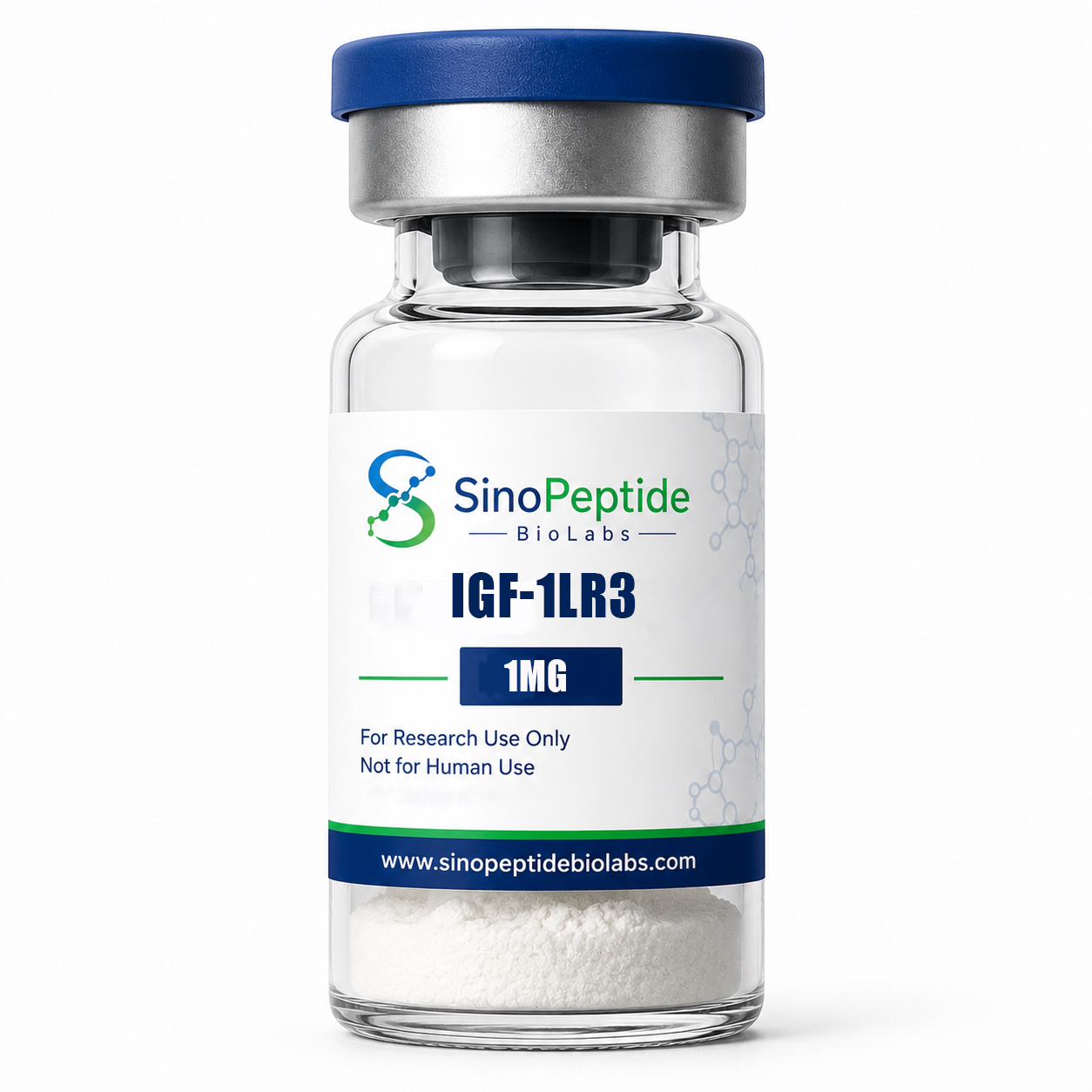
IGF – 1LR3 1mg
$180.00
10 Vials/ Kits
IGF-1 LR3 1mg: Research, Mechanism, Benefits, Safety, Uses & Product Guide
SEO Title: IGF-1 LR3 1mg: Research, Mechanism, Benefits & Safety
Meta Description: Explore IGF-1 LR3 1mg, including its molecular mechanism, IGF-1 receptor research, potential research applications, safety considerations, regulatory status, and product-quality factors.
URL Slug: /igf-1-lr3-1mg/
Primary SEO Keyword: IGF-1 LR3 1mg
Secondary Keywords:
IGF-1 LR3, IGF-1 LR3 peptide, Long R3 IGF-1, Long R3 IGF-I, LR3 IGF-1 1mg, IGF-1 LR3 research, IGF-1 LR3 benefits, IGF-1 LR3 mechanism, IGF-1 receptor research, IGF-1 peptide, insulin-like growth factor 1, IGF-1 analog, IGF-1 LR3 safety, IGF-1 LR3 research peptide, Long R3 IGF-I research, IGF-1 LR3 vs IGF-1, IGF-1 LR3 product
Introduction
IGF-1 LR3 1mg is a laboratory research product associated with Long R3 IGF-1 (Long R3 IGF-I), a modified analogue of insulin-like growth factor-1 (IGF-1). It has attracted research interest because structural modifications can alter how IGF-1 interacts with IGF-binding proteins (IGFBPs) while retaining activity at IGF-related receptors.
Unlike naturally occurring human IGF-1, Long R3 IGF-1 is an engineered analogue. Research involving Long R3 IGF-1 has examined receptor activation, cellular signaling, glucose metabolism, cell growth, tissue biology, and experimental cell-culture systems.
However, an important distinction is necessary: IGF-1 LR3 is not the same as the FDA-approved drug mecasermin (INCRELEX). Mecasermin is recombinant human IGF-1 approved for specific pediatric patients with severe primary IGF-1 deficiency or certain cases of growth hormone gene deletion. Long R3 IGF-1 is a different analogue and should not be represented as an FDA-approved treatment.
This article explains what IGF-1 LR3 is, how it differs from conventional IGF-1, what scientific research has investigated, what the term “1mg” means in a product listing, and what researchers should consider when evaluating a research-grade peptide.
What Is IGF-1 LR3?
IGF-1 LR3 stands for Long Arg3 IGF-1, commonly written as Long R3 IGF-I or LR3 IGF-I.
It is a modified form of IGF-1 developed to change the interaction between the peptide and IGF-binding proteins.
IGF-1 naturally exists within a complex biological system involving:
- IGF-1 receptors
- Insulin receptors
- IGF-binding proteins
- Growth hormone signaling
- Cellular signaling pathways
- Metabolic regulation
- Tissue growth and differentiation
A significant portion of circulating IGF-1 is associated with binding proteins. Modifying the IGF-1 molecule can change its interaction with these proteins.
Research has specifically described Long R3 IGF-I as an analogue with substantially reduced affinity for IGF-binding proteins while retaining activity at the IGF-1 receptor.
This property is one of the primary reasons Long R3 IGF-1 has been investigated experimentally.
What Does “LR3” Mean?
The R3 portion of the name refers to a structural modification involving the third position of the IGF-1 molecule.
The Long portion refers to an N-terminal extension.
These modifications are important because molecular structure can influence:
- Receptor interactions
- Binding-protein interactions
- Biological activity
- Pharmacological behavior
- Stability in experimental systems
Research on IGF analogues has found that modifications affecting IGF-binding-protein interactions can substantially change biological potency in experimental models.
Therefore, IGF-1 LR3 should not simply be described as “stronger IGF-1.” Its properties are the result of a specific molecular design, and experimental results depend heavily on the biological system being studied.
What Does IGF-1 LR3 1mg Mean?
The 1mg in the product name generally describes the quantity of material represented by the product.
It should not automatically be interpreted as a recommended human dose.
This distinction is particularly important for research peptides because:
- Product quantity is not the same as clinical dosage.
- Research concentrations vary between experiments.
- Experimental protocols depend on the model being studied.
- Purity and formulation can influence experimental results.
- A research product should not automatically be treated as a medicine.
Therefore, a product described as IGF-1 LR3 1mg should be presented accurately as a quantity designation rather than a standardized human therapeutic dose.
IGF-1 LR3 vs Natural IGF-1
IGF-1 LR3 is derived from the concept of IGF-1 biology but is structurally modified.
| Feature | Natural IGF-1 | IGF-1 LR3 |
|---|---|---|
| Full name | Insulin-like growth factor-1 | Long R3 IGF-1 |
| Natural human hormone | Yes | No |
| Modified analogue | No | Yes |
| IGF-binding-protein interaction | Normal | Reduced in research models |
| IGF-1 receptor activity | Yes | Yes |
| Research use | Extensive | Extensive experimental research |
| FDA-approved medicine | Natural IGF-1 form is represented by mecasermin | No |
| Primary research interest | Growth and metabolic signaling | Modified IGF signaling and experimental biology |
The distinction between the molecules matters when interpreting scientific literature.
How Does IGF-1 LR3 Work?
IGF-1 LR3 is investigated primarily through the IGF-1 receptor (IGF-1R) signaling system.
The IGF-1 receptor is a cell-surface receptor involved in intracellular pathways associated with:
- Cell growth
- Cell survival
- Protein synthesis
- Cellular metabolism
- Differentiation
- Tissue development
When an IGF-related ligand activates IGF-1R, downstream signaling pathways can become activated.
Research involving Long R3 IGF-I has demonstrated activation of IGF-1 receptors and, in some experimental systems, interaction with insulin receptor signaling as well.
This is one reason IGF-1 LR3 is studied in laboratory models involving cellular growth and metabolism.
IGF-1 LR3 and IGF-Binding Proteins
One of the most important scientific characteristics of Long R3 IGF-1 is its altered relationship with IGF-binding proteins.
IGFBPs help regulate the availability and activity of IGF molecules in biological systems.
Research comparing IGF-1 and Long R3 IGF-1 has found that LR3 has substantially reduced affinity for IGFBPs. In one experimental study involving bovine embryos, the measured affinity of LR3 for IGFBPs was reported to be at least three orders of magnitude lower than that of IGF-1.
This does not mean that LR3 produces identical effects in every biological model.
Instead, it demonstrates how molecular modifications can alter the interaction between a peptide hormone and its binding proteins.
IGF-1 LR3 and Cellular Research
Long R3 IGF-1 has been studied in cell-culture systems because of its ability to activate growth-factor signaling.
One study examining HEK293 cells found that Long R3 IGF-I activated both IGF-1 and insulin receptors in experimental conditions. The study also reported greater receptor activation at lower concentrations compared with insulin or IGF-I in that particular experimental model.
These findings are scientifically relevant but should not be interpreted as evidence that the compound produces the same effects in humans.
Cell-culture research is useful for investigating biological mechanisms, but it does not establish clinical efficacy or safety.
IGF-1 LR3 and Protein Synthesis Research
IGF signaling is closely connected to cellular processes involving protein synthesis and degradation.
Experimental work has examined IGF analogues in muscle and other cell systems.
Early research comparing modified IGF molecules found that Long R3 IGF-I and related analogues could demonstrate different biological potency from native IGF-I in specific cultured-cell models.
Such findings help researchers understand how changes in molecular structure influence cellular signaling.
However, research findings involving isolated cells should not be converted into guaranteed claims about:
- Muscle growth
- Fat loss
- Athletic performance
- Recovery
- Human body composition
- Anti-aging effects
Those claims require appropriate human clinical evidence.
IGF-1 LR3 and Experimental Growth Research
IGF-1 signaling has an established biological relationship with growth and development.
The approved medicine mecasermin, which contains recombinant human IGF-1, is used for a specific pediatric medical condition involving severe primary IGF-1 deficiency. The FDA labeling identifies its indication as growth failure in children aged 2 years and older with severe primary IGF-1 deficiency or certain cases of growth hormone gene deletion involving neutralizing antibodies to growth hormone.
This established medical use demonstrates the importance of the IGF-1 pathway.
It does not, however, establish that Long R3 IGF-1 is an equivalent therapeutic product.
Long R3 IGF-1 is a modified analogue and should be evaluated separately from approved mecasermin.
IGF-1 LR3 Research and Glucose Metabolism
IGF signaling also interacts with glucose metabolism.
Experimental studies have investigated the effects of IGF-I analogues on glucose concentrations. Research in pigs and marmosets reported that IGF-I variants with reduced affinity for IGF-binding proteins could produce stronger hypoglycemic effects than native IGF-I in those experimental settings.
This finding is important from a research perspective because it demonstrates that modifying IGF-binding characteristics can change metabolic activity.
It also highlights an important safety consideration: IGF-related compounds can affect glucose regulation.
Therefore, claims presenting IGF-1 LR3 as a simple muscle-building or performance compound fail to capture the complexity of IGF signaling.
Potential Research Applications of IGF-1 LR3
Depending on the laboratory model, Long R3 IGF-1 may be investigated in areas such as:
1. IGF receptor signaling
Researchers can use IGF analogues to study activation of IGF-1 receptors and downstream signaling pathways.
2. Cell proliferation
IGF signaling is involved in cellular growth and proliferation, making IGF analogues useful in controlled experimental systems.
3. Protein metabolism
Researchers can investigate how IGF signaling influences protein synthesis and degradation.
4. Metabolic signaling
IGF-related pathways interact with glucose and insulin signaling, creating opportunities for metabolic research.
5. Tissue biology
IGF signaling can be investigated in experimental models involving tissue growth and cellular differentiation.
6. Molecular pharmacology
Modified IGF molecules provide tools for studying the relationship between molecular structure, binding proteins, and receptor activation.
IGF-1 LR3 and Muscle Research
IGF-1 is frequently discussed in muscle biology because growth-factor signaling participates in muscle development and repair.
However, marketing claims often go substantially beyond the available evidence.
Laboratory research can demonstrate biological activity without proving a specific human outcome.
For example, the fact that an IGF analogue activates a receptor in cultured cells does not demonstrate that using the compound will produce predictable increases in human muscle mass.
A scientifically responsible IGF-1 LR3 product page should therefore distinguish between:
What research demonstrates:
- Receptor activity
- Cellular signaling
- Modified binding to IGFBPs
- Experimental metabolic effects
What remains unestablished:
- Guaranteed muscle growth
- Guaranteed fat loss
- Improved athletic performance
- Faster recovery in healthy adults
- Long-term safety in humans
This distinction improves both scientific accuracy and SEO trustworthiness.
Is IGF-1 LR3 FDA Approved?
IGF-1 LR3 is not an FDA-approved human medicine.
This should not be confused with mecasermin (INCRELEX), which is an FDA-approved recombinant human IGF-1 product for a specific pediatric indication.
The FDA identifies mecasermin as approved for growth failure in pediatric patients with severe primary IGF-1 deficiency or certain cases involving growth hormone gene deletion and neutralizing antibodies.
Long R3 IGF-I is a different molecule.
A 2021 analytical study explicitly described LongR3-IGF-I, R3-IGF-I, and related IGF analogues as substances that had not been approved for human use and investigated their detection in the context of anti-doping analysis.
Consequently, websites selling or describing IGF-1 LR3 should avoid wording that implies FDA approval, clinical approval, or established therapeutic use.
IGF-1 LR3 and Sports
IGF-related analogues have also received attention in sports science and anti-doping research.
A 2021 study developed analytical methods for detecting LongR3-IGF-I, Des(1-3)-IGF-I, and R3-IGF-I and stated that these substances are prohibited in sport.
For athletes subject to anti-doping rules, this is a significant consideration.
Anyone participating in organized competitive sport should consult the applicable anti-doping authority and current prohibited-substance list rather than relying on product marketing.
IGF-1 LR3 Safety Considerations
Safety is one of the most important areas to address when creating content about IGF-1 LR3.
Because Long R3 IGF-1 is not an FDA-approved therapeutic product, there is no approved human treatment framework equivalent to the one established for mecasermin.
IGF-related signaling can influence multiple biological processes, including glucose regulation and cellular growth.
Research involving IGF analogues has demonstrated metabolic effects, including reductions in blood glucose in animal models.
This means that safety discussions should not focus only on possible benefits.
Potential concerns associated with IGF pathway manipulation include:
- Changes in blood glucose
- Hypoglycemic effects
- Unpredictable biological responses
- Effects on cellular proliferation
- Product contamination
- Incorrect identity or concentration
- Peptide aggregation or degradation
- Unknown long-term effects
These risks are particularly relevant when an experimental peptide is marketed outside a controlled research environment.
Why Product Quality Matters
For research peptides, molecular identity and product quality are critical.
Researchers evaluating an IGF-1 LR3 1mg product should consider whether the supplier can provide appropriate documentation.
Useful documentation may include:
- Certificate of Analysis (COA)
- Peptide identity testing
- Purity testing
- Batch or lot number
- Analytical methodology
- Manufacturing information
- Storage information
- Expiration or retest information
- Appropriate research-use labeling
A product listing that only provides a name and quantity without supporting analytical information provides limited evidence about what is actually contained in the vial or container.
What Should a Certificate of Analysis Show?
A credible COA should be connected to the specific batch being sold.
Depending on the product and laboratory, documentation may address:
Identity
Testing should establish that the material corresponds to the claimed peptide.
Purity
Purity testing can help determine the proportion of the desired peptide relative to detected impurities.
Batch information
The lot or batch number should allow the documentation to be connected to the product.
Testing laboratory
Where applicable, the identity of the analytical laboratory and testing methodology can provide additional transparency.
Date of testing
Testing dates help establish when the material was evaluated.
A COA should support transparency rather than function simply as a marketing badge.
IGF-1 LR3 1mg Research Use
A research-focused product description should clearly explain the intended context.
Appropriate wording may describe IGF-1 LR3 1mg as a research peptide or laboratory research material, depending on the supplier’s actual regulatory and labeling status.
It should not be represented as:
- A guaranteed bodybuilding product
- An approved human medicine
- A treatment for disease
- A substitute for prescribed IGF-1 therapy
- A guaranteed performance enhancer
Clear labeling helps prevent consumers from confusing experimental research compounds with approved pharmaceuticals.
IGF-1 LR3 vs Mecasermin
These products should not be treated as interchangeable.
| Characteristic | IGF-1 LR3 | Mecasermin |
|---|---|---|
| Molecular type | Modified IGF-1 analogue | Recombinant human IGF-1 |
| FDA-approved medicine | No | Yes |
| Approved indication | None | Specific pediatric severe primary IGF-1 deficiency |
| Research status | Experimental | Approved pharmaceutical |
| IGFBP interaction | Modified/reduced in research models | Physiological IGF-1 characteristics |
| Human medical use | Not established as an approved therapy | Established for its labeled indication |
The FDA’s prescribing information describes mecasermin as man-made IGF-1 and specifies its approved pediatric use.
This comparison is particularly important for SEO content because users searching for “IGF-1 LR3” may encounter information about medical IGF-1 and assume the compounds are identical.
IGF-1 LR3 vs IGF-1
The primary difference is molecular structure.
Natural human IGF-1 participates in a tightly regulated physiological system involving IGFBPs, receptors, growth hormone signaling, and other endocrine pathways.
Long R3 IGF-1 has been modified to reduce its interaction with IGFBPs.
Research has demonstrated that these modifications can change biological potency and receptor-related behavior in experimental systems.
Consequently, the two should not be described as interchangeable.
Common Misconceptions About IGF-1 LR3
Myth 1: IGF-1 LR3 is the same as medical IGF-1
It is not.
Mecasermin is recombinant human IGF-1, while Long R3 IGF-1 is a modified analogue.
Myth 2: 1mg is a recommended dose
No.
The “1mg” designation identifies the quantity of product and does not establish an appropriate human dosage.
Myth 3: More receptor activity automatically means better results
Not necessarily.
Biological activity is highly dependent on the experimental system, receptor expression, binding proteins, concentration, and downstream signaling.
Myth 4: Animal research proves human effectiveness
Animal and cell studies can provide valuable mechanistic information but do not automatically establish human efficacy or safety.
Myth 5: A research peptide is equivalent to an approved pharmaceutical
It is not.
Regulatory approval depends on extensive evidence concerning identity, quality, safety, efficacy, manufacturing, and clinical use.
How to Choose an IGF-1 LR3 1mg Research Product
If your website is presenting IGF-1 LR3 as a research material, transparency should be a major part of the product page.
Consider highlighting:
Clear product identity
Use the complete name, including the LR3/Long R3 designation.
Quantity
Clearly identify that the product contains or is represented as 1mg of material.
Research-use status
Explain the intended research context rather than implying therapeutic use.
Analytical documentation
Provide appropriate batch-specific quality information where available.
Storage information
Follow the actual manufacturer’s validated storage requirements rather than publishing generic conditions that may not apply to the specific product.
No unsupported medical claims
Avoid guarantees about muscle growth, fat loss, recovery, athletic performance, or disease treatment.
Why Scientific Accuracy Helps SEO
For health-related content, search engines increasingly reward pages that demonstrate useful, trustworthy information rather than pages built primarily around repeated keywords.
An effective IGF-1 LR3 1mg page should therefore combine:
- Clear scientific terminology
- Accurate product information
- Transparent regulatory status
- Appropriate safety information
- Evidence-based explanations
- Original educational content
- Natural keyword placement
- Helpful FAQs
- Internal links to related research topics
Keyword stuffing can make a page difficult to read and may weaken its overall quality.
Instead of repeating “IGF-1 LR3 1mg” in every paragraph, use related terms naturally, such as:
- Long R3 IGF-1
- Long R3 IGF-I
- IGF-1 analogue
- IGF receptor research
- IGF-binding proteins
- insulin-like growth factor
- IGF-1 research peptide
Frequently Asked Questions
What is IGF-1 LR3 1mg?
IGF-1 LR3 1mg refers to a product containing or represented as 1mg of Long R3 IGF-1, a modified analogue of insulin-like growth factor-1. The 1mg designation describes product quantity and does not constitute a recommended human dose.
What does LR3 mean in IGF-1 LR3?
LR3 refers to the Long R3 structural form of IGF-1. The modifications alter its interaction with IGF-binding proteins while retaining activity in IGF-related experimental systems.
Is IGF-1 LR3 the same as IGF-1?
No. IGF-1 LR3 is a modified analogue of IGF-1 with structural changes that alter its biological behavior.
Is IGF-1 LR3 FDA approved?
No. IGF-1 LR3 is not an FDA-approved human medicine. Mecasermin, a recombinant human IGF-1 product, is FDA approved for a specific pediatric indication involving severe primary IGF-1 deficiency.
Is IGF-1 LR3 the same as mecasermin?
No. Mecasermin is recombinant human IGF-1, while IGF-1 LR3 is a modified analogue.
What is IGF-1 LR3 used for in research?
Research has examined Long R3 IGF-I in areas including receptor signaling, cell biology, protein metabolism, glucose regulation, embryonic development, and IGF-binding-protein interactions.
Does IGF-1 LR3 increase muscle growth?
IGF signaling is involved in muscle biology, but laboratory research does not establish that IGF-1 LR3 reliably increases muscle mass in healthy humans. Product pages should avoid presenting experimental findings as guaranteed human outcomes.
Is IGF-1 LR3 legal in sports?
Long R3 IGF-I and related IGF analogues have been identified as prohibited substances in anti-doping research. Athletes should consult the current rules of their applicable anti-doping organization.
What does 1mg mean?
It refers to the amount of material represented by the product. It should not be interpreted as a standardized therapeutic dose.
What should researchers look for when buying IGF-1 LR3?
Researchers should prioritize accurate product identification, batch-specific analytical documentation, purity information, appropriate labeling, and transparent research-use information.
Internal Link Suggestions
To build topical authority around IGF-1 LR3 1mg, consider linking this page to related educational pages such as:
- IGF-1 Peptide Research
- Growth Hormone and IGF-1 Explained
- IGF-1 vs Growth Hormone
- Peptide Research Guide
- Research Peptide Safety
- Certificate of Analysis Guide
- Peptide Purity Testing
- Mecasermin vs IGF-1 Analogues
- Laboratory Peptide Storage Guide
- Understanding IGF-Binding Proteins
Use descriptive anchor text rather than repeatedly linking the exact keyword “IGF-1 LR3 1mg.”
Recommended Secondary Keyword Cluster
For additional search visibility, naturally incorporate relevant terms throughout supporting content:
Primary cluster
- IGF-1 LR3 1mg
- IGF-1 LR3
- Long R3 IGF-1
- Long R3 IGF-I
Scientific cluster
- IGF-1 receptor
- IGF-binding proteins
- IGFBP
- insulin-like growth factor-1
- IGF-1 analogue
- IGF signaling
- IGF receptor research
Research cluster
- IGF-1 LR3 research
- Long R3 IGF-1 research
- IGF-1 research peptide
- IGF-1 LR3 laboratory research
- experimental IGF analogue
Safety and regulatory cluster
- IGF-1 LR3 safety
- IGF-1 LR3 FDA status
- IGF-1 LR3 research use
- IGF-1 LR3 regulatory status
- IGF-1 LR3 quality testing
Final Thoughts
IGF-1 LR3 1mg represents a modified form of insulin-like growth factor-1 that has been investigated in experimental research because of its distinctive interaction with IGF-binding proteins and IGF-related receptors.
Research has demonstrated that Long R3 IGF-I can behave differently from native IGF-1 in experimental systems, including changes in receptor activation, binding-protein interactions, cellular activity, and metabolic responses.
At the same time, these findings should not be confused with evidence establishing Long R3 IGF-1 as an approved human therapy.
The distinction between IGF-1 LR3 and mecasermin is particularly important. Mecasermin is an FDA-approved recombinant human IGF-1 product for a specific pediatric indication, while Long R3 IGF-1 is a modified analogue without an equivalent FDA-approved therapeutic indication.
For a high-quality SEO product page, the strongest approach is therefore to combine scientific education with transparent product information. Explain the molecule, describe the research, identify its limitations, discuss regulatory status accurately, and avoid unsupported promises about human performance or medical outcomes.
This approach creates content that is more useful to researchers while also establishing stronger topical relevance around the IGF-1 LR3 1mg keyword.
Research and educational disclaimer: This article is provided for educational and research-information purposes. IGF-1 LR3 is not presented as an approved treatment for any disease or condition. Experimental findings from cell and animal studies should not be interpreted as proof of safety or effectiveness in humans. Individuals with medical questions should consult an appropriately qualified healthcare professional.
IGF-1 LR3 1mg IGF-1 LR3 1mg IGF-1 LR3 1mg IGF-1 LR3 1mg IGF-1 LR3 1mg IGF-1 LR3 1mg IGF-1 LR3 1mg IGF-1 LR3 1mg IGF-1 LR3 1mg IGF-1 LR3 1mg IGF-1 LR3 1mg IGF-1 LR3 1mg IGF-1 LR3 1mg IGF-1 LR3 1mg IGF-1 LR3 1mg IGF-1 LR3 1mg IGF-1 LR3 1mg IGF-1 LR3 1mg IGF-1 LR3 1mg IGF-1 LR3 1mg IGF-1 LR3 1mg IGF-1 LR3 1mg IGF-1 LR3 1mg IGF-1 LR3 1mg IGF-1 LR3 1mg IGF-1 LR3 1mg IGF-1 LR3 1mg IGF-1 LR3 1mg
Be the first to review “IGF – 1LR3 1mg”
Related products
Pure Peptides
Pure Peptides
Pure Peptides
Pure Peptides
Pure Peptides
Pure Peptides
Pure Peptides
Pure Peptides
Reviews
There are no reviews yet.