
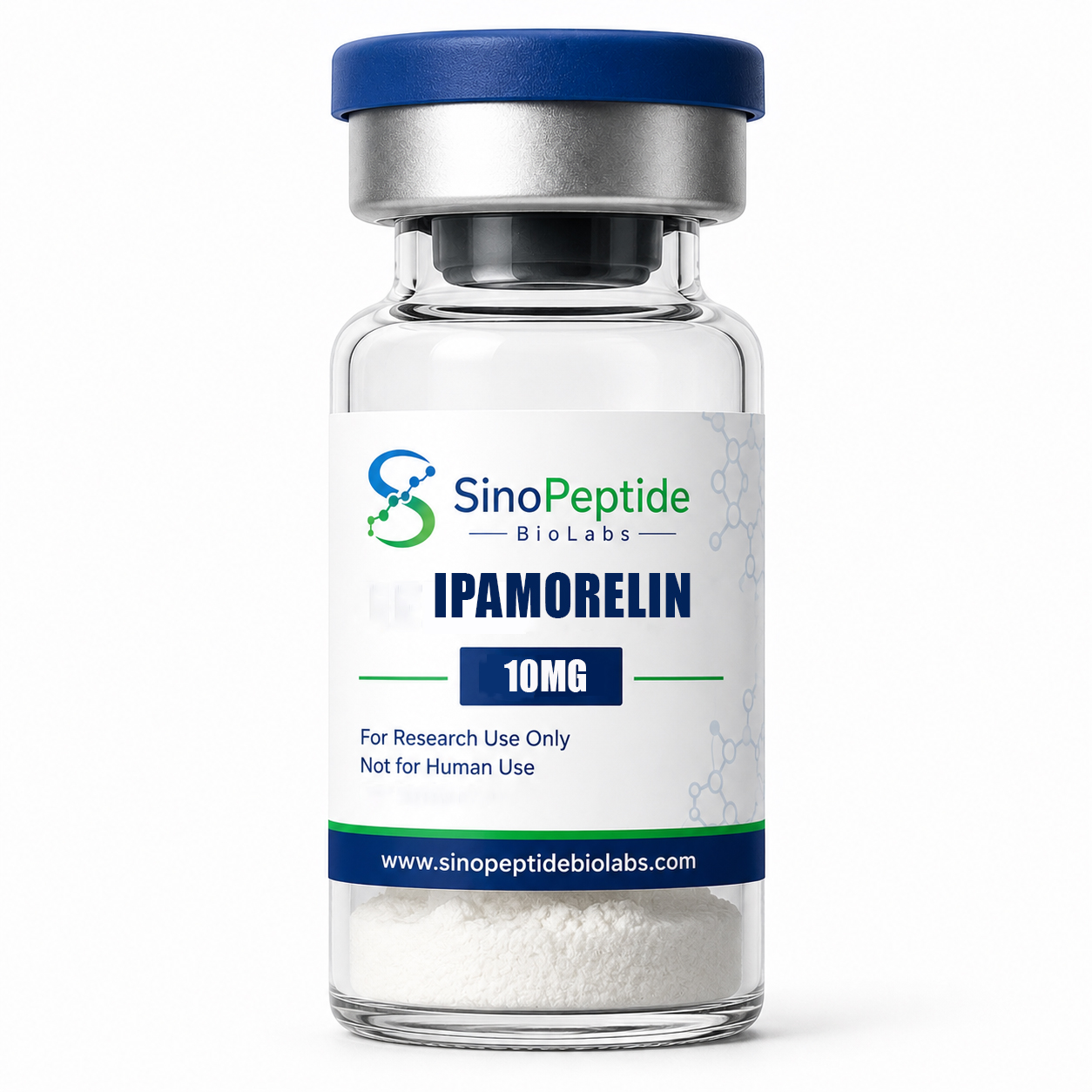
Ipamorelin 10mg
$85.00
10 Vials/ Kits
Ipamorelin 10mg: Research, Mechanism, Benefits, Safety & Uses
Introduction
Ipamorelin 10mg is a product designation associated with ipamorelin, a synthetic pentapeptide that has been studied as a growth hormone secretagogue. Unlike recombinant human growth hormone, which directly supplies growth hormone, ipamorelin is designed to stimulate the body’s own release of growth hormone through a growth-hormone-secretagogue pathway.
Ipamorelin has attracted scientific interest because early pharmacological research identified it as a relatively selective growth hormone-releasing peptide. Experimental studies have investigated its effects on growth hormone secretion, pharmacokinetics, receptor signaling, and related endocrine pathways.
At the same time, it is important to distinguish research involving ipamorelin from claims that the peptide is an established human treatment.
The FDA has evaluated ipamorelin acetate in the context of pharmaceutical compounding and has reported significant gaps in safety information for certain routes of administration. FDA materials also state that the agency did not identify clinical evidence supporting ipamorelin or ipamorelin acetate for the diagnosis or treatment of growth hormone deficiency.
This makes accurate product content especially important.
This guide explains what Ipamorelin 10mg is, how ipamorelin works at the molecular level, what research has found, how it differs from other growth hormone secretagogues, what “10mg” means, and what factors should be considered when evaluating a research peptide.
What Is Ipamorelin?
Ipamorelin is a synthetic growth hormone secretagogue belonging to the growth hormone-releasing peptide family.
Early pharmacological research described ipamorelin as a pentapeptide with potent growth hormone-releasing activity. Experimental studies demonstrated that it stimulated growth hormone release through a GHRP-like receptor pathway.
Its molecular structure is commonly described as:
Aib-His-D-2-Nal-D-Phe-Lys-NH₂
The compound was developed as part of research into growth hormone secretagogues with the objective of producing a more selective effect on growth hormone release.
This selectivity is one of the main scientific characteristics associated with ipamorelin.
However, “selective” does not mean that the compound is risk-free or that it has been established as a safe treatment for human use.
What Does Ipamorelin Do?
The primary research interest in ipamorelin is its ability to stimulate growth hormone (GH) secretion.
Growth hormone is produced by the pituitary gland and plays important roles in:
- Growth and development
- Protein metabolism
- Lipid metabolism
- Glucose regulation
- Tissue biology
- IGF-1 production
- Cellular and physiological processes
Ipamorelin acts as a secretagogue, meaning it stimulates endogenous hormone release rather than directly replacing the hormone.
This makes ipamorelin pharmacologically different from recombinant human growth hormone.
The distinction is important:
Growth hormone therapy: supplies exogenous GH.
Ipamorelin: stimulates endogenous GH secretion.
The body’s physiological feedback systems therefore remain relevant when studying the compound.
How Does Ipamorelin Work?
Ipamorelin belongs to a group of compounds that interact with the growth hormone secretagogue receptor (GHS-R) pathway.
Early research demonstrated that ipamorelin stimulates GH release through a GHRP-like receptor mechanism.
The resulting signaling ultimately affects the pituitary gland’s release of growth hormone.
A simplified pathway can be represented as:
Ipamorelin → GHS-R signaling → pituitary GH release → downstream GH/IGF-1 signaling
This pathway is more complicated biologically than the simplified diagram suggests.
Growth hormone secretion is influenced by multiple factors, including:
- Age
- Sleep
- Nutrition
- Exercise
- Metabolic state
- Sex
- Hormonal feedback
- Baseline pituitary function
Consequently, the response to a GH secretagogue can vary substantially between experimental subjects.
Ipamorelin and Growth Hormone Release
One of the foundational human studies of ipamorelin examined its pharmacokinetic and pharmacodynamic properties in healthy male volunteers.
The study used intravenous infusions at several dose levels and measured circulating ipamorelin and growth hormone concentrations.
Researchers found dose-proportional pharmacokinetics and reported a short terminal half-life of approximately two hours. GH stimulation occurred as a discrete episode, with peak GH concentrations occurring approximately 0.67 hours after administration in the study conditions.
These findings are useful for understanding ipamorelin’s pharmacology.
However, the study involved a controlled intravenous research protocol. It should not be interpreted as establishing an appropriate dosage, administration method, or treatment schedule for a commercially sold Ipamorelin 10mg product.
What Does “10mg” Mean?
The 10mg designation in “Ipamorelin 10mg” generally refers to the amount of peptide or material represented by the product.
It is important not to confuse:
Product quantity ≠ human dosage
A vial labeled “Ipamorelin 10mg” does not by itself establish:
- A recommended dose
- A clinical treatment schedule
- A safe administration route
- A validated therapeutic concentration
Research protocols use specific experimental concentrations and conditions. Those conditions cannot automatically be converted into instructions for human use.
For SEO content, product quantity should therefore be described accurately without implying that 10mg represents a standardized therapeutic regimen.
Ipamorelin Research
Research into ipamorelin began with pharmacological studies designed to identify selective growth hormone secretagogues.
The original characterization studies examined its ability to stimulate GH release in vitro and in animal models. Researchers reported substantial GH-releasing activity and demonstrated that ipamorelin acted through a GHRP-like receptor mechanism.
Later human research examined pharmacokinetics and pharmacodynamics.
Together, these studies provide evidence that ipamorelin can influence GH secretion under controlled experimental conditions.
However, the existence of pharmacological activity does not automatically establish clinical effectiveness.
This distinction is especially important when discussing research peptides online.
Ipamorelin and IGF-1
Growth hormone and IGF-1 are closely connected.
One of the major physiological effects of growth hormone is stimulation of insulin-like growth factor-1 (IGF-1) production, particularly in the liver.
The GH/IGF-1 axis can be broadly represented as:
GH release → IGF-1 production → downstream biological effects
Because ipamorelin stimulates GH secretion, researchers may investigate downstream changes involving IGF-1.
However, the magnitude and duration of any IGF-1 response depend on many physiological variables.
Therefore, it would be inaccurate to describe Ipamorelin 10mg as simply an “IGF-1 booster” without explaining the underlying endocrine pathway.
Ipamorelin and Growth Hormone Secretagogues
Ipamorelin belongs to a broader category of growth hormone secretagogues.
This category includes compounds with different structures and pharmacological characteristics.
Examples discussed in scientific literature include:
- GHRP-2
- GHRP-6
- Hexarelin
- Ipamorelin
- Other growth hormone secretagogues
These compounds should not automatically be considered interchangeable.
Differences may involve:
- Receptor activity
- Selectivity
- Pharmacokinetics
- Effects on other hormones
- Metabolic effects
- Research history
- Safety information
Ipamorelin was specifically developed as a growth hormone secretagogue with a more selective pharmacological profile than some earlier GHRP compounds.
Ipamorelin vs GHRP-6
Ipamorelin and GHRP-6 are both growth hormone secretagogues, but their pharmacological profiles are not identical.
Early research comparing the compounds found that ipamorelin could stimulate GH release with potency and efficacy comparable to GHRP-6 in certain experimental models.
However, GHRP-6 is associated with a broader pharmacological profile.
Ipamorelin was developed partly in an effort to obtain more selective GH-releasing activity.
A research-focused comparison should therefore emphasize molecular pharmacology rather than marketing claims such as “stronger” or “better.”
Ipamorelin and Selectivity
Selectivity is one of the most frequently discussed features of ipamorelin.
The original research characterized ipamorelin as a selective growth hormone secretagogue. In experimental testing, researchers evaluated effects on GH release and other endocrine hormones.
However, selectivity should not be interpreted as complete biological isolation.
The human endocrine system is interconnected.
Changing GH secretion can potentially influence downstream pathways, including:
- IGF-1
- Glucose metabolism
- Insulin sensitivity
- Tissue growth signaling
- Fluid balance
A review of growth hormone secretagogues concluded that available human research remained limited in long-term duration and highlighted concerns including possible increases in blood glucose related to reduced insulin sensitivity.
Potential Research Applications
Ipamorelin can be investigated in several scientific areas.
1. Growth Hormone Biology
Researchers can use ipamorelin to investigate mechanisms controlling GH secretion.
2. Receptor Pharmacology
Because ipamorelin acts through the GHS-R pathway, it can be studied to understand receptor activation and downstream signaling.
3. Endocrine Research
Ipamorelin provides a tool for studying interactions between GH secretion and other hormonal pathways.
4. Pharmacokinetics
Human research has investigated ipamorelin’s absorption, distribution, metabolism, and elimination under specific experimental conditions.
5. Growth Hormone Secretagogue Research
Ipamorelin can be compared experimentally with other GHS compounds to investigate differences in potency, selectivity, and hormonal response.
Ipamorelin and Body Composition Research
Growth hormone is involved in the regulation of body composition, which has contributed to interest in GH secretagogues.
However, claims that Ipamorelin automatically causes fat loss or muscle gain are not supported simply by its ability to stimulate GH.
Experimental research has shown that GH secretagogues can have metabolic effects that are not necessarily identical to direct GH administration.
For example, animal research involving ipamorelin reported increased relative fat mass and increased food intake in certain GH-intact mice.
This illustrates why simplified marketing claims about “fat burning” can be misleading.
Research outcomes depend on:
- Species
- Baseline hormone status
- Experimental duration
- Compound exposure
- Feeding behavior
- Metabolic condition
- Experimental design
Human results cannot be inferred directly from animal findings.
Ipamorelin Safety
Safety is a major consideration when discussing Ipamorelin 10mg.
The FDA has reviewed ipamorelin acetate in the context of compounding and identified important limitations in the available safety evidence.
FDA materials state that compounded drugs containing ipamorelin acetate may pose immunogenicity risks for certain routes because of possible aggregation and peptide-related impurities. FDA also notes that ipamorelin acetate contains unnatural amino acids, which increase the complexity of peptide characterization.
The FDA further reported that it had not identified clinical safety data for subcutaneous administration in its 2024 review.
This is an important distinction from early pharmacology studies.
A controlled clinical study using intravenous administration does not establish the safety of a different administration route.
Ipamorelin and Blood Glucose
Growth hormone signaling can interact with glucose metabolism.
FDA materials discussing ipamorelin noted concerns associated with the potential effects of increasing IGF-1 and the known metabolic risks associated with growth hormone products, including glucose intolerance.
A broader review of growth hormone secretagogues similarly identified concern about increased blood glucose related to reduced insulin sensitivity.
This is one reason why it is inappropriate to describe GH secretagogues as having only positive effects.
Endocrine signaling can involve both desired and undesired physiological consequences.
Ipamorelin and Immunogenicity
Peptide-based products can potentially trigger immune responses.
The FDA has specifically raised concerns about immunogenicity for compounded ipamorelin acetate products administered by certain routes. Potential contributors include:
- Peptide aggregation
- Peptide-related impurities
- Manufacturing differences
- Formulation characteristics
- Structural complexity
The FDA also noted that ipamorelin acetate contains unnatural amino acids, which can complicate characterization.
This makes analytical quality particularly important when evaluating experimental peptide materials.
Is Ipamorelin FDA Approved?
Ipamorelin is not an FDA-approved human treatment.
The FDA evaluated ipamorelin and ipamorelin acetate as substances considered for compounding and reviewed proposed uses including growth hormone deficiency and postoperative ileus.
In its review, FDA stated that it had not identified data supporting the effectiveness of ipamorelin or ipamorelin acetate for diagnosis or treatment of growth hormone deficiency in children or adults.
Therefore, a website should not describe Ipamorelin 10mg as an FDA-approved medication.
It should also not imply that it is equivalent to approved growth hormone therapies.
Ipamorelin and Human Clinical Research
There is a distinction between human research and approved clinical treatment.
Human studies have investigated ipamorelin’s pharmacokinetics and ability to stimulate GH release. For example, a controlled study in healthy male volunteers examined several intravenous infusion levels and measured both ipamorelin and GH concentrations.
That provides useful pharmacological information.
It does not establish that Ipamorelin 10mg products sold for research purposes are safe or effective for treating a medical condition.
FDA’s later review specifically highlighted the lack of safety information for certain routes and the absence of evidence supporting treatment of growth hormone deficiency.
Ipamorelin and Postoperative Research
Ipamorelin has also been studied in relation to gastrointestinal motility and postoperative ileus.
The FDA’s safety review noted a published study in which ipamorelin was administered intravenously for improving gastric motility and serious adverse events, including deaths, occurred among study subjects. FDA noted that causality was not established in its evaluation.
This evidence should be described carefully.
The occurrence of serious adverse events does not by itself prove that ipamorelin caused those events.
At the same time, the finding is relevant when discussing why the FDA has identified limitations in the safety evidence.
Ipamorelin 10mg Research Product Quality
When evaluating an Ipamorelin 10mg research product, quality documentation is an important consideration.
Researchers should look for transparent information such as:
- Product identity
- Batch or lot number
- Purity information
- Identity testing
- Certificate of Analysis
- Testing methodology
- Manufacturing information
- Storage requirements
- Retest or expiration information
- Research-use labeling
A product page should not claim a particular purity percentage unless appropriate analytical documentation supports that claim.
Similarly, manufacturers should not be assumed to follow a particular manufacturing standard unless documentation verifies it.
Why a Certificate of Analysis Matters
A Certificate of Analysis (COA) can provide evidence about the characteristics of a particular batch.
Depending on the laboratory and testing method, a COA may provide information about:
Identity
Whether the tested material corresponds to the claimed peptide.
Purity
The measured proportion of the desired compound under the specified analytical method.
Batch number
A way to connect the analytical result to a specific product batch.
Testing date
The date on which the material was evaluated.
Analytical method
Information about how identity or purity was assessed.
For research applications, batch-specific documentation is more useful than generic claims appearing on a product page.
Ipamorelin 10mg Storage Considerations
Storage requirements can depend on:
- Product formulation
- Manufacturer
- Container
- Lyophilized or liquid state
- Stability testing
- Intended research application
For that reason, a website should publish the manufacturer’s validated storage requirements rather than automatically giving generic instructions.
Incorrect storage can potentially affect peptide stability and therefore compromise research results.
Researchers should follow the documentation supplied with the specific material.
Is Ipamorelin a Peptide?
Yes.
Ipamorelin is a synthetic peptide consisting of five amino-acid residues and is classified pharmacologically as a growth hormone secretagogue. The original characterization paper describes its pentapeptide structure and GH-releasing activity.
Its relatively small peptide structure is one reason it can be studied as a defined molecular compound in laboratory pharmacology.
Ipamorelin vs Growth Hormone
Ipamorelin and recombinant human growth hormone have fundamentally different mechanisms.
Ipamorelin
Stimulates endogenous growth hormone secretion through a secretagogue pathway.
Recombinant human growth hormone
Provides exogenous growth hormone.
This distinction has important physiological implications.
With a secretagogue, the response depends partly on the functional capacity of the individual’s GH-producing system.
With exogenous GH, the administered hormone directly increases circulating GH exposure.
Therefore, ipamorelin should not be marketed as simply another form of human growth hormone.
Ipamorelin vs CJC-1295
Ipamorelin and CJC-1295 are both commonly discussed in growth hormone research but act through different pathways.
Ipamorelin is a growth hormone secretagogue associated with the GHS receptor pathway.
CJC-1295 is a growth hormone-releasing hormone analogue designed to influence the GHRH pathway.
Because the pathways differ, the compounds should not be described as identical or interchangeable.
When comparing them for research purposes, relevant variables include:
- Molecular structure
- Receptor target
- Pharmacokinetics
- GH response
- Study population
- Experimental protocol
- Available safety evidence
Common Misconceptions About Ipamorelin 10mg
“10mg is a standard human dose.”
Not necessarily.
The 10mg designation identifies the quantity represented by a product. It does not establish a clinically validated dose.
“Ipamorelin is FDA approved.”
It is not an FDA-approved human treatment. FDA has specifically reported insufficient evidence supporting its effectiveness for treating growth hormone deficiency.
“Ipamorelin is the same as HGH.”
No.
Ipamorelin stimulates endogenous GH secretion, while recombinant HGH supplies GH directly.
“Ipamorelin only affects growth hormone.”
The endocrine system is interconnected. Changes in GH signaling can influence downstream pathways such as IGF-1 and glucose metabolism.
“Research results guarantee human benefits.”
No.
Cell, animal, and controlled pharmacological studies provide different types of evidence and should not automatically be translated into clinical claims.
How to Build a High-Quality Ipamorelin 10mg Product Page
A strong product page should provide useful information without making unsupported medical promises.
Recommended sections include:
Product name
Ipamorelin 10mg
Scientific description
Explain that ipamorelin is a synthetic growth hormone secretagogue investigated in laboratory and pharmacological research.
Product quantity
Clearly explain that 10mg refers to product quantity.
Research status
State that the material is intended for legitimate research purposes where applicable and is not being represented as an approved human medicine.
Quality documentation
Provide appropriate analytical information where available.
Regulatory information
Avoid suggesting FDA approval.
Safety information
Explain that human safety evidence remains limited, particularly for certain routes of administration.
This structure supports both SEO and responsible scientific communication.
SEO Keyword Strategy for Ipamorelin 10mg
For a website targeting Ipamorelin 10mg, the primary keyword should appear naturally in important areas such as:
- SEO title
- H1
- Introduction
- One or more H2 headings
- Meta description
- URL slug
- Product description
- FAQ section
Related keywords can be incorporated naturally throughout the article.
Primary keyword
Ipamorelin 10mg
Related keywords
- Ipamorelin peptide
- Ipamorelin research
- Ipamorelin acetate
- Ipamorelin mechanism
- Ipamorelin safety
- growth hormone secretagogue
- GH releasing peptide
- Ipamorelin research peptide
- Ipamorelin FDA status
Avoid repeating the primary keyword unnaturally in every paragraph.
Semantic relevance is more useful than keyword stuffing.
Frequently Asked Questions
What is Ipamorelin 10mg?
Ipamorelin 10mg refers to a product represented as containing 10mg of ipamorelin. Ipamorelin is a synthetic growth hormone secretagogue investigated for its ability to stimulate GH release.
What is Ipamorelin used for in research?
Research has examined ipamorelin’s effects on growth hormone secretion, pharmacokinetics, receptor signaling, endocrine physiology, and related biological pathways.
Is Ipamorelin FDA approved?
No. FDA has not approved ipamorelin as a human treatment. FDA has also stated that it did not identify evidence supporting ipamorelin for diagnosis or treatment of growth hormone deficiency.
Is Ipamorelin the same as HGH?
No. Ipamorelin stimulates endogenous GH release, while HGH is administered directly as a hormone.
What does 10mg mean?
It generally indicates the amount of material represented by the product. It should not automatically be interpreted as a recommended human dose.
Does Ipamorelin increase growth hormone?
Controlled research has demonstrated that ipamorelin can stimulate GH release. A human pharmacokinetic/pharmacodynamic study documented GH responses following intravenous administration.
Is Ipamorelin safe?
Available safety information is limited. FDA has identified concerns regarding ipamorelin acetate, including potential immunogenicity and insufficient safety information for certain routes of administration.
Is Ipamorelin a GHRP?
Ipamorelin is commonly classified as a growth hormone secretagogue and was developed within the GHRP-related research field. Its activity involves the GHRP/GHS receptor pathway.
Can Ipamorelin be used for growth hormone deficiency?
It should not be represented as an approved treatment for growth hormone deficiency. FDA has stated that it did not identify evidence supporting ipamorelin or ipamorelin acetate for diagnosing or treating GHD.
What should researchers look for when evaluating Ipamorelin 10mg?
Researchers should consider product identity, batch-specific analytical testing, purity documentation, certificate of analysis, appropriate labeling, and transparent regulatory information.
Internal Link Suggestions
To strengthen topical authority, consider linking the Ipamorelin 10mg page to related educational content:
- GHRP-2 Acetate Research
- GHRP-6 Acetate Research
- CJC-1295 Research
- Growth Hormone Secretagogues Explained
- IGF-1 Research
- Peptide Research Guide
- Research Peptide Safety
- Certificate of Analysis Guide
- Peptide Purity Testing
- Growth Hormone vs Growth Hormone Secretagogues
Use descriptive anchor text and avoid linking every occurrence of the primary keyword.
Final Thoughts
Ipamorelin 10mg is a research-oriented product designation associated with ipamorelin, a synthetic pentapeptide investigated as a growth hormone secretagogue.
Scientific research has demonstrated that ipamorelin can stimulate growth hormone release through a GHRP-like receptor pathway. Human pharmacokinetic and pharmacodynamic research has also characterized its behavior under controlled intravenous experimental conditions.
However, the available evidence should be interpreted carefully.
Ipamorelin is not the same as recombinant human growth hormone, and it should not be represented as an FDA-approved treatment. FDA reviews have identified important limitations in the available evidence, including insufficient information regarding certain routes of administration and the absence of evidence supporting its use for treating growth hormone deficiency.
Safety is another important consideration. FDA has highlighted potential immunogenicity concerns associated with ipamorelin acetate and peptide-related impurities, while broader research into growth hormone secretagogues has identified the need for additional long-term safety research.
For an SEO product page, the most credible approach is therefore to provide detailed scientific information while maintaining a clear distinction between research findings and established medical use.
A high-quality Ipamorelin 10mg page should explain its mechanism, research history, product quantity, regulatory status, quality considerations, and limitations of current evidence. Avoiding exaggerated claims about muscle growth, fat loss, recovery, anti-aging, or disease treatment will make the content more scientifically responsible and more useful to readers.
Research and educational disclaimer: This content is intended for educational and research-information purposes. Ipamorelin is not presented here as an FDA-approved treatment for any disease or condition. Experimental findings should not be interpreted as proof of safety or effectiveness for personal medical use. Anyone seeking treatment for a hormone-related condition should consult a qualified healthcare professional.
Ipamorelin 10mgIpamorelin 10mg Ipamorelin 10mg Ipamorelin 10mg Ipamorelin 10mg Ipamorelin 10mg Ipamorelin 10mg Ipamorelin 10mg Ipamorelin 10mg Ipamorelin 10mg Ipamorelin 10mg Ipamorelin 10mg Ipamorelin 10mg Ipamorelin 10mg Ipamorelin 10mg Ipamorelin 10mg Ipamorelin 10mg Ipamorelin 10mg Ipamorelin 10mg Ipamorelin 10mg Ipamorelin 10mg
Be the first to review “Ipamorelin 10mg”
Related products
Pure Peptides
Pure Peptides
Pure Peptides
Pure Peptides
Pure Peptides
Pure Peptides
Pure Peptides
Pure Peptides
Reviews
There are no reviews yet.