
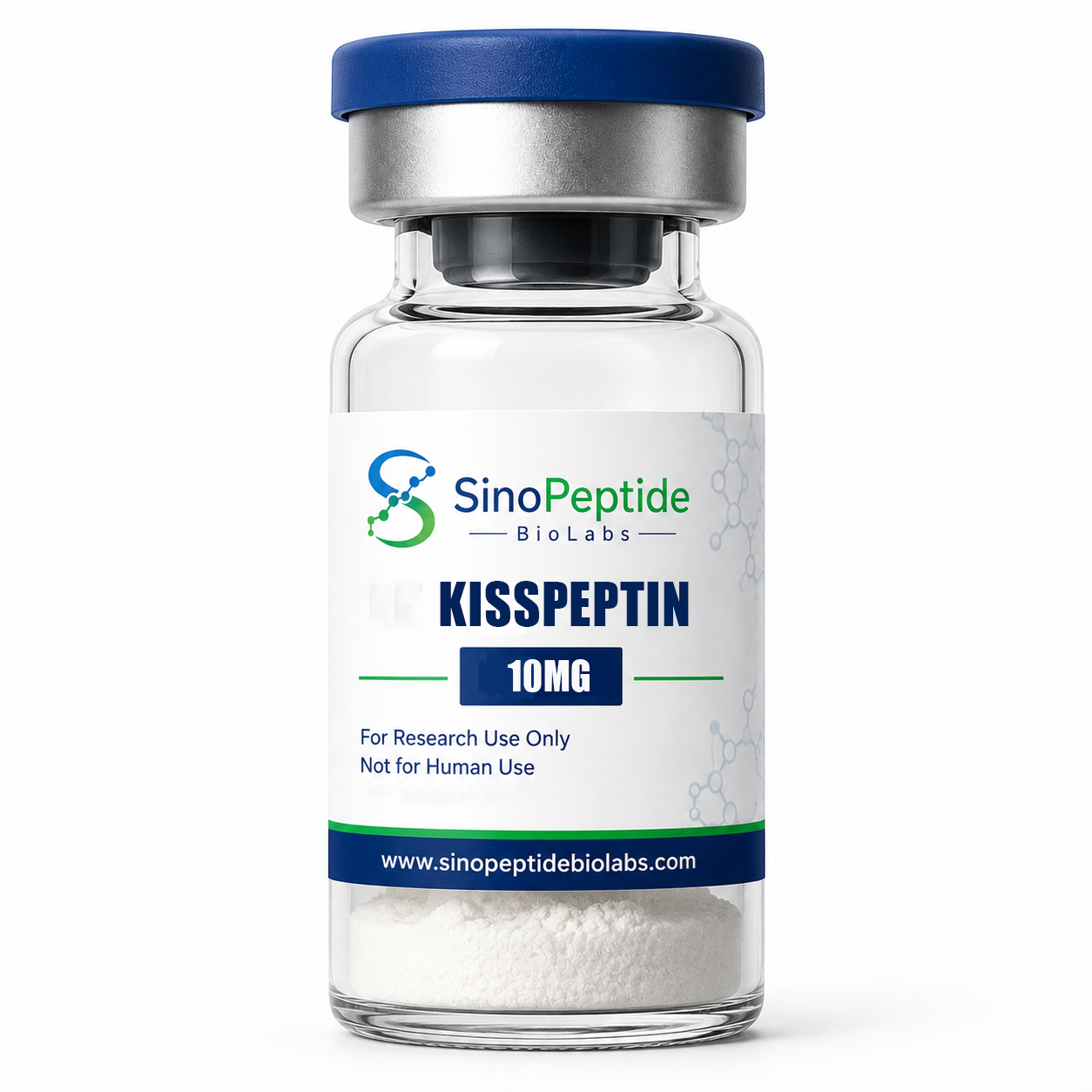
KissPeptin-10 10mg
$115.00
10 Vials/ Kits
KissPeptin-10 10mg: Complete Guide to Uses, Research, Safety, and Frequently Asked Questions
KissPeptin-10 10mg is a laboratory peptide associated with the biological activity of kisspeptin, a signaling molecule involved in the regulation of reproductive hormone pathways. Interest in KissPeptin-10 has increased because researchers have studied kisspeptin signaling in relation to the hypothalamic-pituitary-gonadal (HPG) axis, reproductive function, puberty, and hormone regulation.
Despite growing scientific interest, it is important to distinguish research involving kisspeptin or kisspeptin-derived peptides from established medical treatments. The availability of a product labeled “KissPeptin-10 10mg” does not by itself establish that the product is approved for human therapeutic use, nor does the stated 10mg amount represent a recommended human dose.
This guide explains what KissPeptin-10 is, how kisspeptin signaling works, what researchers have investigated, why dosage terminology can be confusing, potential safety considerations, storage and handling concepts, and frequently asked questions.
Important: This article is for educational and research-information purposes. KissPeptin-10 products sold for laboratory or research use should not be assumed to be approved medicines. Do not use a research peptide for self-treatment or attempt to determine a human dose without qualified medical supervision.
What Is KissPeptin-10?
KissPeptin-10 is a short peptide fragment derived from the kisspeptin signaling system. Kisspeptins are peptides encoded by the KISS1 gene and are involved in communication between signaling pathways that regulate reproductive hormone activity.
The kisspeptin system has attracted substantial scientific attention because kisspeptin signaling can stimulate pathways involving gonadotropin-releasing hormone (GnRH). GnRH, in turn, regulates the secretion of luteinizing hormone (LH) and follicle-stimulating hormone (FSH), which are important components of reproductive endocrinology.
In simplified terms, researchers often describe the pathway as:
Kisspeptin signaling → GnRH signaling → LH/FSH regulation → reproductive hormone activity
The actual physiology is considerably more complex. Kisspeptin activity is influenced by biological sex, reproductive status, feedback from sex hormones, metabolic conditions, and other signaling pathways.
Because of this complexity, KissPeptin-10 should not be described as simply a “testosterone peptide,” “fertility peptide,” or “hormone booster.” Such descriptions can oversimplify the underlying science.
Understanding the “10mg” Label
One of the most important points when researching KissPeptin-10 10mg is understanding what 10mg means.
A label stating “10mg” generally refers to the quantity of peptide contained in a product or vial. It does **not automatically mean that 10mg is a suitable, tested, or recommended amount for a person to administer.
Research studies may use very different quantities, concentrations, routes of administration, and experimental protocols. A laboratory product may also be prepared for analytical or experimental work rather than human administration.
Therefore, consumers and researchers should distinguish between:
- Product quantity: the amount stated on a product label.
- Experimental concentration: the concentration used in a laboratory protocol.
- Study dose: an amount used in a particular scientific experiment.
- Clinical dose: a dose established through appropriate clinical research and regulatory approval.
These terms are not interchangeable.
How Does the Kisspeptin System Work?
Kisspeptin is best understood as part of a biological signaling network rather than as an isolated hormone supplement.
Kisspeptin-producing neurons can communicate with neurons involved in GnRH secretion. When kisspeptin signaling activates its receptor, known as KISS1R, downstream signaling can influence GnRH release.
GnRH then acts on the pituitary gland, contributing to the secretion of LH and FSH.
LH and FSH have different but interconnected roles in reproductive physiology.
In males, LH contributes to signaling pathways involved in testosterone production, while FSH is important for aspects of sperm production and Sertoli-cell function.
In females, LH and FSH participate in follicular development, ovulation, ovarian hormone production, and menstrual-cycle regulation.
This system is governed by feedback mechanisms. Sex hormones such as testosterone, estradiol, and progesterone can influence the activity of the reproductive endocrine axis.
As a result, manipulating one part of the pathway may have effects elsewhere in the system.
KissPeptin-10 and Reproductive Research
A major reason for interest in KissPeptin-10 is its relationship with reproductive endocrinology.
Researchers have investigated kisspeptin signaling in areas including:
Puberty
Kisspeptin signaling is closely associated with activation of the reproductive endocrine system during puberty. Scientific studies have helped establish kisspeptin neurons as important regulators of GnRH activity.
Fertility
Because kisspeptin signaling can influence GnRH and downstream reproductive hormones, researchers have examined its potential relevance to fertility and reproductive disorders.
Hormone Regulation
Research has also explored whether controlled manipulation of kisspeptin pathways could provide useful information about reproductive hormone regulation.
Reproductive Disorders
Kisspeptin-related pathways are being investigated in several reproductive and endocrine conditions. However, research interest does not necessarily mean that a particular peptide formulation is an established treatment for those conditions.
Is KissPeptin-10 the Same as Kisspeptin?
The terms are closely related but should not automatically be treated as identical.
Kisspeptin refers to a family of peptides generated from the KISS1 gene. Different kisspeptin-derived peptides can have biological activity.
“KissPeptin-10” commonly refers to a 10-amino-acid kisspeptin fragment used in research contexts.
The exact terminology can vary between scientific literature and commercial product descriptions, so researchers should verify the peptide’s:
- amino-acid sequence,
- molecular weight,
- purity,
- formulation,
- supplier documentation,
- certificate of analysis,
- and intended use.
This is especially important when comparing products from different manufacturers.
Potential Research Applications
KissPeptin-10 may be of interest to laboratories studying reproductive endocrinology and hormone signaling.
Potential research areas include:
- Kisspeptin receptor biology
- GnRH signaling
- LH and FSH regulation
- reproductive endocrine pathways
- puberty-related physiology
- fertility research
- neuroendocrine signaling
- sex-hormone feedback
- metabolic influences on reproduction
- experimental reproductive medicine
Researchers should evaluate the original scientific literature rather than relying solely on commercial descriptions.
KissPeptin-10 and Testosterone Research
Kisspeptin signaling has attracted attention in testosterone research because the reproductive endocrine system connects kisspeptin, GnRH, LH, and testosterone production.
However, this does not mean that KissPeptin-10 should be marketed as a testosterone replacement product.
Testosterone production is regulated through multiple levels of endocrine feedback. Altering one signaling pathway can produce different effects depending on an individual’s physiological state.
Therefore, claims such as “KissPeptin-10 increases testosterone,” “KissPeptin-10 boosts testosterone naturally,” or “KissPeptin-10 replaces testosterone therapy” require careful qualification and should not be presented as established medical facts without appropriate evidence.
KissPeptin-10 and Fertility
The relationship between kisspeptin signaling and fertility is one of the most important areas of scientific interest.
The reproductive system requires coordinated signaling between the brain, pituitary gland, and reproductive organs. Kisspeptin participates in this communication by influencing GnRH neurons.
Researchers have therefore examined kisspeptin-based approaches as potential tools for understanding reproductive dysfunction.
Nevertheless, there is an important distinction between experimental research and routine fertility treatment.
A person experiencing infertility should receive an appropriate medical evaluation rather than attempting to use an experimental peptide independently. Infertility can have many causes, including hormonal, anatomical, genetic, metabolic, ovarian, testicular, and other factors.
Is KissPeptin-10 Approved for Human Use?
The regulatory status of a specific KissPeptin-10 product depends on the country, manufacturer, formulation, and intended use.
A product marketed as a research peptide should not automatically be considered an approved medication.
Before making any medical or commercial claim about KissPeptin-10, it is important to verify the relevant regulatory authority and the exact product.
Product labels such as:
- “for research use only,”
- “not for human consumption,”
- or similar wording
should be taken seriously.
Regulatory approval applies to specific products and indications; scientific research on a molecule does not by itself establish approval for every commercial formulation.
KissPeptin-10 Safety Considerations
Safety is particularly important when discussing research peptides.
The potential effects of manipulating the kisspeptin system are not limited to one isolated biological process. Kisspeptin is part of an endocrine signaling network, meaning that biological effects may depend on dose, exposure, timing, route, individual physiology, and other factors.
Possible concerns with unsupervised peptide use include:
- uncertain product purity,
- inaccurate labeling,
- contamination,
- inappropriate storage,
- unknown formulation components,
- unexpected endocrine effects,
- interactions with other treatments,
- and lack of adequate clinical safety information for a particular product.
A research-grade product may meet specifications suitable for laboratory experiments without meeting the standards required for a licensed pharmaceutical.
Why Product Quality Matters
When researchers obtain peptides, product quality is a critical consideration.
Important documentation may include a Certificate of Analysis (CoA) containing information about:
- peptide identity,
- purity,
- batch number,
- testing methodology,
- quantity,
- analytical results,
- and manufacturing information.
Depending on the research application, additional information such as mass spectrometry or chromatographic analysis may be relevant.
A professional research workflow should prioritize traceability and documentation rather than relying solely on marketing claims.
Storage and Handling
Peptide stability can depend on the specific molecule, formulation, solvent, concentration, temperature, exposure to light, and duration of storage.
Researchers should follow the manufacturer’s validated storage instructions and applicable laboratory procedures.
Important general principles include:
- avoid unnecessary temperature fluctuations;
- protect materials from unsuitable environmental conditions;
- maintain clear labeling;
- record lot and expiration information;
- use appropriate laboratory handling procedures;
- and follow institutional safety requirements.
Storage instructions should come from the product’s technical documentation rather than from generalized internet recommendations.
KissPeptin-10 vs. Other Research Peptides
KissPeptin-10 belongs to a different biological category from many peptides commonly discussed online.
Some research peptides are investigated for growth-hormone signaling, metabolic pathways, tissue signaling, or other biological functions. Kisspeptin research is particularly associated with reproductive neuroendocrinology.
This distinction matters because different peptides can act on different receptors and physiological systems.
A website should therefore avoid grouping every peptide under broad claims such as “hormone optimization.”
Instead, high-quality content should explain the specific biological pathway associated with each compound.
What Should Buyers Look for in a Research Product?
If a laboratory is evaluating a KissPeptin-10 research product, several documentation factors may be relevant.
1. Peptide Identity
The supplier should clearly identify the compound and relevant sequence information.
2. Purity Information
A stated purity percentage should be accompanied by appropriate analytical documentation where available.
3. Batch Information
A batch or lot number supports traceability.
4. Certificate of Analysis
A CoA can help researchers assess whether the product matches its stated specifications.
5. Storage Instructions
The supplier should provide product-specific storage information.
6. Intended Use
Researchers should verify whether the product is explicitly intended for laboratory research and follow the applicable restrictions.
KissPeptin-10 10mg: Frequently Asked Questions
What is KissPeptin-10 10mg?
KissPeptin-10 10mg generally refers to a product containing a specified quantity of KissPeptin-10 peptide. Kisspeptin-related peptides are studied for their role in reproductive hormone signaling and the HPG axis.
What does 10mg mean?
The 10mg designation normally describes the amount of material contained in the product. It should not automatically be interpreted as a human treatment dose.
Is KissPeptin-10 a hormone?
Kisspeptin is a peptide signaling molecule involved in regulation of reproductive neuroendocrine pathways. It is more accurately discussed as a signaling peptide rather than simply described as a conventional hormone supplement.
What is KissPeptin-10 used for?
KissPeptin-10 is primarily of interest in scientific research involving kisspeptin signaling, GnRH regulation, reproductive endocrinology, and related biological pathways.
Can KissPeptin-10 increase testosterone?
Kisspeptin signaling is connected to reproductive hormone pathways that can influence LH and testosterone physiology. However, this should not be interpreted as evidence that a commercially available KissPeptin-10 product is an approved testosterone treatment.
Is KissPeptin-10 used in fertility research?
Yes. Kisspeptin signaling has been studied extensively in reproductive and fertility-related research because of its role in GnRH and reproductive hormone regulation.
Is KissPeptin-10 safe?
Safety depends on the specific product, formulation, exposure, research protocol, and individual circumstances. A product sold for research should not be assumed to be safe for human administration.
Can I use KissPeptin-10 without medical supervision?
Self-administration of a research peptide is not recommended. Anyone considering a medical treatment involving kisspeptin-related compounds should discuss the issue with a qualified healthcare professional.
How should KissPeptin-10 be stored?
Storage requirements depend on the exact product and formulation. Researchers should follow the supplier’s technical documentation and laboratory procedures.
How to Evaluate KissPeptin-10 Information Online
Search results for peptides can contain a mixture of scientific information, commercial descriptions, anecdotal experiences, and unsupported claims.
When evaluating online content, consider the source.
Scientific publications, regulatory agencies, universities, and established medical organizations generally provide stronger evidence than anonymous websites or promotional pages.
Be cautious with claims promising:
- guaranteed fertility improvement,
- guaranteed testosterone increases,
- rapid hormonal optimization,
- permanent reproductive benefits,
- or completely risk-free results.
Biological systems are complex, and scientific research rarely supports absolute guarantees.
Why Scientific Context Matters
Kisspeptin research is a good example of why molecular biology should be explained carefully.
A molecule can demonstrate an interesting biological effect in an experimental setting without becoming an approved medicine.
The path from laboratory discovery to clinical treatment typically involves:
- Basic research
- Preclinical investigation
- Safety evaluation
- Clinical trials
- Regulatory review
- Manufacturing controls
- Post-approval monitoring, where applicable
Consequently, a research peptide should not be marketed as though laboratory findings automatically establish clinical efficacy.
Responsible Content About KissPeptin-10
For websites publishing information about KissPeptin-10, responsible SEO content should combine search relevance with medical accuracy.
Instead of repeating a keyword unnaturally, useful content can address related questions such as:
- What is KissPeptin-10?
- What does Kisspeptin do?
- How does Kisspeptin affect GnRH?
- What is KissPeptin-10 10mg?
- Is KissPeptin-10 approved?
- What does current research say?
- What are the safety considerations?
- How should research peptides be evaluated?
- What documentation should laboratories request?
This approach creates broader topical coverage while providing readers with meaningful information.
Conclusion
KissPeptin-10 10mg is associated with a research area focused on kisspeptin signaling and reproductive neuroendocrinology. Kisspeptin plays an important role in signaling pathways connected with GnRH, LH, FSH, and reproductive hormone regulation.
Scientific interest in this pathway includes research into puberty, fertility, reproductive hormone regulation, and endocrine signaling. However, research findings should not be confused with regulatory approval or established clinical treatment.
The “10mg” designation describes the stated quantity of a product and should not be interpreted as a recommended human dose. Anyone evaluating a KissPeptin-10 product for laboratory research should pay attention to identity, purity, batch traceability, analytical documentation, storage requirements, and intended-use labeling.
For medical questions involving fertility, testosterone, reproductive hormones, or endocrine disorders, consultation with a qualified healthcare professional is more appropriate than self-directed use of a research peptide.
Ultimately, the most useful information about KissPeptin-10 is information that clearly separates scientific evidence, laboratory research, product specifications, and established clinical medicine.
KissPeptin-10 10mg KissPeptin-10 10mg KissPeptin-10 10mg KissPeptin-10 10mg KissPeptin-10 10mg KissPeptin-10 10mg KissPeptin-10 10mg KissPeptin-10 10mg KissPeptin-10 10mg KissPeptin-10 10mg KissPeptin-10 10mg KissPeptin-10 10mg KissPeptin-10 10mg KissPeptin-10 10mg KissPeptin-10 10mg KissPeptin-10 10mg KissPeptin-10 10mg KissPeptin-10 10mg KissPeptin-10 10mg
Be the first to review “KissPeptin-10 10mg”
Related products
Pure Peptides
Pure Peptides
Pure Peptides
Pure Peptides
Pure Peptides
Pure Peptides
Pure Peptides
Pure Peptides
Reviews
There are no reviews yet.