
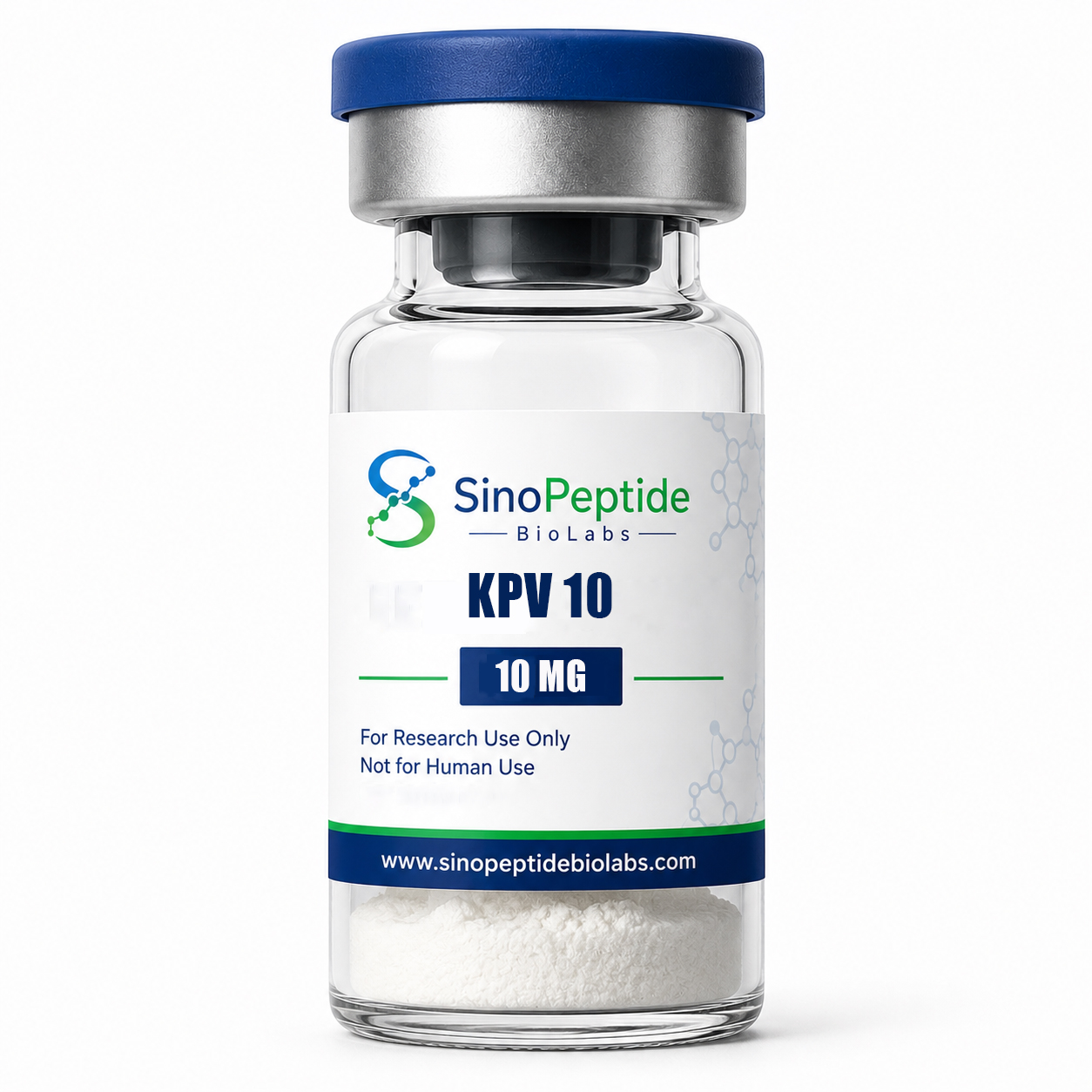
KPV 10mg
$70.00
KPV 10mg: Uses, Research, Benefits, Safety and Complete Guide
KPV 10mg is a peptide product associated with research into inflammation, intestinal health, skin biology, wound healing, and immune regulation. KPV is a short tripeptide consisting of three amino acids—lysine, proline, and valine—and corresponds to the C-terminal portion of alpha-melanocyte-stimulating hormone (α-MSH).
Interest in KPV has increased because laboratory and animal studies have reported anti-inflammatory and tissue-protective effects. However, an important distinction is necessary: KPV remains an investigational compound, and the available evidence does not establish an approved medical use, validated human dosage, or proven clinical benefit.
A 2026 FDA review found that it had not identified clinical studies or human exposure data for KPV through any route of administration. The agency also noted that potential human safety risks remain unknown.
This guide explains what KPV 10mg means, what KPV research has found, its proposed mechanisms, potential applications under investigation, safety considerations, regulatory status, and the difference between preclinical research and proven human treatment.
What Is KPV?
KPV is a naturally derived short peptide sequence made up of:
- K — Lysine
- P — Proline
- V — Valine
It represents amino acids 11–13 of alpha-MSH and is commonly described in scientific literature as the C-terminal tripeptide of α-MSH.
Research interest in KPV comes largely from the observation that some anti-inflammatory activity associated with α-MSH can be retained in this much smaller peptide. Unlike the complete α-MSH molecule, KPV does not contain the full sequence responsible for the hormone’s well-known pigmentation effects.
Researchers have therefore investigated KPV as a potential model compound for studying inflammation without reproducing all of the biological effects of the parent hormone.
Reviews of α-MSH-related peptides have described KPV as an important C-terminal fragment with anti-inflammatory activity in laboratory and animal models.
What does KPV stand for?
KPV stands for Lys-Pro-Val, referring to its three amino acids:
Lysine – Proline – Valine
It may also be described as:
- KPV peptide
- KPV tripeptide
- α-MSH(11–13)
- alpha-MSH 11–13
- Lys-Pro-Val
These names refer to the same basic peptide sequence, although specific formulations, salts, terminal modifications, or research preparations can differ.
What Does KPV 10mg Mean?
The term KPV 10mg generally describes a product containing a stated quantity of KPV peptide.
The 10mg refers to the amount of material, not automatically to a medically established dose.
This distinction is particularly important because KPV does not currently have an established human therapeutic dosage supported by approved clinical trials.
For example, a vial labeled KPV 10mg should not automatically be interpreted as meaning:
- 10mg is a recommended human dose
- 10mg is a clinically proven dose
- 10mg is an FDA-approved treatment
- 10mg is appropriate for injection
- 10mg has been demonstrated to treat inflammation
The amount listed on a research product and a clinically validated dosage are two different concepts.
For SEO purposes, websites should therefore avoid writing statements such as “KPV 10mg is the standard dose” unless reliable human clinical evidence eventually establishes such a regimen.
KPV 10mg Research Overview
Most of the interest surrounding KPV comes from laboratory and animal research rather than human clinical trials.
Research has investigated KPV in areas including:
- intestinal inflammation
- inflammatory bowel disease models
- epithelial inflammation
- immune signaling
- skin inflammation
- wound healing
- ocular tissue repair
- antimicrobial activity
- cellular inflammatory pathways
One important study published in Gastroenterology investigated KPV and intestinal inflammation. Researchers reported that KPV uptake through the PepT1 transporter was associated with reduced intestinal inflammation in experimental models.
These findings are scientifically interesting, but they do not establish that KPV 10mg treats inflammatory disease in humans.
Preclinical evidence vs. clinical evidence
This distinction is essential when evaluating KPV.
Preclinical evidence can include:
- cell studies
- laboratory experiments
- animal models
- biochemical experiments
- tissue models
Clinical evidence involves research in human participants.
At present, the KPV evidence base is predominantly preclinical. FDA’s 2026 assessment stated that it had not identified clinical studies or human exposure data for KPV through any route.
Therefore, KPV should be described as an investigational research peptide, rather than a proven treatment.
Potential KPV Benefits Under Research
Online discussions frequently describe KPV as an anti-inflammatory, healing, gut-health, or skin-support peptide. Some of these descriptions originate from legitimate preclinical research, but they should not be presented as established human benefits.
Below are the major areas of scientific interest.
1. Anti-Inflammatory Research
The strongest area of KPV research involves inflammation.
The parent molecule α-MSH has demonstrated anti-inflammatory activity in numerous experimental systems. Researchers subsequently investigated whether the KPV fragment could retain some of these properties.
Scientific reviews have reported that KPV retains substantial anti-inflammatory activity in experimental models while lacking the pigmentation-related effects associated with the complete hormone.
Potential mechanisms studied include modulation of inflammatory signaling, cytokine production, immune-cell behavior, and cellular responses to inflammatory stimuli.
However, these findings should be described as research observations, not evidence that KPV is an established anti-inflammatory medicine.
KPV and Gut Health Research
One of the most frequently discussed applications of KPV involves intestinal inflammation.
Researchers have investigated KPV in experimental models of intestinal inflammation because the peptide can interact with the intestinal peptide transporter known as PepT1.
A published study found that PepT1-mediated uptake of KPV was associated with reduced intestinal inflammation in experimental models.
This has generated interest in KPV as a possible research tool for studying:
- intestinal inflammatory pathways
- epithelial responses
- immune signaling
- inflammatory bowel disease mechanisms
- intestinal barrier biology
Nevertheless, laboratory results should not be interpreted as proof that KPV can prevent, reverse, or cure conditions such as Crohn’s disease or ulcerative colitis.
Does KPV treat ulcerative colitis?
There is currently not enough human clinical evidence to say that KPV treats ulcerative colitis.
KPV has been studied in experimental inflammatory models, but that is different from demonstrating safety and effectiveness in patients.
People with inflammatory bowel disease should therefore not replace prescribed medical treatment with an unapproved peptide.
KPV and Skin Research
Another area of interest is skin inflammation and tissue biology.
Because inflammatory signaling plays an important role in many skin conditions, researchers have investigated α-MSH-derived peptides, including KPV, for their effects on inflammatory processes.
Experimental research has examined questions involving:
- inflammatory signaling
- epithelial cells
- wound-related processes
- oxidative stress
- immune responses
- skin barrier biology
These studies provide a scientific rationale for further investigation but do not establish KPV as a dermatological treatment.
Claims such as “KPV 10mg cures acne,” “KPV permanently repairs skin,” or “KPV is proven for eczema” are not supported by adequate human clinical evidence.
KPV and Wound-Healing Research
KPV has also attracted interest in experimental wound-healing research.
Researchers have investigated whether KPV can influence inflammatory processes that occur during tissue injury and repair.
The FDA’s 2026 advisory-committee materials specifically identified wound healing and inflammatory conditions among the uses evaluated for KPV-related bulk drug substances.
This regulatory review should not be confused with FDA approval. The fact that a substance is discussed by an advisory committee does not mean it has been approved for that use.
More research is required to determine whether experimental findings can translate into safe and effective clinical treatments.
How Does KPV Work?
The precise mechanism of KPV is still being investigated.
One important research pathway involves PepT1, a peptide transporter found in intestinal epithelial cells and other tissues.
The 2008 study on KPV reported that PepT1-mediated uptake contributed to the peptide’s anti-inflammatory effects in experimental intestinal inflammation.
KPV is also interesting because its biological behavior differs from the complete α-MSH molecule.
Scientific reviews have proposed that KPV may retain anti-inflammatory activity even though it lacks the sequence required for binding to known melanocortin receptors in the same way as the complete hormone. The precise signaling mechanisms remain an area of investigation.
Potentially relevant biological processes include:
- inflammatory cytokine regulation
- NF-κB-related signaling
- immune-cell activity
- epithelial responses
- oxidative and inflammatory stress
- intestinal peptide transport
However, describing these pathways does not mean that KPV has a proven therapeutic effect in humans.
Is KPV 10mg FDA Approved?
No. KPV 10mg is not an FDA-approved medication.
The FDA evaluated KPV-related bulk drug substances in connection with its 2026 Pharmacy Compounding Advisory Committee meeting. The agency’s briefing materials stated that it had not identified clinical studies or human exposure data for KPV through any route of administration.
The FDA meeting included KPV free base and KPV acetate among substances considered for potential inclusion on the 503A Bulks List, with wound healing and inflammatory conditions listed as the uses under review.
An advisory committee review is not the same thing as FDA drug approval.
Therefore, a website should not claim:
- “FDA-approved KPV”
- “FDA-approved KPV 10mg”
- “FDA-approved KPV treatment”
- “clinically approved KPV dosage”
unless the regulatory status changes in the future and is supported by an official FDA source.
Is KPV 10mg Safe?
The available evidence is insufficient to establish the safety profile of KPV in humans.
This is one of the most important points for anyone researching KPV 10mg.
In its 2026 evaluation, FDA stated that it had not identified clinical studies or human exposure data for KPV by any route and that potential safety risks associated with human use were unknown. The agency also noted that it had not identified clinical data assessing immunogenicity or aggregation of KPV.
This means that there is not enough evidence to confidently determine:
- long-term safety
- appropriate human dosage
- safe frequency of administration
- human pharmacokinetics
- human bioavailability
- potential drug interactions
- long-term immune effects
- effects during pregnancy
- effects in people with chronic diseases
Consequently, statements such as “KPV is completely safe” are not scientifically justified.
Does KPV 10mg Have a Proven Human Dose?
No established human dose currently exists.
Although websites may publish specific KPV dosing schedules, these should not automatically be interpreted as clinically validated recommendations.
A scientifically responsible KPV article should distinguish between:
Research quantity:
The amount of peptide contained in a research preparation.
Experimental dose:
An amount used in a particular laboratory or animal experiment.
Human therapeutic dose:
A dosage established through appropriately designed clinical studies.
These are not interchangeable.
A 10mg product label therefore does not mean that 10mg is an approved or clinically validated human dosage.
KPV 10mg Reconstitution and Administration
Research products may be supplied in different physical forms and formulations. Therefore, there is no universal reconstitution or administration procedure that can safely be applied to every product labeled KPV 10mg.
Important variables may include:
- peptide formulation
- salt or free-base form
- purity
- intended research application
- solvent compatibility
- sterility
- container conditions
- manufacturer’s specifications
For this reason, websites should avoid publishing a generic injection or reconstitution protocol as though it were medically established.
If a product is being used for legitimate laboratory research, researchers should follow the applicable manufacturer’s technical documentation, laboratory procedures, institutional protocols, and relevant safety requirements.
KPV 5mg vs KPV 10mg
The difference between KPV 5mg and KPV 10mg is primarily the stated quantity of peptide.
| Feature | KPV 5mg | KPV 10mg |
|---|---|---|
| Peptide | KPV | KPV |
| Quantity | 5mg | 10mg |
| Research status | Investigational | Investigational |
| FDA-approved drug | No | No |
| Established human dose | No | No |
| Human clinical evidence | Insufficient | Insufficient |
| Primary research interest | Inflammation and related pathways | Inflammation and related pathways |
A 10mg quantity does not mean that the product is twice as effective as a 5mg product.
Likewise, a larger quantity does not establish better clinical outcomes.
The appropriate interpretation is simply that 10mg represents a greater stated amount of the peptide material.
KPV 10mg vs Other Peptides
KPV is sometimes grouped with peptides such as BPC-157, TB-500, GHK-Cu, and other compounds discussed online for tissue repair or inflammation.
However, these substances should not automatically be treated as interchangeable.
They can differ substantially in:
- amino-acid sequence
- proposed mechanisms
- research models
- formulation
- pharmacokinetics
- safety evidence
- regulatory status
- human clinical evidence
KPV is particularly notable because it is a very short three-amino-acid peptide derived from α-MSH.
The fact that multiple peptides are marketed for similar purposes does not mean they have equivalent scientific evidence.
KPV 10mg for Research
KPV may be of interest to researchers studying:
- inflammatory signaling
- intestinal biology
- epithelial responses
- peptide transport
- immune modulation
- wound-healing mechanisms
- skin inflammation
- α-MSH-related biology
Researchers evaluating KPV should pay particular attention to experimental design and product characterization.
Important considerations include:
Peptide identity
The material should be appropriately characterized to establish that the supplied compound corresponds to the intended peptide.
Purity
A stated percentage of purity should be supported by appropriate analytical documentation rather than assumed from a product listing.
Formulation
KPV may exist in different chemical forms or preparations. Results from one formulation cannot automatically be applied to another.
Sterility
A research-grade peptide should not automatically be assumed to be sterile or suitable for administration to humans or animals.
Certificate of analysis
Where applicable, researchers should review available analytical documentation, including information about identity, purity, contaminants, and other relevant quality attributes.
What Does the Research Actually Show?
The scientific literature provides a more nuanced picture than many commercial peptide pages.
What research supports
Research supports continued investigation of KPV in areas such as:
- inflammatory signaling
- intestinal inflammation
- peptide transport
- epithelial biology
- tissue-protective pathways
- wound-related processes
A major study found that KPV uptake through PepT1 was associated with reduced intestinal inflammation in experimental models.
Reviews have also described KPV as an α-MSH-derived tripeptide with anti-inflammatory activity in experimental systems.
What research does not establish
The evidence does not currently establish:
- an approved medical indication
- a proven human dose
- long-term human safety
- demonstrated clinical effectiveness
- established human pharmacokinetics
- a standard therapeutic protocol
This distinction is especially important for SEO content because medical search users benefit from accurate, evidence-based information rather than exaggerated claims.
Common Misconceptions About KPV 10mg
Myth 1: KPV 10mg is an approved medication
False.
KPV is not an FDA-approved medication.
Myth 2: 10mg is the standard KPV dose
False.
No standardized human therapeutic dose has been established.
Myth 3: Animal research proves KPV works in humans
False.
Animal research can provide valuable mechanistic evidence, but clinical effectiveness must be demonstrated in human studies.
Myth 4: KPV can replace treatment for inflammatory disease
False.
There is insufficient clinical evidence to support replacing established medical treatment with KPV.
Myth 5: Research-grade KPV is automatically suitable for human use
False.
Research-grade material is not automatically equivalent to an approved pharmaceutical product.
Who Should Be Cautious About KPV?
Because human safety information is limited, additional caution is appropriate for people who:
- are pregnant or breastfeeding
- have chronic medical conditions
- take prescription medications
- have known allergies
- have immune-system disorders
- are preparing for surgery
- are receiving treatment for inflammatory disease
- are considering replacing prescribed medication
Anyone considering an investigational compound for a medical condition should discuss the situation with a qualified healthcare professional.
KPV 10mg and Sports or Athletic Use
Athletes should independently verify the current prohibited-substance rules that apply to their sport and governing organization.
The regulatory status of a research peptide and its status under an anti-doping framework are separate questions.
Athletes should not assume that a peptide is permitted simply because it is not marketed as a conventional prescription medication.
When competitive eligibility matters, checking the current rules of the relevant anti-doping organization is essential.
How to Evaluate a KPV 10mg Product
If you are evaluating a product labeled KPV 10mg for legitimate research purposes, consider looking for transparent technical information rather than relying solely on marketing claims.
Useful information may include:
- Peptide identity
- Declared quantity
- Purity testing
- Analytical method
- Certificate of analysis
- Lot or batch identification
- Storage specifications
- Formulation information
- Contaminant testing
- Manufacturer documentation
A professional research-oriented website should clearly distinguish between product specifications and medical claims.
For example, saying that a vial contains a stated amount of KPV is a product specification.
Saying that the same vial will cure inflammation is a medical efficacy claim requiring clinical evidence.
Why KPV 10mg Is Attracting Scientific Interest
KPV is scientifically interesting for several reasons.
First, it is a very small peptide derived from a naturally occurring hormone-related sequence.
Second, research suggests that it can influence inflammatory biology without reproducing all of the pigmentary activity associated with complete α-MSH.
Third, KPV has been investigated in intestinal inflammation models involving PepT1-mediated peptide uptake.
Finally, its small size makes it an interesting compound for researchers studying peptide transport, inflammation, and molecular signaling.
These characteristics help explain why KPV continues to appear in experimental peptide research.
However, scientific interest should not be confused with clinical validation.
Future Research on KPV
More research is needed before KPV can be evaluated as a potential therapeutic compound in humans.
Future studies would ideally investigate:
- pharmacokinetics
- bioavailability
- dose-response relationships
- acute toxicity
- repeat-dose toxicity
- immunogenicity
- formulation stability
- drug interactions
- route-specific safety
- controlled human trials
- long-term outcomes
Well-designed human clinical trials would be particularly important.
Until such evidence becomes available, KPV should remain classified as an investigational research peptide rather than an established medical treatment.
Frequently Asked Questions About KPV 10mg
What is KPV 10mg?
KPV 10mg generally refers to a research preparation containing a stated 10mg quantity of KPV peptide. KPV is the three-amino-acid sequence lysine-proline-valine and corresponds to the C-terminal portion of α-MSH.
What are the potential KPV benefits?
Preclinical research has investigated KPV for anti-inflammatory activity, intestinal inflammation, wound-related processes, skin biology, and immune signaling. These findings have not been sufficiently confirmed in human clinical trials.
Is KPV 10mg FDA approved?
No. KPV is not an FDA-approved medication. FDA reviewed KPV-related substances in 2026 and reported that it had not identified clinical studies or human exposure data for KPV.
Is there a recommended KPV 10mg dosage?
There is no established human therapeutic dosage for KPV. A product containing 10mg should not be interpreted as having a clinically validated 10mg dose.
Can KPV 10mg be used for inflammation?
KPV is being investigated for inflammatory pathways, particularly in laboratory and animal models. However, there is insufficient human clinical evidence to establish KPV as a treatment for inflammatory disease.
Can KPV help with gut health?
Experimental studies have investigated KPV in intestinal inflammation models. One study reported effects involving PepT1-mediated uptake and reduced intestinal inflammation in experimental systems.
This does not establish KPV as a proven treatment for human gastrointestinal disease.
Is KPV the same as alpha-MSH?
No. KPV is a three-amino-acid fragment corresponding to the C-terminal portion of α-MSH. It is much smaller than the complete α-MSH molecule.
Is KPV the same as BPC-157?
No. KPV and BPC-157 are different peptides with different amino-acid sequences and research profiles.
Is KPV safe?
Human safety has not been adequately established. FDA reported that it had not identified clinical studies or human exposure data for KPV and stated that potential human safety risks were unknown.
Is KPV 10mg suitable for human consumption?
A research product should not automatically be considered suitable for human use. Product quality, sterility, formulation, regulatory status, and clinical evidence are separate considerations.
Does KPV have human clinical trials?
As of the current evidence reviewed for this article, no established clinical evidence demonstrates the safety or effectiveness of KPV in humans. FDA’s 2026 review likewise reported no identified clinical studies or human exposure data.
Is KPV a healing peptide?
“KPV healing peptide” is primarily a marketing or informal research description. KPV has been studied in experimental inflammation and tissue-related models, but human clinical evidence is insufficient to establish it as a healing treatment.
Final Thoughts on KPV 10mg
KPV 10mg is a research-oriented peptide preparation associated with growing scientific interest in inflammation, intestinal biology, immune signaling, skin research, and tissue-related processes.
Its scientific rationale comes largely from studies of KPV as the C-terminal tripeptide of α-MSH and from laboratory and animal research showing anti-inflammatory effects. Research involving PepT1 has been particularly important in understanding KPV’s potential role in intestinal inflammation.
At the same time, the current evidence has important limitations.
KPV does not have an established FDA-approved therapeutic indication, there is no validated human dosage, and FDA reported that it had not identified clinical studies or human exposure data for KPV through any route.
Therefore, the most accurate way to describe KPV 10mg is as an investigational peptide used in research, not as a proven medication.
For researchers and readers evaluating KPV, the most useful approach is to focus on peptide identity, product characterization, published evidence, regulatory information, and the distinction between preclinical findings and human clinical outcomes.
As additional research becomes available, particularly controlled human studies, the understanding of KPV’s potential benefits, risks, pharmacology, and appropriate applications may become clearer.
Be the first to review “KPV 10mg”
Related products
Pure Peptides
Pure Peptides
Pure Peptides
Pure Peptides
Pure Peptides
Pure Peptides
Pure Peptides
Pure Peptides
Reviews
There are no reviews yet.