

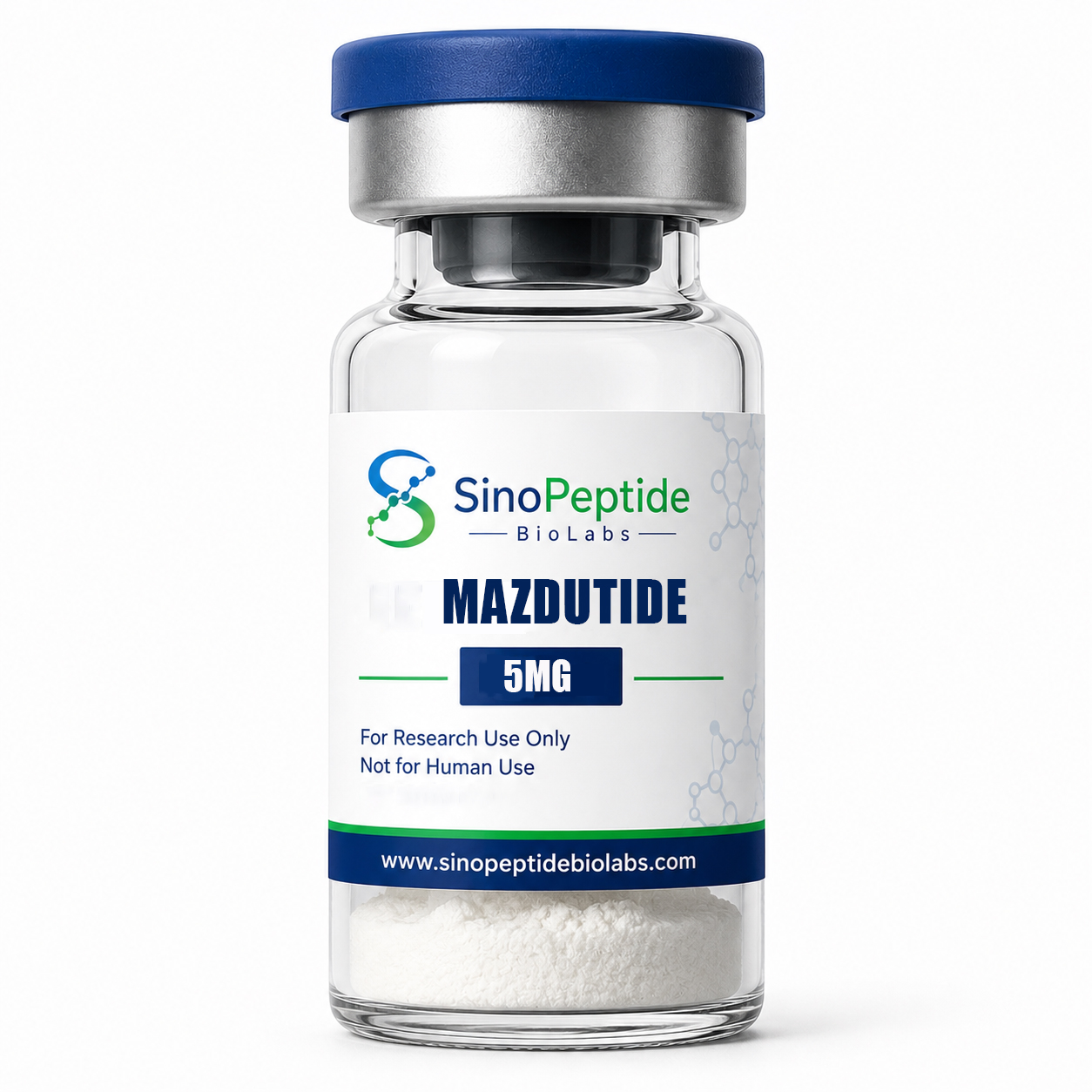
Mazdutide 5mg
$105.00
10 Vials/Kits
Mazdutide 5mg: Uses, Benefits, Mechanism, Safety, Research & Clinical Evidence
What Is Mazdutide 5mg?
Mazdutide 5mg refers to a 5-milligram quantity of mazdutide, a long-acting metabolic medicine that activates both the glucagon-like peptide-1 receptor (GLP-1R) and the glucagon receptor (GCGR).
Mazdutide is also known by development names including IBI362 and OXM3. Unlike medicines that selectively activate the GLP-1 receptor, mazdutide is designed to engage two metabolic pathways simultaneously.
Clinical development has focused particularly on chronic weight management and type 2 diabetes, with multiple randomized clinical trials evaluating different doses and populations. In June 2025, mazdutide received its first approval in China for long-term weight management in eligible adults with overweight or obesity, followed by approval for glycemic control in adults with type 2 diabetes in September 2025.
The phrase “Mazdutide 5mg” requires some clarification, however. A 5 mg quantity does not automatically mean that 5 mg is an approved or clinically validated maintenance dose. Published clinical trials have evaluated several dose levels, including 3 mg, 4.5 mg, 6 mg and 9 mg, while the pivotal GLORY-1 obesity study evaluated 4 mg and 6 mg once weekly.
Therefore, a website discussing Mazdutide 5mg should clearly distinguish between vial or product quantity, research doses, and regulator-approved dosing schedules.
Mazdutide 5mg at a Glance
| Feature | Information |
|---|---|
| Product | Mazdutide |
| Development names | IBI362 / OXM3 |
| Drug class | GLP-1/glucagon receptor dual agonist |
| Main research areas | Obesity, overweight, type 2 diabetes |
| Administration studied | Subcutaneous injection |
| Frequency in major trials | Once weekly |
| 5mg meaning | Quantity/strength designation; not automatically an approved dose |
| Key obesity study | GLORY-1 |
| Key diabetes research | DREAMS program |
| First approval | China, 2025 |
| Weight-management indication | Eligible adults with overweight or obesity |
| Diabetes indication | Adults with type 2 diabetes |
| Common adverse effects | Gastrointestinal symptoms such as nausea, diarrhea and vomiting |
| Important distinction | Mazdutide is not the same molecule as semaglutide or tirzepatide |
How Does Mazdutide Work?
Mazdutide belongs to a newer group of medicines known as dual receptor agonists.
Its two principal targets are:
- GLP-1 receptor
- Glucagon receptor
GLP-1 receptor activation is associated with effects on appetite, food intake, insulin secretion and glucose regulation. Glucagon receptor activity can influence energy expenditure, glucose metabolism and lipid metabolism.
The combination is intended to produce broader metabolic effects than activating either pathway alone.
Mazdutide is structurally related to oxyntomodulin, a naturally occurring gut peptide that interacts with both GLP-1 and glucagon signaling. Researchers have investigated whether this dual activity can provide meaningful effects on body weight and metabolic health.
This mechanism is important when understanding why mazdutide is being studied for obesity and type 2 diabetes rather than viewing it simply as another conventional weight-loss product.
Mazdutide and the GLP-1 Receptor
The GLP-1 component of mazdutide contributes to several clinically important metabolic effects.
GLP-1 receptor activation can:
- Increase glucose-dependent insulin secretion
- Reduce inappropriate glucagon signaling after meals
- Slow gastric emptying
- Reduce appetite
- Decrease food intake
- Improve blood glucose control
- Support body-weight reduction
These effects are part of the broader pharmacology shared by several incretin-based medicines.
However, mazdutide should not simply be described as “another GLP-1.” Its additional glucagon receptor activity is a defining feature of the molecule.
Mazdutide and the Glucagon Receptor
The glucagon component gives mazdutide its dual-agonist profile.
Glucagon plays an important role in energy metabolism and helps regulate glucose availability. Activation of the glucagon receptor may also influence energy expenditure and lipid metabolism.
Researchers have therefore investigated whether combining GLP-1 receptor and glucagon receptor activity could provide additional effects on body weight and metabolic parameters.
This dual mechanism is one reason mazdutide has attracted interest in obesity research.
Mazdutide 5mg for Weight Management
Weight management is currently one of the most important areas of mazdutide clinical development.
The Phase 3 GLORY-1 trial evaluated once-weekly mazdutide in Chinese adults with overweight or obesity. Participants received 4 mg or 6 mg mazdutide or placebo for 48 weeks, alongside lifestyle intervention.
At week 48, mean body-weight change was:
- −11.00% with 4 mg mazdutide
- −14.01% with 6 mg mazdutide
- +0.30% with placebo
The study also found that 35.7% of participants in the 4 mg group and 49.5% in the 6 mg group achieved at least 15% weight reduction by week 48.
These results provide substantial clinical evidence that mazdutide can produce meaningful weight reduction in the studied population.
Importantly, these results should not be interpreted as evidence that a 5 mg dose will produce a particular percentage of weight loss. The published Phase 3 trial did not establish 5 mg as one of its primary treatment arms.
What Does the Research Say About Mazdutide and Weight Loss?
Earlier Phase 2 research also demonstrated dose-related weight reduction.
A randomized Phase 2 trial in Chinese adults with overweight or obesity evaluated 3 mg, 4.5 mg and 6 mg mazdutide. At week 24, mean body-weight changes were approximately:
- −6.7% with 3 mg
- −10.4% with 4.5 mg
- −11.3% with 6 mg
The placebo group experienced approximately 1% weight gain.
These findings were subsequently supported by the larger Phase 3 GLORY-1 study.
The evidence therefore supports mazdutide as an effective investigational and, in China, approved pharmacological option for appropriate weight-management populations. It does not support making universal claims that every person using a 5 mg product will lose a specific amount of weight.
Mazdutide and Type 2 Diabetes
Mazdutide has also been investigated as a treatment for type 2 diabetes.
In a Phase 2 randomized trial involving Chinese adults with inadequately controlled type 2 diabetes, participants received 3 mg, 4.5 mg or 6 mg mazdutide, dulaglutide, or placebo.
At week 20, mazdutide reduced HbA1c by approximately 1.41% to 1.67%, depending on dose. Body weight also decreased in a dose-dependent manner, with reductions of up to approximately 7.1%.
Later Phase 3 research provided additional evidence.
In a Phase 3 trial involving adults with type 2 diabetes inadequately controlled by diet and exercise, 4 mg and 6 mg mazdutide produced substantially greater HbA1c reductions than placebo after 24 weeks. Weight loss was also greater with mazdutide than placebo.
These findings explain why mazdutide development has extended beyond obesity into diabetes management.
Mazdutide 5mg and Blood Sugar Control
The effects of mazdutide on blood glucose are primarily related to its incretin and glucagon pathways.
Clinical studies have reported improvements in:
- HbA1c
- Fasting glucose
- Body weight
- Appetite
- Several cardiometabolic measurements
However, people with diabetes should not independently substitute or modify established diabetes treatment based on information about mazdutide purchased online.
Blood glucose management requires consideration of other medications, kidney function, nutrition, hypoglycemia risk and individual treatment goals.
Potential Benefits of Mazdutide
Based on published clinical studies, potential benefits associated with mazdutide include:
1. Body-weight reduction
Weight reduction is one of the best-established clinical effects demonstrated in mazdutide obesity trials.
2. Reduced appetite
Reduced appetite has been reported during clinical development and is consistent with GLP-1 receptor activity.
3. Improved glycemic control
Clinical trials in people with type 2 diabetes have demonstrated reductions in HbA1c.
4. Waist-circumference reduction
Weight-management trials have reported improvements in waist circumference alongside weight loss.
5. Broader metabolic effects
Clinical research has also examined changes in lipid measurements, blood pressure, uric acid, liver-related markers and other metabolic parameters.
These findings are promising, but they should not be turned into claims that mazdutide independently treats every metabolic condition.
Mazdutide and Liver Fat
Another area of interest is metabolic dysfunction-associated fatty liver disease and related liver conditions.
Because obesity, insulin resistance and excess liver fat frequently occur together, researchers have investigated whether substantial weight loss and the direct metabolic effects of mazdutide can improve liver-related outcomes.
Innovent has reported substantial reductions in liver fat in clinical development programs, while additional Phase 3 studies are evaluating mazdutide in populations with metabolic dysfunction-associated fatty liver disease.
However, ongoing research should not be confused with an established indication.
A website should therefore avoid statements such as “Mazdutide cures fatty liver.”
A more accurate statement is:
Mazdutide is being studied for potential benefits in obesity-associated liver disease, with clinical research evaluating changes in liver fat and metabolic markers.
Mazdutide 5mg Dosage: What Should You Know?
The term “Mazdutide 5mg dosage” can be misleading because 5 mg may describe the quantity contained in a vial rather than an established clinical dose.
Published trials have used several dosing schedules.
For example, a Phase 2 diabetes study evaluated 3 mg, 4.5 mg and 6 mg, with gradual dose escalation during treatment.
The pivotal Phase 3 GLORY-1 obesity study evaluated 4 mg and 6 mg once weekly.
Therefore, a 5 mg vial should not automatically be interpreted as a recommendation to administer 5 mg weekly.
The correct dose depends on the specific approved product, country, indication, patient characteristics and prescribing information.
For a commercial website, this distinction is particularly important because online pages sometimes confuse vial strength with approved dosage.
Is Mazdutide 5mg FDA Approved?
Mazdutide’s regulatory status depends on the country.
Mazdutide received its first regulatory approval in China in June 2025 for long-term weight management in eligible adults with overweight or obesity. A second Chinese approval followed in September 2025 for glycemic control in adults with type 2 diabetes.
This does not mean that mazdutide is automatically approved in every country.
Therefore, websites should avoid statements such as:
“Mazdutide is FDA approved for weight loss.”
Instead, a medically responsible statement is:
“Mazdutide received approval in China in 2025 for specified weight-management and type 2 diabetes indications. Regulatory status varies by country.”
This distinction is particularly important for international customers.
Is Mazdutide the Same as Semaglutide?
No.
Although both medicines involve GLP-1 receptor activity, their pharmacology is different.
Semaglutide is a GLP-1 receptor agonist.
Mazdutide is a dual GLP-1 receptor and glucagon receptor agonist.
This means mazdutide was designed to activate an additional metabolic pathway.
Clinical trials are examining how this dual mechanism compares with established GLP-1-based treatments, including semaglutide.
However, results from one medication should not automatically be transferred to another.
Mazdutide vs Tirzepatide
Mazdutide and tirzepatide are also different molecules.
Tirzepatide is a GIP and GLP-1 receptor agonist, whereas mazdutide activates GLP-1 and glucagon receptors.
Therefore:
| Feature | Mazdutide | Tirzepatide |
|---|---|---|
| GLP-1 receptor | Yes | Yes |
| Glucagon receptor | Yes | No |
| GIP receptor | No | Yes |
| Drug class | GLP-1/glucagon dual agonist | GIP/GLP-1 dual agonist |
| Weight-management research | Extensive | Extensive |
| Type 2 diabetes research | Extensive | Extensive |
| Mechanism | GLP-1 + glucagon | GIP + GLP-1 |
These medications should not be described as interchangeable.
Mazdutide 5mg Side Effects
Like other medicines that influence gastrointestinal and metabolic pathways, mazdutide can cause adverse effects.
Clinical trials have commonly reported gastrointestinal symptoms such as:
- Nausea
- Diarrhea
- Vomiting
- Decreased appetite
- Abdominal discomfort
In Phase 2 diabetes research, diarrhea, decreased appetite, nausea and vomiting were among the most frequently reported adverse events.
In the 60-week Phase 3 GLORY-2 study of 9 mg mazdutide, nausea, vomiting and diarrhea were also common, with most reported events described as mild to moderate.
Individual risk varies, and higher doses may have different tolerability profiles.
Mazdutide and Gastrointestinal Tolerability
Gastrointestinal tolerability is an important consideration when evaluating mazdutide.
The digestive system is involved in GLP-1 signaling, and appetite reduction and delayed gastric emptying can contribute to nausea or changes in eating patterns.
Clinical trials commonly use gradual dose escalation to improve tolerability.
This is another reason why consumers should not treat a 5 mg vial as proof that 5 mg is an appropriate starting or maintenance dose.
Important Safety Considerations
Mazdutide should be considered a pharmacologically active medicine rather than a general wellness supplement.
Before using any prescription metabolic medicine, healthcare professionals may consider factors such as:
- Existing diabetes treatment
- History of gastrointestinal disease
- Pancreatic disease
- Gallbladder problems
- Kidney function
- Pregnancy or plans for pregnancy
- Other medicines
- Previous reactions to incretin-based therapies
The appropriate assessment depends on the individual patient.
People should not make treatment decisions solely from a product page, social-media protocol or online dosage calculator.
Is Mazdutide Safe?
Clinical trials indicate that mazdutide can be tolerated by many participants, but “safe” should not be interpreted as “risk-free.”
The most frequently reported adverse events have generally involved the gastrointestinal system. Longer-term safety surveillance is also important because obesity and type 2 diabetes treatments may be used for extended periods.
Clinical evidence is strongest for the populations and treatment regimens actually studied.
The GLORY-1 Phase 3 trial included 610 adults with overweight or obesity and followed participants for 48 weeks.
A subsequent Phase 3 study evaluated 9 mg mazdutide for 60 weeks in Chinese adults with obesity, expanding the evidence base but still representing a specific study population.
Mazdutide 5mg for Research Use
Some websites market products described as “Mazdutide 5mg” for research purposes.
This creates an important distinction between:
An approved medicinal product
and
A research-labeled product or laboratory material.
A research-use product should not automatically be assumed to have the identity, purity, sterility, stability or manufacturing controls of an approved pharmaceutical.
If a website sells a research product, quality documentation should be clearly described without implying that research material is equivalent to an approved medicine.
Relevant documentation may include:
- Certificate of analysis
- Batch or lot number
- Identity testing
- Purity testing
- Manufacturer information
- Storage information
- Intended-use statement
- Regulatory documentation where applicable
For injectable materials, sterility and endotoxin considerations are especially important.
What Does “Mazdutide 5mg Vial” Mean?
A Mazdutide 5mg vial generally means that the container is labeled as containing 5 mg of the active ingredient.
It does not, by itself, establish:
- The correct patient dose
- The correct injection volume
- The correct reconstitution method
- The number of weekly doses
- The product’s regulatory approval
- The product’s sterility
- The product’s clinical equivalence to an approved formulation
Those details depend on the specific product and labeling.
For SEO content, explaining this distinction improves both medical accuracy and user trust.
Mazdutide Administration
Clinical studies have evaluated mazdutide as a subcutaneous, once-weekly treatment.
However, administration instructions should come from the approved product information or a qualified healthcare professional.
A website should avoid publishing a universal mixing or injection protocol for an unspecified Mazdutide 5mg vial, because different formulations and product presentations may have different instructions.
This is especially important when dealing with products sold online as research materials.
Who Has Studied Mazdutide?
Mazdutide has undergone extensive clinical development involving organizations including Innovent Biologics and Eli Lilly.
The development program has included Phase 1, Phase 2 and Phase 3 studies in areas including:
- Obesity
- Overweight
- Type 2 diabetes
- Metabolic liver disease
- Obstructive sleep apnea
- Other obesity-associated conditions
Innovent reported multiple Phase 3 programs involving different metabolic populations, including GLORY and DREAMS studies.
The expanding development program reflects the broader interest in dual GLP-1/glucagon receptor agonists.
Mazdutide Clinical Trials
Clinical research provides a stronger foundation for understanding mazdutide than anecdotal reports or online testimonials.
GLORY-1
GLORY-1 evaluated 4 mg and 6 mg mazdutide in adults with overweight or obesity.
At week 48, the 6 mg group had an average body-weight reduction of 14.01%.
GLORY-2
GLORY-2 evaluated 9 mg mazdutide in adults with obesity.
At week 60, mean body weight decreased by 16.65% from baseline in the mazdutide group compared with 1.50% with placebo.
DREAMS Studies
The DREAMS program has investigated mazdutide in adults with type 2 diabetes, including comparisons with established diabetes treatments.
Together, these studies provide evidence that mazdutide can affect both body weight and glucose metabolism.
Can Mazdutide Build Muscle?
Mazdutide should not be marketed as a muscle-building drug.
Significant weight loss can involve reductions in both fat mass and lean mass. The quality of weight loss depends on nutritional intake, physical activity, resistance training and individual physiology.
Therefore, claims such as “Mazdutide builds muscle while burning fat” are too broad unless supported by specific body-composition data.
A more accurate approach is to state that clinical studies primarily evaluate body weight and metabolic outcomes, while body-composition effects require separate analysis.
Can Mazdutide Burn Belly Fat?
Mazdutide can reduce overall body weight and waist circumference in clinical studies.
However, spot reduction of abdominal fat should not be claimed.
Weight loss occurs through systemic metabolic changes rather than a mechanism that selectively targets one visible area of the body.
Research into liver fat and visceral adiposity is particularly interesting, but these outcomes should be described using study-specific evidence rather than generalized marketing claims.
Can Mazdutide Treat Obesity?
This question requires a distinction between scientific evidence and regulatory labeling.
Mazdutide has demonstrated clinically meaningful weight reduction in randomized clinical trials.
In China, it received approval in 2025 for long-term weight management in specified adults with overweight or obesity, alongside diet control and increased physical activity.
Whether mazdutide can legally be prescribed for obesity in another country depends on that country’s regulatory status.
Is Mazdutide a Peptide?
Mazdutide is a peptide-based therapeutic molecule and is structurally related to oxyntomodulin.
It is designed to activate GLP-1 and glucagon receptors.
However, describing it simply as a “peptide for weight loss” can be misleading because mazdutide is a pharmacologically active therapeutic agent with specific clinical development and regulatory history.
Mazdutide 5mg Storage and Product Quality
Storage requirements should always follow the specific manufacturer’s instructions.
For any product marketed as Mazdutide 5mg, buyers should verify:
- Product identity
- Manufacturer
- Batch number
- Expiration date
- Certificate of analysis
- Storage conditions
- Packaging integrity
- Regulatory status
- Intended use
For an approved medicine, the official product labeling should take priority over information from third-party websites.
For research products, a certificate of analysis alone should not be treated as proof that the product is approved for human administration.
Mazdutide 5mg: Research Product vs Approved Medicine
This distinction deserves its own section because it is frequently misunderstood.
A website selling Mazdutide 5mg may use language such as “research peptide,” “laboratory material,” or “research compound.”
That terminology does not make the product interchangeable with an approved pharmaceutical.
The evidence from clinical trials applies to the specified drug product, formulation, dose, route, population and study conditions.
It should not automatically be transferred to an unidentified or independently manufactured product.
Frequently Asked Questions About Mazdutide 5mg
What is Mazdutide 5mg?
Mazdutide 5mg refers to a 5-milligram quantity of mazdutide. Mazdutide is a dual GLP-1 and glucagon receptor agonist investigated and approved in certain settings for metabolic conditions, including weight management and type 2 diabetes.
Is 5mg an approved Mazdutide dose?
A 5 mg product quantity should not automatically be described as an approved clinical dose. Published pivotal obesity studies evaluated 4 mg and 6 mg, while other clinical trials investigated different dose levels.
What is Mazdutide used for?
Mazdutide has been studied for weight management, obesity, overweight and type 2 diabetes. In China, it received approval for specified weight-management and type 2 diabetes indications in 2025.
How does Mazdutide work?
Mazdutide activates both the GLP-1 receptor and glucagon receptor, creating a dual metabolic mechanism.
Is Mazdutide the same as Ozempic?
No. Ozempic contains semaglutide, a GLP-1 receptor agonist. Mazdutide activates both GLP-1 and glucagon receptors.
Is Mazdutide the same as tirzepatide?
No. Tirzepatide activates GIP and GLP-1 receptors, whereas mazdutide activates GLP-1 and glucagon receptors.
Can Mazdutide help with weight loss?
Clinical trials have demonstrated substantial weight reduction with mazdutide in studied adults with overweight or obesity.
What are the common side effects?
Clinical studies have commonly reported gastrointestinal effects including nausea, diarrhea, vomiting and decreased appetite.
Is Mazdutide FDA approved?
Mazdutide’s first approval was in China in 2025. Regulatory status differs between countries, so approval in one jurisdiction should not be represented as worldwide approval.
Is Mazdutide available worldwide?
Availability depends on the country and its regulatory framework. Clinical development in a country does not necessarily mean that the medicine is commercially approved there.
Is Mazdutide a GLP-1 drug?
Mazdutide activates the GLP-1 receptor, but it is more accurately described as a GLP-1/glucagon dual receptor agonist.
Does Mazdutide reduce blood sugar?
Clinical trials in adults with type 2 diabetes have demonstrated meaningful HbA1c reductions with mazdutide.
Can I use a Mazdutide 5mg vial without medical supervision?
A product labeled 5 mg should not be treated as self-explanatory dosing guidance. The appropriate use of an approved medicine depends on its official labeling and clinical assessment. Research-labeled products should not be assumed to be approved for human use.
Final Perspective on Mazdutide 5mg
Mazdutide 5mg is a high-interest search term within the rapidly developing field of metabolic medicines, but accurate content needs to distinguish the product quantity from validated clinical dosing.
Mazdutide is a dual GLP-1/glucagon receptor agonist developed for metabolic conditions including obesity and type 2 diabetes. Randomized clinical trials have demonstrated meaningful reductions in body weight and improvements in glycemic control, while gastrointestinal adverse effects are among the most commonly reported tolerability issues.
The Phase 3 GLORY-1 trial showed substantial weight reduction with 4 mg and 6 mg mazdutide over 48 weeks, while the later GLORY-2 trial evaluated a 9 mg regimen in adults with obesity.
For anyone researching Mazdutide 5mg, one of the most important distinctions is that 5 mg may describe the amount of material in a vial rather than an established approved maintenance dose. Clinical evidence should always be interpreted according to the exact formulation, dose, population and indication studied.
From an SEO perspective, the strongest content strategy is therefore not to repeat “Mazdutide 5mg” excessively. Instead, the keyword should appear naturally alongside closely related search topics such as Mazdutide weight loss, Mazdutide benefits, Mazdutide dosage, Mazdutide side effects, Mazdutide clinical trials, Mazdutide research, Mazdutide mechanism, GLP-1 glucagon dual agonist and Mazdutide 5mg vial.
This creates a more comprehensive topical resource while maintaining medically responsible language and avoiding unsupported promises about weight loss, diabetes treatment, fat burning or muscle gain.
Mazdutide 5mg Mazdutide 5mg Mazdutide 5mg Mazdutide 5mg Mazdutide 5mg Mazdutide 5mg Mazdutide 5mg Mazdutide 5mg Mazdutide 5mg Mazdutide 5mg Mazdutide 5mg
Be the first to review “Mazdutide 5mg”
Related products
Pure Peptides

Pure Peptides
Pure Peptides
Pure Peptides
Pure Peptides

Pure Peptides

Pure Peptides

Pure Peptides
Reviews
There are no reviews yet.