


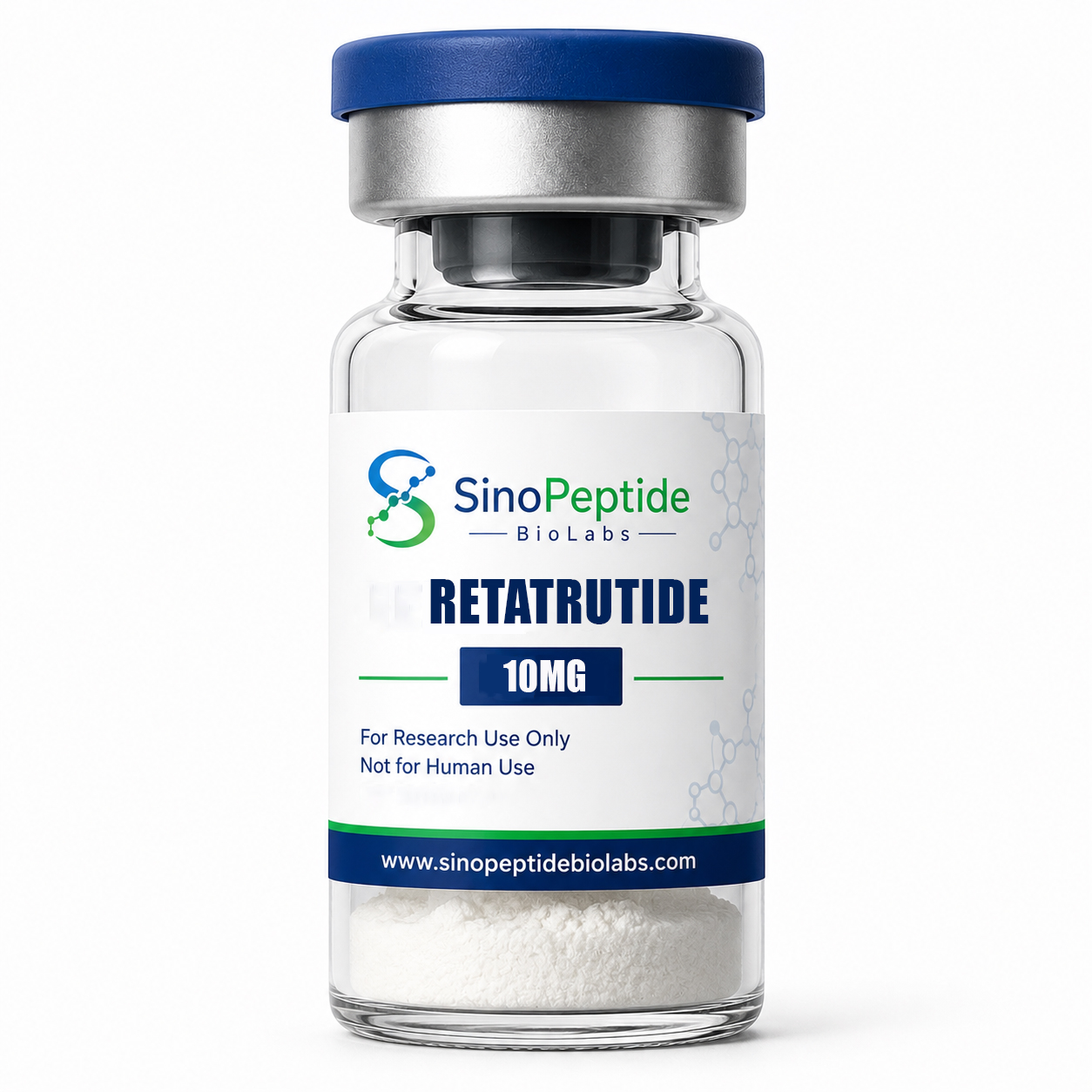
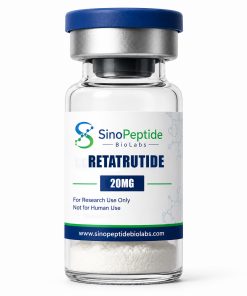
Retatrutide 10mg
$100.00
10Vials/ Kits
Retatrutide 10mg: Complete Research Peptide Guide, Mechanism, Clinical Research, Safety & Quality
Retatrutide 10mg is a research-product specification associated with retatrutide (LY3437943), an investigational peptide being developed by Eli Lilly. Retatrutide has attracted significant scientific interest because it is designed to activate three metabolic hormone receptors: GIP, GLP-1, and glucagon receptors.
Unlike conventional single-target incretin therapies, retatrutide is described as a triple hormone receptor agonist. Researchers are investigating whether simultaneous activity at these three pathways can influence body weight, glucose metabolism, energy expenditure, appetite regulation, and other metabolic outcomes.
Importantly, the term Retatrutide 10mg describes the amount of material associated with a product specification. It should not automatically be interpreted as a recommended clinical dose. Clinical trials have investigated specific retatrutide doses and dosing schedules under controlled conditions, and a 10mg product presentation should not be treated as equivalent to a studied or approved treatment regimen.
As of September 2026, retatrutide remains investigational. Eli Lilly states that it has not been approved by any regulatory agency, while the U.S. Food and Drug Administration states that retatrutide is not a component of an FDA-approved drug and cannot be used in compounding under federal law.
What Is Retatrutide 10mg?
Retatrutide 10mg refers to a product containing or labeled as containing 10 milligrams of retatrutide research material.
Retatrutide itself is a synthetic peptide-based investigational molecule also known by the development code LY3437943. Its distinguishing feature is its activity at three hormone receptors:
- Glucose-dependent insulinotropic polypeptide receptor (GIPR)
- Glucagon-like peptide-1 receptor (GLP-1R)
- Glucagon receptor (GCGR)
Because of this activity, retatrutide is often described as a GIP/GLP-1/glucagon triple agonist.
The 10mg designation is primarily a quantity specification. It does not mean that 10mg is an approved therapeutic dose, nor does it establish how the material should be administered.
This distinction is especially important because clinical studies have used different doses, including 1mg, 4mg, 8mg, 9mg, and 12mg depending on the trial and study population.
Retatrutide Chemical and Biological Identity
Retatrutide was developed as a multi-receptor agonist intended to combine biological activity associated with three metabolic signaling systems.
The three targets have different physiological roles.
GIP Receptor Activity
GIP, or glucose-dependent insulinotropic polypeptide, is an incretin hormone involved in nutrient-related metabolic signaling.
GIP receptor activation can influence:
- Glucose-dependent insulin secretion
- Nutrient handling
- Metabolic signaling
- Adipose-tissue biology
- Interactions with other incretin pathways
Researchers are interested in how GIP receptor activity may complement GLP-1 receptor signaling.
GLP-1 Receptor Activity
GLP-1 is an incretin hormone involved in glucose regulation and appetite-related signaling.
GLP-1 receptor activation is associated with several physiological effects, including:
- Glucose-dependent insulin secretion
- Reduced glucagon secretion under certain conditions
- Delayed gastric emptying
- Appetite and food-intake regulation
GLP-1 receptor agonism has become an important area of metabolic medicine, making retatrutide’s additional receptor activities particularly relevant to current research.
Glucagon Receptor Activity
Glucagon has physiological effects that differ from GLP-1 and GIP.
Glucagon receptor signaling can influence:
- Hepatic glucose metabolism
- Energy expenditure
- Lipid metabolism
- Substrate utilization
Retatrutide’s glucagon receptor activity is therefore an important part of its experimental mechanism.
How Does Retatrutide Work?
The defining feature of retatrutide is simultaneous activation of GIP, GLP-1, and glucagon receptors.
Researchers are studying whether this combination can create complementary metabolic effects.
A simplified model is:
GIP activity → incretin and metabolic signaling
GLP-1 activity → appetite and glucose-regulation signaling
Glucagon activity → energy and hepatic metabolic signaling
The combined activity is intended to produce a broader metabolic response than targeting a single receptor alone.
However, describing the mechanism does not mean that every proposed effect has been established as a clinical benefit. Retatrutide is still undergoing clinical evaluation.
Why Is Retatrutide Called a Triple Agonist?
Retatrutide is sometimes informally referred to online as a “GLP-3” compound.
That terminology can be misleading.
There is no established receptor called “GLP-3” corresponding to retatrutide. Eli Lilly specifically describes retatrutide as a triple hormone receptor agonist because it activates GIP, GLP-1, and glucagon receptors.
For scientifically accurate SEO content, terms such as:
- Retatrutide triple agonist
- GIP/GLP-1/glucagon agonist
- Retatrutide LY3437943
- Triple hormone receptor agonist
are preferable to presenting “GLP-3” as an official scientific classification.
Retatrutide 10mg and Weight-Loss Research
Weight management is one of the major research areas for retatrutide.
A landmark Phase 2 randomized clinical trial published in the New England Journal of Medicine included 338 adults with obesity or overweight plus a weight-related condition.
Participants received different retatrutide regimens or placebo for 48 weeks.
At 48 weeks, the reported least-squares mean body-weight changes were:
| Retatrutide group | Mean body-weight change at 48 weeks |
|---|---|
| 1mg | −8.7% |
| Combined 4mg | −17.1% |
| Combined 8mg | −22.8% |
| 12mg | −24.2% |
| Placebo | −2.1% |
The trial also reported dose-related gastrointestinal adverse events and dose-dependent increases in heart rate that peaked around week 24 and subsequently declined.
These findings helped establish retatrutide as an important investigational compound in metabolic research.
However, the results should not be interpreted as evidence that a 10mg product produces a specific amount of weight loss. The study did not establish 10mg as an approved or universally applicable dose.
Retatrutide and Type 2 Diabetes Research
Retatrutide is also being investigated in people with type 2 diabetes.
A Phase 3 trial known as TRANSCEND-T2D-1 evaluated retatrutide in adults with type 2 diabetes that was inadequately controlled through diet and exercise alone.
The trial included 537 randomized participants and evaluated 4mg, 9mg, and 12mg retatrutide against placebo.
At week 40, mean HbA1c changes were:
- 4mg: −1.69%
- 9mg: −1.86%
- 12mg: −1.94%
- Placebo: −0.81%
Mean body-weight changes were:
- 4mg: −11.5%
- 9mg: −13.9%
- 12mg: −15.3%
- Placebo: −2.6%
The most frequent adverse events were generally gastrointestinal and were reported as mostly mild to moderate.
These results provide important evidence for ongoing retatrutide research, but they do not establish Retatrutide 10mg as an approved diabetes treatment.
Retatrutide Phase 3 Research
By 2026, retatrutide had advanced into a broad Phase 3 development program.
The TRIUMPH program has investigated retatrutide in populations involving obesity and related metabolic conditions.
In July 2026, Eli Lilly announced topline results from TRIUMPH-2 and TRIUMPH-3.
In TRIUMPH-2, adults with obesity or overweight and type 2 diabetes received retatrutide at studied doses of 4mg, 9mg, or 12mg. At 80 weeks, average body-weight reductions were reported as 12.7%, 19.1%, and 20.8%, respectively.
TRIUMPH-3 evaluated adults with severe obesity and established cardiovascular disease, with or without type 2 diabetes. Lilly reported average weight reductions of up to 22.6% at 80 weeks.
These are clinical-trial results and should not be transferred directly to a 10mg research product.
Retatrutide and Metabolic Research
Retatrutide is being studied beyond simple body-weight measurements.
Researchers are evaluating its effects on several interconnected metabolic pathways, including:
- Glucose regulation
- Insulin-related signaling
- Appetite regulation
- Body composition
- Energy metabolism
- Lipid metabolism
- Cardiometabolic health
- Liver-related metabolic outcomes
The combination of incretin and glucagon receptor activity makes retatrutide particularly interesting for metabolic research.
What Does 10mg Mean?
The 10mg in Retatrutide 10mg describes the amount of retatrutide associated with a product specification.
It does not automatically indicate:
- A recommended human dose
- A clinical maintenance dose
- A starting dose
- A weekly treatment dose
- An FDA-approved dose
- A dose established for obesity
- A dose established for diabetes
This distinction is critical for accurate product descriptions.
Clinical trials have used carefully controlled doses and escalation protocols. Therefore, a website should avoid language suggesting that “10mg” itself represents an established treatment regimen.
Retatrutide 10mg Research Applications
Retatrutide may be relevant to laboratory and scientific research involving:
Metabolic Signaling
Researchers can study how simultaneous activation of GIP, GLP-1, and glucagon receptors influences metabolic pathways.
Obesity Biology
Retatrutide has been investigated in clinical studies involving obesity, body weight, appetite, and metabolic health.
Glucose Regulation
Researchers are examining changes in HbA1c, glucose control, insulin-related physiology, and other metabolic markers.
Energy Metabolism
The glucagon component makes retatrutide particularly interesting for studies involving energy expenditure and substrate metabolism.
Multi-Receptor Pharmacology
Retatrutide provides a useful research model for studying whether simultaneous receptor activation can produce effects that differ from single- or dual-target compounds.
Retatrutide 10mg vs Semaglutide
Retatrutide and semaglutide are both associated with incretin-related metabolic research, but they are not the same compound.
| Characteristic | Retatrutide | Semaglutide |
|---|---|---|
| GIP receptor | Yes | No |
| GLP-1 receptor | Yes | Yes |
| Glucagon receptor | Yes | No |
| Classification | Triple agonist | GLP-1 receptor agonist |
| Development status | Investigational | Approved for specific indications |
| Research focus | Metabolic and obesity research | Diabetes, obesity and related indications |
The most important difference is receptor profile.
Retatrutide combines three receptor targets, while semaglutide primarily targets GLP-1 receptors.
Retatrutide vs Tirzepatide
Tirzepatide is another multi-receptor metabolic medicine, but it activates GIP and GLP-1 receptors rather than all three receptors targeted by retatrutide.
| Feature | Retatrutide | Tirzepatide |
|---|---|---|
| GIP | Yes | Yes |
| GLP-1 | Yes | Yes |
| Glucagon | Yes | No |
| Triple agonist | Yes | No |
| Regulatory status | Investigational | Approved for specific indications |
This distinction is important when creating comparison content because retatrutide should not be described as simply another form of tirzepatide.
Retatrutide 10mg Quality and Purity
For research materials, quality documentation is an important consideration.
A high-quality research peptide should ideally be accompanied by appropriate analytical information.
HPLC Testing
High-performance liquid chromatography can be used to assess chromatographic purity and identify major impurities.
Mass Spectrometry
Mass spectrometry can help evaluate molecular identity by measuring molecular mass.
Certificate of Analysis
A Certificate of Analysis, or COA, may contain information such as:
- Product identity
- Batch number
- Purity result
- Analytical method
- Testing date
- Laboratory information
- Appearance
- Quantity
A COA should be traceable to the actual batch rather than being a generic document reused across multiple products.
Batch Traceability
Batch identification allows researchers to connect a specific material to its analytical documentation.
Storage and Stability Information
Peptides can be sensitive to environmental conditions. Appropriate storage should therefore follow the supplier’s validated specifications and the material’s documentation.
A website should avoid publishing unsupported storage claims when stability data are unavailable.
Retatrutide 10mg Safety Considerations
Retatrutide remains an investigational compound, meaning its long-term safety profile is still being evaluated.
Clinical studies have reported gastrointestinal adverse events, including symptoms associated with GLP-1 receptor activity.
Researchers have also observed changes in heart rate during clinical development.
Potential safety considerations should therefore be evaluated using actual clinical-trial evidence rather than marketing claims.
A research-product webpage should not describe retatrutide as universally safe, risk-free, or suitable for self-treatment.
Is Retatrutide 10mg FDA Approved?
No.
As of September 2026, retatrutide is not FDA-approved.
The FDA states that retatrutide is not a component of an FDA-approved drug and has not been found safe and effective for any condition. The agency also states that retatrutide cannot be used in compounding under federal law.
Eli Lilly similarly states that retatrutide has not been approved by any regulatory agency and remains available only through its clinical-trial development program.
This regulatory distinction should be clearly presented on any website publishing information about Retatrutide 10mg.
Retatrutide 10mg and Research-Use Labeling
Because retatrutide remains investigational, product descriptions should clearly distinguish scientific research from human medical treatment.
Appropriate language can describe the material as:
- Research material
- Investigational compound
- Laboratory research product
- Material for analytical or scientific investigation
A website should not make unsupported claims that a research product is an approved treatment for obesity, diabetes, cardiovascular disease, sleep apnea, or other medical conditions.
Common Misconceptions About Retatrutide 10mg
Misconception 1: 10mg Is the Standard Clinical Dose
There is no established FDA-approved standard dose of 10mg for retatrutide.
Misconception 2: Retatrutide Is Already FDA Approved
It is not FDA-approved as of September 2026.
Misconception 3: “GLP-3” Is the Official Name
Retatrutide is scientifically described as a GIP, GLP-1, and glucagon receptor agonist. “GLP-3” is an informal term and should not be presented as an official receptor classification.
Misconception 4: Clinical Trial Results Prove Every Retatrutide Product Is Equivalent
Clinical trials use controlled investigational materials with defined manufacturing and study protocols. Results from those trials cannot automatically be applied to every product marketed under the Retatrutide name.
Misconception 5: 10mg Means 10mg Per Week
A product quantity and a clinical dosing regimen are different concepts.
How to Evaluate a Retatrutide 10mg Research Product
When evaluating research material, consider several factors.
1. Chemical Identity
The supplier should clearly identify the compound and avoid ambiguous naming.
2. Batch-Specific Testing
Look for analytical documentation corresponding to the specific lot.
3. HPLC Analysis
Chromatographic purity data can provide useful information about the material.
4. Mass Spectrometry
Mass confirmation can support identity verification.
5. Certificate of Analysis
A useful COA should contain enough information to connect the analytical results to the specific batch.
6. Transparent Labeling
Research materials should not be marketed as approved medicines when they are not.
7. Regulatory Transparency
A credible product page should clearly disclose investigational status and avoid unsupported medical claims.
Retatrutide 10mg FAQs
What is Retatrutide 10mg?
Retatrutide 10mg refers to a research-product specification containing or labeled as containing 10mg of retatrutide, an investigational GIP, GLP-1, and glucagon receptor agonist.
What is retatrutide also called?
Retatrutide is also known by the development code LY3437943.
What does retatrutide do?
Retatrutide activates GIP, GLP-1, and glucagon receptors. Researchers are studying how this triple-receptor activity affects body weight, glucose metabolism, appetite, energy metabolism, and related metabolic outcomes.
Is Retatrutide 10mg FDA approved?
No. Retatrutide is not FDA-approved as of September 2026.
Is retatrutide the same as semaglutide?
No. Semaglutide is primarily a GLP-1 receptor agonist, whereas retatrutide activates GIP, GLP-1, and glucagon receptors.
Is retatrutide the same as tirzepatide?
No. Tirzepatide activates GIP and GLP-1 receptors. Retatrutide additionally activates the glucagon receptor.
Has retatrutide been studied in humans?
Yes. Retatrutide has been evaluated in randomized clinical trials involving obesity, type 2 diabetes, and related conditions.
What doses have been studied?
Clinical trials have evaluated different doses, including 1mg, 4mg, 8mg, 9mg, and 12mg depending on the study. These trial doses should not be interpreted as instructions for using a 10mg research product.
Does Retatrutide 10mg guarantee weight loss?
No. Clinical-trial results describe outcomes in specific study populations under controlled conditions. They do not guarantee results for an individual or establish that a 10mg product will produce a particular outcome.
Is Retatrutide 10mg a research peptide?
Retatrutide is an investigational peptide-based molecule used in research and clinical development. Whether a particular commercial product is genuinely retatrutide must be established through appropriate quality and identity testing.
How should Retatrutide 10mg be stored?
Storage requirements depend on the validated specifications for the particular research material. Researchers should follow the supplier’s documented stability and storage information rather than assuming that all retatrutide products have identical requirements.
The Future of Retatrutide Research
Retatrutide remains one of the most extensively studied investigational multi-receptor metabolic compounds.
Its development program is examining a wide range of potential applications involving obesity, type 2 diabetes, cardiovascular risk, obstructive sleep apnea, knee osteoarthritis, and other metabolic conditions.
The scientific importance of retatrutide comes from its unusual combination of GIP, GLP-1, and glucagon receptor activity.
Future regulatory decisions will depend on the complete clinical-development package, including efficacy, safety, manufacturing quality, and long-term outcome data.
For researchers and readers, the most important distinction is between promising clinical research and established medical approval.
Conclusion
Retatrutide 10mg is a research-product specification associated with retatrutide, also known as LY3437943, an investigational triple hormone receptor agonist targeting GIP, GLP-1, and glucagon receptors.
Research to date has produced substantial interest in retatrutide’s potential effects on body weight, glucose regulation, appetite, and broader metabolic pathways. Phase 2 and Phase 3 studies have provided increasingly detailed information about efficacy and safety in selected populations.
However, the 10mg product designation should not be confused with an approved clinical dose. Clinical studies have used specific investigational regimens, and a commercially labeled 10mg product cannot automatically be assumed to have the same quality, formulation, or clinical characteristics as material used in a controlled trial.
As of September 2026, retatrutide remains investigational and is not FDA-approved. For research purposes, identity verification, analytical testing, batch traceability, and transparent regulatory labeling are important considerations.
Research-use disclaimer: Retatrutide is an investigational compound. This article is provided for educational and scientific information and does not constitute medical advice, treatment guidance, or instructions for human administration. Retatrutide should not be presented as an approved treatment unless and until the relevant regulatory authorities grant such approval.
Retatrutide 10mg Retatrutide 10mg Retatrutide 10mg Retatrutide 10mg Retatrutide 10mg Retatrutide 10mg Retatrutide 10mg Retatrutide 10mg Retatrutide 10mg Retatrutide 10mg
Be the first to review “Retatrutide 10mg”
Related products
Pure Peptides

Pure Peptides
Pure Peptides
Pure Peptides
Pure Peptides
Pure Peptides
Pure Peptides
Pure Peptides
Reviews
There are no reviews yet.