

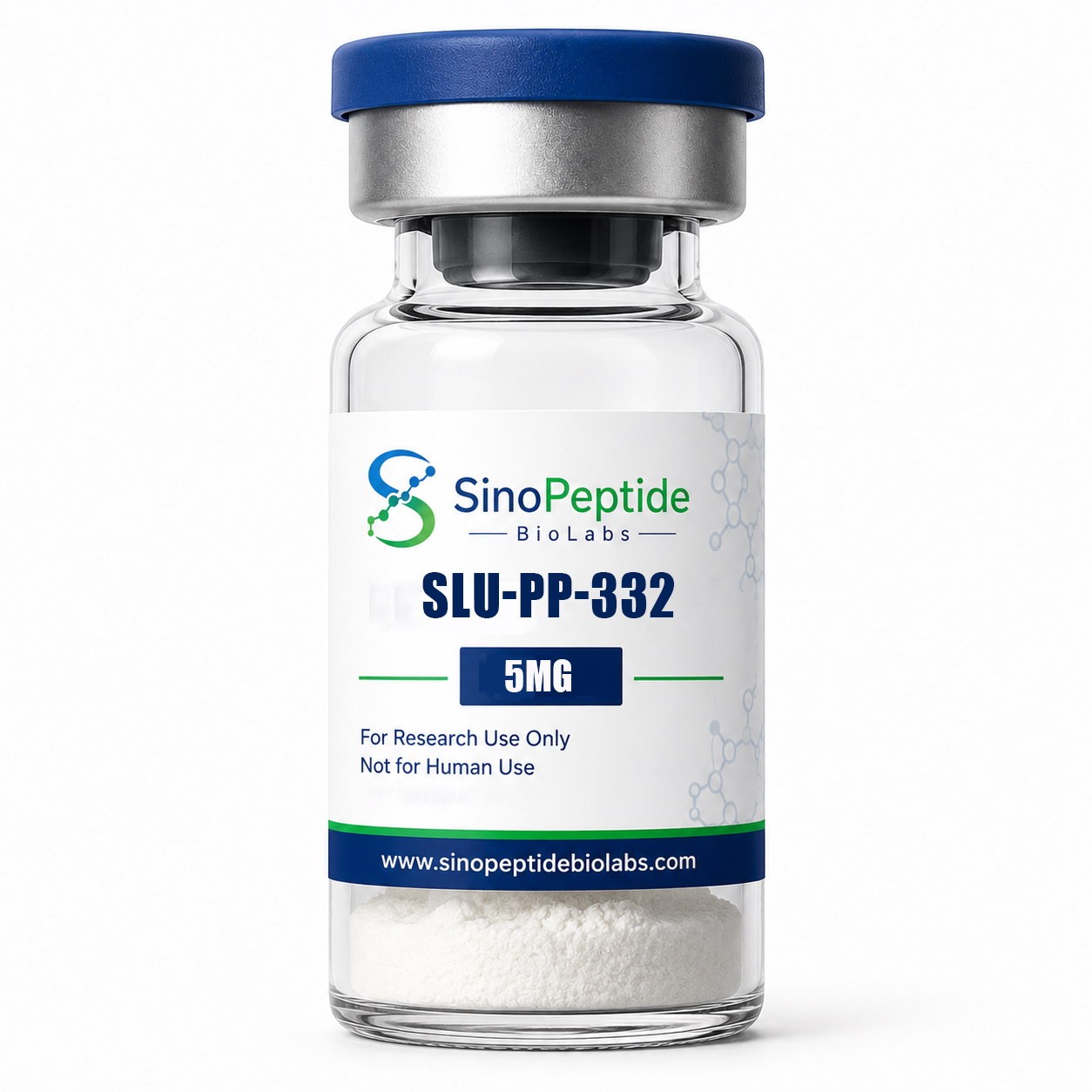
SLU-PP-332 5mg
$70.00
10 Vials/ Kits
SLU-PP-332 5mg: Research, Mechanism, Benefits, Safety & Uses
Introduction
SLU-PP-332 5mg is an experimental small-molecule research compound that has attracted scientific interest because of its activity at the estrogen-related receptor (ERR) family, particularly ERRα. Unlike peptide-based research compounds, SLU-PP-332 is a synthetic small molecule designed to interact with nuclear receptors involved in mitochondrial metabolism and exercise-responsive gene regulation.
Research has identified SLU-PP-332 as a pan-ERR agonist, meaning that it can activate ERRα, ERRβ, and ERRγ, with particularly strong activity reported toward ERRα. Experimental studies have investigated its effects on mitochondrial function, cellular respiration, skeletal-muscle metabolism, oxidative muscle fibers, fatty-acid oxidation, and exercise endurance.
Interest in SLU-PP-332 has expanded because researchers are exploring whether pharmacological activation of ERR signaling can reproduce selected molecular adaptations normally associated with aerobic exercise. In mouse studies, SLU-PP-332 increased oxidative skeletal-muscle characteristics and exercise endurance, providing proof-of-concept for the broader concept of an exercise-mimetic compound.
Further preclinical work investigated SLU-PP-332 in models of obesity and metabolic syndrome. These studies reported increased energy expenditure, enhanced fatty-acid oxidation, reduced fat accumulation, and improved insulin sensitivity in experimental animals.
However, these findings should be interpreted correctly. SLU-PP-332 remains a preclinical research compound, and results from cells and animal models do not establish safety or effectiveness in humans. A 2026 study examining SLU-PP-332 metabolites for doping-control purposes also describes the compound as an emerging exercise mimetic and notes its experimental status.
The 5mg designation refers to the amount of compound represented by a research product, not a validated human dose or recommendation for administration.
This guide explains what SLU-PP-332 is, how it works, why researchers study it, its relationship with exercise and mitochondrial metabolism, potential research applications, safety considerations, regulatory limitations, and factors to consider when evaluating a research product.
What Is SLU-PP-332?
SLU-PP-332 is a synthetic estrogen-related receptor agonist developed as a chemical tool for studying ERR signaling.
Estrogen-related receptors, commonly abbreviated as ERRs, are orphan nuclear receptors involved in regulating genes associated with energy metabolism, mitochondrial function, oxidative phosphorylation, fatty-acid utilization, and skeletal-muscle adaptation.
There are three major ERR subtypes:
- ERRα
- ERRβ
- ERRγ
Research characterizes SLU-PP-332 as a pan-ERR agonist capable of targeting all three receptors, with its strongest activity reported toward ERRα.
This makes the compound useful for investigating how ERR activation affects cellular metabolism.
SLU-PP-332 is therefore different from research peptides such as MOTS-c, BPC-157, or CJC-1295. It is a small-molecule research compound, not a peptide.
What Does SLU-PP-332 5mg Mean?
The phrase SLU-PP-332 5mg generally refers to a research product containing a stated quantity of SLU-PP-332.
The 5mg amount should not be interpreted as a recommended clinical dosage.
Product quantity and experimental dose are separate concepts. The appropriate concentration or amount used in laboratory research depends on the experimental model, assay design, route used in an animal study, pharmacokinetic considerations, and other scientific variables.
For this reason, a product labeled “5mg” should not automatically be interpreted as an instruction for human administration.
For SEO and product accuracy, websites should describe 5mg as the product quantity rather than presenting it as a human dose.
How Does SLU-PP-332 Work?
The primary mechanism of interest is activation of the estrogen-related receptor family.
ERRs are nuclear receptors that regulate transcription of genes involved in energy metabolism. ERRα in particular has an important role in metabolic tissues and skeletal muscle.
Research has shown that SLU-PP-332 activates ERRα, ERRβ, and ERRγ, with significant ERRα activity. In skeletal-muscle cell experiments, the compound increased mitochondrial function and cellular respiration.
This provides a mechanistic explanation for why SLU-PP-332 has become an important research tool for studying exercise-related metabolic signaling.
SLU-PP-332 and ERRα
ERRα is one of the most important targets associated with SLU-PP-332.
The receptor participates in transcriptional regulation of genes associated with:
- Mitochondrial metabolism
- Oxidative phosphorylation
- Fatty-acid utilization
- Energy production
- Skeletal-muscle adaptation
- Exercise-responsive pathways
Experimental research indicates that ERRα activation is critical for some of the exercise-related effects observed with SLU-PP-332 in mice. In the original study, blocking ERRα signaling prevented the improvement in exercise endurance associated with the compound.
This finding helped establish ERRα as an important mechanistic target for exercise-mimetic research.
SLU-PP-332 and ERRβ
ERRβ is another member of the ERR family targeted by SLU-PP-332.
Although ERRα has received particular attention in studies of skeletal-muscle exercise biology, ERRβ contributes to the broader ERR signaling network.
Because SLU-PP-332 can activate multiple ERR subtypes, it is useful as a pharmacological research tool for studying how coordinated ERR activation influences cellular metabolism.
SLU-PP-332 and ERRγ
ERRγ is also activated by SLU-PP-332.
Together, ERRα, ERRβ, and ERRγ regulate overlapping and distinct aspects of metabolic gene expression.
The ability of SLU-PP-332 to interact with all three receptors is one reason researchers refer to it as a pan-ERR agonist.
SLU-PP-332 as an Exercise Mimetic
One of the most recognizable descriptions of SLU-PP-332 is exercise mimetic.
An exercise mimetic is a compound investigated for its ability to reproduce selected molecular or physiological responses normally associated with physical activity.
It is important to understand that this does not mean the compound literally replaces exercise.
Instead, researchers are interested in whether activating particular molecular pathways can reproduce specific components of the biological response to exercise.
The original SLU-PP-332 research found that the compound induced an ERRα-dependent acute aerobic exercise gene program in mice. It also increased oxidative muscle fibers and improved exercise endurance.
This generated significant interest in ERR agonists as experimental tools for understanding exercise adaptation.
SLU-PP-332 and Mitochondrial Function
Mitochondrial biology is a major focus of SLU-PP-332 research.
Mitochondria are responsible for producing much of the cellular energy required by tissues with high energy demands, including skeletal muscle.
ERR signaling is closely associated with transcriptional control of mitochondrial metabolism.
In cell-based experiments, SLU-PP-332 increased mitochondrial function and cellular respiration in skeletal-muscle cells.
This makes the compound useful for investigating questions such as:
- How nuclear receptors regulate mitochondria
- How skeletal muscle adapts to exercise
- How cells alter energy production
- How fatty acids are metabolized
- How oxidative metabolism changes under different conditions
Importantly, increased mitochondrial activity in an experimental model does not automatically establish a clinical benefit in humans.
SLU-PP-332 and Skeletal Muscle Research
Skeletal muscle is one of the most extensively studied tissues in relation to SLU-PP-332.
Researchers have investigated how ERR activation affects muscle fiber characteristics and metabolic activity.
In mouse experiments, SLU-PP-332 increased the proportion of type IIa oxidative skeletal-muscle fibers. The compound also improved exercise endurance.
These findings are scientifically relevant because skeletal-muscle fiber composition influences how muscles generate and utilize energy during physical activity.
Researchers are therefore investigating ERR agonists in relation to:
- Muscle oxidative metabolism
- Exercise adaptation
- Mitochondrial function
- Fatty-acid oxidation
- Muscle endurance
- Metabolic flexibility
The evidence remains predominantly preclinical.
SLU-PP-332 and Fatty-Acid Oxidation
Fatty-acid oxidation is another major research area.
Fatty acids can be used by mitochondria as an energy source, particularly during prolonged or aerobic activity.
Experimental research has reported increased fatty-acid oxidation following SLU-PP-332 treatment in animal models. Studies in obesity and metabolic syndrome models also reported increased energy expenditure and changes in fat accumulation.
This has led researchers to examine whether ERR activation could influence the regulation of genes responsible for lipid metabolism.
The findings are interesting for metabolic research but should not be interpreted as evidence that SLU-PP-332 is a proven human weight-management treatment.
SLU-PP-332 and Energy Expenditure
Energy expenditure is another important endpoint investigated in experimental models.
In mouse models of metabolic syndrome, SLU-PP-332 increased energy expenditure and fatty-acid oxidation. Researchers also observed reduced fat-mass accumulation in treated animals.
These findings provide a basis for investigating the relationship between ERR signaling and whole-body metabolism.
However, animal metabolism can differ substantially from human metabolism. The presence of an effect in mice does not establish that the same effect occurs in people.
SLU-PP-332 and Metabolic Research
SLU-PP-332 has been studied in models relevant to metabolic syndrome and obesity.
In one study, researchers evaluated the compound in diet-induced obese and genetically obese mice. Experimental treatment produced changes in energy expenditure, fatty-acid oxidation, fat accumulation, and insulin sensitivity.
These findings have made SLU-PP-332 a research interest for scientists studying:
- Obesity biology
- Metabolic syndrome
- Insulin sensitivity
- Lipid metabolism
- Energy expenditure
- Mitochondrial metabolism
- Skeletal-muscle metabolism
Nevertheless, no conclusion about human therapeutic effectiveness should be drawn solely from these animal studies.
SLU-PP-332 and Insulin Sensitivity
Insulin sensitivity is another endpoint investigated in experimental SLU-PP-332 research.
In mouse models of metabolic syndrome, treatment with SLU-PP-332 improved insulin sensitivity. Researchers proposed that increased energy expenditure and fatty-acid oxidation contributed to the observed metabolic effects.
These findings are useful for understanding ERR signaling and metabolic physiology.
They do not establish SLU-PP-332 as a treatment for diabetes or insulin resistance in humans.
A scientifically responsible product description should therefore use terms such as “studied in metabolic models” rather than claiming that SLU-PP-332 treats metabolic disease.
SLU-PP-332 and Exercise Endurance
Exercise endurance is one of the clearest experimental outcomes associated with SLU-PP-332.
The original research reported increased treadmill exercise endurance in mice following treatment. The study linked the effect to ERRα activation and an exercise-associated transcriptional program.
This is one reason the compound is frequently described online as an exercise mimetic.
However, animal exercise performance should not be presented as proof of improved athletic performance in humans.
Human clinical research would be necessary to establish:
- Appropriate exposure
- Safety
- Pharmacokinetics
- Efficacy
- Potential adverse effects
- Effects on different populations
Such evidence is not currently established for SLU-PP-332.
New Research on SLU-PP-332
Research into SLU-PP-332 continues to develop.
A 2026 study performed detailed structure-activity relationship research on the SLU-PP-332 chemical scaffold. Researchers examined how structural modifications influence ERRα and ERRγ agonism, transcriptional activity, ligand efficiency, solubility, and metabolic stability.
The researchers described SLU-PP-332 as an established chemical probe for ERR activation and used its structure as a basis for investigating next-generation ERR agonists.
This is significant because it demonstrates that the compound remains useful not only for biological experiments but also for medicinal-chemistry research.
SLU-PP-332 Metabolism and Doping-Control Research
SLU-PP-332 has also become relevant to analytical chemistry and anti-doping research.
A 2026 study investigated the in-vitro metabolism of SLU-PP-332 using human liver S9 fractions. Researchers identified multiple metabolites using liquid chromatography and high-resolution mass spectrometry. The study was specifically designed to help characterize metabolites that could be relevant for doping-control purposes.
This research is important because experimental exercise mimetics can present challenges for analytical laboratories.
The findings demonstrate that SLU-PP-332 is being studied not only for pharmacology but also for:
- Metabolite identification
- Analytical chemistry
- Drug testing
- Anti-doping science
- Mass-spectrometry methods
Is SLU-PP-332 a Peptide?
No.
SLU-PP-332 is a synthetic small-molecule compound, not a peptide.
This distinction is important for accurate SEO content and product categorization.
A website should avoid describing SLU-PP-332 as a “peptide” because doing so can create inaccurate scientific information.
Appropriate descriptions include:
- Small-molecule research compound
- Synthetic ERR agonist
- Pan-ERR agonist
- ERR research compound
- Exercise-mimetic research compound
- Metabolic research compound
Is SLU-PP-332 5mg FDA Approved?
SLU-PP-332 should not be represented as an FDA-approved medication or established human therapy.
The published literature describes it as a preclinical research compound, and the current evidence base is dominated by cell and animal studies rather than established clinical efficacy and safety data.
Consequently, a product page should not claim that SLU-PP-332 5mg is approved to treat:
- Obesity
- Diabetes
- Metabolic syndrome
- Muscle disorders
- Aging
- Fatigue
- Cardiovascular disease
- Exercise intolerance
Such claims would go beyond the available evidence.
SLU-PP-332 Safety Considerations
Safety is a major consideration because SLU-PP-332 remains an experimental compound.
Preclinical efficacy does not establish a complete human safety profile.
Important questions for future development include:
- Human pharmacokinetics
- Human pharmacodynamics
- Long-term exposure
- Organ-specific effects
- Drug interactions
- Off-target activity
- Reproductive effects
- Cardiovascular effects
- Metabolic effects
- Appropriate therapeutic window
These questions cannot be answered adequately using current animal evidence alone.
Researchers should therefore avoid assuming that findings observed in mice translate directly to human safety.
Why Product Quality Matters for SLU-PP-332 5mg
When evaluating an experimental research compound, documentation is an important part of research quality.
A credible research product should have clear identification and appropriate analytical documentation.
Certificate of Analysis
Where available, a Certificate of Analysis (COA) should correspond to the relevant batch or lot.
Depending on the supplier and testing laboratory, documentation may include:
- Compound identity
- Purity
- Batch number
- Analytical method
- Test date
- Laboratory information
- Reported quantity
A generic COA that cannot be connected to the actual batch provides less useful information than batch-specific analytical documentation.
Compound Identity
Correct identification is particularly important with small-molecule research compounds because structurally related analogues can have substantially different pharmacological properties.
Researchers should verify that the documentation specifically identifies SLU-PP-332 rather than simply using a generic description such as “exercise mimetic” or “ERR agonist.”
Purity and Analytical Testing
Purity testing can help researchers evaluate whether a material is appropriate for an intended laboratory experiment.
Depending on the research application, analytical characterization may involve techniques such as:
- High-performance liquid chromatography
- Mass spectrometry
- Nuclear magnetic resonance
- Other validated analytical approaches
The appropriate testing method depends on the scientific question and the requirements of the research laboratory.
SLU-PP-332 5mg for Research
SLU-PP-332 may be relevant to laboratory research involving ERR signaling and metabolic biology.
Potential research areas include:
ERR receptor research
Scientists can use SLU-PP-332 as a pharmacological tool for investigating ERRα, ERRβ, and ERRγ signaling.
Mitochondrial biology
Researchers can examine how ERR activation affects mitochondrial metabolism and cellular respiration.
Skeletal-muscle research
SLU-PP-332 can be investigated in experimental models of muscle metabolism and exercise adaptation.
Metabolic research
The compound has been studied in models of obesity, energy expenditure, fatty-acid oxidation, and insulin sensitivity.
Exercise-mimetic research
Researchers can examine how pharmacological activation of ERR signaling reproduces selected molecular responses associated with aerobic exercise.
Medicinal chemistry
The SLU-PP-332 scaffold is also being investigated as a starting point for designing improved ERR agonists.
SLU-PP-332 vs. Exercise
The term “exercise mimetic” can easily create misunderstanding.
SLU-PP-332 does not mean that a chemical compound can reproduce every biological effect of exercise.
Physical activity affects numerous physiological systems simultaneously, including:
- Skeletal muscle
- Cardiovascular function
- Nervous system signaling
- Endocrine pathways
- Immune signaling
- Bone metabolism
- Mitochondrial adaptation
- Vascular function
SLU-PP-332 primarily provides researchers with a way to investigate a particular molecular pathway associated with exercise responses.
Therefore, exercise mimetic should be understood as a research description rather than a claim that the compound replaces physical activity.
Common Misconceptions About SLU-PP-332
Is SLU-PP-332 a peptide?
No. It is a synthetic small-molecule ERR agonist.
Is SLU-PP-332 the same as a GLP-1 medication?
No. SLU-PP-332 acts through the ERR nuclear-receptor system and is mechanistically different from GLP-1 receptor agonists.
Is 5mg a human dose?
No. Five milligrams describes the stated quantity of a research product and should not automatically be interpreted as a clinical dose.
Does SLU-PP-332 cause weight loss in humans?
There is no established clinical evidence demonstrating that SLU-PP-332 is an effective human weight-loss treatment. Animal studies have reported reduced fat accumulation and metabolic effects, but those findings remain preclinical.
Does SLU-PP-332 improve endurance?
Experimental mouse studies reported increased exercise endurance. This does not establish the same effect in humans.
Is SLU-PP-332 an exercise replacement?
No. It is better described as an experimental compound used to investigate selected exercise-related molecular pathways.
Frequently Asked Questions About SLU-PP-332 5mg
What is SLU-PP-332 5mg?
SLU-PP-332 5mg refers to a research product containing a stated quantity of the synthetic small-molecule ERR agonist SLU-PP-332.
What does SLU-PP-332 do?
SLU-PP-332 activates ERRα, ERRβ, and ERRγ, with particularly strong ERRα activity. Experimental studies have investigated its effects on mitochondrial function, skeletal-muscle metabolism, fatty-acid oxidation, and exercise endurance.
What is SLU-PP-332 used for?
It is primarily studied as a research tool for investigating ERR signaling, exercise-mimetic biology, mitochondrial metabolism, skeletal-muscle physiology, and metabolic disease models.
Is SLU-PP-332 FDA approved?
It should not be presented as an FDA-approved therapeutic. Current published research remains primarily preclinical.
Is SLU-PP-332 a peptide?
No. SLU-PP-332 is a synthetic small molecule.
Does SLU-PP-332 activate ERRα?
Yes. Research identifies SLU-PP-332 as a pan-ERR agonist with significant ERRα activity, and ERRα signaling was important for the exercise-endurance effects observed in mouse experiments.
Does SLU-PP-332 affect mitochondria?
Experimental research has reported increased mitochondrial function and cellular respiration in skeletal-muscle cells following SLU-PP-332 exposure.
Has SLU-PP-332 been studied for obesity?
Yes. Animal studies have investigated SLU-PP-332 in diet-induced and genetically induced obesity models, reporting increased energy expenditure, fatty-acid oxidation, and reduced fat accumulation.
Has SLU-PP-332 been studied in humans?
The major published efficacy studies underlying current interest are preclinical, particularly cell and animal research. Human safety and efficacy should therefore not be assumed from these findings.
Why is SLU-PP-332 called an exercise mimetic?
Because experimental studies found that activating ERR signaling with SLU-PP-332 can reproduce selected molecular and physiological responses associated with aerobic exercise in animal models.
What does 5mg mean?
It identifies the stated quantity of compound in a research product. It does not establish a recommended human dose.
SEO Strategy for the SLU-PP-332 5mg Product Page
For a website targeting the keyword SLU-PP-332 5mg, the page should combine commercial relevance with educational depth.
The primary keyword can naturally appear in:
- SEO title
- H1
- Introduction
- One or two H2 headings
- Meta description
- URL slug
- Product description
- FAQ section
- Image alt text
Secondary keywords should be distributed naturally throughout the article.
Useful topical clusters include:
SLU-PP-332 research
SLU-PP-332 mechanism
SLU-PP-332 ERR agonist
SLU-PP-332 exercise mimetic
SLU-PP-332 mitochondrial research
SLU-PP-332 metabolism
SLU-PP-332 endurance research
SLU-PP-332 safety
SLU-PP-332 5mg research compound
Avoid repeating the exact-match keyword excessively. A comprehensive article covering the compound’s mechanism, scientific background, research applications, limitations, and safety considerations provides more useful topical coverage than keyword stuffing.
Recommended Internal Links
To build topical authority around SLU-PP-332, consider linking this page to related educational content such as:
- What Are Exercise Mimetics?
- ERRα, ERRβ and ERRγ Explained
- Mitochondrial Metabolism Research
- Research Compounds and Certificate of Analysis Guide
- Small-Molecule Research Compounds
- Metabolic Research Compounds
- Skeletal Muscle and Mitochondrial Research
- Exercise and Cellular Energy Metabolism
- Research Compound Safety Guide
These pages can create a broader topical cluster around mitochondrial biology, exercise-mimetic research, and metabolic signaling.
Final Thoughts on SLU-PP-332 5mg
SLU-PP-332 5mg is an experimental research product associated with one of the more interesting areas of contemporary exercise and metabolic biology.
Unlike peptide-based compounds, SLU-PP-332 is a synthetic small-molecule agonist of estrogen-related receptors. Research has characterized it as a pan-ERR agonist with significant activity at ERRα, ERRβ, and ERRγ.
Its scientific importance comes from the role of ERRs in regulating genes associated with mitochondrial metabolism, oxidative energy production, fatty-acid utilization, and skeletal-muscle adaptation.
Experimental studies have reported several notable findings. In skeletal-muscle models, SLU-PP-332 increased mitochondrial function and cellular respiration. In mice, researchers observed changes in oxidative muscle fibers and improved exercise endurance.
Additional animal research investigated the compound in metabolic syndrome and obesity models, reporting increased energy expenditure, enhanced fatty-acid oxidation, reduced fat accumulation, and improved insulin sensitivity.
More recent research has expanded the field through chemical optimization of the SLU-PP-332 scaffold, while analytical researchers have investigated its metabolites for potential use in doping-control methods.
Despite this growing research interest, SLU-PP-332 remains an experimental preclinical compound. Animal findings should not be presented as established human benefits, and the compound should not be marketed as an approved treatment for obesity, diabetes, metabolic syndrome, aging, or exercise performance.
For research-focused websites, the most accurate positioning is therefore to describe SLU-PP-332 5mg as a small-molecule ERR research compound used to investigate exercise-responsive transcription, mitochondrial metabolism, skeletal-muscle physiology, and metabolic signaling.
Product documentation also matters. Researchers should look for accurate compound identification, appropriate analytical testing, batch-specific documentation where available, and transparent research-use labeling.
By combining scientifically accurate information with clear SEO structure, this page can target the SLU-PP-332 5mg keyword while also building topical relevance around ERR agonists, exercise-mimetic research, mitochondrial metabolism, and metabolic biology.
Research Disclaimer: SLU-PP-332 is an experimental research compound. The information presented here is for educational and research-information purposes and is not medical advice. Nothing in this article establishes SLU-PP-332 as a human treatment, approved medication, dietary supplement, or substitute for exercise or medical care. No dosing or human-administration recommendation is provided.
SLU-PP-332 5mg SLU-PP-332 5mgSLU-PP-332 5mg SLU-PP-332 5mg SLU-PP-332 5mg SLU-PP-332 5mg SLU-PP-332 5mg SLU-PP-332 5mg SLU-PP-332 5mg SLU-PP-332 5mg SLU-PP-332 5mg SLU-PP-332 5mg SLU-PP-332 5mg SLU-PP-332 5mg SLU-PP-332 5mg SLU-PP-332 5mg SLU-PP-332 5mg SLU-PP-332 5mg SLU-PP-332 5mg SLU-PP-332 5mg SLU-PP-332 5mg SLU-PP-332 5mg SLU-PP-332 5mg SLU-PP-332 5mg SLU-PP-332 5mg SLU-PP-332 5mg SLU-PP-332 5mg SLU-PP-332 5mg SLU-PP-332 5mg SLU-PP-332 5mg SLU-PP-332 5mg
Be the first to review “SLU-PP-332 5mg”
Related products
Pure Peptides
Pure Peptides
Pure Peptides
Pure Peptides
Pure Peptides
Pure Peptides
Pure Peptides
Pure Peptides
Reviews
There are no reviews yet.