


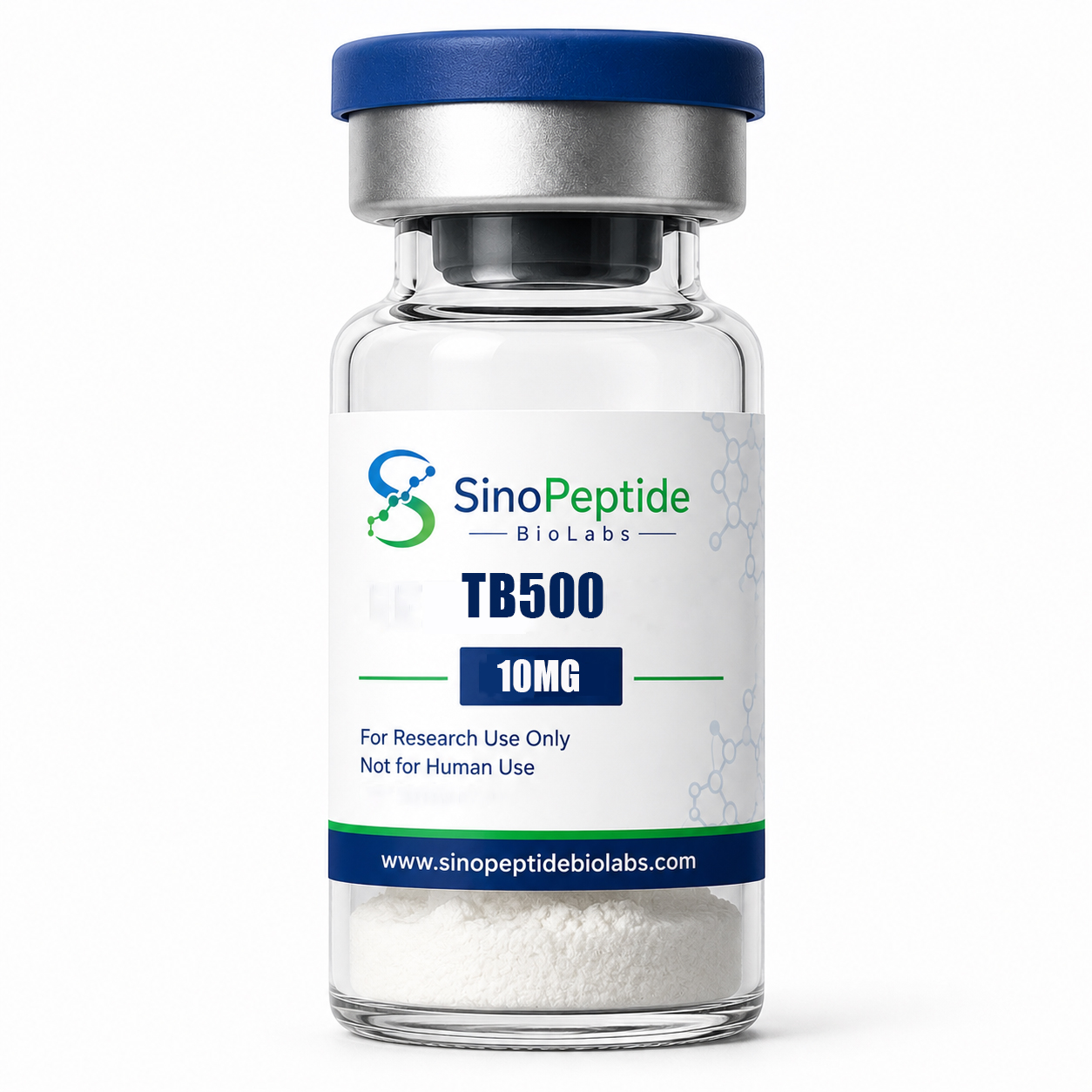
TB 500( Thymosin B4 Acetate) 10mg
$135.00
10Vials/ Kits
TB-500 (Thymosin Beta-4 Fragment) 10mg: Complete Research Peptide Guide, Mechanism, Uses, Safety and Quality
TB-500 10mg is a research peptide product commonly associated with the Thymosin Beta-4 (Tβ4) signaling pathway and studied in connection with tissue repair, cell migration, angiogenesis, inflammation, and regenerative biology. The name “TB-500” is frequently used in commercial research settings to describe a synthetic fragment related to Thymosin Beta-4.
However, an important scientific distinction should be made before discussing TB-500.
Full-length Thymosin Beta-4 is a naturally occurring 43-amino-acid peptide, while TB-500 is generally identified in regulatory and research literature as the seven-amino-acid fragment LKKTETQ. FDA materials specifically distinguish TB-500 from full-length Thymosin Beta-4 and discuss TB-500 acetate and TB-500 free base as separate bulk-substance forms.
This distinction matters for accurate product descriptions, scientific SEO, and regulatory compliance. Research involving full-length Tβ4 should not automatically be represented as clinical evidence for a TB-500 10mg product.
This guide explains TB-500 10mg, its relationship to Thymosin Beta-4, proposed biological mechanisms, research applications, product quality considerations, safety concerns, regulatory status, and commonly asked questions.
Research-use note: TB-500 10mg should not be presented as an FDA-approved treatment or as a substitute for an approved medical therapy. Research findings involving Thymosin Beta-4, particularly animal and laboratory studies, should not automatically be interpreted as evidence that TB-500 is safe or effective for treating human conditions.
What Is TB-500 10mg?
TB-500 10mg is a research peptide product containing a labeled quantity of TB-500. The “10mg” designation refers to the amount of material in the product, not an established human therapeutic dose.
TB-500 is generally associated with the sequence LKKTETQ, a short peptide fragment derived from the actin-binding region of Thymosin Beta-4.
The full-length Thymosin Beta-4 molecule contains 43 amino acids and is an endogenous peptide found in many tissues and biological fluids. Research has linked full-length Tβ4 to actin regulation, cell migration, angiogenesis, wound repair, inflammation, and cellular survival.
TB-500 is often marketed as a Thymosin Beta-4-related research peptide because the LKKTETQ sequence is located within the actin-binding region of Tβ4.
This creates an important SEO and scientific distinction:
- TB-500: commonly refers to the LKKTETQ seven-amino-acid fragment.
- Thymosin Beta-4: full-length naturally occurring 43-amino-acid peptide.
- TB-500 acetate: an acetate-associated form of the TB-500 peptide material.
- TB-500 10mg: a product quantity designation.
- Thymosin Beta-4 research: may involve the full-length 43-amino-acid molecule rather than TB-500.
A high-quality product page should avoid treating these terms as perfectly interchangeable.
TB-500 vs Thymosin Beta-4: Are They the Same?
One of the most common misconceptions surrounding TB-500 is that TB-500 and full-length Thymosin Beta-4 are chemically identical.
They are not.
Full-length Thymosin Beta-4 is a 43-amino-acid peptide. TB-500 is generally identified as the LKKTETQ fragment, consisting of seven amino acids. FDA documentation specifically describes TB-500 as “Thymosin Beta-4, Fragment (LKKTETQ)” and separately discusses TB-500 acetate and TB-500 free base.
The relationship is therefore better described as:
Thymosin Beta-4 → contains an actin-binding region → LKKTETQ fragment → commonly associated with TB-500 research
This distinction is particularly important when interpreting scientific studies.
A study involving full-length Tβ4 should not automatically be described as a study of TB-500 10mg.
What Does 10mg Mean for TB-500?
The “10mg” in TB-500 10mg describes the nominal quantity of peptide material in the product.
It does not establish:
- a recommended human dose;
- a therapeutic dose;
- an approved medical regimen;
- a concentration after reconstitution;
- clinical effectiveness;
- or equivalence to a dose used in a Thymosin Beta-4 study.
Research products can be sold in different quantities for laboratory applications, including 2mg, 5mg, 10mg or other specifications.
For SEO and product information, the safest interpretation is:
TB-500 10mg = TB-500 research material labeled as containing 10mg.
The amount should not be confused with the amounts or concentrations investigated in clinical studies of other Thymosin Beta-4 formulations.
How Does TB-500 Relate to Thymosin Beta-4 Biology?
Thymosin Beta-4 is best known for its interaction with actin, an important cytoskeletal protein.
Actin participates in:
- cell shape;
- cell movement;
- intracellular organization;
- tissue remodeling;
- wound repair;
- cellular migration;
- and other fundamental biological processes.
Tβ4 is described as a major actin-sequestering molecule, and research has connected its activity with cellular migration, angiogenesis, wound repair, and tissue regeneration.
The LKKTETQ region has attracted scientific interest because it represents an important portion of the actin-binding region of Tβ4. Experimental research has investigated short sequences associated with this region and their biological effects.
Nevertheless, the biological activity of a short peptide fragment should not automatically be assumed to reproduce all of the properties of the complete 43-amino-acid protein.
TB-500 Research and Actin Signaling
Actin is a central component of the cellular cytoskeleton.
Changes in actin dynamics can influence how cells:
- move toward an injured area;
- change shape;
- attach to surrounding structures;
- organize tissues;
- and respond to environmental signals.
Full-length Thymosin Beta-4 has been extensively studied for its relationship with actin regulation.
Research has proposed that Tβ4-mediated effects on actin dynamics can contribute to cell migration and wound-repair processes.
This is one reason the Thymosin Beta-4/TB-500 research area has attracted attention in regenerative biology.
However, laboratory observations involving actin signaling do not establish that a commercially labeled TB-500 10mg product will produce a particular clinical outcome in humans.
TB-500 and Cell Migration Research
Cell migration is a critical biological process during tissue repair.
Following tissue injury, different types of cells need to move into or around the damaged area. These include epithelial cells, endothelial cells, fibroblasts and immune cells.
Research on full-length Thymosin Beta-4 has identified increased cell migration as one possible mechanism underlying its effects on tissue repair.
For example, experimental studies have reported increased keratinocyte migration in wound models. An early study found that Tβ4 increased re-epithelialization, collagen deposition and angiogenesis in a rat full-thickness wound model.
Reviews of Tβ4 biology have similarly described effects involving cell migration, angiogenesis, inflammation and cellular survival.
These findings help explain why TB-500 is frequently discussed in regenerative research.
But again, research on full-length Tβ4 should be clearly distinguished from direct evidence concerning TB-500.
TB-500 and Wound-Healing Research
Wound healing is one of the most extensively studied areas associated with Thymosin Beta-4.
Research has examined several components of the wound-healing process, including:
- epithelial migration;
- angiogenesis;
- extracellular-matrix remodeling;
- collagen deposition;
- inflammatory signaling;
- cell survival;
- and tissue regeneration.
A PubMed-indexed review describes Tβ4 as a naturally occurring regenerative molecule that has been investigated in animal models and human wound studies.
Another review reports that Tβ4 promoted dermal healing in various preclinical models and had been investigated in phase 2 studies involving pressure ulcers, stasis ulcers and epidermolysis bullosa wounds.
These studies provide important background for understanding why the Thymosin Beta-4 pathway remains relevant to regenerative research.
However, the evidence should be described accurately.
Full-length Tβ4 research is not automatically TB-500 evidence
A website should avoid statements such as:
“TB-500 has been clinically proven to heal wounds.”
That wording incorrectly collapses different molecules, formulations and study designs into a single claim.
A more scientifically appropriate statement is:
“Thymosin Beta-4 has been investigated in preclinical and clinical wound-healing research, while TB-500 is a shorter Thymosin Beta-4-related fragment requiring separate evaluation.”
TB-500 and Angiogenesis Research
Angiogenesis refers to the formation of new blood vessels.
New blood-vessel formation is an important component of tissue repair because damaged tissues may require improved blood flow during regeneration.
Research involving full-length Tβ4 has reported angiogenic activity.
Studies have investigated:
- endothelial-cell migration;
- blood-vessel formation;
- tissue perfusion;
- wound repair;
- and cellular responses following injury.
A review of Tβ4 research describes angiogenesis, cell migration and tissue repair among the peptide’s biological activities.
Another review describes the role of Tβ4 in tissue repair and regeneration and discusses its potential applications involving dermal, corneal and other tissues.
For TB-500 research, angiogenesis therefore represents an important area of investigation, but it should not be converted into a therapeutic promise.
TB-500 and Inflammation Research
Inflammation is an essential part of normal tissue repair, but excessive or prolonged inflammatory signaling can contribute to tissue damage.
Thymosin Beta-4 has been investigated for effects on inflammatory pathways.
Research reviews describe Tβ4-related effects involving inflammatory cytokines and chemokines, cellular survival, and tissue-repair processes.
This has led researchers to investigate whether Tβ4-related pathways could influence the balance between inflammation and regeneration.
However, “anti-inflammatory” should not be interpreted as meaning that TB-500 is an established anti-inflammatory treatment.
TB-500 and Fibrosis Research
Fibrosis involves excessive deposition and remodeling of extracellular matrix.
Thymosin Beta-4 research has investigated its potential relationship with:
- fibroblast activity;
- collagen deposition;
- myofibroblast behavior;
- tissue remodeling;
- and scar formation.
A review of Tβ4 biology describes effects involving myofibroblasts, inflammation and fibrosis.
These findings are scientifically relevant because wound repair requires controlled tissue remodeling.
At the same time, fibrosis-related findings from laboratory models should not be interpreted as evidence that TB-500 prevents or treats human fibrotic disease.
TB-500 Research Applications
TB-500 and Thymosin Beta-4-related peptides are commonly discussed in research involving:
1. Wound repair
Researchers investigate epithelial migration, tissue remodeling, collagen deposition and wound closure.
2. Regenerative biology
Tβ4 has been studied in relation to cellular repair, regeneration and tissue protection.
3. Angiogenesis
Research examines blood-vessel formation and endothelial-cell behavior.
4. Cell migration
Actin-dependent cellular movement is a major area of interest.
5. Inflammation
Researchers investigate inflammatory cytokines and cellular responses after tissue injury.
6. Fibrosis
Tβ4 research includes investigation of scar formation and extracellular-matrix remodeling.
7. Corneal research
Full-length Tβ4 has been investigated in ocular wound-healing models. Reviews have described its potential effects on corneal cell migration, inflammation and wound repair.
8. Cardiovascular research
Tβ4 has been investigated experimentally in cardiac injury and repair models.
9. Neurological research
Research has explored Tβ4-related mechanisms in nervous-system injury and regeneration.
These areas demonstrate the breadth of the scientific field without implying that TB-500 is an approved treatment for any of these conditions.
TB-500 10mg and Preclinical Research
Much of the mechanistic literature surrounding Thymosin Beta-4 comes from:
- cell culture studies;
- animal models;
- biochemical experiments;
- tissue models;
- and early-stage clinical research.
Animal studies are useful for investigating mechanisms and generating hypotheses.
For example, Tβ4 research has demonstrated effects on cell migration, angiogenesis, inflammation and wound repair in different animal models.
However, animal results cannot establish human safety or effectiveness by themselves.
This distinction is especially important for TB-500 because FDA materials have identified limited safety information for products containing TB-500 and specifically highlighted concerns relating to injectable administration, aggregation and peptide-related impurities.
TB-500 Acetate: What Does “Acetate” Mean?
TB-500 may be described commercially as TB-500 acetate.
The term “acetate” generally indicates an acetate-associated form of the peptide material rather than a completely different biological peptide.
FDA materials specifically identify both:
- TB-500 free base; and
- TB-500 acetate.
The FDA describes these as seven-amino-acid peptides associated with TB-500 and notes the proposed use of injectable routes in the regulatory evaluation.
For product-page accuracy, “acetate” should not be presented as proof of greater effectiveness or superior quality.
Quality depends on factors such as:
- chemical identity;
- purity;
- peptide sequence;
- aggregation;
- residual impurities;
- analytical characterization;
- and manufacturing controls.
TB-500 10mg Quality and Purity
For research peptides, product quality can be as important as the nominal quantity.
A high-quality TB-500 10mg research product should ideally be supported by appropriate analytical documentation.
Important quality indicators include:
HPLC Testing
High-performance liquid chromatography can be used to evaluate peptide purity and identify related impurities.
A reported purity percentage should be accompanied by appropriate analytical information rather than presented as an unsupported marketing number.
Mass Spectrometry
Mass spectrometry can help confirm molecular mass and support peptide identity.
For a short peptide such as TB-500, analytical confirmation is important because small sequence or synthesis differences can produce different materials.
Sequence Identity
The documentation should clearly identify what peptide is being supplied.
This is particularly important for TB-500 because of the frequent confusion between:
- full-length Thymosin Beta-4;
- TB-500;
- Thymosin Beta-4 fragments;
- and other short peptide sequences.
Certificate of Analysis
A useful COA may include:
- product name;
- batch or lot number;
- testing date;
- purity result;
- analytical method;
- molecular-weight confirmation;
- and laboratory information.
Batch Traceability
The lot number on the product should correspond to the analytical documentation.
Why Peptide Aggregation Matters
Peptide aggregation is an important quality and safety consideration.
Individual peptide molecules can associate into larger structures under certain conditions.
Aggregation can potentially affect:
- product consistency;
- analytical characterization;
- biological behavior;
- stability;
- and immunogenicity.
This issue is particularly important for injectable peptide materials.
The FDA specifically raised concerns about potential immunogenicity associated with TB-500, including risks that may be amplified by aggregation and peptide-related impurities. The agency also noted the lack of sufficient human safety information for TB-500 drug products.
Consequently, a TB-500 product should not be evaluated solely by its stated milligram amount.
TB-500 10mg Safety Considerations
Safety is an important part of responsible TB-500 research information.
FDA materials have identified significant information gaps concerning TB-500. In its evaluation, FDA stated that it lacked sufficient clinical and nonclinical safety information and highlighted concerns about immunogenicity, aggregation and peptide-related impurities.
The FDA’s current bulk-substance safety materials similarly state that compounded drugs containing TB-500 may pose an immunogenicity risk because of aggregation and peptide-related impurities and that important information is lacking regarding potential harm in humans.
This means that claims describing TB-500 as “completely safe,” “risk-free,” or “clinically proven” are not scientifically justified.
Potential research concerns include:
- peptide purity;
- sequence identity;
- aggregation;
- impurities;
- immunogenicity;
- formulation quality;
- route of administration;
- and lack of adequate human safety data.
For these reasons, TB-500 should not be marketed as an established human medicine.
Is TB-500 FDA Approved?
TB-500 is not an FDA-approved therapeutic drug.
FDA materials have evaluated TB-500 in the context of bulk substances for compounding and identified substantial safety-information limitations.
In 2026, FDA materials stated that the nomination for “Thymosin Beta-4, Fragment (LKKTETQ),” also known as TB-500, had been withdrawn from category 2, while FDA planned to consult its Pharmacy Compounding Advisory Committee regarding TB-500 acetate and TB-500 free base.
This regulatory process should not be confused with FDA approval.
An FDA review, advisory committee discussion or potential consideration for a compounding list does not mean that a substance has been approved as a prescription treatment.
TB-500 vs Full-Length Thymosin Beta-4
| Characteristic | TB-500 | Full-Length Thymosin Beta-4 |
|---|---|---|
| Common identity | LKKTETQ fragment | Thymosin Beta-4 |
| Length | 7 amino acids | 43 amino acids |
| Relationship | Fragment associated with Tβ4 | Complete endogenous peptide |
| Research focus | Fragment-related biological research | Broad tissue-repair and regenerative research |
| Actin-related research | Yes | Extensive |
| Wound-healing literature | More limited direct evidence | Extensive preclinical and clinical literature |
| FDA-approved medicine | No | No general FDA-approved Tβ4 drug |
| Product quantity | May be sold as 10mg | Varies by research formulation |
| Evidence interpretation | Must be evaluated separately | Do not automatically transfer to TB-500 |
The distinction between the two molecules is critical when creating accurate SEO content.
TB-500 vs BPC-157
TB-500 and BPC-157 are frequently grouped together in online discussions because both are associated with experimental tissue-repair research.
However, they are different peptides.
TB-500 is associated with the Thymosin Beta-4 fragment LKKTETQ.
BPC-157 is a different experimental peptide that has primarily been studied in preclinical gastrointestinal, vascular and tissue-repair models.
Neither should be described as interchangeable with the other.
Research findings for one peptide should not automatically be transferred to another.
TB-500 vs TB-4
The terms “TB-500” and “TB-4” can create additional confusion.
TB-4 is sometimes used informally to refer to Thymosin Beta-4, while TB-500 is commonly used to describe the shorter LKKTETQ fragment.
For scientifically precise content, the full chemical identity should be stated whenever possible.
This is especially important for laboratory purchasing, analytical testing and scientific documentation.
TB-500 Storage and Stability
Peptide stability depends on the specific formulation, packaging, concentration, solvent, temperature, moisture exposure and storage conditions.
A research product should therefore be stored according to the supplier’s validated product instructions rather than relying on generic internet recommendations.
Important stability factors can include:
- temperature;
- humidity;
- exposure to light;
- repeated handling;
- container integrity;
- formulation pH;
- and freeze-thaw history.
A product that has undergone inappropriate storage may not retain the same analytical characteristics as a properly stored material.
For research use, maintaining lot traceability and recording storage conditions can help support reproducibility.
How to Evaluate a TB-500 10mg Research Product
Before purchasing or using a research peptide for laboratory work, researchers can examine several factors.
1. Confirm the chemical identity
Determine whether the product is:
- TB-500/LKKTETQ;
- full-length Thymosin Beta-4;
- or another peptide.
2. Review the COA
Check whether the certificate corresponds to the specific lot.
3. Look for analytical testing
HPLC and mass spectrometry can provide useful information about purity and identity.
4. Check labeling
The product should clearly state the research status and material identity.
5. Evaluate documentation
Transparent suppliers should provide appropriate product and analytical information.
6. Avoid unsupported claims
Claims such as “guaranteed regeneration” or “clinically proven recovery” should be treated cautiously.
7. Distinguish research from clinical medicine
Laboratory material should not be presented as an approved treatment.
Common Misconceptions About TB-500 10mg
Myth 1: TB-500 is exactly the same as Thymosin Beta-4
Correction: TB-500 is generally identified as the seven-amino-acid LKKTETQ fragment, whereas full-length Tβ4 is a 43-amino-acid peptide.
Myth 2: 10mg means a medically established dose
Correction: 10mg describes product quantity and does not establish a human therapeutic dose.
Myth 3: Tβ4 wound studies prove TB-500 works identically
Correction: Evidence involving full-length Tβ4 should not automatically be transferred to TB-500.
Myth 4: FDA discussion means FDA approval
Correction: FDA evaluation or PCAC consideration is not equivalent to approval.
Myth 5: A high purity percentage proves clinical safety
Correction: Chemical purity is only one component of product quality and does not establish clinical safety.
Myth 6: “Research peptide” means proven ineffective
Correction: Research status means the product is being investigated and does not have the same regulatory status as an approved therapeutic product.
TB-500 10mg Research: What Does the Evidence Actually Show?
The strongest scientific foundation surrounding this subject comes from research on full-length Thymosin Beta-4, not necessarily commercial TB-500 products.
Research has demonstrated several interesting biological effects in laboratory and animal models.
These include:
- enhanced cellular migration;
- angiogenesis;
- modulation of inflammatory signaling;
- increased epithelial repair;
- cellular survival;
- and tissue-remodeling effects.
Human studies involving topical Tβ4 have also been conducted in wound-related settings. A phase 2 study of topical Tβ4 in venous stasis ulcers reported an acceptable safety profile and suggested potential wound-healing effects in some groups.
Other clinical research has examined Tβ4 in chronic wounds and epidermolysis bullosa.
However, these studies should not be represented as proof that TB-500 10mg is an approved human treatment.
The evidence hierarchy matters:
Cell studies → animal studies → early clinical research → larger controlled clinical trials → regulatory approval
TB-500 remains on the research side of this framework.
Why the TB-500 Research Field Is Important
The biological processes investigated through Tβ4 and TB-500 research are relevant to several major areas of biomedical science.
Modern regenerative medicine increasingly focuses on understanding how tissues:
- respond to injury;
- regulate inflammation;
- restore vascular networks;
- migrate across damaged areas;
- remodel extracellular matrix;
- and restore functional architecture.
Thymosin Beta-4 has become an important research molecule because it interacts with several of these biological processes simultaneously.
A review published in PubMed describes Tβ4 as a multifunctional peptide with research spanning tissue repair, regeneration, cellular signaling and potential clinical applications.
This makes the pathway valuable for continued investigation even when individual compounds or fragments have not received regulatory approval.
Frequently Asked Questions About TB-500 10mg
What is TB-500 10mg?
TB-500 10mg is a research peptide product labeled as containing 10mg of TB-500 material. TB-500 is commonly associated with the seven-amino-acid Thymosin Beta-4 fragment LKKTETQ.
Is TB-500 the same as Thymosin Beta-4?
No. Full-length Thymosin Beta-4 is a 43-amino-acid peptide, while TB-500 is generally identified as the shorter LKKTETQ fragment.
What is TB-500 used for in research?
Research discussions commonly focus on cell migration, actin biology, wound repair, angiogenesis, inflammation and regenerative biology.
Does TB-500 have human clinical evidence?
Direct clinical evidence for TB-500 itself is limited. Much of the published wound-healing literature concerns full-length Thymosin Beta-4 rather than the TB-500 fragment.
Is TB-500 FDA approved?
No. TB-500 is not an FDA-approved therapeutic drug.
What does 10mg mean?
It indicates the labeled quantity of peptide material in the product. It does not represent an FDA-approved human dose.
What is TB-500 acetate?
TB-500 acetate refers to an acetate-associated form of TB-500. FDA materials separately identify TB-500 acetate and TB-500 free base.
What is LKKTETQ?
LKKTETQ is the seven-amino-acid sequence commonly associated with TB-500 and the actin-binding region of Thymosin Beta-4.
Does TB-500 have wound-healing research?
Thymosin Beta-4 has substantial preclinical and some clinical wound-healing research. Direct evidence for TB-500 itself should be considered separately.
How should TB-500 research quality be evaluated?
Researchers can consider peptide identity, sequence confirmation, HPLC purity, mass spectrometry, batch traceability and the availability of a credible Certificate of Analysis.
Is TB-500 the same as BPC-157?
No. They are chemically different research peptides with different molecular structures and research histories.
Is TB-500 a regenerative medicine?
TB-500 is better described as an experimental research peptide associated with regenerative biology rather than as an approved regenerative medicine.
Conclusion: TB-500 10mg Research Overview
TB-500 10mg is a research peptide commonly associated with the LKKTETQ fragment of Thymosin Beta-4. Its scientific interest comes largely from the broader biology of Thymosin Beta-4, particularly research involving actin regulation, cellular migration, angiogenesis, inflammation and tissue repair.
The most important point for accurate scientific and SEO content is that TB-500 should not simply be treated as another name for full-length Thymosin Beta-4. Full-length Tβ4 contains 43 amino acids, whereas TB-500 is generally identified as the seven-amino-acid LKKTETQ fragment.
Research on full-length Tβ4 has produced interesting findings in wound-healing models and several early clinical studies. However, these results do not automatically establish the safety or effectiveness of TB-500 10mg.
FDA materials currently identify significant gaps in safety information for TB-500, including concerns about potential immunogenicity, aggregation and peptide-related impurities.
For research purposes, the most useful approach is therefore to focus on accurate molecular identity, analytical quality, evidence classification and regulatory status rather than making unsupported therapeutic claims.
TB-500 10mg can be appropriately positioned as a research product for laboratory investigation into peptide biology, actin-related pathways, cell migration and regenerative mechanisms, while clearly distinguishing experimental research from established medical treatment.
Research-use disclaimer: This content is provided for educational and research-information purposes. TB-500 is not presented as an FDA-approved treatment, and this article does not provide instructions for human administration, dosing or treatment of disease.
TB-500 10mg TB-500 10mg TB-500 10mg TB-500 10mg TB-500 10mg TB-500 10mg TB-500 10mg TB-500 10mg TB-500 10mg TB-500 10mg TB-500 10mg TB-500 10mg TB-500 10mg TB-500 10mg TB-500 10mg
Be the first to review “TB 500( Thymosin B4 Acetate) 10mg”
Related products
Pure Peptides
Pure Peptides
Pure Peptides
Pure Peptides
Pure Peptides
Pure Peptides
Pure Peptides
Pure Peptides
Reviews
There are no reviews yet.