

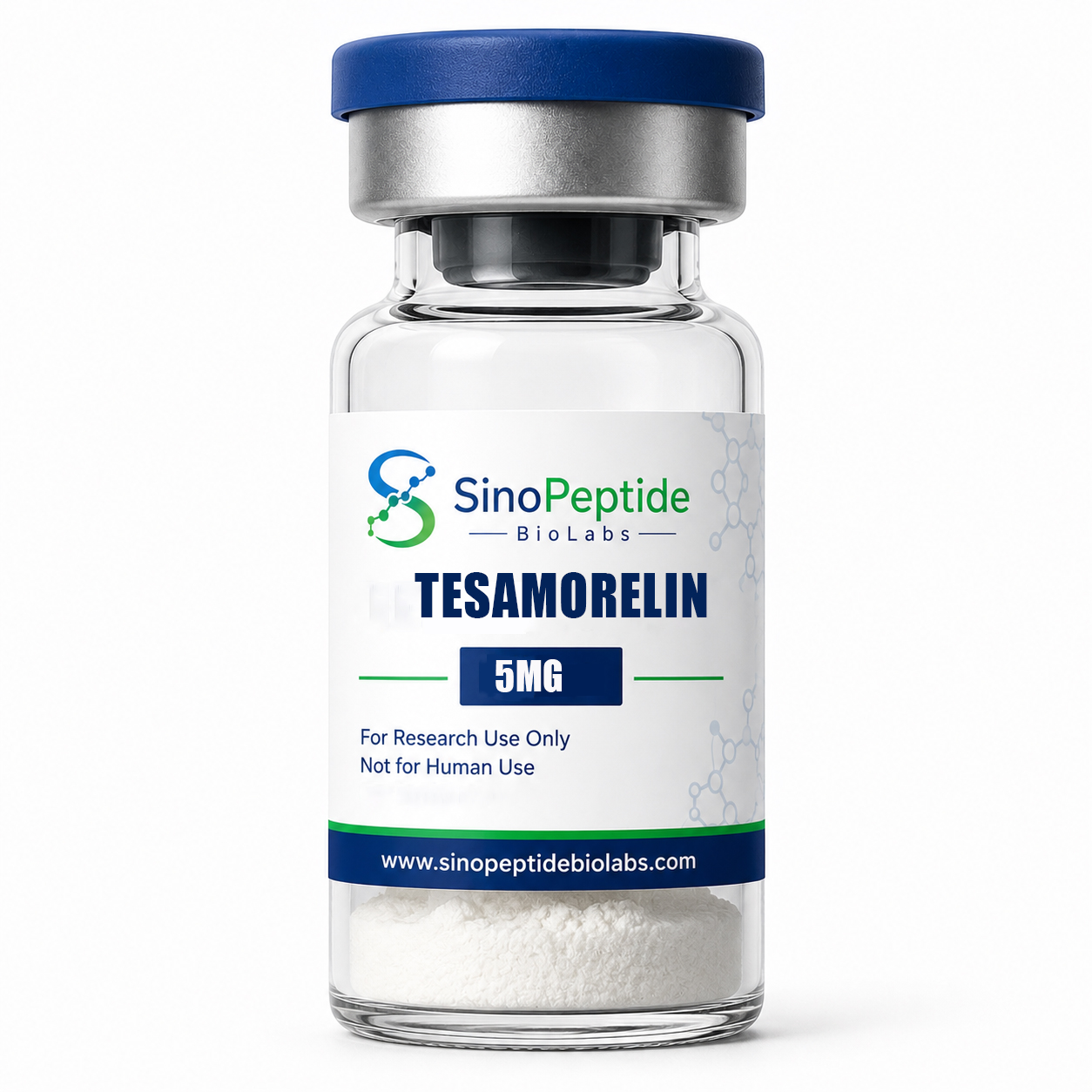
Tesamorelin 5mg
$90.00
10Vials/ Kits
Tesamorelin 5mg: Complete Research, Uses, Benefits, Safety and Quality Guide
Introduction
Tesamorelin 5mg is a product designation associated with tesamorelin, a synthetic analogue of growth hormone-releasing hormone (GHRH). Tesamorelin has attracted significant scientific and medical interest because it can stimulate the body’s growth hormone axis and has been clinically investigated for reducing excess visceral abdominal fat in adults with HIV-associated lipodystrophy.
Unlike many experimental peptides discussed online, tesamorelin has an established pharmaceutical history. In the United States, FDA-approved tesamorelin products are indicated for reducing excess abdominal fat in HIV-infected adults with lipodystrophy. Current FDA labeling also makes an important distinction: tesamorelin is not indicated for weight-loss management, because its effect on overall body weight is considered weight-neutral.
This distinction is essential for accurate SEO content.
A website should not simply describe Tesamorelin 5mg as a generic “fat-burning peptide.” Tesamorelin has a specific pharmacological mechanism and a specific FDA-approved indication. Its clinical research primarily concerns visceral adipose tissue in people with HIV-associated lipodystrophy rather than ordinary obesity or cosmetic weight loss.
Tesamorelin works by mimicking the activity of GHRH and stimulating the pituitary gland to release growth hormone. Increased growth hormone signaling subsequently affects downstream pathways, including insulin-like growth factor 1 (IGF-1), lipid metabolism, and body-composition regulation.
Research has demonstrated significant reductions in visceral adipose tissue in appropriately selected patients. In a major randomized clinical trial, patients receiving tesamorelin experienced a significant reduction in visceral adipose tissue compared with placebo.
This guide explains Tesamorelin 5mg, its mechanism, clinical research, relationship to growth hormone and IGF-1, quality considerations, regulatory status, safety considerations, storage, and common misconceptions.
What Is Tesamorelin?
Tesamorelin is a synthetic growth hormone-releasing hormone analogue.
It is designed to mimic the biological activity of endogenous growth hormone-releasing hormone, also known as GHRH.
GHRH is naturally produced by the hypothalamus and plays an important role in regulating the secretion of growth hormone from the anterior pituitary gland.
Tesamorelin interacts with the GHRH receptor and stimulates the release of endogenous growth hormone.
This creates a physiological pathway:
Tesamorelin → GHRH receptor stimulation → increased growth hormone release → downstream IGF-1 signaling and metabolic effects
This mechanism distinguishes tesamorelin from directly administered growth hormone.
Tesamorelin does not simply replace growth hormone. Instead, it acts upstream by stimulating the body’s own growth hormone secretion.
What Does Tesamorelin 5mg Mean?
The term Tesamorelin 5mg generally describes the stated quantity of tesamorelin in a particular product.
However, 5mg is a mass measurement, not automatically a clinical dose.
This distinction is extremely important when creating a product page.
For example:
- 5mg = mass
- 5mL = volume
- 5mg/mL = concentration
- 5mg vial = stated quantity contained in the vial
A 5mg product should therefore not automatically be described as a 5mg/mL solution or as the standard clinical dosage of tesamorelin.
Furthermore, FDA-approved tesamorelin products have specific formulations and dosing instructions. Current FDA labeling states that EGRIFTA WR and EGRIFTA SV have different formulations, strengths, preparation requirements, and storage instructions and are not substitutable.
Consequently, a generic online product labeled “Tesamorelin 5mg” should not automatically be equated with a particular FDA-approved formulation.
Tesamorelin and GHRH
Tesamorelin is closely related pharmacologically to growth hormone-releasing hormone.
GHRH naturally stimulates the pituitary gland to release growth hormone.
Tesamorelin was developed to reproduce this signaling pathway.
This is different from administering recombinant human growth hormone directly.
The distinction can be summarized as:
GHRH: endogenous signaling hormone
Tesamorelin: synthetic GHRH analogue
Growth hormone: downstream hormone released by the pituitary
IGF-1: downstream growth-related mediator influenced by growth hormone
This pathway is central to understanding tesamorelin research.
How Does Tesamorelin Work?
Tesamorelin binds to GHRH receptors in the pituitary gland.
This stimulates growth hormone secretion.
Growth hormone then acts on multiple tissues and stimulates production of insulin-like growth factor 1 (IGF-1), primarily in the liver.
The resulting physiological pathway can influence:
- Lipid metabolism
- Fat distribution
- Protein metabolism
- Body composition
- Visceral adipose tissue
- IGF-1 concentrations
Clinical studies have demonstrated increases in IGF-1 during tesamorelin treatment. In one major trial, IGF-1 increased substantially in the tesamorelin group compared with placebo.
However, increased IGF-1 should not automatically be interpreted as a therapeutic benefit. IGF-1 is a biologically active hormone, and excessive or inappropriate growth-hormone-axis stimulation can have clinically important effects.
Tesamorelin and Visceral Adipose Tissue
One of the most important areas of tesamorelin research is visceral adipose tissue (VAT).
Visceral fat is stored around internal abdominal organs and differs biologically from subcutaneous fat stored beneath the skin.
This distinction is important because tesamorelin’s clinical indication is specifically related to excess abdominal fat associated with HIV lipodystrophy, not generalized weight loss.
In a randomized placebo-controlled clinical trial involving 412 people with HIV and abdominal fat accumulation, daily tesamorelin treatment for 26 weeks reduced visceral adipose tissue by approximately 15.2%, while the placebo group experienced an increase of approximately 5.0%.
The study also reported improvements in several lipid measures.
These findings helped establish tesamorelin’s role in treating HIV-associated abdominal fat accumulation.
Tesamorelin for HIV-Associated Lipodystrophy
The strongest clinical evidence for tesamorelin concerns HIV-associated lipodystrophy.
Lipodystrophy refers to abnormal changes in body-fat distribution.
Some people living with HIV can develop changes in abdominal fat distribution, particularly in the context of antiretroviral therapy.
Excess visceral fat can be associated with:
- Increased waist circumference
- Abdominal distension
- Altered body composition
- Metabolic abnormalities
- Psychological distress related to body image
Tesamorelin was developed as a targeted pharmacological approach to reducing excess visceral adipose tissue in this population.
Current FDA labeling specifically identifies reduction of excess abdominal fat in HIV-infected adults with lipodystrophy as the indication for EGRIFTA WR.
Tesamorelin Is Not a General Weight-Loss Drug
One of the most important corrections for SEO content is the distinction between visceral fat reduction and weight loss.
FDA labeling explicitly states that EGRIFTA WR is not indicated for weight-loss management because it has a weight-neutral effect.
This means a website should avoid describing tesamorelin as:
- A general weight-loss medication
- A conventional obesity drug
- A rapid fat-loss injection
- A replacement for diet and exercise
- A cosmetic fat-burning treatment
A more accurate description is:
Tesamorelin is a GHRH analogue indicated in the United States for reducing excess abdominal fat in HIV-infected adults with lipodystrophy.
That wording accurately reflects its approved indication.
Tesamorelin Clinical Research
Tesamorelin has been evaluated in randomized controlled clinical trials.
A major trial enrolled HIV-infected patients with abdominal fat accumulation and compared daily tesamorelin with placebo over 26 weeks.
The study found a significant reduction in visceral adipose tissue and improvements in several lipid measures.
Another randomized trial involving more than 400 patients found that tesamorelin reduced visceral adipose tissue and improved certain measures of trunk fat, waist circumference, and waist-to-hip ratio.
These trials provide a substantially stronger clinical evidence base than many experimental peptides.
However, their findings must still be interpreted within the population studied.
The patients had HIV-associated abdominal fat accumulation, meaning the results should not automatically be extrapolated to otherwise healthy individuals seeking cosmetic fat reduction.
Tesamorelin and Long-Term Research
Longer-term research has investigated whether reductions in visceral fat are maintained.
In a 52-week study, participants who continued tesamorelin maintained an approximately 18% reduction in visceral adipose tissue. Importantly, patients who discontinued tesamorelin experienced reaccumulation of visceral fat.
This is a significant finding because it demonstrates that the effects of tesamorelin are not necessarily permanent.
Therefore, SEO content should avoid claims such as:
- “Permanent visceral fat removal”
- “Permanent abdominal fat loss”
- “One-time fat reduction”
The published evidence instead supports an effect that can be maintained during continued treatment in appropriately studied patients.
Tesamorelin and Liver Fat
Researchers have also investigated tesamorelin’s effects on liver fat.
A randomized clinical trial involving 50 HIV-infected men and women with abdominal fat accumulation found that six months of tesamorelin treatment significantly reduced visceral adipose tissue and also reduced liver fat compared with placebo.
The study found a significant reduction in liver fat percentage, although the authors emphasized that further research was needed to establish the clinical importance and long-term consequences of the findings.
This is an important example of how SEO content should present scientific evidence:
“Research has investigated…” is more appropriate than “Tesamorelin treats fatty liver disease.”
Tesamorelin and Metabolic Research
Visceral adiposity is closely connected with metabolic health.
Researchers have investigated whether reductions in visceral fat are associated with changes in metabolic markers.
One study found that patients who responded to tesamorelin with meaningful VAT reduction also experienced greater improvements in triglycerides and certain glucose-related measures compared with nonresponders.
These observations suggest that changes in visceral adipose tissue may be linked with broader metabolic effects.
However, tesamorelin should not be marketed as a general treatment for diabetes, metabolic syndrome, or cardiovascular disease unless the specific indication is supported by appropriate regulatory evidence.
Tesamorelin and IGF-1
One of the defining biological effects of tesamorelin is increased growth hormone signaling and consequently increased IGF-1.
IGF-1 is an important hormone involved in growth, metabolism, and tissue signaling.
Because tesamorelin stimulates the growth hormone axis, IGF-1 levels can increase during treatment.
This is both an important mechanism and an important safety consideration.
In clinical trials, IGF-1 increases were documented during tesamorelin therapy.
The relationship between tesamorelin, growth hormone, and IGF-1 should therefore be considered when discussing the drug’s pharmacology.
Tesamorelin 5mg Research Applications
Tesamorelin may be relevant to several areas of scientific research.
1. Growth hormone research
Researchers can use tesamorelin to study GHRH-mediated growth hormone secretion.
2. Visceral adipose tissue research
Tesamorelin provides a pharmacological model for investigating changes in visceral adipose tissue.
3. HIV-associated lipodystrophy research
This represents the most established clinical research area.
4. Metabolic research
Studies have investigated relationships between visceral fat, lipid metabolism, and glucose regulation.
5. Liver-fat research
Clinical research has examined changes in hepatic fat associated with tesamorelin treatment.
6. Growth hormone/IGF-1 research
Tesamorelin can be studied as a tool for examining the relationship between GHRH, growth hormone, and IGF-1.
Tesamorelin vs Growth Hormone
Tesamorelin and recombinant growth hormone are not the same substance.
Tesamorelin
Tesamorelin is a GHRH analogue that stimulates endogenous growth hormone release.
Growth hormone
Recombinant human growth hormone directly supplies growth hormone.
The distinction matters because the two substances act at different points in the physiological pathway.
Tesamorelin works upstream.
Growth hormone acts downstream.
This difference affects pharmacology, clinical indications, monitoring considerations, and regulatory status.
Tesamorelin vs Sermorelin
Tesamorelin and sermorelin are both related to GHRH signaling but are different peptides.
Sermorelin is a shorter analogue corresponding to a portion of endogenous GHRH.
Tesamorelin is a modified GHRH analogue developed with a specific clinical application in HIV-associated lipodystrophy.
They should not be treated as interchangeable.
Their research histories, formulations, regulatory status, and clinical indications differ.
Tesamorelin vs CJC-1295
CJC-1295 is another peptide frequently discussed in connection with growth hormone signaling.
However, CJC-1295 and tesamorelin are different molecules with different pharmacological properties.
Tesamorelin has an established clinical history and FDA-approved indication for HIV-associated lipodystrophy.
CJC-1295 is generally discussed as an investigational peptide rather than as an FDA-approved treatment for fat reduction.
Therefore, a website should avoid presenting all GHRH-related peptides as equivalent.
Tesamorelin 5mg Quality Considerations
Quality is particularly important when evaluating peptide products.
A quality-focused Tesamorelin 5mg page should provide information such as:
- Product identity
- Peptide name
- Quantity
- Batch number
- Purity
- Analytical testing
- Manufacturer information
- Storage requirements
- Expiration or retest information
- Certificate of Analysis
The objective is to establish confidence that the material is correctly identified and meets its stated specifications.
Tesamorelin HPLC Testing
High-performance liquid chromatography (HPLC) is commonly used for peptide analysis.
HPLC can help assess chromatographic purity and identify additional peaks that may represent impurities or related substances.
For a Tesamorelin 5mg research product, HPLC information can provide useful evidence about:
- Relative purity
- Batch consistency
- Chromatographic profile
- Potential impurities
However, a high HPLC purity percentage does not mean that a product is automatically clinically approved or suitable for every purpose.
Analytical purity and clinical safety are different concepts.
Tesamorelin Mass Spectrometry
Mass spectrometry (MS) can complement HPLC by helping confirm molecular mass.
For synthetic peptides, identity confirmation is important because small differences in sequence or chemical modification can produce different compounds.
A strong analytical package may therefore combine:
HPLC + mass spectrometry + batch documentation
This provides stronger product-characterization evidence than an unsupported purity claim alone.
Certificate of Analysis for Tesamorelin 5mg
A Certificate of Analysis (COA) can provide batch-specific quality information.
Depending on the manufacturer, a COA may contain:
- Product name
- Batch number
- Testing date
- Purity
- Identity testing
- Molecular mass
- Appearance
- Analytical method
- Specifications
A batch-specific COA is preferable to a generic document because it links the analytical results to the actual product batch.
For research environments, traceability is an important part of experimental reproducibility.
Tesamorelin Storage and Stability
Peptides can be sensitive to environmental conditions.
Potential stability factors include:
- Temperature
- Moisture
- Light
- Oxygen
- pH
- Solvent
- Container integrity
- Freeze-thaw exposure
Storage requirements vary according to the exact formulation.
Importantly, FDA labeling for approved tesamorelin products specifies product-specific preparation and storage requirements, and current labeling emphasizes that different EGRIFTA formulations are not interchangeable.
Therefore, websites should not publish a universal storage instruction for every product labeled Tesamorelin 5mg.
The manufacturer’s product documentation should be followed.
Tesamorelin Safety Considerations
Tesamorelin is a biologically active drug that affects the growth hormone/IGF-1 axis.
It should therefore not be described as risk-free.
FDA labeling includes important warnings and precautions concerning conditions and adverse effects associated with growth hormone-related activity. Current labeling also highlights issues including elevated IGF-1, glucose intolerance or diabetes, fluid retention, hypersensitivity reactions, injection-site reactions, and malignancy-related considerations.
The exact risk profile depends on the patient and formulation.
This is one reason tesamorelin should be distinguished from ordinary cosmetic peptides.
Tesamorelin and Glucose Regulation
Because growth hormone can influence glucose metabolism, glucose-related effects are an important consideration.
Clinical research has evaluated glucose measures during tesamorelin treatment.
One major trial did not find significant differences in overall glycemic measures after 26 weeks, although other studies have examined changes in glucose-related parameters and FDA labeling includes warnings concerning glucose intolerance and diabetes.
Therefore, a website should avoid claiming that tesamorelin universally improves metabolic health.
Tesamorelin and IGF-1 Safety
Tesamorelin increases IGF-1 as part of its mechanism.
FDA labeling identifies elevated IGF-1 as an important consideration during treatment.
This illustrates why tesamorelin is not simply a cosmetic fat-loss peptide.
Its effects involve a hormonal signaling system with multiple physiological consequences.
Is Tesamorelin FDA Approved?
Yes, tesamorelin has FDA-approved pharmaceutical formulations for a specific indication.
Current FDA labeling for EGRIFTA WR states that it is indicated for reducing excess abdominal fat in HIV-infected adult patients with lipodystrophy.
However, this does not mean that every product labeled “Tesamorelin 5mg” is FDA-approved.
Approval applies to specific products, formulations, manufacturers, labeling, strengths, and indications.
This distinction is crucial.
A generic research product carrying the tesamorelin name should not be presented as identical to an FDA-approved EGRIFTA formulation without appropriate evidence.
Tesamorelin Is Not Approved for General Cosmetic Fat Loss
The FDA-approved indication is specific.
Current labeling states that EGRIFTA WR is not indicated for weight-loss management.
Therefore, SEO pages should avoid marketing tesamorelin as a general cosmetic body-contouring product.
A better description is:
Tesamorelin is a GHRH analogue with an FDA-approved indication for reducing excess abdominal fat associated with HIV lipodystrophy.
This is both more accurate and more defensible.
Common Tesamorelin Misconceptions
Misconception 1: Tesamorelin is a general weight-loss drug
It is not. FDA labeling specifically states that EGRIFTA WR is not indicated for weight-loss management.
Misconception 2: Tesamorelin directly supplies growth hormone
It does not. Tesamorelin is a GHRH analogue that stimulates endogenous growth hormone release.
Misconception 3: Tesamorelin permanently removes visceral fat
Clinical research has documented reaccumulation of visceral fat after discontinuation.
Misconception 4: Tesamorelin 5mg is automatically an FDA-approved product
FDA approval applies to specific pharmaceutical formulations, not every product carrying the same active-ingredient name.
Misconception 5: Tesamorelin is the same as CJC-1295
They are different peptides with different pharmacological and regulatory histories.
Misconception 6: Tesamorelin is the same as growth hormone
It is not. Tesamorelin stimulates growth hormone secretion rather than directly supplying recombinant growth hormone.
Misconception 7: Tesamorelin is simply a cosmetic peptide
Its established pharmaceutical indication concerns HIV-associated lipodystrophy, not ordinary cosmetic fat reduction.
Frequently Asked Questions About Tesamorelin 5mg
What is Tesamorelin 5mg?
Tesamorelin 5mg refers to a product containing a stated 5mg quantity of tesamorelin. The 5mg designation describes mass and should not automatically be interpreted as a clinical dose or concentration.
What is tesamorelin?
Tesamorelin is a synthetic analogue of growth hormone-releasing hormone that stimulates endogenous growth hormone secretion.
What is tesamorelin used for?
In the United States, FDA-approved tesamorelin is indicated for reducing excess abdominal fat in HIV-infected adults with lipodystrophy.
Is tesamorelin a weight-loss drug?
No. FDA labeling specifically states that EGRIFTA WR is not indicated for weight-loss management.
Does tesamorelin reduce visceral fat?
Clinical trials have demonstrated reductions in visceral adipose tissue in HIV-infected patients with abdominal fat accumulation.
Does visceral fat return after tesamorelin?
Research has reported reaccumulation of visceral adipose tissue after treatment discontinuation.
Does tesamorelin increase IGF-1?
Yes. Increased IGF-1 is part of the biological response associated with tesamorelin treatment.
Is Tesamorelin FDA approved?
Specific tesamorelin products are FDA approved for reducing excess abdominal fat in HIV-infected adults with lipodystrophy. This does not mean every Tesamorelin 5mg product is FDA approved.
Is tesamorelin the same as growth hormone?
No. Tesamorelin is a GHRH analogue that stimulates the body’s growth hormone secretion.
Is tesamorelin the same as CJC-1295?
No. They are different GHRH-related peptides.
How can Tesamorelin 5mg quality be evaluated?
Useful documentation may include product identity, batch number, HPLC purity, mass spectrometry, Certificate of Analysis, manufacturer information, and appropriate storage documentation.
What does 5mg mean?
It means the stated mass of tesamorelin in the product. It does not automatically indicate concentration or clinical dosage.
How to Evaluate a Tesamorelin 5mg Product
A quality-focused website should provide transparent product information.
Product identity
Clearly identify the active ingredient as tesamorelin.
Product quantity
Clearly distinguish 5mg from 5mL and mg/mL concentration.
Batch information
Provide batch or lot information where applicable.
Analytical testing
HPLC and mass spectrometry can help characterize peptide purity and identity.
Certificate of Analysis
A batch-specific COA can support product traceability.
Manufacturer information
The manufacturer and source should be clearly identified.
Regulatory status
The page should distinguish between an FDA-approved pharmaceutical product and a separately marketed research product.
Tesamorelin and Responsible SEO
For a high-ranking Tesamorelin 5mg page, SEO should focus on comprehensive topical coverage rather than keyword stuffing.
The primary keyword can naturally appear in:
- Page title
- H1
- Introduction
- Product description
- Selected H2 headings
- FAQ section
- Meta title
- Meta description
- URL slug
- Image alt text
Supporting keywords can include:
- Tesamorelin peptide
- Tesamorelin 5mg
- Tesamorelin research
- Tesamorelin GHRH
- Tesamorelin visceral fat
- Tesamorelin HIV lipodystrophy
- Tesamorelin IGF-1
- Tesamorelin mechanism
- Tesamorelin safety
- Tesamorelin HPLC
- Tesamorelin COA
- Tesamorelin FDA approved
The page should answer the reader’s questions naturally rather than repeating the primary keyword in every paragraph.
Research Evidence and Limitations
Tesamorelin has a stronger clinical evidence base than many research peptides because it has been evaluated in randomized controlled trials and has an FDA-approved indication.
However, the evidence has a specific population and purpose.
The strongest clinical evidence concerns:
- Adults with HIV
- HIV-associated lipodystrophy
- Excess abdominal/visceral fat
- Reduction in visceral adipose tissue
Evidence should not automatically be extrapolated to:
- General obesity
- Healthy individuals
- Cosmetic weight loss
- Athletic body composition
- General metabolic enhancement
A 2026 systematic review and meta-analysis of four randomized controlled trials involving 909 people with HIV-associated lipodystrophy found that tesamorelin reduced visceral adipose tissue, waist circumference, and trunk fat and increased lean body mass, while also noting limitations concerning long-term safety, optimal dosing strategies, and durability.
This newer evidence reinforces the established research direction while also demonstrating why careful interpretation remains important.
Research-Use and Medical Disclaimer
Tesamorelin is a biologically active pharmaceutical substance.
Information about Tesamorelin 5mg should not be interpreted as personalized medical advice, a prescription, or instructions for self-administration.
Different tesamorelin products may have different formulations, strengths, preparation requirements, and storage instructions. FDA labeling specifically states that EGRIFTA WR and EGRIFTA SV are not interchangeable.
Individuals considering tesamorelin treatment should consult an appropriately qualified healthcare professional and rely on the labeling applicable to the specific approved product.
Conclusion
Tesamorelin 5mg is a product designation associated with tesamorelin, a synthetic analogue of growth hormone-releasing hormone.
Tesamorelin works by stimulating the GHRH receptor and increasing endogenous growth hormone secretion, which subsequently influences IGF-1 and other metabolic pathways.
Its most established clinical application is the reduction of excess abdominal fat in HIV-infected adults with lipodystrophy. Current FDA labeling for EGRIFTA WR specifically identifies this indication and states that the product is not indicated for general weight-loss management.
Clinical research has demonstrated significant reductions in visceral adipose tissue among appropriately selected patients. One major trial reported an approximately 15.2% reduction in VAT after 26 weeks compared with a 5.0% increase with placebo. Other research has reported sustained reductions during continued treatment and reaccumulation after discontinuation.
For SEO and product-content purposes, it is therefore important to avoid describing tesamorelin as a generic fat-burning or cosmetic weight-loss peptide.
A strong Tesamorelin 5mg page should explain its GHRH mechanism, visceral-fat research, HIV-associated lipodystrophy indication, relationship with IGF-1, product quality, analytical testing, regulatory status, safety considerations, and the distinction between product quantity and approved pharmaceutical formulations.
This evidence-based approach gives readers useful information while building a more authoritative topical resource around the keywords Tesamorelin 5mg, tesamorelin peptide, tesamorelin research, tesamorelin visceral fat, tesamorelin GHRH, and tesamorelin safety.
Tesamorelin 5mg Tesamorelin 5mg Tesamorelin 5mg Tesamorelin 5mg Tesamorelin 5mg Tesamorelin 5mg Tesamorelin 5mg Tesamorelin 5mg Tesamorelin 5mg Tesamorelin 5mg Tesamorelin 5mg Tesamorelin 5mg Tesamorelin 5mg Tesamorelin 5mg Tesamorelin 5mg
Be the first to review “Tesamorelin 5mg”
Related products
Pure Peptides
Pure Peptides
Pure Peptides
Pure Peptides
Pure Peptides
Pure Peptides
Pure Peptides
Pure Peptides
Reviews
There are no reviews yet.