
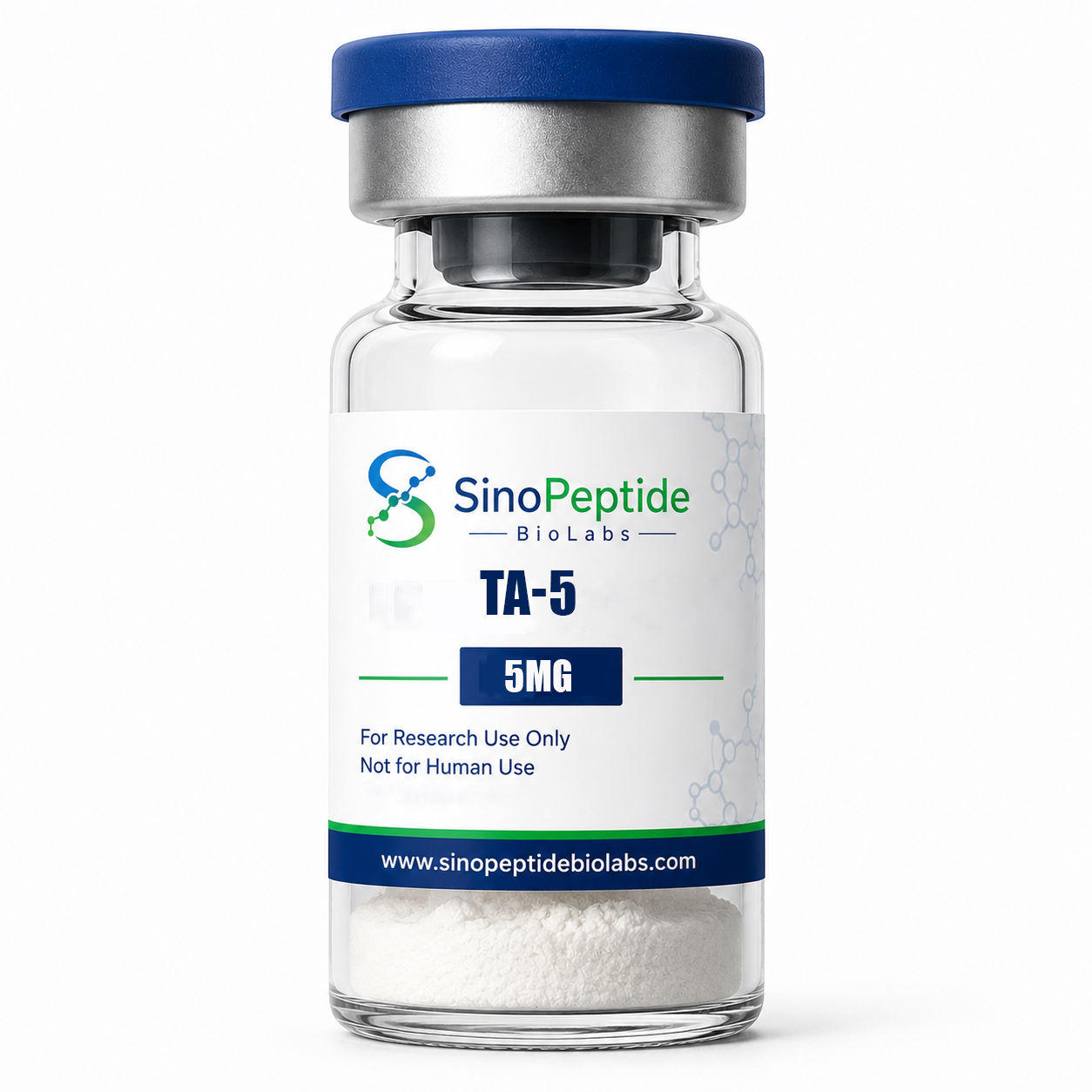
Thymosin Alpha-1 5mg
$95.00
10 Vials/ Kits
Thymosin Alpha-1 5mg: Research, Mechanism, Immune Function, Benefits & Safety
Introduction to Thymosin Alpha-1 5mg
Thymosin Alpha-1 (Tα1) is a naturally occurring peptide that has attracted substantial scientific interest because of its effects on both innate and adaptive immune responses. Unlike peptides primarily investigated for metabolic, hormonal, or tissue-related pathways, Thymosin Alpha-1 is principally studied as an immunomodulatory peptide.
The peptide is a 28-amino-acid fragment derived from prothymosin alpha. Research has examined its interactions with immune cells, Toll-like receptor signaling, T-cell activity, dendritic-cell function, cytokine pathways, and immune responses to infectious and inflammatory challenges.
The term Thymosin Alpha-1 5mg generally describes a product containing 5 milligrams of Thymosin Alpha-1. Importantly, the 5mg designation describes the amount of material in the product and should not automatically be interpreted as a recommended human dose.
Thymosin Alpha-1 has been studied in numerous clinical settings, including infectious diseases, immune dysfunction, cancer-related research, and severe systemic inflammation. However, research findings vary substantially according to the disease, patient population, study design, and treatment context.
For that reason, high-quality content about Thymosin Alpha-1 should explain both its biological potential and the limitations of the current evidence.
What Is Thymosin Alpha-1?
Thymosin Alpha-1 is a 28-amino-acid peptide originally characterized as a thymic peptide. It is produced naturally in the body through cleavage of prothymosin alpha. Synthetic Thymosin Alpha-1 has subsequently been developed for scientific and clinical research.
The peptide is also known by several names, including:
- Thymosin Alpha-1
- Tα1
- TA1
- Thymalfasin
- Thymosin α-1
Its scientific significance comes from its ability to influence multiple components of immune regulation rather than functioning through a single narrowly defined biological pathway.
Research indicates that Tα1 can affect:
- T cells
- Dendritic cells
- Natural killer cells
- Macrophages
- Cytokine signaling
- Toll-like receptor pathways
- Innate immune responses
- Adaptive immune responses
- Immune tolerance mechanisms
This broad biological activity has made Thymosin Alpha-1 an important subject in immunology and translational medicine.
What Does Thymosin Alpha-1 5mg Mean?
The term Thymosin Alpha-1 5mg identifies a quantity of the peptide.
The “5mg” refers to 5 milligrams of Thymosin Alpha-1 contained in a particular product or preparation. It does not independently establish:
- a therapeutic dose,
- a recommended frequency,
- a validated administration schedule,
- clinical effectiveness,
- product quality,
- sterility,
- or regulatory approval.
Those factors depend on the specific formulation, manufacturing standards, jurisdiction, and intended use.
For research-oriented product descriptions, it is therefore preferable to describe 5mg as the product quantity rather than calling it a standard clinical dose.
Molecular Characteristics of Thymosin Alpha-1
A 28-Amino-Acid Peptide
Thymosin Alpha-1 is a relatively short peptide consisting of 28 amino acids. It is derived from prothymosin alpha, a protein involved in cellular biology and immune regulation.
Its small peptide structure allows researchers to investigate interactions with receptors and signaling pathways involved in immune regulation.
Unlike conventional small-molecule drugs, peptides can have complex biological behavior related to their structure, degradation, aggregation, and interactions with biological systems.
This is one reason peptide characterization and product-quality testing are important when evaluating laboratory or pharmaceutical materials.
How Does Thymosin Alpha-1 Work?
One of the most interesting aspects of Thymosin Alpha-1 research is that the peptide does not appear to act through only one biological pathway.
Instead, studies have identified interactions with multiple immune signaling systems.
Toll-Like Receptor Signaling
Research has associated Tα1 with several Toll-like receptors (TLRs), including TLR2, TLR3, TLR4, TLR7, and TLR9.
These receptors are important components of innate immune recognition.
Activation of relevant signaling pathways can influence downstream processes involving transcription factors, cytokines, interferons, and immune-cell activation.
This helps explain why Thymosin Alpha-1 has been investigated in conditions involving impaired or dysregulated immune responses.
Effects on Dendritic Cells
Dendritic cells play a central role in connecting innate and adaptive immunity.
Research has shown that Thymosin Alpha-1 can influence dendritic-cell behavior and signaling. Studies have particularly investigated TLR9-associated pathways and downstream effects involving interferon signaling and immune tolerance.
Because dendritic cells help regulate how the immune system responds to foreign antigens, their modulation is an important area of Tα1 research.
T-Cell Function
T cells are central to adaptive immunity.
Scientific studies have investigated whether Thymosin Alpha-1 can influence T-cell maturation, differentiation, activation, and functional responses.
This is particularly relevant to research involving conditions in which immune responses may become suppressed or dysregulated.
However, changes in immune markers do not automatically mean that a peptide will improve clinical outcomes. Clinical effectiveness must be established separately for each condition.
Thymosin Alpha-1 and Immune Regulation
The immune system needs to achieve a balance between adequate defense and excessive inflammation.
An overly weak response can impair pathogen control, while an excessively inflammatory response can contribute to tissue damage.
Thymosin Alpha-1 is particularly interesting because researchers describe it as an immunomodulator, rather than simply an immune stimulant.
This distinction matters.
An immunomodulator may influence immune activity in different directions depending on the cellular environment and underlying disease.
Research has examined Tα1 in relation to:
- immune activation,
- immune suppression,
- inflammation,
- immune tolerance,
- T-cell function,
- dendritic-cell signaling,
- interferon pathways,
- cytokine production,
- and innate immune recognition.
This complex activity is one of the reasons Thymosin Alpha-1 continues to be investigated.
Thymosin Alpha-1 Research Applications
Thymosin Alpha-1 and Infectious Disease Research
One of the largest areas of Tα1 research involves infectious diseases.
Researchers have studied the peptide in viral infections, severe infections, and situations involving immune dysfunction.
A review of Tα1 and viral infectious diseases described effects involving T cells, B cells, macrophages, natural killer cells, and several Toll-like receptor pathways.
Historical research has included investigations involving:
- hepatitis B,
- hepatitis C,
- HIV-related immune dysfunction,
- severe infections,
- and COVID-19.
However, evidence varies considerably between conditions.
Thymosin Alpha-1 and Sepsis Research
Sepsis has been one of the most extensively studied applications of Thymosin Alpha-1.
The underlying rationale is that sepsis can involve profound immune dysregulation. Researchers have therefore investigated whether immune modulation could improve outcomes.
Earlier systematic reviews reported potentially beneficial effects on mortality and immune markers but also emphasized limitations such as small study populations and inconsistent study quality.
More recent evidence provides an important counterbalance.
A large multicenter, double-blind, placebo-controlled phase 3 trial involving 1,106 adults with sepsis found no clear evidence that Thymosin Alpha-1 reduced 28-day all-cause mortality.
A 2025 systematic review and meta-analysis found an overall association with reduced 28-day mortality, but the apparent benefit was not maintained in higher-quality and multicenter subgroup analyses, and the authors concluded that additional evidence is required.
This illustrates why SEO content should avoid making blanket statements such as “Thymosin Alpha-1 treats sepsis.”
The scientific evidence is more nuanced.
Thymosin Alpha-1 and Viral Infection Research
Viral infections are another important area of investigation.
Tα1 has been studied because of its potential influence on innate immune recognition, T-cell responses, interferon pathways, and other immune mechanisms.
Researchers have investigated its potential relevance to viral illnesses including hepatitis and COVID-19.
However, clinical results have not been uniform.
For example, clinical studies in COVID-19 have produced different findings, with some reporting changes in immune markers or clinical outcomes while others have not established definitive benefits.
Consequently, Thymosin Alpha-1 should be described as a research subject in infectious-disease immunology, rather than as a universally established antiviral treatment.
Thymosin Alpha-1 and Cancer Research
Cancer immunology is another significant research area for Tα1.
The immune system plays an important role in recognizing and responding to abnormal cells. Researchers have therefore explored whether immune-modulating peptides can influence antitumor immune responses.
Studies have investigated Thymosin Alpha-1 in connection with:
- T-cell responses,
- natural killer cell activity,
- dendritic cells,
- tumor-associated macrophages,
- immune checkpoint pathways,
- chemotherapy,
- radiotherapy,
- and the tumor microenvironment.
Recent reviews describe Tα1 as a potential adjunctive immunomodulatory strategy in oncology while emphasizing that evidence remains heterogeneous and additional clinical research is needed.
Importantly, this does not establish Thymosin Alpha-1 as a standalone cancer treatment.
Cancer treatment decisions should be based on evidence-supported therapies and qualified medical guidance.
Thymosin Alpha-1 and T-Cell Research
T-cell biology is one of the most important areas associated with Tα1.
T cells help coordinate adaptive immune responses and play major roles in recognizing abnormal or infected cells.
Research has explored whether Tα1 can influence:
- T-cell maturation,
- T-cell activation,
- CD4+ T-cell responses,
- immune-cell differentiation,
- cytokine signaling,
- and immune reconstitution.
An early randomized study involving people with HIV and low CD4 counts found that Thymosin Alpha-1 was well tolerated but did not demonstrate significant differences in several measured lymphocyte subsets, illustrating the difference between biological activity and proven clinical benefit.
Thymosin Alpha-1 and Dendritic Cell Research
Dendritic cells are professional antigen-presenting cells that help initiate and regulate adaptive immune responses.
Tα1 research has shown particular interest in dendritic-cell signaling.
Experimental work has connected Thymosin Alpha-1 with TLR9-dependent signaling and pathways involving type I interferons and indoleamine 2,3-dioxygenase.
These mechanisms have been investigated in relation to the balance between immune activation and immune tolerance.
This is significant because immune regulation is more complicated than simply increasing immune activity.
A peptide capable of influencing both inflammatory and regulatory pathways may have different effects depending on the biological environment.
Potential Research Benefits of Thymosin Alpha-1
Scientific literature has identified several areas where Thymosin Alpha-1 may have research relevance.
These include:
1. Immune Modulation
Tα1 has been investigated for its ability to influence innate and adaptive immune responses.
2. T-Cell Function
Researchers have studied its effects on T-cell maturation, activation, and immune responses.
3. Dendritic-Cell Activity
Tα1 may influence dendritic-cell signaling and antigen-related immune responses.
4. Viral Immunology
Its effects on antiviral immune pathways have generated considerable research interest.
5. Inflammation Research
Because Tα1 can influence several immune signaling pathways, researchers have studied its relationship with inflammatory responses.
6. Cancer Immunology
Researchers continue to investigate whether Tα1 can complement established cancer treatments by influencing antitumor immunity.
These should be understood as research areas rather than guaranteed clinical benefits.
Thymosin Alpha-1 5mg Safety
Safety is an important consideration when evaluating any peptide product.
Clinical literature generally describes Thymosin Alpha-1 as having a relatively well-characterized research history, but safety depends on the formulation, population, indication, product quality, and clinical context.
A review covering more than 11,000 human subjects across more than 30 trials examined the safety and efficacy literature for Tα1.
Historical clinical research has commonly reported local reactions associated with administration, while individual studies have reported different adverse-event profiles.
Importantly, research safety data for pharmaceutical-grade Tα1 should not automatically be transferred to every commercially marketed “Thymosin Alpha-1 5mg” product.
Product identity, purity, sterility, endotoxin levels, manufacturing controls, and analytical characterization can substantially affect safety.
Why Product Quality Matters
A peptide’s label alone does not establish its quality.
For a research-oriented Thymosin Alpha-1 product, quality documentation may be particularly important because peptide materials can present challenges involving:
- purity,
- degradation,
- aggregation,
- impurities,
- peptide characterization,
- sterility,
- endotoxins,
- storage stability,
- and manufacturing consistency.
The FDA has specifically discussed concerns related to compounded peptide substances, including issues involving peptide impurities, immunogenic potential, self-association, aggregation, and characterization.
For this reason, buyers and laboratories should evaluate documentation rather than relying solely on marketing claims.
Relevant documentation may include:
- Certificate of Analysis (COA)
- analytical purity information,
- identity testing,
- batch information,
- manufacturing details,
- and appropriate quality-control documentation.
Is Thymosin Alpha-1 5mg FDA Approved?
This is an important SEO question because online peptide listings sometimes make confusing regulatory claims.
Thymosin Alpha-1 is not an FDA-approved drug in the United States.
At an FDA Pharmacy Compounding Advisory Committee meeting in December 2024, FDA materials stated that products containing Thymosin Alpha-1 were not approved in the United States. The discussion also distinguished foreign approval from FDA approval and emphasized that orphan designation is separate from FDA approval.
Thymosin Alpha-1 or thymalfasin has been marketed or used medically in some countries, but regulatory status varies by jurisdiction.
Therefore, a website should not describe a Thymosin Alpha-1 5mg product as “FDA approved” unless there is a specific FDA-approved product and indication supporting that claim.
Thymosin Alpha-1 vs. Thymosin Beta-4
Thymosin Alpha-1 and Thymosin Beta-4 are sometimes confused because they share the word “thymosin.”
They are, however, different peptides with different biological characteristics.
Thymosin Alpha-1 is primarily associated with:
- immune modulation,
- T-cell biology,
- dendritic-cell signaling,
- innate immunity,
- and infectious-disease research.
Thymosin Beta-4 is primarily studied in relation to:
- actin regulation,
- cellular migration,
- tissue repair,
- angiogenesis,
- and wound-healing biology.
Consequently, these two peptides should not be presented as interchangeable.
Thymosin Alpha-1 vs. Other Immune-Modulating Peptides
Tα1 belongs to a broader field of immunomodulatory research.
Researchers investigate different peptides based on their biological targets and mechanisms.
Thymosin Alpha-1 is distinctive because its research profile spans both innate and adaptive immune responses.
Its potential interactions with Toll-like receptors and dendritic-cell pathways make it particularly relevant to immune signaling research.
However, “immune boosting” is an oversimplification.
The immune system is a highly interconnected network, and increasing immune activity indiscriminately is not necessarily beneficial.
The more accurate description is immune modulation.
Thymosin Alpha-1 5mg for Research
A Thymosin Alpha-1 5mg product may be relevant to laboratory research involving:
- peptide characterization,
- immune signaling,
- T-cell biology,
- dendritic-cell function,
- Toll-like receptor pathways,
- cytokine research,
- infectious-disease immunology,
- cancer immunology,
- and translational peptide research.
Research use should follow appropriate institutional procedures, laboratory safety requirements, applicable regulations, and validated protocols.
A product labeled for research should not automatically be represented as a pharmaceutical product intended for human treatment.
Frequently Asked Questions About Thymosin Alpha-1 5mg
What is Thymosin Alpha-1 5mg?
Thymosin Alpha-1 5mg refers to a product containing 5 milligrams of Thymosin Alpha-1 peptide. The 5mg designation identifies the amount of material and does not independently establish a clinical dosing recommendation.
What is Thymosin Alpha-1 used for in research?
Researchers study Thymosin Alpha-1 for its immunomodulatory properties, including effects on T cells, dendritic cells, Toll-like receptor signaling, cytokines, innate immunity, adaptive immunity, infectious diseases, and cancer immunology.
Is Thymosin Alpha-1 a natural peptide?
Yes. Thymosin Alpha-1 is a naturally occurring 28-amino-acid peptide derived from prothymosin alpha. Synthetic forms have subsequently been developed for research and clinical applications.
Is Thymosin Alpha-1 FDA approved?
No. Thymosin Alpha-1 is not FDA-approved in the United States. FDA materials from 2024 specifically noted that products containing Tα1 were not approved in the United States.
Does Thymosin Alpha-1 boost the immune system?
It is more accurate to describe Tα1 as an immunomodulatory peptide. Research suggests that it can influence multiple components of innate and adaptive immunity rather than simply increasing immune activity.
Has Thymosin Alpha-1 been studied in humans?
Yes. Tα1 has been investigated in numerous human clinical studies involving infectious diseases, immune dysfunction, cancer, and other conditions. A 2024 review examined more than 11,000 human participants across more than 30 clinical trials.
Has Thymosin Alpha-1 been studied for sepsis?
Yes. Multiple clinical trials and meta-analyses have examined Tα1 in sepsis. However, a large 2025 phase 3 randomized controlled trial found no clear reduction in 28-day mortality, highlighting the uncertainty surrounding its effectiveness for this indication.
Is Thymosin Alpha-1 the same as Thymosin Beta-4?
No. They are different peptides with different structures and biological research profiles.
What should buyers look for in a Thymosin Alpha-1 product?
For research materials, buyers should look for appropriate documentation such as batch identification, analytical characterization, purity information, and a Certificate of Analysis where applicable. Claims about sterility, endotoxin levels, or pharmaceutical-grade status should be supported by appropriate documentation.
Internal Link Suggestions for SEO
To build topical authority around Thymosin Alpha-1 5mg, consider linking this article to related educational or product pages.
Suggested internal links include:
- Thymosin Alpha-1 10mg →
/thymosin-alpha-1-10mg/ - Thymosin Beta-4 →
/thymosin-beta-4/ - BPC-157 →
/bpc-157/ - KPV Peptide →
/kpv-peptide/ - Peptide Research Guide →
/peptide-research-guide/ - Peptide Storage Guide →
/peptide-storage-guide/ - Certificate of Analysis Guide →
/certificate-of-analysis-guide/
Use descriptive anchor text naturally rather than repeatedly linking the exact same keyword.
SEO Keyword Strategy
Primary Keyword
Thymosin Alpha-1 5mg
Secondary Keywords
- Thymosin Alpha-1 peptide
- Thymosin Alpha 1 5mg
- Tα1 peptide
- TA1 peptide
- Thymalfasin
- Thymosin Alpha-1 research
- Thymosin Alpha-1 benefits
- Thymosin Alpha-1 mechanism
- Thymosin Alpha-1 immune function
- Thymosin Alpha-1 safety
- Thymosin Alpha-1 clinical research
- Thymosin Alpha-1 FDA status
- Thymosin Alpha-1 immunomodulator
- Thymosin Alpha-1 peptide research
- Thymosin Alpha-1 and T cells
- Thymosin Alpha-1 and immune system
- Thymosin Alpha-1 research peptide
Long-Tail Keywords
- What is Thymosin Alpha-1 5mg?
- What does Thymosin Alpha-1 do?
- How does Thymosin Alpha-1 work?
- Is Thymosin Alpha-1 FDA approved?
- Thymosin Alpha-1 peptide research
- Thymosin Alpha-1 immune research
- Thymosin Alpha-1 clinical studies
- Thymosin Alpha-1 safety research
- Thymosin Alpha-1 mechanism of action
- Thymosin Alpha-1 5mg research peptide
Final Thoughts on Thymosin Alpha-1 5mg
Thymosin Alpha-1 is one of the better-studied immunomodulatory peptides in modern peptide research. As a 28-amino-acid peptide derived from prothymosin alpha, it has been investigated for its influence on T cells, dendritic cells, Toll-like receptor signaling, cytokine pathways, innate immunity, adaptive immunity, and immune tolerance.
Its research history includes infectious diseases, sepsis, cancer immunology, immune dysfunction, and other areas of translational medicine.
At the same time, the clinical evidence is not uniform. Earlier studies and meta-analyses have reported potentially beneficial immune or clinical effects in certain settings, while newer, larger studies have produced more cautious conclusions. The 2025 phase 3 TESTS trial, for example, found no clear evidence that Tα1 reduced 28-day mortality in adults with sepsis.
This makes accurate scientific positioning particularly important.
Thymosin Alpha-1 5mg should be presented as a peptide quantity and research subject, not as a guaranteed treatment or universally established immune-enhancing therapy.
For research and educational purposes, its diverse effects on innate and adaptive immunity make it a valuable subject for continued investigation. Future studies may further clarify which patient populations, disease environments, and biological pathways are most relevant to Tα1.
Medical and Research Disclaimer: This article is provided for educational and informational purposes only. It does not constitute medical advice, diagnosis, treatment instructions, or a recommendation to use Thymosin Alpha-1. Regulatory status varies by country, and Thymosin Alpha-1 is not FDA-approved in the United States. Any human use of an investigational or non-approved peptide should be determined by an appropriately qualified healthcare professional and conducted in accordance with applicable laws and clinical standards.
Thymosin Alpha-1 5mg Thymosin Alpha-1 5mgThymosin Alpha-1 5mg Thymosin Alpha-1 5mg Thymosin Alpha-1 5mg Thymosin Alpha-1 5mg Thymosin Alpha-1 5mgThymosin Alpha-1 5mg Thymosin Alpha-1 5mg Thymosin Alpha-1 5mg Thymosin Alpha-1 5mg Thymosin Alpha-1 5mg Thymosin Alpha-1 5mg Thymosin Alpha-1 5mg Thymosin Alpha-1 5mg Thymosin Alpha-1 5mg Thymosin Alpha-1 5mg Thymosin Alpha-1 5mg Thymosin Alpha-1 5mg Thymosin Alpha-1 5mg Thymosin Alpha-1 5mg
Be the first to review “Thymosin Alpha-1 5mg”
Related products
Pure Peptides
Pure Peptides
Pure Peptides
Pure Peptides
Pure Peptides
Pure Peptides
Pure Peptides
Pure Peptides
Reviews
There are no reviews yet.