

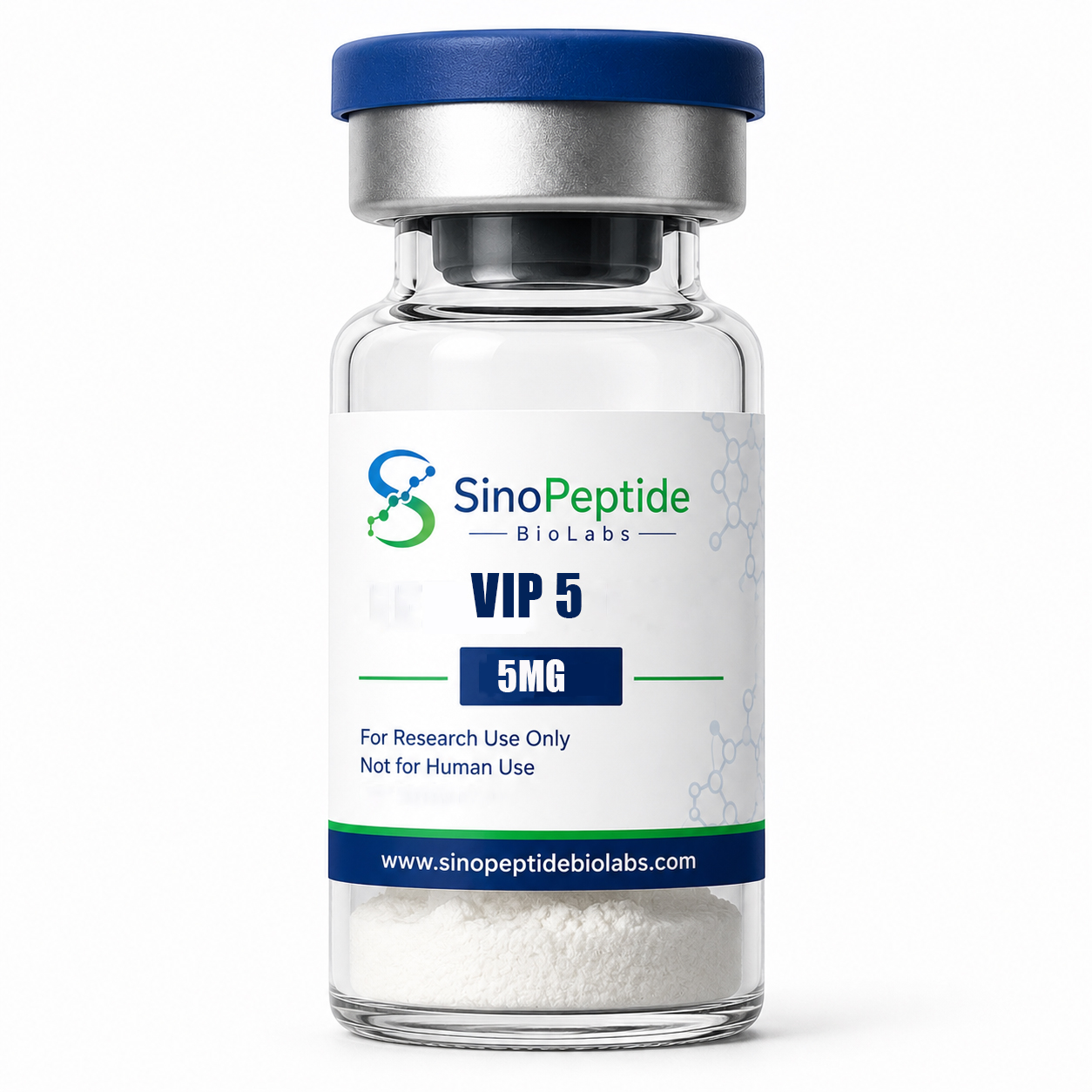
VIP 5mg
$85.00
10 Vials/ Kits
VIP 5mg: Benefits, Uses, Research, Safety & Product Guide
VIP 5mg: A Comprehensive Guide to Vasoactive Intestinal Peptide Research
VIP, short for vasoactive intestinal peptide, is a naturally occurring neuropeptide involved in signaling throughout the nervous, gastrointestinal, cardiovascular, and respiratory systems.
Although its name emphasizes the intestine, VIP is not limited to the digestive tract. It is found throughout the body and functions as a neurotransmitter, neuromodulator, and signaling molecule with effects on smooth muscle, blood vessels, immune responses, glandular secretion, and gastrointestinal activity.
Interest in VIP 5mg has grown within peptide research because scientists have investigated VIP for a wide variety of biological and therapeutic applications, including respiratory diseases, pulmonary vascular disorders, inflammatory conditions, gastrointestinal physiology, and neuroimmune signaling.
However, VIP should not be confused with a conventional nutritional supplement or with an established treatment for all of the conditions discussed online.
Research into VIP has identified potentially important biological activities, but clinical translation has historically been limited by the peptide’s very short half-life, rapid enzymatic degradation, and challenges associated with delivering it to the desired tissues.
The term VIP 5mg also needs clarification. The “5mg” designation describes a quantity of peptide in a particular product presentation. It does not automatically represent an approved clinical dose, treatment schedule, or recommendation for human use.
This guide explains what VIP is, how it works, why researchers are interested in it, what clinical research has shown, potential applications, safety considerations, and important product-quality issues.
What Is VIP?
Vasoactive intestinal peptide is a 28-amino-acid neuropeptide that was first identified in the early 1970s.
It is produced in the nervous system and several peripheral tissues and acts through specific receptors known as:
- VPAC1
- VPAC2
- PAC1
These receptors help mediate many of VIP’s biological effects.
VIP is involved in several physiological processes, including:
- Blood-vessel relaxation
- Airway smooth-muscle relaxation
- Gastrointestinal motility
- Intestinal secretion
- Neurotransmission
- Immune regulation
- Inflammatory signaling
- Endocrine signaling
Because VIP affects multiple organ systems, it has attracted research interest far beyond the gastrointestinal tract.
Scientists have investigated its potential role in:
- Asthma
- Chronic obstructive pulmonary disease
- Pulmonary arterial hypertension
- Cystic fibrosis
- Inflammatory disorders
- Neurological signaling
- Gastrointestinal diseases
- Cardiovascular physiology
A recent review describes VIP as an abundant neurotransmitter in the lungs and discusses its potential relevance to several pulmonary diseases while also emphasizing the limitations that have prevented widespread clinical use.
What Does VIP 5mg Mean?
The phrase VIP 5mg refers to a stated amount of VIP peptide.
The unit mg, or milligram, measures mass.
Therefore:
5mg = five milligrams of the specified material.
It does not automatically mean:
- 5mg per injection
- A clinically recommended dose
- A standard human treatment amount
- A validated therapeutic regimen
- A specific concentration after reconstitution
These distinctions are important when creating accurate product content.
A product labeled VIP 5mg should be evaluated according to its complete specification, including:
- Peptide identity
- Quantity
- Formulation
- Purity
- Salt form, if applicable
- Packaging
- Manufacturer
- Lot number
- Expiration or retest information
- Intended research or pharmaceutical status
The quantity printed on a product label should never be converted into a dosing recommendation without appropriate clinical evidence and product-specific prescribing information.
How Does Vasoactive Intestinal Peptide Work?
VIP exerts its effects by binding to specific G-protein-coupled receptors.
The principal receptor families associated with VIP signaling are:
VPAC1
VPAC1 receptors are widely distributed and participate in several physiological signaling pathways, including gastrointestinal and immune functions.
VPAC2
VPAC2 receptors are involved in smooth-muscle relaxation, immune signaling, and other physiological processes.
PAC1
PAC1 is more closely associated with pituitary adenylate cyclase-activating polypeptide signaling but can also participate in VIP-related biology.
The interaction between VIP and these receptors can influence intracellular signaling pathways involving cyclic AMP and other downstream messengers.
The result is a broad range of physiological effects.
This broad activity is one reason VIP is scientifically interesting—but it also makes development of VIP-based medicines more complicated.
VIP and Vasodilation
One of the best-established physiological effects of VIP is vasodilation, meaning relaxation of blood-vessel smooth muscle.
This property explains the “vasoactive” portion of its name.
VIP can influence vascular tone and blood flow through receptor-mediated signaling.
Researchers have investigated these properties particularly in pulmonary vascular disease.
A clinical study published in Circulation investigated VIP in patients with primary pulmonary hypertension and reported improvements in hemodynamic measures in the small study population.
However, this early research should not be interpreted as proof that VIP 5mg is an established treatment for pulmonary hypertension.
Later reviews have continued to describe VIP as a promising research candidate while highlighting challenges involving short half-life and administration.
VIP and Airway Relaxation
VIP also has significant activity within the respiratory system.
VIP-containing nerve fibers are present in the airway and pulmonary vasculature.
Research indicates that VIP can produce:
- Bronchodilation
- Vasodilation
- Smooth-muscle relaxation
- Modulation of airway secretions
- Immunomodulatory effects
These characteristics have made VIP an interesting research target for respiratory diseases.
Reviews have investigated VIP-based approaches in:
- Asthma
- COPD
- Pulmonary hypertension
- Cystic fibrosis
- Other inflammatory lung conditions
However, clinical development has been challenging because naturally occurring VIP is rapidly degraded.
VIP and Inflammation
Another major area of VIP research involves immune regulation.
VIP can interact with immune cells and influence inflammatory signaling.
Research has investigated effects involving:
- Macrophages
- Lymphocytes
- Mast cells
- Cytokine signaling
- Inflammatory pathways
- Immune-cell activity
This has led researchers to investigate VIP as a potential immunomodulatory peptide.
Importantly, “immunomodulatory” does not mean that VIP is universally anti-inflammatory or that it should be used to treat inflammatory diseases without medical supervision.
The immune system is highly complex, and VIP can have different effects depending on:
- Cell type
- Tissue
- Receptor expression
- Concentration
- Disease state
- Timing
Therefore, laboratory evidence should not automatically be converted into broad therapeutic claims.
VIP and the Respiratory System
The respiratory system is one of the most extensively researched areas for VIP.
VIP is naturally present in pulmonary tissues and has effects on both airway and vascular smooth muscle.
A major review described VIP as having bronchodilatory and vasodilatory properties while also discussing its immunomodulatory functions.
Researchers have therefore investigated VIP-based therapies for:
Asthma
Asthma involves airway inflammation, bronchial hyperresponsiveness, and variable airflow obstruction.
VIP’s ability to relax airway smooth muscle and influence inflammatory pathways has made it an attractive research target.
However, older reviews note that rapid enzymatic degradation has limited the development of conventional VIP therapy.
Chronic Obstructive Pulmonary Disease
COPD involves chronic airway and lung abnormalities.
Researchers have investigated whether VIP’s bronchodilatory and anti-inflammatory properties could have therapeutic applications.
Reviews describe VIP as a potentially useful candidate while emphasizing the limitations of delivery and stability.
Pulmonary Hypertension
VIP has also been studied for its effects on pulmonary vascular tone.
Early human research investigated VIP in primary pulmonary hypertension, while subsequent reviews continued to explore its potential role in pulmonary vascular disease.
VIP and Pulmonary Hypertension Research
Pulmonary arterial hypertension is characterized by elevated pressure in the pulmonary circulation and progressive changes in pulmonary blood vessels.
Because VIP can produce pulmonary vasodilation, researchers have investigated whether it could influence pulmonary vascular resistance.
The early human study involving eight patients reported improvements in pulmonary hemodynamic parameters following VIP administration.
However, the small sample size is important.
A study involving eight patients cannot establish the effectiveness or safety of a therapy for the broader population.
Subsequent research has therefore focused on:
- VIP analogues
- Inhaled VIP
- Extended-release formulations
- Improved delivery systems
- Receptor-selective compounds
These approaches attempt to preserve the biological activity of VIP while addressing its pharmacokinetic limitations.
VIP and Gastrointestinal Function
The gastrointestinal tract is central to VIP’s physiological identity.
VIP influences:
- Intestinal smooth muscle
- Fluid secretion
- Electrolyte transport
- Blood flow
- Gastrointestinal motility
It acts as a neurotransmitter and signaling molecule within the enteric nervous system.
The peptide’s gastrointestinal effects explain why excessive VIP production can produce profound intestinal symptoms in certain rare endocrine tumors.
This is also why VIP should not simply be described as a general “gut health peptide.”
Its physiological effects are highly specific and dose- and context-dependent.
VIP and the Nervous System
VIP is also an important neuropeptide.
It is produced by neurons in both the central and peripheral nervous systems and can act as a neurotransmitter or neuromodulator.
Researchers have investigated VIP signaling in relation to:
- Neural communication
- Circadian biology
- Neuroimmune interactions
- Autonomic function
- Neuroprotection
However, many neurological applications remain experimental.
The existence of VIP in nervous tissue does not mean that supplemental VIP has been established as a cognitive enhancer or general brain-health treatment.
A scientifically responsible article should distinguish physiological presence from therapeutic efficacy.
VIP and Immune Regulation
VIP’s interaction with the immune system has generated substantial research interest.
Studies have examined how VIP can influence:
- Cytokine production
- Immune-cell activation
- Inflammatory responses
- T-cell behavior
- Macrophage activity
- Neuroimmune communication
The peptide is sometimes described as anti-inflammatory in research literature, but this term should be used carefully.
VIP does not function as a universal anti-inflammatory drug.
Its effects depend on the biological context and the receptor pathways activated.
Research continues to investigate whether VIP analogues or modified delivery systems could harness selected immunological effects while reducing unwanted systemic activity.
Potential Benefits of VIP: What Does Research Actually Show?
The phrase VIP peptide benefits is common in online searches, but it is important to separate established physiological effects from clinical benefits.
Biological Effects
VIP has well-described biological activities involving:
- Vasodilation
- Bronchodilation
- Smooth-muscle relaxation
- Gastrointestinal secretion
- Neurotransmission
- Immune modulation
These physiological effects are supported by extensive research.
Research Applications
Scientists have investigated VIP in:
- Asthma
- COPD
- Pulmonary hypertension
- Cystic fibrosis
- Inflammatory disorders
- Gastrointestinal physiology
- Neuroimmune research
Proven Clinical Benefits
This category requires much more caution.
VIP has not become a routinely used systemic therapy for most of these conditions.
A major limitation is its pharmacokinetic behavior.
The peptide is rapidly degraded, resulting in a short plasma half-life that complicates therapeutic development.
Therefore, it is more accurate to describe VIP as a biologically active neuropeptide with significant therapeutic research potential than as a universally established treatment.
Why Is VIP Difficult to Use as a Medicine?
One of the most important issues in VIP research is pharmacokinetics.
VIP is susceptible to rapid enzymatic degradation.
This means that the peptide can disappear from circulation relatively quickly after administration.
Researchers have identified this short half-life as a major obstacle to developing VIP as a conventional medicine.
Potential approaches investigated to overcome this limitation include:
- Modified VIP analogues
- Long-acting formulations
- Inhaled delivery
- Controlled-release systems
- Nanoparticle-based delivery
- Stabilized peptide structures
The objective is to extend VIP’s biological activity while directing it toward the tissues where it is needed.
VIP Analogues and Drug-Delivery Research
Rather than using native VIP directly, researchers have explored modified analogues.
An analogue may be designed to:
- Resist enzymatic degradation
- Improve receptor selectivity
- Extend duration of action
- Improve tissue targeting
- Reduce unwanted effects
Reviews have described stabilized VIP agonists and specialized delivery systems as potential strategies for respiratory applications.
This research illustrates an important principle:
The biological activity of VIP is well established, but turning that activity into a practical medicine requires overcoming pharmacological limitations.
VIP 5mg and Product Quality
Anyone researching a product labeled VIP 5mg should pay close attention to quality documentation.
The product name alone does not establish:
- Identity
- Purity
- Potency
- Sterility
- Stability
- Manufacturing quality
A high-quality product description should clearly identify the applicable specifications.
Important information can include:
Peptide Identity
The label should clearly identify vasoactive intestinal peptide.
Quantity
The product should state the total quantity, such as 5mg.
Purity
Where applicable, analytical testing should establish peptide purity.
Lot or Batch Number
This provides manufacturing traceability.
Expiration or Retest Date
A clearly documented date helps establish product status.
Storage Requirements
Peptides can be sensitive to environmental conditions, and storage requirements should come from the applicable manufacturer or product documentation.
Certificate of Analysis
For research products, a batch-specific COA can provide useful information about identity and analytical testing.
However, a COA should correspond to the actual batch rather than being treated as generic proof of every product carrying the same name.
VIP 5mg: Purity and Peptide Characterization
Peptide quality is more complicated than simply reporting a single percentage.
Analytical characterization may consider:
- Identity
- Purity
- Related peptide impurities
- Degradation products
- Residual solvents
- Water content
- Counterions or salt form
The importance of peptide characterization is recognized broadly in modern regulatory science.
FDA guidance on peptide drug products discusses issues including pharmacokinetics, immunogenicity and other clinical pharmacology considerations relevant to peptide medicines.
This is particularly important when a peptide is intended for pharmaceutical rather than laboratory use.
VIP 5mg and Sterility
If a VIP product is marketed as an injectable preparation, sterility becomes a critical consideration.
Injectable products require appropriate controls against:
- Microbial contamination
- Endotoxins
- Particulate contamination
- Improper formulation
- Container defects
A research peptide being sold online does not automatically mean that it meets pharmaceutical sterile-manufacturing standards.
For this reason, website content should avoid making unsupported claims such as:
- “100% sterile”
- “pharmaceutical grade”
- “hospital grade”
- “FDA approved”
unless those claims can be verified for the specific product.
Is VIP 5mg FDA Approved?
The regulatory status of a specific VIP product depends on the formulation and jurisdiction.
FDA’s Substance Registration System identifies vasoactive intestinal peptide as a substance and provides its chemical identity. However, FDA explicitly states that the existence of a UNII does not imply regulatory review or approval.
Therefore, the presence of VIP in an FDA database should not be interpreted as evidence that a commercially marketed VIP 5mg product is FDA approved.
This distinction is important for SEO product pages.
A website should not describe VIP 5mg as an FDA-approved therapy unless a specific approved product can be identified in the FDA’s drug approval records.
VIP 5mg: Research Product vs Approved Medicine
VIP can appear in several different contexts online.
These may include:
- Laboratory research
- Peptide research
- Experimental drug development
- Academic research
- Compounded preparations
- Investigational formulations
These categories should not be treated as interchangeable.
A research product is not automatically an approved medicine.
Similarly, a peptide’s presence in published research does not mean that every commercially available formulation has undergone the same quality, safety, and efficacy evaluation.
This distinction is especially important when discussing VIP 5mg on an e-commerce or educational website.
VIP and Clinical Research
VIP has been studied for decades.
The research record includes:
- Laboratory experiments
- Animal studies
- Small human trials
- Pharmacology studies
- Respiratory research
- Pulmonary vascular studies
- Drug-delivery research
- VIP analogue development
A major theme across this literature is the gap between promising biological activity and practical clinical use.
The short half-life of VIP remains one of the most frequently cited challenges.
Research therefore increasingly explores modified VIP analogues and delivery technologies rather than relying solely on native VIP.
VIP and Asthma Research
Asthma has been an important target for VIP research because VIP can relax airway smooth muscle.
The theoretical advantages include:
- Bronchodilation
- Modulation of airway inflammation
- Effects on pulmonary blood vessels
However, clinical development has encountered major obstacles.
Earlier research reviews noted that rapid enzymatic breakdown limited the effectiveness of VIP-based treatment and that VIP agonists had not demonstrated superiority over established asthma therapies in clinical use.
Consequently, VIP should not be marketed as a replacement for established asthma treatment.
VIP and COPD Research
Chronic obstructive pulmonary disease is another area of research interest.
VIP has several properties potentially relevant to COPD:
- Airway relaxation
- Vascular relaxation
- Immunomodulation
- Effects on inflammatory signaling
Researchers have therefore explored whether stabilized VIP compounds could provide therapeutic benefits.
However, the clinical evidence remains insufficient for native VIP to become a routine COPD treatment.
Recent reviews continue to describe VIP and VIP-based compounds as an area of research rather than an established standard therapy.
VIP and Pulmonary Vascular Research
VIP’s vasodilatory properties have led to research in pulmonary vascular diseases.
In experimental models, VIP signaling has been associated with pulmonary vascular relaxation and modulation of vascular remodeling.
Early clinical work also investigated VIP in primary pulmonary hypertension.
Nevertheless, modern pulmonary hypertension treatment involves established drug classes with specific evidence and regulatory indications.
VIP research should therefore be understood as an investigation into potential future therapies rather than a substitute for established medical management.
VIP and Gastrointestinal Research
VIP’s original identification was closely associated with gastrointestinal physiology.
It can affect:
- Intestinal smooth muscle
- Fluid secretion
- Electrolyte transport
- Blood flow
- Motility
Because of these effects, VIP remains an important molecule in gastroenterology research.
VIP signaling is also relevant to the rare VIPoma, a neuroendocrine tumor that can produce excessive VIP.
This illustrates the biological potency of the peptide.
Normal VIP signaling is part of physiological regulation, while excessive endogenous VIP can contribute to significant pathological effects.
VIP and Neuroimmune Research
VIP sits at an interesting intersection between the nervous and immune systems.
Neurons can release VIP, while immune cells can express VIP receptors.
This creates opportunities for bidirectional signaling between:
Nervous system ↔ immune system
Researchers are investigating how this communication may influence:
- Inflammation
- Immune tolerance
- Tissue responses
- Neuroinflammation
- Respiratory disease
- Gastrointestinal inflammation
These areas remain scientifically active and should not be confused with proven therapeutic indications.
VIP 5mg Safety Considerations
Safety information depends heavily on the formulation, route, purity, and clinical context.
Native VIP has powerful biological activity involving blood vessels, smooth muscle, gastrointestinal secretion, and other systems.
Potential physiological effects can therefore include changes in:
- Vascular tone
- Blood pressure
- Heart rate
- Gastrointestinal activity
- Airway function
This does not mean that every person exposed to VIP will experience these effects.
It means that VIP is a biologically active signaling peptide and should not be treated as an ordinary nutritional product.
The limited clinical development of VIP has historically been linked in part to pharmacokinetic and administration challenges.
Who Should Exercise Particular Caution?
Anyone considering an investigational VIP preparation should discuss the product with an appropriately qualified healthcare professional, especially people with:
- Cardiovascular disease
- Blood-pressure disorders
- Respiratory disease
- Gastrointestinal disorders
- Pregnancy or breastfeeding
- Complex medication regimens
- Known peptide or medication allergies
This is particularly important for products marketed for injection.
The appropriate clinical assessment depends on the individual’s medical history and the exact product formulation.
VIP 5mg vs Other Peptides
VIP is sometimes discussed alongside other research peptides, but its pharmacology is distinctive.
| Peptide | General research focus | Key distinction |
|---|---|---|
| VIP | Vascular, respiratory, gastrointestinal and immune signaling | Endogenous neuropeptide with broad physiological activity |
| AOD-9604 | Fat metabolism and obesity research | Fragment derived from growth hormone |
| CJC-1295 | Growth-hormone axis research | Growth-hormone-releasing hormone analogue |
| Ipamorelin | Growth-hormone secretagogue research | Ghrelin-receptor-related secretagogue |
| BPC-157 | Experimental tissue and gastrointestinal research | Synthetic peptide investigated primarily in preclinical research |
| MOTS-c | Metabolic research | Mitochondria-derived peptide |
The fact that these substances are all called “peptides” does not make them interchangeable.
They differ substantially in:
- Structure
- Receptors
- Biological effects
- Pharmacokinetics
- Human evidence
- Regulatory status
Why VIP Research Remains Important
VIP is scientifically interesting because one peptide participates in multiple biological systems.
It links:
- Neural signaling
- Vascular regulation
- Airway physiology
- Gastrointestinal activity
- Immune regulation
This makes VIP both promising and challenging.
A compound with multiple physiological effects can potentially influence several disease pathways, but those same effects can complicate drug development.
Researchers therefore continue to investigate more selective VIP analogues and advanced delivery systems.
Frequently Asked Questions About VIP 5mg
What is VIP 5mg?
VIP 5mg generally refers to a product containing five milligrams of vasoactive intestinal peptide. The 5mg designation describes product quantity and does not automatically represent an approved human dose.
What does VIP stand for?
VIP stands for vasoactive intestinal peptide, also called vasoactive intestinal polypeptide.
What does vasoactive intestinal peptide do?
VIP is a neuropeptide involved in vascular relaxation, airway relaxation, gastrointestinal function, neurotransmission, and immune regulation.
Is VIP a peptide?
Yes. Human VIP is a naturally occurring 28-amino-acid neuropeptide.
Is VIP FDA approved?
The existence of VIP as a recognized chemical substance in FDA’s Substance Registration System does not mean that a VIP 5mg product is FDA approved. FDA specifically states that a UNII does not imply regulatory review or approval.
What are the potential benefits of VIP?
Research has investigated VIP for vascular relaxation, airway function, immune modulation, gastrointestinal physiology, pulmonary hypertension, asthma, COPD and other conditions. These are research areas rather than universal proven clinical benefits.
Is VIP used for lung research?
Yes. VIP has been extensively investigated in pulmonary research, including asthma, COPD, pulmonary hypertension and other respiratory disorders.
Why has VIP not become a widely used medicine?
One major challenge is its very short plasma half-life and rapid enzymatic degradation. Researchers have explored stabilized analogues and specialized delivery systems to overcome these limitations.
Does VIP reduce inflammation?
VIP has immunomodulatory properties and has been investigated for effects on inflammatory pathways. However, research findings should not be interpreted as proof that VIP 5mg is an established anti-inflammatory treatment.
Does 5mg mean the clinical dose is 5mg?
No. Five milligrams describes the quantity of product material. It does not establish an appropriate human dose.
Is VIP the same as semaglutide or other metabolic peptides?
No. VIP has a different structure, receptor system, and biological role from GLP-1 receptor agonists such as semaglutide.
Can VIP be used for asthma?
VIP has been studied for asthma because of its bronchodilatory and immunomodulatory effects. However, native VIP has pharmacokinetic limitations and is not a replacement for established asthma treatment.
Final Thoughts on VIP 5mg
VIP 5mg refers to a product containing a stated quantity of vasoactive intestinal peptide, a naturally occurring neuropeptide with broad physiological activity.
VIP participates in vascular, respiratory, gastrointestinal, nervous-system, and immune signaling. Its ability to relax vascular and airway smooth muscle and influence inflammatory pathways has made it an important subject of biomedical research.
Researchers have investigated VIP in conditions including asthma, COPD, pulmonary hypertension, cystic fibrosis, gastrointestinal disorders, and inflammatory diseases.
However, the distinction between biological activity and proven clinical efficacy is essential.
VIP’s rapid enzymatic degradation and short plasma half-life have historically limited its development as a conventional therapeutic agent. Researchers have consequently investigated stabilized analogues and specialized delivery technologies.
For anyone researching VIP 5mg, the most important product considerations include peptide identity, quantity, purity, formulation, manufacturer, batch documentation, storage information, and regulatory status.
The 5mg designation should be understood as a product quantity rather than a recommendation for human administration.
For SEO purposes, a strong VIP 5mg page should focus on accurate scientific information rather than exaggerated claims. Explaining the peptide’s biological role, research history, potential applications, limitations, and quality considerations provides substantially more value to readers than presenting experimental research as established medical treatment.
Medical and Research Disclaimer
This article is provided for educational and informational purposes only and does not constitute medical advice, diagnosis, or treatment. VIP is a biologically active neuropeptide, and the regulatory status, formulation, quality, and permitted uses of VIP products vary by jurisdiction. The term “5mg” describes product quantity and should not be interpreted as an individualized dosing recommendation. Readers should verify the documentation and regulatory status of any specific product and consult an appropriately qualified healthcare professional regarding medical use.
VIP 5mg VIP 5mg VIP 5mg VIP 5mg VIP 5mg VIP 5mgVIP 5mg VIP 5mg VIP 5mg VIP 5mg VIP 5mgVIP 5mg VIP 5mg VIP 5mg VIP 5mg VIP 5mg VIP 5mg VIP 5mgVIP 5mg VIP 5mg VIP 5mg VIP 5mg VIP 5mg VIP 5mg VIP 5mg VIP 5mg VIP 5mg
Be the first to review “VIP 5mg”
Related products
Pure Peptides
Pure Peptides
Pure Peptides
Pure Peptides
Pure Peptides
Pure Peptides
Pure Peptides
Pure Peptides
Reviews
There are no reviews yet.