

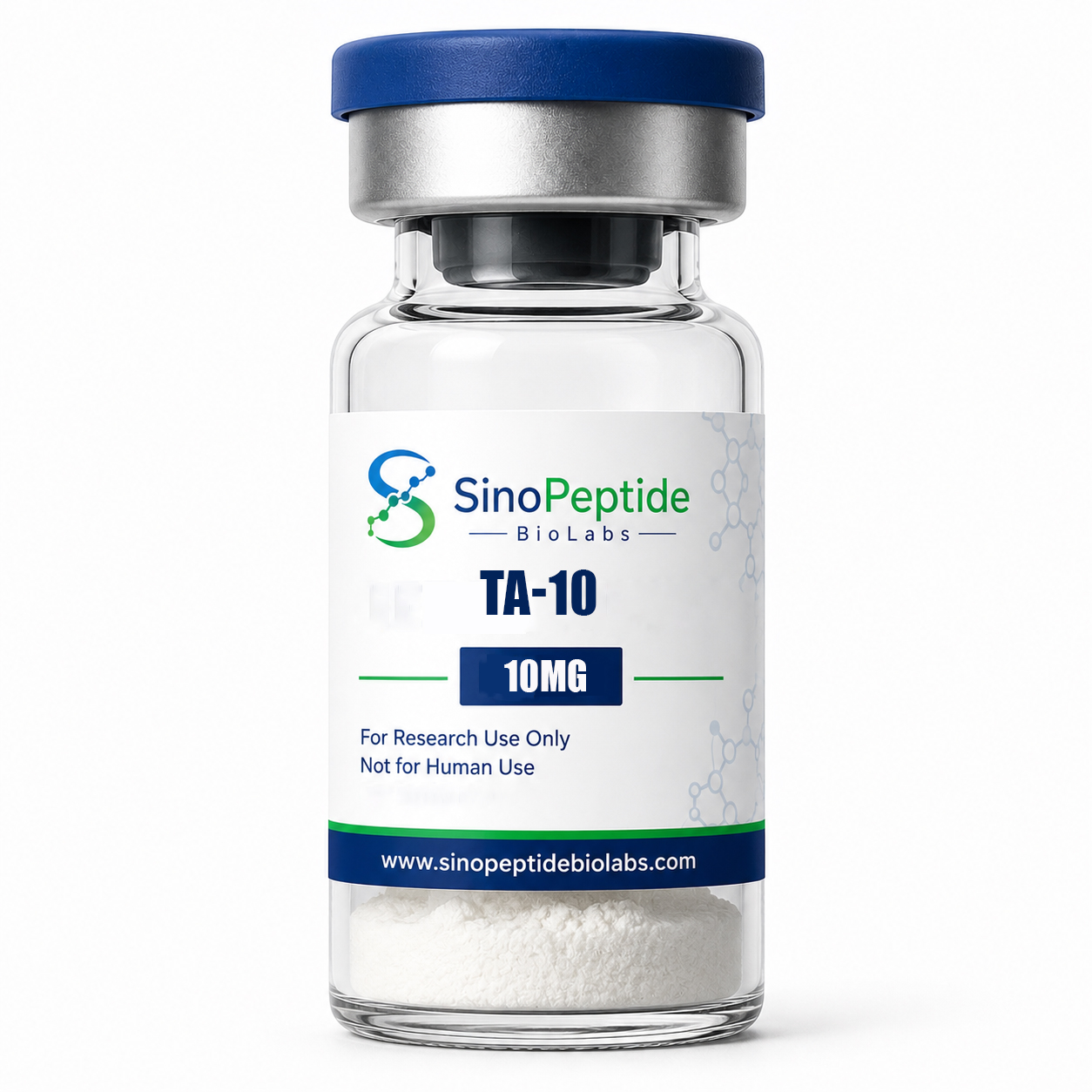
Thymosin Alpha-1 10mg
$165.00
10 Vials/ Kits
ARA-290 10mg: Uses, Benefits, Mechanism, Safety & Research
What Is ARA-290 10mg?
ARA-290 10mg is a peptide product designation referring to 10 mg of ARA-290, an experimental peptide also known as cibinetide.
ARA-290 was engineered from a specific region of erythropoietin (EPO). Unlike erythropoietin itself, ARA-290 was developed to investigate tissue-protective and neuroprotective signaling without the erythropoietic activity associated with conventional EPO.
The compound has attracted scientific interest because of its potential interaction with what researchers describe as the innate repair receptor (IRR), a receptor complex associated with tissue protection, inflammation regulation, and repair processes.
The U.S. FDA’s Substance Registration System lists ARA-290 and cibinetide as names associated with the substance, while explicitly noting that a UNII record does not imply regulatory review or approval.
ARA-290 has been investigated in preclinical models and early-stage human clinical studies, particularly in areas involving small fiber neuropathy, neuropathic pain, diabetes-related neuropathy, and sarcoidosis-associated nerve dysfunction.
However, it is important to distinguish scientific research from established medical treatment. ARA-290 is an investigational compound, and evidence from early clinical trials does not establish that every commercial product labeled “ARA-290 10mg” is an approved medicine or that a 10 mg product quantity represents a recommended human dose.
ARA-290 10mg at a Glance
| Property | Information |
|---|---|
| Common name | ARA-290 |
| Alternative name | Cibinetide |
| Product designation | ARA-290 10mg |
| Peptide type | Synthetic erythropoietin-derived peptide |
| Research focus | Tissue protection and nerve repair |
| Primary research area | Neuropathy and neuroprotection |
| Proposed receptor | Innate repair receptor (IRR) |
| Related biological system | Erythropoietin signaling |
| Erythropoietic activity | Designed to avoid conventional EPO erythropoiesis |
| Human research | Yes |
| FDA-approved ARA-290 medicine | Should not be assumed |
| Standard 10mg clinical dose | Not established |
| Research status | Investigational |
The FDA substance database identifies ARA-290/cibinetide but specifically warns that the existence of a substance identifier does not mean the substance has undergone FDA review or received approval.
What Does ARA-290 Stand For?
ARA-290 is sometimes described as an erythropoietin-derived tissue-protective peptide.
The compound was developed from the three-dimensional structure of erythropoietin with the goal of investigating protective signaling separate from erythropoiesis.
This distinction is fundamental.
Traditional erythropoietin is well known for stimulating red blood cell production. ARA-290 was designed to investigate a different biological pathway associated with tissue protection and repair.
Researchers have therefore investigated whether ARA-290 can influence processes such as:
- Neuroinflammation
- Nerve fiber integrity
- Tissue repair
- Neuropathic pain
- Cellular survival
- Inflammatory signaling
- Metabolic dysfunction
These mechanisms remain areas of research rather than established indications for a commercial 10 mg product.
How Does ARA-290 Work?
ARA-290’s proposed mechanism differs from conventional erythropoietin therapy.
Research has focused on the innate repair receptor, sometimes abbreviated IRR.
The receptor system involves components associated with erythropoietin signaling and has been investigated for its role in tissue protection without stimulating red blood cell production.
The proposed pathway can be summarized as:
ARA-290 → innate repair receptor signaling → modulation of inflammatory/tissue-protective pathways → potential support for nerve and tissue repair
The mechanism is biologically interesting because excessive inflammatory signaling can contribute to tissue injury and neuropathic pain.
Researchers have therefore investigated whether selectively activating tissue-protective pathways could encourage repair while avoiding the erythropoietic effects of EPO.
ARA-290 and the Innate Repair Receptor
The innate repair receptor is central to much of the scientific interest surrounding ARA-290.
The concept is that certain signaling pathways associated with erythropoietin can have tissue-protective functions separate from the hormone’s ability to stimulate erythropoiesis.
ARA-290 was developed to explore this non-erythropoietic signaling.
Research has investigated its potential effects on:
- Inflammatory cells
- Peripheral nerves
- Microglia
- Tissue injury responses
- Small nerve fibers
- Metabolic pathways
A major reason ARA-290 continues to attract attention is the possibility of influencing tissue repair rather than simply suppressing symptoms.
However, claims that ARA-290 definitively “regenerates nerves” or “cures neuropathy” go beyond the current evidence.
ARA-290 and Neuropathy Research
Neuropathy is one of the most important areas of ARA-290 research.
Neuropathy can involve damage or dysfunction of peripheral nerves and may cause:
- Burning pain
- Tingling
- Numbness
- Altered temperature sensation
- Hypersensitivity
- Autonomic symptoms
- Changes in sensory function
Small fiber neuropathy is particularly difficult to diagnose and treat because small nerve fibers can be affected even when conventional nerve-conduction testing does not fully capture the problem.
ARA-290 has been investigated as a potential tissue-protective approach in several neuropathy-related conditions.
A review of early clinical studies reported that ARA-290 was associated with improvements in neuropathic symptoms and measures of small nerve fiber structure in people with sarcoidosis and type 2 diabetes. The authors also emphasized that longer-term studies were needed to determine its full therapeutic potential.
ARA-290 for Small Fiber Neuropathy
Small fiber neuropathy is one of the most prominent areas of ARA-290 research.
Small nerve fibers are involved in:
- Pain sensation
- Temperature sensation
- Autonomic regulation
Damage to these fibers can result in neuropathic pain and autonomic dysfunction.
A clinical study involving people with sarcoidosis-associated small nerve fiber loss examined cibinetide at 1, 4, and 8 mg/day compared with placebo.
The researchers reported a significant increase in corneal nerve fiber abundance in the 4 mg group and observed additional changes involving nerve fiber measurements.
These findings are scientifically important because they suggest that ARA-290 may influence measures of nerve-fiber integrity.
Nevertheless, the study was relatively small and short, so it does not establish ARA-290 as a proven long-term treatment for small fiber neuropathy.
ARA-290 and Neuropathic Pain
Pain associated with nerve injury is another major research area.
Unlike conventional analgesics that primarily target pain perception, ARA-290 has been investigated for its potential effect on biological processes associated with nerve injury and inflammation.
A review of phase II ARA-290 studies reported improvements in neuropathic pain symptoms among patients with sarcoidosis. The same research program also reported improvements in sensory measures and quality-of-life-related outcomes.
Another clinical study found that ARA-290 treatment was associated with improved neuropathic symptoms in people with type 2 diabetes.
These results provide a rationale for continued investigation, but they should not be interpreted as proof that ARA-290 will relieve neuropathic pain in every patient.
ARA-290 and Diabetic Neuropathy
Diabetic neuropathy is another important research target.
High blood glucose and associated metabolic abnormalities can contribute to nerve damage over time.
In a phase 2 clinical study, participants with type 2 diabetes and painful neuropathy received ARA-290 or placebo for 28 days.
The study reported improvements in neuropathic symptoms and also observed changes in HbA1c, lipid profiles, and corneal nerve fiber density. The investigators reported no potential safety issues identified during the study period.
These findings are promising from a research perspective, but the trial’s duration and sample size limit conclusions about long-term effectiveness.
ARA-290 should therefore not be presented as an established treatment for diabetic neuropathy.
ARA-290 and Sarcoidosis
Sarcoidosis is an inflammatory disease that can affect multiple organs.
Some people with sarcoidosis develop small fiber neuropathy, neuropathic pain, and autonomic dysfunction.
ARA-290 has been studied specifically in this population.
Research has reported improvements in neuropathic symptoms and quality of life, together with changes in measures of small nerve fiber structure.
This research helped establish ARA-290 as an experimental candidate for conditions involving inflammatory nerve injury.
However, clinical evidence remains limited compared with that available for established neuropathy treatments.
ARA-290 and Nerve Regeneration
The phrase “ARA-290 nerve regeneration” is frequently used in online searches.
Scientific evidence provides a more nuanced picture.
Some clinical studies have measured changes in corneal nerve fiber abundance and other markers of small nerve fiber integrity.
For example, a clinical study found that the 4 mg/day treatment group had a significant increase in corneal nerve fiber abundance compared with placebo.
These findings support continued research into whether ARA-290 can influence nerve repair.
They do not establish that ARA-290 completely regenerates damaged nerves or reverses every form of neuropathy.
A medically responsible website should therefore use terms such as:
- “investigated for nerve repair”
- “studied for nerve-fiber recovery”
- “potential neuroprotective activity”
- “research into tissue repair”
rather than making definitive therapeutic claims.
ARA-290 and Neuroprotection
Neuroprotection refers broadly to mechanisms that help protect nerve cells or neural structures from injury.
ARA-290’s proposed tissue-protective signaling is one reason researchers have investigated it as a neuroprotective peptide.
Preclinical work has examined inflammatory responses involving spinal microglia and astrocytes.
In an animal model of nerve injury, ARA-290 reduced mechanical allodynia and produced effects lasting beyond the treatment period.
Animal findings can provide important mechanistic information, but they cannot automatically be translated into human therapeutic outcomes.
For SEO content, it is important to clearly identify animal evidence as preclinical research.
Potential Benefits of ARA-290 10mg
The potential benefits of ARA-290 are best described as research objectives, rather than guaranteed clinical effects.
1. Neuroprotective Research
ARA-290 is being investigated for signaling pathways associated with tissue protection and nerve health.
2. Small Fiber Research
Human studies have examined changes in small nerve fiber measures, including corneal nerve fiber abundance.
3. Neuropathic Pain Research
Clinical trials have reported improvements in neuropathic symptoms in selected populations.
4. Inflammation Research
ARA-290 has been investigated for its ability to influence inflammatory and tissue-repair pathways.
5. Metabolic Research
A phase 2 study in type 2 diabetes reported changes in HbA1c and lipid profiles alongside improvements in neuropathic symptoms.
6. Tissue Repair Research
The compound’s development is based partly on the hypothesis that selective activation of tissue-protective signaling may promote repair without stimulating erythropoiesis.
These findings justify continued scientific investigation but do not establish ARA-290 as a universally effective therapy.
ARA-290 10mg Dosage: What Does 10mg Mean?
The term ARA-290 10mg refers to the quantity of peptide represented by the product.
It should not automatically be interpreted as a recommended human dose.
Published human research has used different amounts depending on the study design.
For example, a phase 2 diabetes study used 4 mg of ARA-290 daily for 28 days, while a sarcoidosis-related study evaluated 1 mg, 4 mg, and 8 mg/day.
These research protocols demonstrate why a 10 mg product quantity should not be converted into a universal dosing recommendation.
In other words:
10 mg in a container ≠ 10 mg as an established clinical dose.
The appropriate dose, route, frequency, and formulation—if any are appropriate for a particular clinical setting—depend on the specific product and medical/research protocol.
Why ARA-290 10mg Should Not Be Treated Like a Standard Prescription
A product label can describe how much peptide is present without establishing that the product is an approved medicine.
FDA explains that drugs still being tested and not approved are considered investigational or experimental drugs. Access to such products in the United States generally occurs through clinical trials or applicable expanded-access mechanisms.
Therefore, the existence of published ARA-290 research does not mean that a commercially labeled “ARA-290 10mg” product is equivalent to the material used in a clinical trial.
Differences can include:
- Manufacturing process
- Purity
- Sterility
- Formulation
- Concentration
- Storage conditions
- Stability
- Administration route
- Regulatory status
Is ARA-290 FDA Approved?
ARA-290 should not be described as an FDA-approved medicine.
The FDA’s substance database lists ARA-290/cibinetide as a recognized substance, but the database explicitly states that a UNII does not imply regulatory review or approval.
FDA also explains that approved drug products can be verified through Drugs@FDA and the Orange Book.
This distinction is important for SEO and compliance.
A website should avoid claims such as:
- “FDA-approved ARA-290”
- “FDA-approved 10mg ARA-290”
- “FDA-approved nerve-regeneration peptide”
- “FDA-approved neuropathy cure”
unless specific official documentation establishes such an approval.
Is ARA-290 the Same as Erythropoietin?
No.
ARA-290 was derived from the structure of erythropoietin, but it is not the same as recombinant erythropoietin therapy.
This distinction is central to its development.
Erythropoietin has an established role in stimulating red blood cell production.
ARA-290 was designed as a non-erythropoietic peptide intended to investigate tissue-protective signaling.
The 2015 phase 2 study described ARA-290 as a nonhematopoietic peptide engineered from erythropoietin and investigated its effects in people with type 2 diabetes and painful neuropathy.
Therefore, ARA-290 should not be marketed as a substitute for erythropoietin.
ARA-290 Safety
Safety is an important consideration because ARA-290 remains an investigational compound.
In the 2015 phase 2 diabetes study, researchers reported that no potential safety issues were identified during the 28-day treatment period and subsequent follow-up.
Another clinical study examining cibinetide in sarcoidosis evaluated several doses and reported biological effects without identifying a major safety signal during the study.
However, these findings should not be interpreted as proof of long-term safety.
Clinical studies may involve:
- Relatively small participant populations
- Carefully selected patients
- Limited treatment periods
- Specific monitoring procedures
- Controlled product formulations
A commercially available product may not have the same quality or formulation as research material.
Potential ARA-290 Safety Considerations
Because long-term clinical use has not been established, it is inappropriate to claim that ARA-290 has no risks.
Potential areas requiring continued investigation include:
- Long-term effects
- Immune responses
- Product purity
- Manufacturing consistency
- Formulation stability
- Interactions with other treatments
- Effects in populations not represented in clinical trials
Anyone considering an investigational peptide for a medical condition should discuss the issue with an appropriately qualified healthcare professional.
ARA-290 10mg for Research
ARA-290 is particularly interesting in research because it potentially connects three areas:
neuroprotection + inflammation regulation + tissue repair
Potential research applications include:
Small Fiber Neuropathy
Studying nerve fiber density and neuropathic symptoms.
Diabetic Neuropathy
Investigating whether tissue-protective signaling can influence metabolic and nerve-related outcomes.
Sarcoidosis-Associated Neuropathy
Examining neuropathic pain and autonomic dysfunction in inflammatory disease.
Neuroinflammation
Studying inflammatory responses involving neural tissues.
Tissue Repair
Investigating whether innate repair signaling can support recovery after tissue injury.
The clinical evidence is still developing, making ARA-290 an interesting research compound rather than an established universal treatment.
ARA-290 vs EPO
| Feature | ARA-290 | Erythropoietin |
|---|---|---|
| Origin | Derived from EPO structure | Naturally occurring hormone/protein |
| Primary research concept | Tissue protection | Red blood cell production |
| Erythropoiesis | Designed to avoid it | Major biological effect |
| Research interest | Nerve and tissue protection | Anemia and erythropoiesis |
| Neuropathy research | Yes | Not its primary approved role |
| FDA status | Investigational | Specific EPO products are approved for defined indications |
The distinction is important because ARA-290 is sometimes inaccurately described as simply a form of EPO.
ARA-290 vs Other Peptides
ARA-290 is different from commonly marketed peptides such as BPC-157, TB-500, or growth hormone secretagogues.
Its scientific rationale is specifically connected to erythropoietin-derived tissue-protective signaling and the innate repair receptor.
For example:
- ARA-290: primarily investigated for tissue protection and neuropathy.
- BPC-157: investigated mainly in preclinical tissue-repair research.
- TB-500/thymosin-related compounds: investigated in tissue and wound-healing research.
- Growth hormone secretagogues: primarily studied for stimulation of GH secretion.
These compounds should not be presented as interchangeable.
What Should You Check When Evaluating ARA-290 10mg?
If a website offers an ARA-290 10mg product, transparency is important.
1. Confirm the Peptide Identity
The product should clearly identify ARA-290/cibinetide.
2. Review Batch Documentation
A batch or lot number helps establish traceability.
3. Check the Certificate of Analysis
A credible COA should provide relevant analytical information for the specific batch where applicable.
4. Verify Purity Testing
The stated purity should be supported by appropriate analytical methods.
5. Check Product Formulation
Do not assume that every ARA-290 10mg product has the same formulation or stability characteristics.
6. Review Intended Use
Research-use products should not be misleadingly marketed as approved human medicines.
7. Verify Regulatory Status
The presence of a scientific paper or FDA substance record does not establish approval of a particular finished product.
ARA-290 10mg and SEO Search Intent
For websites targeting the keyword ARA-290 10mg, search intent can be divided into several categories.
Informational Search Intent
Users may search:
- What is ARA-290?
- What is cibinetide?
- How does ARA-290 work?
- What are the benefits of ARA-290?
Research Intent
Users may search:
- ARA-290 clinical trials
- ARA-290 neuropathy research
- ARA-290 nerve regeneration
- ARA-290 mechanism
- ARA-290 studies
Product Intent
Users may search:
- ARA-290 10mg
- ARA-290 peptide 10mg
- Cibinetide 10mg
- ARA-290 research peptide
A strong SEO page can address all three categories while maintaining medical accuracy.
Frequently Asked Questions About ARA-290 10mg
What is ARA-290 10mg?
ARA-290 10mg refers to a product designation containing 10 mg of ARA-290, also known as cibinetide. It is an investigational peptide derived from erythropoietin and studied primarily for tissue-protective and neuroprotective effects.
What is cibinetide?
Cibinetide is another name for ARA-290. The FDA Substance Registration System lists both ARA-290 and cibinetide as names associated with the substance.
What does ARA-290 do?
Research suggests that ARA-290 can interact with tissue-protective signaling pathways associated with the innate repair receptor. Human studies have investigated its effects on neuropathic symptoms and small nerve fiber measures.
Is ARA-290 the same as EPO?
No. ARA-290 was engineered from the structure of erythropoietin but was designed as a non-erythropoietic peptide.
Does ARA-290 regenerate nerves?
Clinical research has reported changes in measures of small nerve fiber abundance, including corneal nerve fibers. However, describing ARA-290 as a proven nerve-regeneration treatment would overstate the current evidence.
Has ARA-290 been studied in humans?
Yes. Human clinical studies have investigated ARA-290 in conditions including sarcoidosis-associated neuropathy and type 2 diabetes with neuropathic symptoms.
Is ARA-290 FDA approved?
ARA-290 should not be described as an FDA-approved medicine. The FDA substance database specifically states that a UNII record does not imply regulatory review or approval.
Does ARA-290 10mg mean a 10mg dose?
No. “10mg” can describe the amount of peptide contained in a product. It does not establish a universal clinical dose.
What doses have been studied?
Human studies have used different experimental doses. For example, one type 2 diabetes study used 4 mg daily for 28 days, while a sarcoidosis study evaluated 1, 4, and 8 mg/day.
Is ARA-290 used for diabetic neuropathy?
ARA-290 has been investigated for diabetic neuropathy, including a phase 2 study involving people with type 2 diabetes and painful neuropathy. The study reported improvements in neuropathic symptoms and selected metabolic and nerve measures.
Is ARA-290 studied for small fiber neuropathy?
Yes. ARA-290/cibinetide has been studied in sarcoidosis-associated small nerve fiber loss and neuropathic pain, including research measuring corneal nerve fiber abundance.
Is ARA-290 safe?
Early clinical studies have reported generally favorable short-term safety findings, but this does not establish long-term safety for all populations or formulations. Continued research is required.
Final Thoughts on ARA-290 10mg
ARA-290 10mg, also known as cibinetide, is an investigational peptide derived from the structure of erythropoietin and developed to investigate non-erythropoietic tissue-protective signaling.
Its most notable research area is neuropathy, particularly small fiber neuropathy, sarcoidosis-associated neuropathy, and diabetic neuropathy.
Human studies have produced interesting findings. A phase 2 study in people with type 2 diabetes reported improvements in neuropathic symptoms along with changes in HbA1c, lipid profiles, and corneal nerve fiber density.
Research in sarcoidosis-associated small fiber neuropathy has also reported changes in corneal nerve fiber abundance and other measures of nerve function.
These findings help explain why ARA-290 continues to attract interest in neuroprotection and regenerative medicine research.
At the same time, the evidence should be presented responsibly.
ARA-290 is not the same as erythropoietin, and the presence of an FDA substance record does not mean that ARA-290 has been approved as a finished medicine. The FDA explicitly states that a UNII record does not imply regulatory review or approval.
The 10mg designation should likewise not be confused with a standardized human dose. Published studies have used different experimental dosing regimens, including 4 mg/day in one phase 2 diabetes study and 1, 4, or 8 mg/day in a sarcoidosis study.
For a website targeting ARA-290 10mg, the strongest long-term SEO strategy is therefore to combine the exact product keyword with medically accurate topics such as cibinetide, ARA-290 mechanism, small fiber neuropathy, nerve repair research, neuropathic pain, neuroprotection, clinical studies, safety, and regulatory status.
Rather than promising that ARA-290 will cure neuropathy or regenerate damaged nerves, high-quality content should explain what the research actually demonstrates, identify the limitations of existing trials, and distinguish experimental findings from established medical treatments.
That evidence-based approach provides useful information to readers while also creating more credible, trustworthy content for search engines and healthcare-related audiences.
Medical disclaimer: This article is for educational and informational purposes only. It does not diagnose disease, prescribe treatment, or establish individualized dosing or administration instructions. ARA-290/cibinetide remains an investigational compound, and the safety, quality, formulation, regulatory status, and intended use of any specific ARA-290 10mg product should be independently verified through appropriate documentation and qualified healthcare or research professionals.
ARA-290 10mg ARA-290 10mg ARA-290 10mg ARA-290 10mg ARA-290 10mg ARA-290 10mg ARA-290 10mg ARA-290 10mg ARA-290 10mg ARA-290 10mg ARA-290 10mg ARA-290 10mg ARA-290 10mg ARA-290 10mg ARA-290 10mg ARA-290 10mg ARA-290 10mg ARA-290 10mg ARA-290 10mg ARA-290 10mg ARA-290 10mg
Be the first to review “Thymosin Alpha-1 10mg”
Related products
Pure Peptides
Pure Peptides
Pure Peptides
Pure Peptides
Pure Peptides
Pure Peptides
Pure Peptides
Pure Peptides
Reviews
There are no reviews yet.