
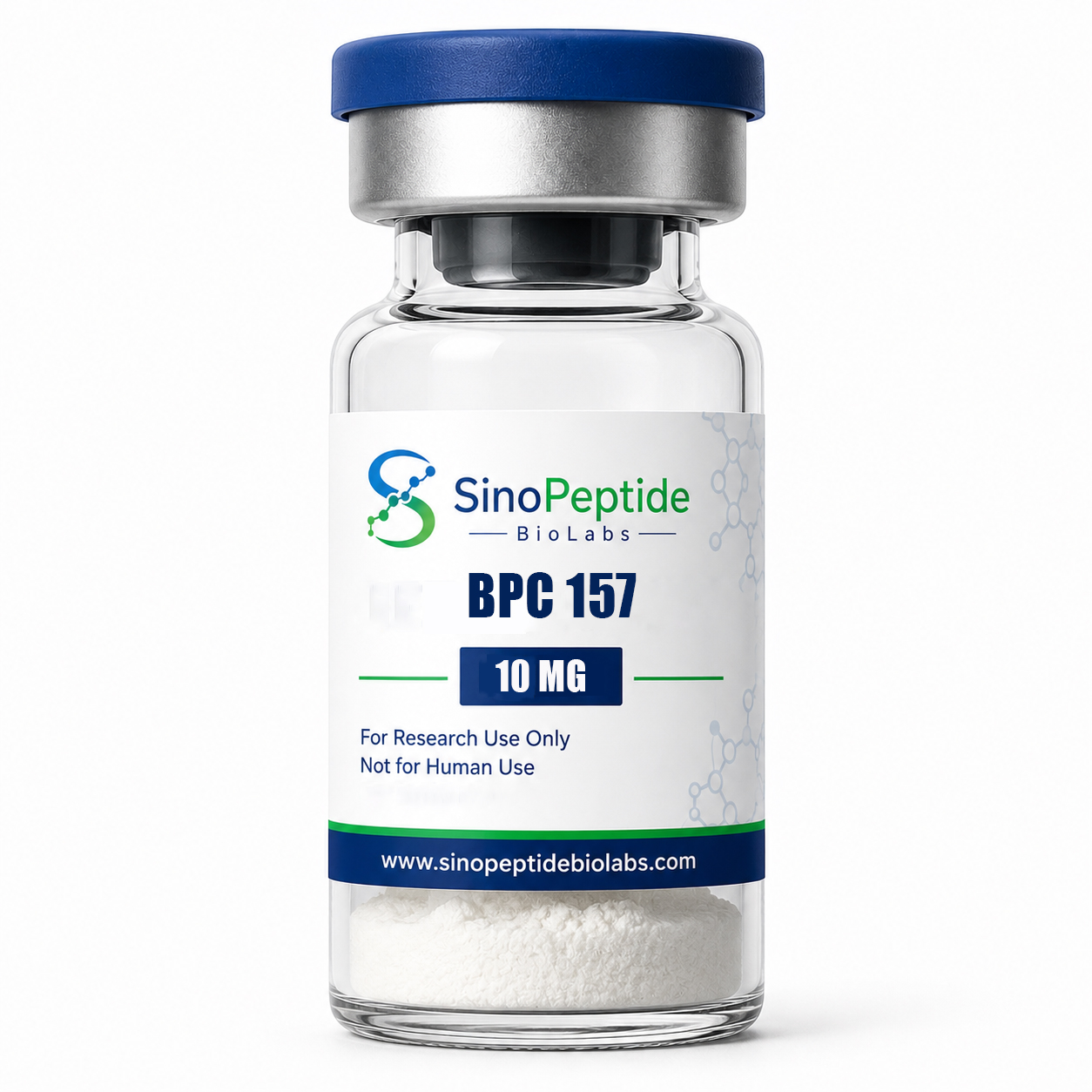
BPC 157 10mg
$72.00
BPC 157 10mg: Uses, Research, Safety, Benefits and Complete Guide
BPC 157 10mg is a peptide product commonly encountered in the research-peptide market. BPC-157 has attracted substantial interest because laboratory and animal studies have investigated its potential effects on tissue repair, inflammation, gastrointestinal function, blood vessels, muscles, tendons, ligaments, and other biological systems.
However, interest in BPC 157 has grown much faster than the clinical evidence supporting its use in humans. BPC-157 is not an FDA-approved medicine, and there is currently no established FDA-approved therapeutic dose or standardized pharmaceutical formulation for BPC-157. A 2025 systematic review found that most available evidence remains preclinical, while a 2026 review described BPC-157 as an investigational peptide with major pharmaceutical-development and clinical-evidence gaps.
The term “10mg” refers to the quantity of peptide in a particular product presentation, not to a universally established human dose. This distinction is important for anyone researching BPC 157 10mg online.
This guide explains what BPC-157 is, what researchers have studied, what 10mg means, potential research applications, safety considerations, regulatory status, product quality, and frequently asked questions.
What Is BPC-157?
BPC-157 stands for Body Protection Compound-157. It is a synthetic pentadecapeptide consisting of 15 amino acids. Its amino-acid sequence is commonly represented as GEPPPGKPADDAGLV. FDA substance records identify BPC-157 as a protein and list BPC-157 acetate as a related salt form.
BPC-157 has been studied extensively in laboratory and animal research. Investigators have examined its potential biological effects in models involving:
- Tissue injury
- Tendons and ligaments
- Muscle injury
- Bone healing
- Gastrointestinal injury
- Inflammation
- Blood-vessel formation
- Wound repair
- Oxidative stress
- Neurological and other experimental conditions
A recent systematic review of BPC-157 in orthopaedic sports medicine identified 36 relevant studies, of which 35 were preclinical and only one was clinical. The review reported promising findings in animal models involving muscle, tendon, ligament, and bone injuries but emphasized the lack of adequate clinical safety data.
Therefore, BPC-157 should currently be described as an investigational research peptide, rather than as an established treatment for injury, inflammation, or disease.
What Does BPC 157 10mg Mean?
The phrase BPC 157 10mg generally describes a product containing 10 milligrams of BPC-157.
The “10mg” designation describes quantity, not an officially established treatment dose.
This distinction matters because online sources sometimes incorrectly present a particular vial size as though it were an approved human dosing regimen. There is currently no FDA-approved BPC-157 prescribing label establishing that 10mg is a standard therapeutic dose.
FDA documents discussing BPC-157-related substances note that proposed compounded products have appeared in different formulations, including oral and injectable products, but FDA has identified substantial limitations in the available safety and clinical information.
Consequently, a product labeled BPC 157 10mg should not automatically be interpreted as “10mg per day,” “10mg per injection,” or any other predetermined dosing schedule.
BPC 157 10mg: Why Is It Popular?
BPC-157 has become popular because preclinical research has produced intriguing findings across several biological systems.
Researchers have investigated BPC-157 in models involving:
- Tissue repair
- Tendon and ligament injury
- Muscle injury
- Gastrointestinal damage
- Inflammation
- Angiogenesis
- Wound healing
- Bone and joint research
- Cellular protection
- Vascular function
The popularity of BPC-157 should not, however, be confused with proof of clinical effectiveness.
The 2025 systematic review of orthopaedic research concluded that available studies suggest potential benefits but emphasized that the evidence is dominated by preclinical research and that human clinical safety data remain inadequate.
BPC 157 10mg Research and Potential Benefits
1. BPC-157 and Tissue Repair Research
One of the most widely investigated areas of BPC-157 research is tissue repair.
Animal studies have examined whether BPC-157 may influence biological processes associated with recovery following tissue injury. Research has included muscle, tendon, ligament, bone, and other tissues.
Potential mechanisms investigated in preclinical research include effects on:
- Angiogenesis
- Fibroblast activity
- Nitric oxide signaling
- Inflammatory pathways
- Growth-factor signaling
- Cellular survival
- Microvascular function
A 2026 review described experimental findings involving angiogenesis, collagen-related processes, fibroblast activity, and nitric oxide pathways.
These findings make BPC-157 scientifically interesting, but laboratory and animal observations cannot automatically be translated into proven benefits in humans.
2. BPC-157 and Tendon Research
Tendons have relatively limited blood supply compared with many other tissues, which makes tendon healing an important area of regenerative-medicine research.
Preclinical BPC-157 studies have investigated tendon injury models and related processes such as:
- Fibroblast activity
- Collagen organization
- Blood-vessel formation
- Inflammatory signaling
- Tissue remodeling
The 2025 systematic review of BPC-157 in sports medicine reported that preclinical studies showed improvements in functional, structural, and biomechanical outcomes in several experimental models.
However, these findings do not establish BPC-157 as a clinically proven tendon treatment.
People with tendon injuries should receive an appropriate medical evaluation rather than relying on an investigational peptide.
3. BPC-157 and Muscle Research
BPC-157 has also been studied in experimental muscle-injury models.
Researchers have investigated whether BPC-157 could influence processes involved in muscle recovery and tissue integrity.
Some proposed mechanisms include:
- Modulation of inflammatory responses
- Angiogenesis
- Cellular signaling
- Fibroblast activity
- Microcirculation
- Tissue remodeling
These findings are promising enough to support further research, but they remain largely preclinical.
A 2025 review concluded that BPC-157 shows potential in experimental musculoskeletal injuries but emphasized that the available evidence is insufficient to establish clinical effectiveness and safety.
4. BPC-157 and Gastrointestinal Research
Gastrointestinal research is another important area for BPC-157.
Experimental studies have examined BPC-157 in models involving gastrointestinal injury and inflammatory conditions. The peptide has been investigated for possible effects on mucosal integrity, inflammation, vascular responses, and tissue protection.
In fact, FDA’s 2026 review evaluated BPC-157-related substances specifically in the context of proposed use for ulcerative colitis.
This does not mean BPC-157 is an FDA-approved treatment for ulcerative colitis.
Rather, it demonstrates that gastrointestinal effects have been an area of scientific and regulatory interest.
5. BPC-157 and Inflammation Research
Inflammation is another recurring subject in BPC-157 research.
Preclinical investigations have reported effects on inflammatory signaling and cytokine-related pathways. Researchers are interested in whether these effects could contribute to tissue protection and recovery.
However, inflammation is a complex biological process, and results observed in experimental models cannot automatically demonstrate that BPC-157 treats inflammatory diseases in humans.
For SEO purposes, websites should therefore avoid claims such as:
“BPC-157 cures inflammation.”
A more medically accurate statement is:
“Preclinical studies have investigated BPC-157 for potential anti-inflammatory effects.”
This wording accurately distinguishes research findings from established medical claims.
How Does BPC-157 Work?
The precise mechanism of BPC-157 in humans remains incompletely characterized.
Research has proposed interactions with several biological pathways, including pathways associated with:
- Nitric oxide
- Angiogenesis
- VEGFR2 signaling
- ERK-related signaling
- Fibroblast activity
- Inflammatory mediators
- Vascular function
A recent review described BPC-157’s experimental activity across several overlapping biological pathways, while emphasizing that its pharmaceutical development and human pharmacokinetic characterization remain incomplete.
This is an important distinction.
A peptide can produce measurable biological effects in laboratory models without yet having a fully established mechanism, effective dose, safety profile, or clinical indication in humans.
Is BPC 157 10mg FDA Approved?
No. BPC-157 is not an FDA-approved drug.
FDA materials from 2026 state that BPC-157 is not a component of an approved product in any country and is not included in major pharmacopoeias such as the European, Japanese, or International Pharmacopoeias.
FDA also evaluated BPC-157 free base and BPC-157 acetate in connection with proposed compounding uses. The agency identified significant limitations in the available safety information.
Therefore, websites selling or discussing BPC 157 10mg should avoid statements such as:
- “FDA-approved BPC-157”
- “FDA-approved healing peptide”
- “FDA-approved BPC-157 injection”
- “FDA-approved 10mg BPC-157 dose”
These statements would be misleading.
FDA explains that approved medicines undergo review of evidence concerning safety and effectiveness before approval.
Is BPC-157 Safe?
The safety profile of BPC-157 remains incompletely established.
This is one of the most important points when evaluating BPC 157 10mg.
FDA’s 2026 briefing identified limited safety information for BPC-157-related substances and noted potential concerns including immunogenicity and peptide-related impurities. The agency also noted that available nonclinical toxicology data were limited in scope and duration.
Animal toxicology findings also deserve attention. FDA’s briefing described findings in repeat-dose studies involving laboratory animals, including changes associated with clotting measures and liver-related laboratory signals. Longer-duration studies were not available to establish whether these findings were reproducible or whether additional risks might emerge.
This does not prove that BPC-157 necessarily causes these effects in humans. It does demonstrate why more research is required before its safety can be confidently characterized.
What Human Studies Exist for BPC-157?
Human research exists, but it remains extremely limited.
A 2025 systematic review found only one clinical study among 36 included studies relating to BPC-157 and orthopaedic sports medicine.
A small 2025 pilot study examined intravenous BPC-157 in only two participants. The researchers reported that the participants tolerated the infusions without reported side effects, but the authors themselves stated that future studies are necessary to confirm safety.
A tiny pilot study should not be interpreted as proof that BPC-157 is broadly safe.
A recent review similarly concluded that human evidence remains minimal and that well-designed clinical trials are needed.
BPC 157 10mg Dosage: What You Should Know
Searching for “BPC 157 10mg dosage” is common, but there is an important medical distinction.
There is no universally accepted FDA-approved human dosage for BPC-157.
Therefore, a website should not present a specific amount, frequency, injection schedule, or treatment cycle as an established medical dosing regimen.
The fact that some research or commercially available products use a 10mg presentation does not establish that 10mg is an appropriate dose for every person or every condition.
Dosage depends on factors that would require clinical evidence, including:
- Route of administration
- Formulation
- Peptide purity
- Salt or chemical form
- Medical indication
- Patient characteristics
- Pharmacokinetics
- Treatment duration
- Potential drug interactions
For these reasons, BPC 157 10mg should be described as a product quantity rather than a recommended patient dose.
BPC 157 10mg Reconstitution
Online searches frequently combine BPC 157 10mg with terms such as “reconstitution.”
However, there is no universal reconstitution procedure that can safely be applied to every BPC-157 product.
Different products may differ in:
- Formulation
- Salt form
- Excipients
- Container
- Sterility status
- Intended use
- Manufacturer specifications
A research product should therefore be handled according to its manufacturer’s documentation and laboratory requirements.
Websites should avoid presenting one generic mixing procedure as though it were an FDA-approved preparation method for human administration.
BPC 157 10mg Storage
Storage requirements depend on the specific formulation and manufacturer’s instructions.
A website should not invent a universal storage temperature or expiration period for every BPC 157 10mg product.
When evaluating a product, researchers should look for documentation specifying:
- Storage conditions
- Lot or batch number
- Manufacturing date
- Expiration or retest date
- Purity
- Identity testing
- Certificate of Analysis
- Packaging requirements
If a product lacks clear storage and quality documentation, its suitability for research should be questioned.
BPC 157 10mg Purity and Product Quality
Product quality is particularly important for research peptides.
The label “BPC 157 10mg” alone does not establish purity, identity, sterility, stability, or manufacturing quality.
A reputable research supplier should ideally provide documentation such as a Certificate of Analysis (COA).
Depending on the intended research application, useful quality information may include:
Peptide identity
Testing should establish that the material actually corresponds to the claimed peptide.
Purity
Analytical testing can help identify the proportion of the desired peptide relative to impurities.
Batch information
A lot or batch number allows the documentation to be connected to a specific production batch.
Analytical methods
Research-grade documentation may identify analytical techniques used to characterize the material.
Sterility information
Sterility should not be assumed simply because a product is labeled “research grade” or supplied in a vial.
This is particularly important because FDA has identified concerns involving peptide impurities, characterization, and potential immunogenicity for certain BPC-157-related compounded products.
BPC 157 10mg vs BPC 157 5mg
The primary difference is the stated amount of peptide.
| Feature | BPC 157 5mg | BPC 157 10mg |
|---|---|---|
| Peptide | BPC-157 | BPC-157 |
| Stated quantity | 5mg | 10mg |
| Research status | Investigational | Investigational |
| FDA-approved medicine | No | No |
| Established human dose | No | No |
| Clinical evidence | Limited | Limited |
| Quantity difference | Lower | Higher |
The 10mg presentation does not mean it is twice as effective as a 5mg presentation.
Likewise, a larger quantity does not establish better clinical outcomes.
BPC 157 10mg vs Other Research Peptides
BPC-157 is often discussed alongside peptides such as KPV, TB-500, and other experimental compounds.
These substances should not automatically be considered interchangeable.
Each peptide has a different:
- Amino-acid sequence
- Biological mechanism
- Research history
- Pharmacokinetic profile
- Safety evidence
- Regulatory status
BPC-157 has received substantial attention because of its preclinical research in tissue repair and gastrointestinal models, but this does not mean it has the same properties as other peptides.
The appropriate comparison should therefore focus on scientific evidence rather than marketing claims.
Is BPC-157 a Healing Peptide?
BPC-157 is frequently marketed online as a “healing peptide.”
There is some scientific basis for this terminology in the sense that researchers have investigated BPC-157 in experimental tissue-repair models.
However, the phrase can become misleading when it implies proven treatment in humans.
A more accurate description is:
BPC-157 is an investigational peptide studied for potential effects on tissue repair, inflammation, vascular biology, and gastrointestinal function.
This wording is better suited to medically responsible SEO content because it acknowledges the research without overstating the evidence.
BPC 157 10mg for Research
Because BPC-157 lacks an approved therapeutic formulation, many online products are marketed for research purposes.
A research-use description should be clear about what the product is and what it is not.
Important considerations include:
- Product identity
- Manufacturer information
- Batch documentation
- Analytical testing
- Purity
- Storage instructions
- Intended research use
- Applicable local laws and regulations
A “research use” label should not be interpreted as evidence that the product is safe or effective for human treatment.
FDA has specifically noted that BPC-157 products appear to be offered online in different formulations and for various claimed uses.
BPC-157 and Athletes
BPC-157 is particularly popular in sports and fitness discussions because of interest in muscle, tendon, ligament, and recovery research.
However, athletes should pay close attention to anti-doping regulations.
The 2026 World Anti-Doping Agency Prohibited List identifies BPC-157 under the S0 category of non-approved substances.
Therefore, competitive athletes should not assume that a product marketed as a research peptide is permitted in sport.
Athletes subject to drug testing should verify the current rules applicable to their sport and governing organization.
Why Is BPC 157 Research Important?
BPC-157 remains scientifically interesting for several reasons.
First, preclinical research has repeatedly investigated its effects across different tissue and disease models.
Second, researchers are interested in its potential interactions with vascular, inflammatory, and cellular pathways.
Third, there is significant interest in developing better evidence for regenerative medicine.
However, scientific interest should not be confused with clinical approval.
The next stage of BPC-157 research requires better-designed human studies addressing:
- Pharmacokinetics
- Dose-response relationships
- Long-term safety
- Repeated exposure
- Immunogenicity
- Drug interactions
- Clinical effectiveness
- Standardized formulations
A 2026 review specifically highlighted the absence of a validated dosing regimen, approved formulation, and completed Phase II clinical trial as major barriers to development.
BPC 157 10mg: Important SEO and Medical Accuracy
If you are publishing an article targeting BPC 157 10mg, avoid aggressive claims such as:
- “BPC-157 cures injuries”
- “BPC-157 permanently heals tendons”
- “BPC-157 is FDA approved”
- “10mg is the recommended dose”
- “BPC-157 has no side effects”
- “BPC-157 is completely safe”
- “BPC-157 is proven to regenerate tissue”
These claims are not supported by the current evidence.
Instead, use evidence-based language:
- “Preclinical research suggests…”
- “Animal studies have investigated…”
- “Researchers are studying…”
- “Human evidence remains limited…”
- “BPC-157 is investigational…”
- “No FDA-approved therapeutic dose has been established…”
This approach is not only medically responsible but also creates stronger long-term SEO content because it demonstrates evidence awareness and avoids unsupported health claims.
Frequently Asked Questions About BPC 157 10mg
What is BPC 157 10mg?
BPC 157 10mg generally refers to a product containing 10 milligrams of BPC-157. The 10mg figure describes the amount of peptide in the product and should not automatically be interpreted as a recommended human dose.
What is BPC-157 used for?
BPC-157 is an investigational peptide studied in laboratory and animal models involving tissue repair, inflammation, gastrointestinal injury, muscle, tendon, ligament, vascular biology, and other conditions. Its clinical effectiveness in humans has not been adequately established.
Is BPC 157 10mg FDA approved?
No. BPC-157 is not an FDA-approved medicine. FDA’s 2026 materials state that BPC-157 is not a component of an approved product in any country.
Is 10mg of BPC-157 a standard dose?
No. There is no universally established FDA-approved human dosing regimen for BPC-157. “10mg” describes product quantity rather than a validated therapeutic dose.
Does BPC-157 help tendon injuries?
Animal and laboratory research has investigated BPC-157 in tendon and other musculoskeletal injury models. However, current human evidence is insufficient to establish BPC-157 as a proven treatment for tendon injuries.
Does BPC-157 help with inflammation?
Preclinical research has investigated potential anti-inflammatory effects of BPC-157. However, this does not establish BPC-157 as an approved treatment for inflammatory diseases.
Is BPC-157 safe?
Its long-term safety in humans remains uncertain. FDA has identified limitations in the available safety information and potential concerns involving immunogenicity and peptide-related impurities.
Has BPC-157 been studied in humans?
Yes, a small number of human studies have been reported. However, the evidence remains very limited. A 2025 pilot study involving two participants examined intravenous BPC-157, while systematic reviews continue to emphasize the lack of robust human clinical evidence.
Can BPC-157 be used by athletes?
Athletes should be especially cautious. BPC-157 appears on the 2026 WADA Prohibited List under S0, the category for non-approved substances.
What should I look for in a BPC 157 10mg product?
For legitimate research purposes, consider documentation such as peptide identity, purity testing, batch information, manufacturer information, analytical results, and appropriate storage documentation.
Is BPC-157 the same as TB-500?
No. BPC-157 and TB-500 are different peptides with different structures and research histories. They should not be treated as interchangeable substances.
Final Thoughts on BPC 157 10mg
BPC 157 10mg is a popular search term within the growing research-peptide market, but the scientific evidence needs to be presented carefully.
BPC-157 is a synthetic 15-amino-acid peptide that has been extensively investigated in preclinical research. Studies have explored its potential effects on tissue repair, tendons, muscles, ligaments, gastrointestinal systems, inflammation, vascular biology, and other biological processes.
The available evidence is promising in some experimental models, but it remains insufficient to establish BPC-157 as a standard medical treatment.
Importantly, 10mg is a quantity, not an FDA-approved dose.
Current evidence also does not support describing BPC-157 as FDA approved, completely safe, or clinically proven to heal injuries. FDA’s 2026 assessment identified important gaps in safety and pharmaceutical characterization, while recent systematic reviews continue to emphasize the predominance of preclinical evidence.
Be the first to review “BPC 157 10mg”
Related products
Uncategorized
Reviews
There are no reviews yet.