

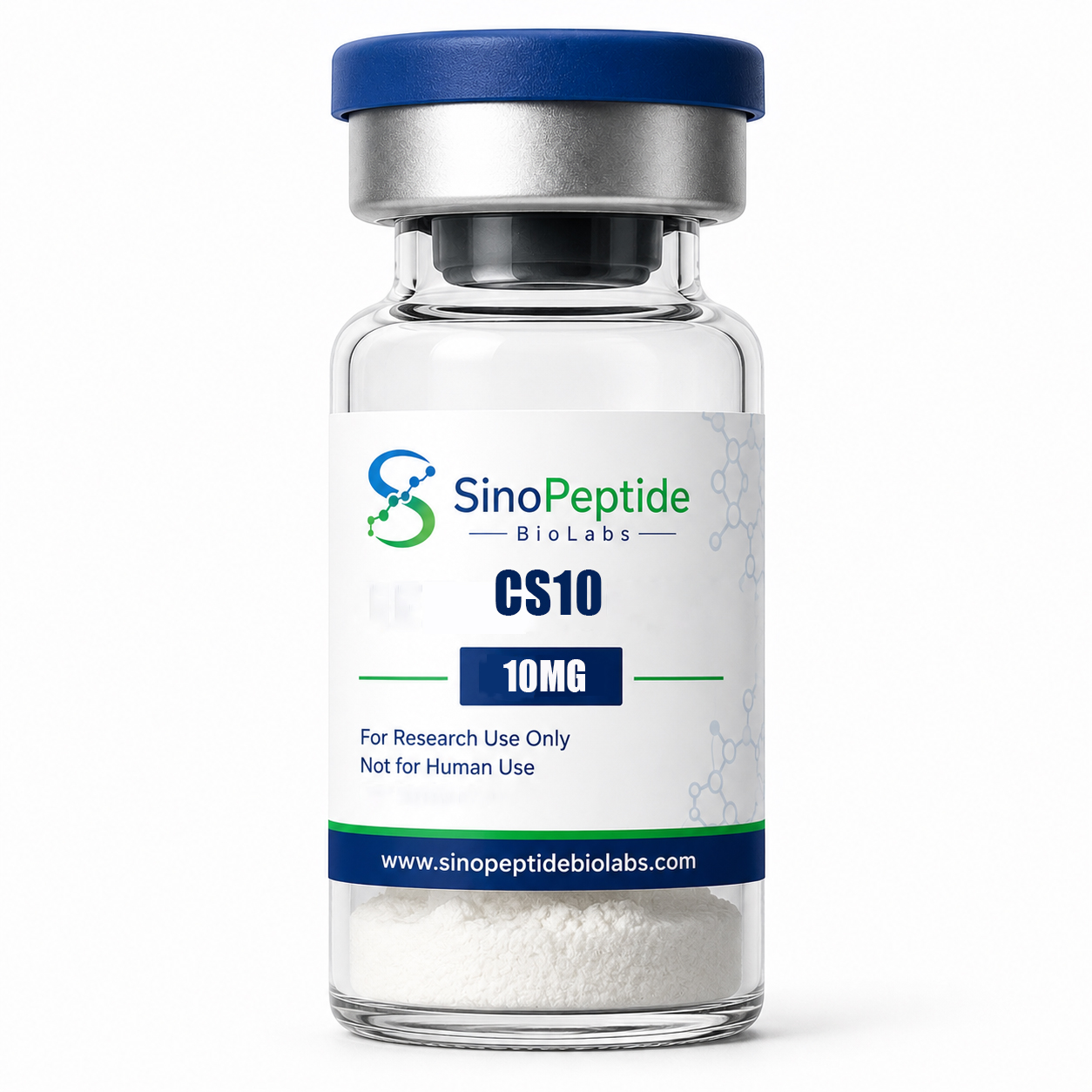
Cagrilintide 5mg + Semaglutide 5mg 10mg
$140.00
10 Vials/ Kits
Cagrilintide 5mg + Semaglutide 5mg 10mg: Benefits, Mechanism, Safety & Research
What Is Cagrilintide 5mg + Semaglutide 5mg 10mg?
Cagrilintide 5mg + Semaglutide 5mg 10mg refers to a product designation indicating 5 mg of cagrilintide and 5 mg of semaglutide, for a combined labeled amount of 10 mg.
The two compounds have different biological mechanisms.
Cagrilintide is a long-acting amylin analogue, while semaglutide is a glucagon-like peptide-1 (GLP-1) receptor agonist. Their combination has been investigated as CagriSema, a fixed-dose combination designed to target complementary pathways involved in appetite regulation, food intake, metabolism, and body weight.
Clinical research has produced substantial evidence for the cagrilintide–semaglutide combination. In the phase 3 REDEFINE 1 trial, adults with overweight or obesity without diabetes received cagrilintide 2.4 mg plus semaglutide 2.4 mg or comparator treatments over 68 weeks. The combination produced a significantly greater reduction in body weight than placebo.
However, an important distinction must be made between the 5 mg + 5 mg product label and the doses used in pivotal clinical trials.
The major phase 3 CagriSema studies have primarily evaluated 2.4 mg cagrilintide + 2.4 mg semaglutide, not a 5 mg + 5 mg regimen. Therefore, the presence of “5mg + 5mg” on a product label should not be interpreted as proof that 5 mg of each ingredient is an established clinical dose.
This distinction is particularly important when creating medically accurate product content.
Cagrilintide 5mg + Semaglutide 5mg 10mg at a Glance
| Property | Information |
|---|---|
| Product designation | Cagrilintide 5mg + Semaglutide 5mg |
| Combined labeled quantity | 10mg |
| Cagrilintide class | Long-acting amylin analogue |
| Semaglutide class | GLP-1 receptor agonist |
| Research combination | CagriSema |
| Primary research area | Weight management and metabolic health |
| Major phase 3 evidence | REDEFINE and REIMAGINE programs |
| Main studied CagriSema dose | 2.4mg cagrilintide + 2.4mg semaglutide |
| Administration studied | Once-weekly subcutaneous treatment |
| FDA status of the combination | Regulatory status should be verified for the specific jurisdiction and date |
| Does 5mg + 5mg equal a standard clinical dose? | No |
| Main evidence-based research outcome | Reduction in body weight |
| Important safety consideration | Gastrointestinal adverse effects are common |
Cagrilintide is recognized by the FDA’s Substance Registration System as a peptide and amylin analogue, but an ingredient record or UNII does not itself indicate regulatory approval of a finished drug product.
How Does Cagrilintide Work?
Cagrilintide is a long-acting amylin analogue.
Amylin is a hormone naturally released from pancreatic beta cells alongside insulin after meals. It participates in appetite regulation and influences gastric emptying and post-meal glucose physiology.
Cagrilintide is designed to reproduce important aspects of amylin signaling while providing a longer duration of action.
Its research interest in weight management comes partly from its ability to influence:
- Appetite
- Food intake
- Satiety
- Gastric emptying
- Energy intake
- Body-weight regulation
Rather than relying on a single metabolic pathway, Cagrilintide is being studied as part of a broader strategy for targeting biological systems involved in obesity.
How Does Semaglutide Work?
Semaglutide is a GLP-1 receptor agonist.
GLP-1 is an incretin hormone involved in glucose regulation and appetite control. GLP-1 receptor agonists can enhance glucose-dependent insulin secretion, reduce glucagon secretion, slow gastric emptying, and influence appetite-related signaling.
A recent review in the New England Journal of Medicine describes GLP-1 receptor agonists as incretin therapies that affect glucose regulation, gastric emptying, glucagon secretion, and central appetite pathways.
Semaglutide has therefore become an important component of modern pharmacological treatment for obesity and type 2 diabetes.
Why Combine Cagrilintide and Semaglutide?
The scientific rationale for combining these compounds is based on their complementary mechanisms.
Cagrilintide targets the amylin pathway, while semaglutide activates the GLP-1 receptor.
The combination is intended to influence appetite and metabolic regulation through more than one biological pathway.
This concept is central to the development of CagriSema.
Rather than describing the combination as simply “two weight-loss peptides,” a more accurate explanation is that it combines an amylin analogue with a GLP-1 receptor agonist.
Novo Nordisk describes CagriSema as a fixed-dose combination of injectable cagrilintide and semaglutide designed to target complementary obesity-related pathways.
Cagrilintide 5mg + Semaglutide 5mg 10mg for Weight Management
Weight management is the primary area in which the combination has generated significant clinical evidence.
The phase 3 REDEFINE 1 study enrolled 3,417 adults with overweight or obesity who did not have diabetes.
Participants received cagrilintide–semaglutide, semaglutide alone, cagrilintide alone, or placebo alongside lifestyle intervention.
At week 68, the estimated mean body-weight change with cagrilintide–semaglutide was −20.4% under the treatment-policy estimand, compared with −3.0% with placebo. The combination also resulted in significantly more participants reaching predefined weight-loss thresholds.
These results provide substantial evidence that the combination can produce clinically meaningful weight reduction in the studied population.
However, the trial used 2.4 mg cagrilintide + 2.4 mg semaglutide, not 5 mg + 5 mg. Therefore, these results should not be presented as evidence that a 5 mg + 5 mg formulation produces the same outcome.
Cagrilintide and Semaglutide in People With Type 2 Diabetes
The combination has also been investigated in adults with overweight or obesity and type 2 diabetes.
The phase 3 REDEFINE 2 study included adults with a BMI of at least 27 and type 2 diabetes. Participants received once-weekly cagrilintide–semaglutide at 2.4 mg of each component or placebo for 68 weeks.
The estimated mean body-weight change was −13.7% with cagrilintide–semaglutide compared with −3.4% with placebo. The study also reported improvements in glycemic outcomes, with 73.5% of participants in the combination group reaching an HbA1c of 6.5% or less compared with 15.9% in the placebo group.
These findings demonstrate that the combination is being evaluated not only for body weight but also for metabolic outcomes in people with type 2 diabetes.
Cagrilintide 5mg + Semaglutide 5mg 10mg Benefits
When discussing the potential benefits of Cagrilintide 5mg + Semaglutide 5mg 10mg, it is important to distinguish established trial findings from theoretical or marketing claims.
1. Weight Reduction
Weight reduction is the most extensively studied potential benefit of the combination.
REDEFINE 1 demonstrated significant body-weight reduction with cagrilintide–semaglutide compared with placebo after 68 weeks.
2. Appetite Regulation
Both components can influence biological systems involved in appetite.
Semaglutide activates GLP-1 receptors, while cagrilintide targets amylin-related signaling.
Their complementary mechanisms are one reason the combination has been investigated for obesity treatment.
3. Improved Glycemic Control
The combination has also been studied in people with type 2 diabetes.
REDEFINE 2 demonstrated both weight reduction and improvements in glycemic outcomes after 68 weeks.
However, the exact role of each component and the appropriate treatment approach depends on the patient’s medical condition and existing therapies.
4. Reduced Food Intake
Changes in appetite and eating behavior are important mechanisms underlying the weight effects of both GLP-1 and amylin-based therapies.
Current clinical development programs continue to investigate appetite regulation and eating behavior associated with CagriSema. Novo Nordisk announced additional CagriSema research in these areas for 2026.
Cagrilintide vs Semaglutide
Although the two compounds are being combined, they are not interchangeable.
| Feature | Cagrilintide | Semaglutide |
|---|---|---|
| Drug class | Amylin analogue | GLP-1 receptor agonist |
| Main pathway | Amylin receptor signaling | GLP-1 receptor signaling |
| Primary research interest | Appetite and weight regulation | Glycemic control and weight management |
| Role in CagriSema | Amylin component | GLP-1 component |
| Clinical development | Investigational in combination | Established medicine in approved products |
| Mechanism | Complementary to GLP-1 activity | Complementary to amylin activity |
The FDA’s substance database identifies cagrilintide as a peptide and amylin analogue.
Semaglutide, by contrast, is already present in FDA-approved products for specific indications. FDA’s 2026 guidance materials include semaglutide products such as Ozempic and Wegovy.
This does not mean that every product containing semaglutide is FDA-approved.
Cagrilintide + Semaglutide vs CagriSema
The term CagriSema refers to the investigational fixed-dose combination developed by Novo Nordisk.
The pivotal clinical program has primarily evaluated 2.4 mg cagrilintide + 2.4 mg semaglutide once weekly.
A website product labeled Cagrilintide 5mg + Semaglutide 5mg 10mg should not automatically be described as CagriSema.
Product names, formulations, concentrations, manufacturers, quality specifications, and regulatory status can differ.
This distinction can also improve SEO accuracy because users searching for “CagriSema” may be looking for the clinical-development program, whereas users searching for “Cagrilintide 5mg + Semaglutide 5mg 10mg” may be looking for a specific product format.
Is Cagrilintide 5mg + Semaglutide 5mg 10mg FDA Approved?
This question requires particular care.
As of September 2026, CagriSema remains in regulatory development in the United States rather than being something a website should casually describe as an FDA-approved 5 mg + 5 mg product.
Novo Nordisk submitted a U.S. New Drug Application for CagriSema in December 2025, describing the investigational combination as 2.4 mg cagrilintide + 2.4 mg semaglutide.
Novo Nordisk’s 2025 annual report also records the CagriSema FDA submission as a regulatory event rather than an established approval.
As of the latest company information available in September 2026, CagriSema continues to be discussed as an investigational combination in ongoing clinical development.
Therefore, a website should not claim that “Cagrilintide 5mg + Semaglutide 5mg 10mg is FDA approved” without specific, current regulatory documentation supporting that exact product and formulation.
Cagrilintide 5mg + Semaglutide 5mg 10mg Dosage
The phrase “Cagrilintide 5mg + Semaglutide 5mg dosage” can be misleading because it combines a product quantity with the concept of a clinical dose.
A vial or container labeled:
Cagrilintide 5mg + Semaglutide 5mg
contains a labeled total of 10 mg across the two components.
It does not establish that:
- 5 mg of cagrilintide should be administered at once
- 5 mg of semaglutide should be administered at once
- 10 mg should be administered weekly
- 10 mg is an approved therapeutic dose
- the product should be administered without medical supervision
The pivotal CagriSema studies evaluated 2.4 mg of cagrilintide plus 2.4 mg of semaglutide, administered once weekly, with dose escalation within the study protocols.
Consequently, the 5 mg + 5 mg product designation should not be confused with the clinical trial regimen.
Why Product Quantity Is Not the Same as Dose
This is one of the most important corrections for SEO content about this product.
Consider the difference:
Product quantity: 5 mg + 5 mg = 10 mg total
versus
Clinical dose: the amount actually administered at a particular time according to an approved label or research protocol.
These are different concepts.
A 10 mg total product does not automatically mean that 10 mg is intended to be administered during a single treatment.
This distinction is especially important with peptide-based products because formulation concentration, route of administration, dosing schedules, and regulatory status can vary.
Cagrilintide + Semaglutide Safety
The combination has been evaluated in large randomized clinical trials, but it is not free from adverse effects.
In REDEFINE 1, gastrointestinal adverse events were reported in 79.6% of participants receiving cagrilintide–semaglutide compared with 39.9% receiving placebo. Events included nausea, vomiting, diarrhea, constipation, and abdominal pain and were mainly described as transient and mild to moderate.
In REDEFINE 2, gastrointestinal adverse events occurred in 72.5% of participants receiving the combination compared with 34.4% with placebo.
This highlights why combination therapies that affect appetite, gastrointestinal function, and metabolic pathways require appropriate clinical assessment.
Potential adverse effects may include:
- Nausea
- Vomiting
- Diarrhea
- Constipation
- Abdominal discomfort or pain
- Reduced appetite
- Gastrointestinal intolerance
Individual risk can depend on medical history, other medicines, treatment duration, and dose escalation.
Important Safety Considerations
Anyone considering a medicine or investigational product involving semaglutide or cagrilintide should discuss the treatment with a qualified healthcare professional.
Particular attention may be needed for people with:
- Significant gastrointestinal disease
- Previous pancreatitis
- Gallbladder disease
- Diabetes treated with other glucose-lowering medicines
- Kidney problems associated with dehydration
- A history of severe medication-related gastrointestinal reactions
- Pregnancy or plans for pregnancy
- Other medical conditions requiring specialist management
The precise safety profile of a specific 5 mg + 5 mg formulation cannot be assumed from trials of the 2.4 mg + 2.4 mg investigational combination.
Cagrilintide 5mg + Semaglutide 5mg 10mg for Weight Loss
The combination has substantial research interest for weight management.
In REDEFINE 1, cagrilintide–semaglutide produced substantially greater weight reduction than placebo over 68 weeks.
The study also found that many more participants achieved clinically meaningful thresholds of weight loss, including reductions of at least 5%, 20%, 25%, and 30%.
However, SEO content should avoid turning those population-level trial results into a guarantee for an individual.
Weight-loss outcomes can differ because of:
- Starting body weight
- Metabolic health
- Treatment adherence
- Diet
- Physical activity
- Treatment duration
- Dose escalation
- Other medications
- Individual response
Therefore, phrases such as “guaranteed weight loss” or “lose X pounds with Cagrilintide 5mg + Semaglutide 5mg” should be avoided.
Cagrilintide + Semaglutide Research in 2026
Research continues to expand beyond the initial obesity trials.
In February 2026, Novo Nordisk reported results from REDEFINE 4, an 84-week open-label head-to-head trial comparing CagriSema 2.4 mg/2.4 mg with tirzepatide 15 mg.
CagriSema achieved 23% weight loss after 84 weeks under the reported analysis, but the predefined primary endpoint of non-inferiority versus tirzepatide was not achieved.
This is an important example of why medical SEO content should present research results accurately rather than selecting only favorable findings.
Additional CagriSema research continues in areas including appetite regulation, eating behavior, body composition, bone health, and type 2 diabetes. Novo Nordisk announced further presentations for EASD 2026.
Cagrilintide + Semaglutide and Body Composition
Weight loss is not simply a change on the bathroom scale.
Researchers are increasingly interested in how obesity medicines affect:
- Fat mass
- Lean mass
- Visceral fat
- Organ-level fat
- Bone health
- Metabolic health
CagriSema research programs are investigating body composition and related biological outcomes.
This is a developing area of research, so product pages should avoid claiming that the combination selectively eliminates fat while preserving all lean tissue unless a specific study supports that claim.
Is Cagrilintide the Same as Semaglutide?
No.
Cagrilintide and semaglutide belong to different pharmacological categories.
Cagrilintide is a long-acting amylin analogue.
Semaglutide is a GLP-1 receptor agonist.
The scientific rationale for CagriSema comes from combining these complementary mechanisms rather than treating them as identical drugs.
What Does “10mg” Mean in Cagrilintide 5mg + Semaglutide 5mg?
The phrase 10mg generally represents the combined labeled quantity:
5mg cagrilintide + 5mg semaglutide = 10mg total
This does not mean that 10mg is a recommended therapeutic dose.
It is also important to understand that the combined milligram number does not necessarily describe pharmacological equivalence between the two compounds. Milligrams of cagrilintide and milligrams of semaglutide cannot simply be treated as interchangeable because the compounds have different molecular structures and mechanisms.
What Should Buyers Look for in a Cagrilintide + Semaglutide Product?
If a website publishes or sells a product under the name Cagrilintide 5mg + Semaglutide 5mg 10mg, transparent product information is important.
Product Identity
The product should clearly state what substances are present and in what quantities.
Batch Documentation
Batch-specific analytical documentation can help establish product identity and quality.
Certificate of Analysis
Where applicable, a current COA should identify the tested material and relevant analytical results.
Manufacturer Information
The manufacturer or responsible supplier should be clearly identified.
Storage Information
Storage requirements should be based on product-specific documentation rather than generic peptide-storage advice.
Regulatory Status
Do not assume that the presence of a peptide, a scientific paper, or a product listing means the finished product is an approved medicine.
The FDA has specifically warned companies selling unapproved cagrilintide products. In a March 2026 warning letter, FDA stated that cagrilintide products offered by a company for sale in the United States were unapproved new drugs.
This reinforces the importance of distinguishing an investigational compound from an approved finished pharmaceutical.
Cagrilintide + Semaglutide vs Other Weight-Loss Treatments
Cagrilintide–semaglutide belongs to a developing class of combination approaches for obesity treatment.
Its distinguishing feature is the combination of:
Amylin pathway + GLP-1 pathway
Semaglutide alone primarily acts through GLP-1 receptors.
Cagrilintide adds amylin-related signaling.
Other obesity treatments may use different mechanisms, such as GLP-1/GIP receptor agonism or other multi-receptor approaches.
Because clinical trials differ in population, duration, design, comparator, and statistical analysis, direct comparisons should only be made when supported by appropriately designed head-to-head trials.
For example, REDEFINE 4 directly compared CagriSema 2.4/2.4 mg with tirzepatide 15 mg over 84 weeks, but the primary non-inferiority endpoint was not achieved.
Frequently Asked Questions
What is Cagrilintide 5mg + Semaglutide 5mg 10mg?
It is a product designation indicating 5 mg of cagrilintide and 5 mg of semaglutide, for a combined labeled quantity of 10 mg.
What is CagriSema?
CagriSema is the name used for the cagrilintide–semaglutide combination developed by Novo Nordisk. Pivotal studies have primarily evaluated 2.4 mg cagrilintide plus 2.4 mg semaglutide.
Does 5mg + 5mg mean a 10mg dose?
No. The 10 mg figure describes the combined labeled quantity. It should not automatically be interpreted as a single clinical dose.
Does Cagrilintide help with weight loss?
Clinical trials have demonstrated significant weight reduction with cagrilintide–semaglutide in adults with overweight or obesity.
Does Semaglutide cause weight loss?
Semaglutide has well-established effects on body weight in approved indications, and it is one of the components of the investigational CagriSema combination.
How does Cagrilintide work?
Cagrilintide is a long-acting amylin analogue that targets pathways involved in appetite and energy intake.
How does Semaglutide work?
Semaglutide is a GLP-1 receptor agonist that influences glucose-dependent insulin secretion, glucagon regulation, gastric emptying, and appetite-related signaling.
Can Cagrilintide and Semaglutide be combined?
The combination has been extensively investigated in clinical trials as CagriSema. However, a specific commercial 5 mg + 5 mg product should not automatically be assumed to have the same formulation, quality, or dosing characteristics as the clinical-trial product.
Is Cagrilintide 5mg + Semaglutide 5mg FDA approved?
The exact 5 mg + 5 mg product should not be described as FDA approved without specific regulatory evidence. CagriSema’s U.S. development has involved an NDA submission based on a 2.4 mg + 2.4 mg formulation, and the combination remains under regulatory development.
What are the common side effects?
Clinical trials reported gastrointestinal adverse events such as nausea, vomiting, diarrhea, constipation, and abdominal pain.
Is Cagrilintide the same as a GLP-1?
No. Cagrilintide is an amylin analogue, whereas semaglutide is a GLP-1 receptor agonist.
Can Cagrilintide + Semaglutide be used for diabetes?
The combination has been studied in adults with type 2 diabetes, including the REDEFINE 2 trial. However, whether a particular product is appropriate for an individual depends on its regulatory status, formulation, medical history, and clinical supervision.
Is Cagrilintide Semaglutide the same as taking Semaglutide alone?
No. The combination adds cagrilintide’s amylin-related mechanism to semaglutide’s GLP-1 receptor activity.
Final Thoughts on Cagrilintide 5mg + Semaglutide 5mg 10mg
Cagrilintide 5mg + Semaglutide 5mg 10mg represents a product designation combining two peptide-based compounds with complementary biological mechanisms.
Cagrilintide is a long-acting amylin analogue, while semaglutide is a GLP-1 receptor agonist. Their combination has generated substantial clinical interest because the two pathways can influence appetite, food intake, metabolic regulation, and body weight through different mechanisms.
The clinical evidence for the combination is significant. In the 68-week REDEFINE 1 trial, cagrilintide–semaglutide produced substantially greater weight reduction than placebo in adults with overweight or obesity without diabetes. REDEFINE 2 also demonstrated meaningful weight and glycemic improvements in adults with type 2 diabetes.
However, there is a crucial distinction between the 5 mg + 5 mg product designation and the 2.4 mg + 2.4 mg formulation used in the pivotal CagriSema trials. The clinical-trial results should not be presented as direct evidence for a 5 mg + 5 mg formulation unless a study specifically evaluates that formulation.
Research is continuing in 2026, including studies of appetite regulation, body composition, diabetes outcomes, and longer-term weight management. At the same time, regulatory development remains important, and websites should avoid describing unapproved products as FDA-approved medicines.
For high-quality SEO content, the most defensible approach is to describe the mechanism clearly, present clinical evidence with its actual study doses and populations, explain safety considerations, and distinguish product quantity, research formulation, and approved clinical dosing.
This evidence-based approach helps readers understand what Cagrilintide 5mg + Semaglutide 5mg 10mg represents without making unsupported promises about weight loss, diabetes treatment, or individual results.
Medical disclaimer: This article is intended for educational and informational purposes and does not provide individualized medical advice, diagnosis, dosing, or treatment instructions. Cagrilintide–semaglutide formulations, regulatory status, and appropriate use should be verified through current official product information and qualified healthcare professionals. Individual clinical-trial results should not be interpreted as guaranteed outcomes for a particular person.
Cagrilintide 5mg + Semaglutide 5mg 10mg: Benefits, Uses & Research Cagrilintide 5mg + Semaglutide 5mg 10mg: Benefits, Uses & Research Cagrilintide 5mg + Semaglutide 5mg 10mg: Benefits, Uses & Research Cagrilintide 5mg + Semaglutide 5mg 10mg: Benefits, Uses & Research Cagrilintide 5mg + Semaglutide 5mg 10mg: Benefits, Uses & Research Cagrilintide 5mg + Semaglutide 5mg 10mg: Benefits, Uses & Research Cagrilintide 5mg + Semaglutide 5mg 10mg: Benefits, Uses & Research Cagrilintide 5mg + Semaglutide 5mg 10mg: Benefits, Uses & Research Cagrilintide 5mg + Semaglutide 5mg 10mg: Benefits, Uses & Research Cagrilintide 5mg + Semaglutide 5mg 10mg: Benefits, Uses & Research Cagrilintide 5mg + Semaglutide 5mg 10mg: Benefits, Uses & Research Cagrilintide 5mg + Semaglutide 5mg 10mg: Benefits, Uses & Research Cagrilintide 5mg + Semaglutide 5mg 10mg: Benefits, Uses & Research Cagrilintide 5mg + Semaglutide 5mg 10mg: Benefits, Uses & Research Cagrilintide 5mg + Semaglutide 5mg 10mg: Benefits, Uses & Research Cagrilintide 5mg + Semaglutide 5mg 10mg: Benefits, Uses & Research Cagrilintide 5mg + Semaglutide 5mg 10mg: Benefits, Uses & Research Cagrilintide 5mg + Semaglutide 5mg 10mg: Benefits, Uses & Research Cagrilintide 5mg + Semaglutide 5mg 10mg: Benefits, Uses & Research Cagrilintide 5mg + Semaglutide 5mg 10mg: Benefits, Uses & Research Cagrilintide 5mg + Semaglutide 5mg 10mg: Benefits, Uses & Research
Be the first to review “Cagrilintide 5mg + Semaglutide 5mg 10mg”
Related products
Pure Peptides
Pure Peptides
Pure Peptides
Pure Peptides
Pure Peptides
Pure Peptides
Pure Peptides
Pure Peptides
Reviews
There are no reviews yet.