

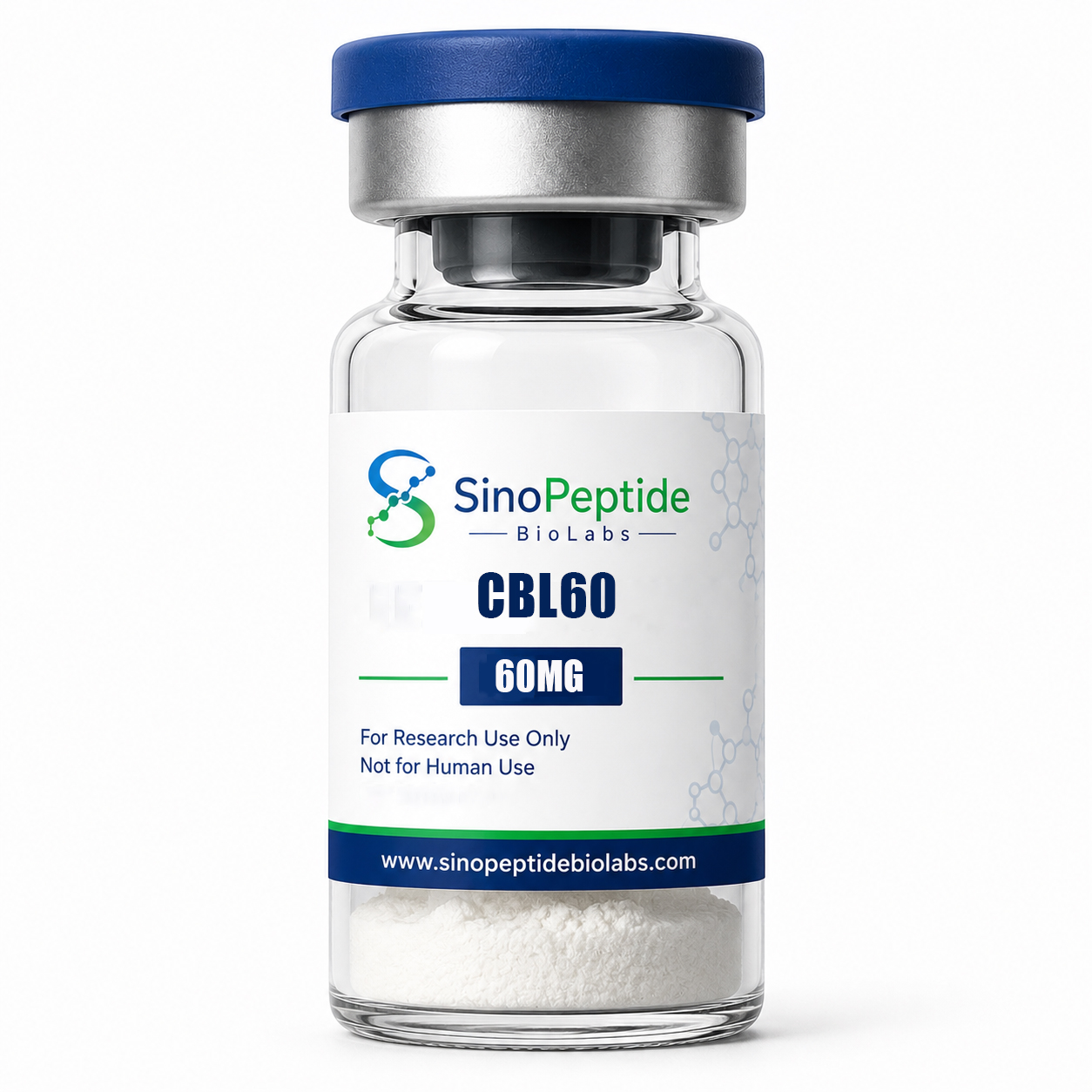
Cerebrolysin 60mg
$35.00
6 vials
Cerebrolysin 60mg: Uses, Benefits, Research, Safety & Product Guide
Cerebrolysin 60mg: A Comprehensive Guide to Research, Uses, Benefits and Safety
Cerebrolysin is a pharmaceutical preparation that has attracted significant scientific interest because of its proposed effects on the nervous system. It is described by its manufacturer as a preparation containing low-molecular-weight peptides and amino acids derived from porcine brain tissue and is marketed in several countries as a prescription medicine.
The compound has been investigated in areas including stroke, traumatic brain injury, dementia, cognitive impairment and neurological recovery. Research has examined whether Cerebrolysin may influence processes associated with neuronal survival, neuroplasticity and recovery following neurological injury.
However, the evidence surrounding Cerebrolysin is complex. Different clinical trials have produced different findings, study designs vary, and its regulatory status differs substantially between countries.
The term Cerebrolysin 60mg also requires clarification. A 60mg designation describes the amount of material in a particular product or formulation; it should not automatically be interpreted as a recommended human dose or treatment schedule.
Official Cerebrolysin information describes its commercial injectable formulation as containing 215.2 mg of Cerebrolysin concentrate per milliliter, meaning that product volume and active-material concentration need to be considered together when evaluating a particular presentation.
This guide examines Cerebrolysin from an educational and SEO perspective, including what it is, how it is proposed to work, areas of research, safety considerations, regulatory status and important product-quality questions.
What Is Cerebrolysin?
Cerebrolysin is a complex peptide-containing preparation derived from porcine brain tissue.
Unlike a conventional single-molecule pharmaceutical, Cerebrolysin is a mixture rather than one chemically defined peptide. Its composition is described in official product information as a concentrate in aqueous solution containing low-molecular-weight peptides and amino acids.
The official product information lists sodium hydroxide and water for injection as excipients and identifies the marketing authorization holder as EVER Neuro Pharma GmbH.
The biological rationale for Cerebrolysin has historically focused on its potential to influence several pathways associated with neuronal survival and recovery.
Researchers have investigated possible effects involving:
- Neuronal survival
- Neuroplasticity
- Synaptic function
- Neurotrophic signaling
- Oxidative stress
- Excitotoxicity
- Recovery after neurological injury
- Cognitive function
These mechanisms have generated considerable interest, but proposed biological mechanisms should not automatically be interpreted as proof of clinical effectiveness.
What Does Cerebrolysin 60mg Mean?
The term Cerebrolysin 60mg can be misleading if the quantity is interpreted as a standardized clinical dose.
60mg refers to quantity
Milligrams measure mass.
Therefore:
60mg = 60 milligrams of the specified product material
It does not, by itself, establish:
- A therapeutic dose
- A recommended injection volume
- A treatment duration
- A frequency of administration
- A medically appropriate regimen
This distinction is especially important because Cerebrolysin products can be described by different concentrations and volumes.
Official manufacturer information states that its solution contains 215.2mg of Cerebrolysin concentrate per mL.
Consequently, product labeling should always be examined before making assumptions about the actual amount contained in a particular presentation.
What Is Cerebrolysin Made Of?
Cerebrolysin is fundamentally different from a conventional single-compound pharmaceutical.
According to the manufacturer’s product information, Cerebrolysin is a preparation containing low-molecular-weight peptides and amino acids derived from porcine brain tissue.
This composition is important when considering the proposed mechanism of action.
Rather than targeting a single receptor through one defined molecule, Cerebrolysin is described as having multimodal biological activity.
This is one reason why research into Cerebrolysin often discusses several biological pathways simultaneously.
The preparation should therefore not be casually described as a single “neuroprotective peptide.”
It is more accurately described as a complex peptide and amino-acid preparation with proposed neurotrophic and neuroprotective activity.
How Does Cerebrolysin Work?
Neurotrophic Signaling
One of the major research concepts surrounding Cerebrolysin is its proposed influence on neurotrophic pathways.
Neurotrophic factors are signaling molecules involved in neuronal survival, development, maintenance and plasticity.
The nervous system depends on these pathways for normal neuronal function and adaptation.
Cerebrolysin research has therefore examined whether the preparation can mimic or influence some aspects of neurotrophic signaling.
However, the precise contribution of individual components remains difficult to determine because Cerebrolysin is a complex mixture.
Neuroplasticity
Neuroplasticity refers to the nervous system’s ability to modify its structure and function in response to experience, learning, injury and environmental demands.
Following neurological injury, neuroplastic processes can contribute to functional recovery.
This has made neuroplasticity an important research area for Cerebrolysin, particularly in stroke and traumatic brain injury.
The concept is scientifically relevant, but evidence that a treatment affects neuroplasticity does not automatically establish that it produces clinically meaningful recovery in every patient.
Neuronal Protection
Another proposed mechanism involves protection of neurons from processes associated with neurological injury.
Depending on the experimental model, research has examined pathways related to:
- Oxidative stress
- Excitotoxicity
- Inflammation
- Apoptosis
- Mitochondrial dysfunction
- Neuronal signaling
These mechanisms are relevant to many neurological disorders.
However, laboratory or mechanistic findings need to be separated from clinical outcomes measured in human trials.
Cerebrolysin and Stroke Research
Stroke is one of the most extensively studied clinical areas involving Cerebrolysin.
A stroke can result in substantial neuronal damage because interruption of blood flow deprives brain tissue of oxygen and nutrients.
Research into Cerebrolysin has therefore examined whether it might influence recovery following ischemic stroke.
Studies have evaluated outcomes such as:
- Functional recovery
- Neurological impairment
- Activities of daily living
- Cognitive function
- Mortality
- Hemorrhagic complications
- Rehabilitation outcomes
The evidence, however, has not been uniformly conclusive.
A recent systematic review and meta-analysis examining Cerebrolysin as an adjunct to mechanical thrombectomy included only three observational studies involving 294 patients. The authors reported potentially favorable outcomes but explicitly noted the small number of studies, limited sample sizes and need for larger randomized trials.
That distinction is important.
An observational meta-analysis can provide useful evidence, but it cannot establish the same level of certainty as a large, well-designed randomized controlled trial.
Therefore, an SEO article should describe Cerebrolysin as a subject of ongoing stroke research, rather than presenting it as a universally proven stroke treatment.
Cerebrolysin and Dementia Research
Cerebrolysin has also been studied in people with dementia and cognitive impairment.
Research has included Alzheimer’s disease and vascular dementia, among other neurological conditions.
The scientific rationale relates partly to the possibility that neurotrophic and neuroplastic mechanisms could influence neuronal function.
Some clinical studies have reported improvements in cognitive or functional measures.
However, dementia research is particularly complicated because different trials may use:
- Different patient populations
- Different disease stages
- Different outcome measures
- Different treatment schedules
- Different follow-up periods
- Different comparators
Consequently, positive findings from an individual study should not automatically be generalized to every person with cognitive impairment.
Older systematic evidence has reported potential cognitive benefits in dementia research, but evidence quality and the clinical significance of observed effects remain important considerations when interpreting the literature.
Cerebrolysin and Cognitive Function
Cognitive function includes several domains, including:
- Memory
- Attention
- Processing speed
- Executive function
- Language
- Learning
Researchers have investigated whether Cerebrolysin can influence some of these domains in neurological disorders.
Some studies have reported improvements in cognitive testing following treatment.
For example, a prospective comparative study published in 2023 reported improvements in several cognitive measures among individuals receiving Cerebrolysin in the study population. However, the study design and population must be considered when interpreting the findings, and a single study does not establish broad effectiveness.
It is therefore more accurate to describe Cerebrolysin as being studied for cognitive and neurological outcomes than to market it as a proven cognitive enhancer.
Cerebrolysin and Traumatic Brain Injury
Traumatic brain injury can produce both immediate and secondary neurological damage.
The initial injury may be followed by processes involving:
- Oxidative stress
- Inflammation
- Excitotoxicity
- Neuronal dysfunction
- Altered cerebral metabolism
Because Cerebrolysin has been investigated for neuroprotective and neuroplastic effects, traumatic brain injury has become another area of research.
Potential outcomes studied include:
- Cognitive recovery
- Functional recovery
- Neurological impairment
- Quality of life
- Rehabilitation outcomes
The manufacturer’s product information lists craniocerebral trauma among its therapeutic indications in certain markets.
However, approved indications vary by country. Product information applicable in one jurisdiction should not automatically be assumed to apply elsewhere.
Potential Benefits of Cerebrolysin
When discussing Cerebrolysin benefits, it is important to distinguish potential research findings from established clinical outcomes.
Research has investigated possible effects involving:
Neuroprotection
Cerebrolysin has been studied for its potential to support neuronal survival during or after neurological injury.
Neuroplasticity
Researchers have investigated whether the preparation can influence pathways involved in neuronal adaptation and recovery.
Cognitive Function
Clinical trials have examined memory and other cognitive measures, particularly in dementia and neurological disorders.
Functional Recovery
Stroke research has examined whether Cerebrolysin may contribute to improvements in functional outcomes during rehabilitation.
Neurological Recovery
The broader concept of neurological recovery remains one of the major areas of Cerebrolysin research.
These areas should be described as research applications or potential effects, rather than guaranteed benefits.
Is Cerebrolysin FDA Approved?
Cerebrolysin’s regulatory status requires careful explanation.
The manufacturer’s official website states that Cerebrolysin is not registered with the U.S. Food and Drug Administration and is not approved for sale or distribution in the United States.
The FDA explains that approved human medicines can be verified through its Drugs@FDA database.
Importantly, the fact that Cerebrolysin has an FDA substance record does not mean that the drug itself has received FDA marketing approval. The FDA’s substance database specifically warns that the presence of a UNII does not imply regulatory review or approval.
This distinction is useful for anyone researching the product online.
Regulatory status can vary by country
Cerebrolysin is marketed as a prescription medicine in certain countries.
The official product information states that it is available by prescription and through pharmacies in applicable markets.
Therefore, the correct regulatory question is not simply:
“Is Cerebrolysin approved?”
It is:
“Is this specific Cerebrolysin product authorized for this indication in the country where it is being used?”
That is a much more accurate way to evaluate regulatory status.
Cerebrolysin Safety
Safety is an essential part of any discussion about Cerebrolysin.
The official prescribing information identifies contraindications including:
- Hypersensitivity to components
- Epilepsy
- Severe renal impairment
These contraindications are based on the applicable product information and may vary according to jurisdiction.
Because Cerebrolysin is an injectable prescription medicine, product quality is particularly important.
Important considerations include:
- Sterility
- Manufacturing controls
- Correct formulation
- Storage conditions
- Packaging integrity
- Lot identification
- Expiration date
- Authenticity
- Regulatory authorization
An injectable pharmaceutical should not be evaluated solely by its advertised ingredient list.
Cerebrolysin and Kidney Function
Renal function is particularly relevant because severe renal impairment is listed as a contraindication in the manufacturer’s prescribing information.
People with kidney disease should therefore not assume that Cerebrolysin is appropriate simply because it is described as a neurological product.
Medical history matters.
The same principle applies to people with epilepsy or known hypersensitivity to the product.
Cerebrolysin and Epilepsy
Epilepsy is specifically listed among the contraindications in the cited product information.
This illustrates why Cerebrolysin should not be treated like an ordinary nutritional supplement.
The appropriate use of an injectable prescription medicine depends on clinical assessment, contraindications, potential interactions and the product’s approved labeling.
Cerebrolysin 60mg vs Standard Commercial Presentations
One important SEO and product-information issue is the distinction between a 60mg listing and standard commercial Cerebrolysin presentations.
Official manufacturer information states that the solution contains 215.2mg/mL of Cerebrolysin concentrate.
Therefore, a product described online as “Cerebrolysin 60mg” should be checked carefully.
Potential explanations include:
- A different formulation
- A research product
- A repackaged product
- A product using a nonstandard labeling convention
- A listing that describes a quantity rather than the standard pharmaceutical concentration
The safest approach is to verify the original manufacturer’s labeling, product packaging and regulatory documentation.
Do not assume that every product using the name “Cerebrolysin” has identical composition or quality.
How to Evaluate a Cerebrolysin Product
1. Verify the Manufacturer
A legitimate pharmaceutical product should have identifiable manufacturer information.
Check:
- Manufacturer name
- Manufacturing location
- Product registration
- Lot number
- Expiration date
2. Check the Official Label
The label should clearly identify the product, strength, formulation and relevant storage information.
3. Verify Regulatory Status
Regulatory authorization should be checked with the relevant national medicines authority.
For products sold in the United States, FDA’s Drugs@FDA database is an important reference for determining whether a drug has been approved.
4. Check Packaging
Look for:
- Intact packaging
- Lot identification
- Expiration information
- Appropriate labeling
- Consistent manufacturer details
5. Be Cautious With Unsupported Claims
Marketing claims such as:
- “Instant brain repair”
- “Guaranteed memory enhancement”
- “Permanent neuroprotection”
- “Guaranteed stroke recovery”
should not be treated as established medical facts.
Clinical evidence is more nuanced.
Cerebrolysin Research: What Does the Evidence Actually Show?
One of the most important considerations when producing high-quality SEO content is avoiding the common mistake of turning preliminary evidence into definitive medical claims.
Cerebrolysin has a substantial research history, but studies differ significantly in quality and design.
Some trials have reported favorable outcomes, while systematic reviews have identified limitations that affect certainty.
For example, recent research involving mechanical thrombectomy and acute ischemic stroke reported promising findings but relied on only three observational studies and explicitly called for larger randomized studies.
Similarly, evidence in dementia has included studies reporting cognitive and functional improvements, but interpretation depends on study methodology, patient selection and outcome measurement.
This means the most scientifically responsible description is:
Cerebrolysin is a researched neuropeptide-containing pharmaceutical preparation with clinical studies investigating neurological and cognitive outcomes, but the strength of evidence varies by condition and study design.
Cerebrolysin as a Research Compound
Cerebrolysin is sometimes discussed online alongside peptides and other experimental compounds.
However, this classification can be misleading.
Unlike a laboratory-only synthetic peptide, Cerebrolysin is an established pharmaceutical product in certain countries.
At the same time, its regulatory status is not universal.
Therefore, website content should avoid presenting Cerebrolysin as either:
- An ordinary dietary supplement, or
- A universally approved medicine.
Its correct classification depends on jurisdiction and the specific product.
Why Product Quality Matters
Cerebrolysin is administered as an injectable pharmaceutical formulation in its established commercial form.
That makes manufacturing quality particularly important.
Factors such as contamination, incorrect storage, counterfeit packaging, incorrect labeling or compromised sterility can create significant risks with injectable products.
Consumers should therefore prioritize products that have:
- Traceable manufacturing information
- Authentic packaging
- Clearly documented formulation
- Lot and expiry information
- Appropriate regulatory documentation
- Reliable distribution channels
A product’s appearance alone cannot establish authenticity.
Cerebrolysin 60mg and SEO Search Intent
For a website targeting the keyword Cerebrolysin 60mg, content should satisfy several different search intents rather than repeating the same keyword throughout the article.
Informational intent
Users may want to know:
- What is Cerebrolysin?
- What is Cerebrolysin used for?
- How does Cerebrolysin work?
- What are Cerebrolysin benefits?
Research intent
Users may search for:
- Cerebrolysin clinical trials
- Cerebrolysin stroke research
- Cerebrolysin dementia research
- Cerebrolysin neuroprotection
- Cerebrolysin cognitive research
Product intent
Users may want to understand:
- Cerebrolysin 60mg
- Cerebrolysin injection
- Cerebrolysin formulation
- Cerebrolysin concentration
- Cerebrolysin product quality
Safety intent
Common safety searches include:
- Cerebrolysin side effects
- Cerebrolysin contraindications
- Cerebrolysin safety
- Cerebrolysin kidney disease
- Cerebrolysin epilepsy
Addressing all these search intents creates a more useful and comprehensive page than repeating “Cerebrolysin 60mg” throughout every paragraph.
Frequently Asked Questions About Cerebrolysin 60mg
What is Cerebrolysin 60mg?
Cerebrolysin 60mg is a product designation referring to a stated amount of Cerebrolysin material. The “60mg” should not automatically be interpreted as a recommended clinical dose.
What is Cerebrolysin used for?
In countries where it is authorized, Cerebrolysin is prescribed for certain cerebrovascular and neurological conditions. The manufacturer’s product information lists indications including stroke, dementia and craniocerebral trauma in applicable markets.
Is Cerebrolysin a peptide?
Cerebrolysin is a complex preparation containing low-molecular-weight peptides and amino acids rather than a single defined peptide molecule.
Does Cerebrolysin improve memory?
Cerebrolysin has been studied for cognitive outcomes, including memory and other measures, particularly in dementia research. Some studies report improvements, but results should be interpreted in the context of study design and the overall evidence base.
Is Cerebrolysin FDA approved?
The manufacturer states that Cerebrolysin is not registered with the FDA and is not approved for sale or distribution in the United States.
Is Cerebrolysin available by prescription?
The manufacturer’s information states that Cerebrolysin is available by prescription in markets where it is authorized.
What does 60mg mean?
60mg refers to mass, not necessarily a clinical dosage regimen. The concentration and volume of the specific product must be checked separately.
Can Cerebrolysin be used for stroke?
Stroke is one of the conditions for which Cerebrolysin has been studied and is listed as an indication in certain national product information. However, treatment decisions should be based on the applicable local clinical guidelines and prescribing information.
Can Cerebrolysin be used for dementia?
Cerebrolysin has been studied in dementia, including Alzheimer’s-type and vascular dementia. Evidence has produced some positive findings, but results vary and should be interpreted according to the quality of the available clinical evidence.
Who should avoid Cerebrolysin?
The cited product information lists hypersensitivity, epilepsy and severe renal impairment as contraindications. The applicable local prescribing information should always be consulted.
Is Cerebrolysin the same as a dietary supplement?
No. Cerebrolysin is a pharmaceutical preparation and should not automatically be classified as an ordinary dietary supplement.
Final Thoughts on Cerebrolysin 60mg
Cerebrolysin is a complex pharmaceutical preparation that has generated substantial interest in neurological research.
Its proposed biological effects include pathways associated with neuroprotection, neuroplasticity and neuronal signaling, and clinical research has investigated its potential role in stroke, dementia, traumatic brain injury and other neurological conditions.
At the same time, evidence should be interpreted carefully. Positive findings from individual studies do not automatically establish universal clinical effectiveness, and recent research continues to call for larger and better-designed trials in important applications.
The regulatory situation also requires attention. Cerebrolysin is available as a prescription medicine in certain countries, while the manufacturer states that it is not FDA-approved or registered for sale and distribution in the United States.
For the specific keyword Cerebrolysin 60mg, it is particularly important to distinguish the stated quantity from an actual clinical dose. Product concentration, formulation, manufacturer, packaging and regulatory authorization should all be verified before drawing conclusions about a particular product.
High-quality SEO content should therefore focus not simply on promotional claims, but on providing accurate information about the compound, its research history, product characteristics, safety considerations and regulatory status.
Cerebrolysin 60mg Cerebrolysin 60mg Cerebrolysin 60mg Cerebrolysin 60mg Cerebrolysin 60mg Cerebrolysin 60mg Cerebrolysin 60mg Cerebrolysin 60mg Cerebrolysin 60mg Cerebrolysin 60mg Cerebrolysin 60mg Cerebrolysin 60mg Cerebrolysin 60mg Cerebrolysin 60mg Cerebrolysin 60mg Cerebrolysin 60mg Cerebrolysin 60mg Cerebrolysin 60mg Cerebrolysin 60mg Cerebrolysin 60mgCerebrolysin 60mg Cerebrolysin 60mg Cerebrolysin 60mg Cerebrolysin 60mg Cerebrolysin 60mg Cerebrolysin 60mg Cerebrolysin 60mg Cerebrolysin 60mg
Be the first to review “Cerebrolysin 60mg”
Related products
Pure Peptides
Pure Peptides
Pure Peptides
Pure Peptides
Pure Peptides
Pure Peptides
Pure Peptides
Pure Peptides
Reviews
There are no reviews yet.