
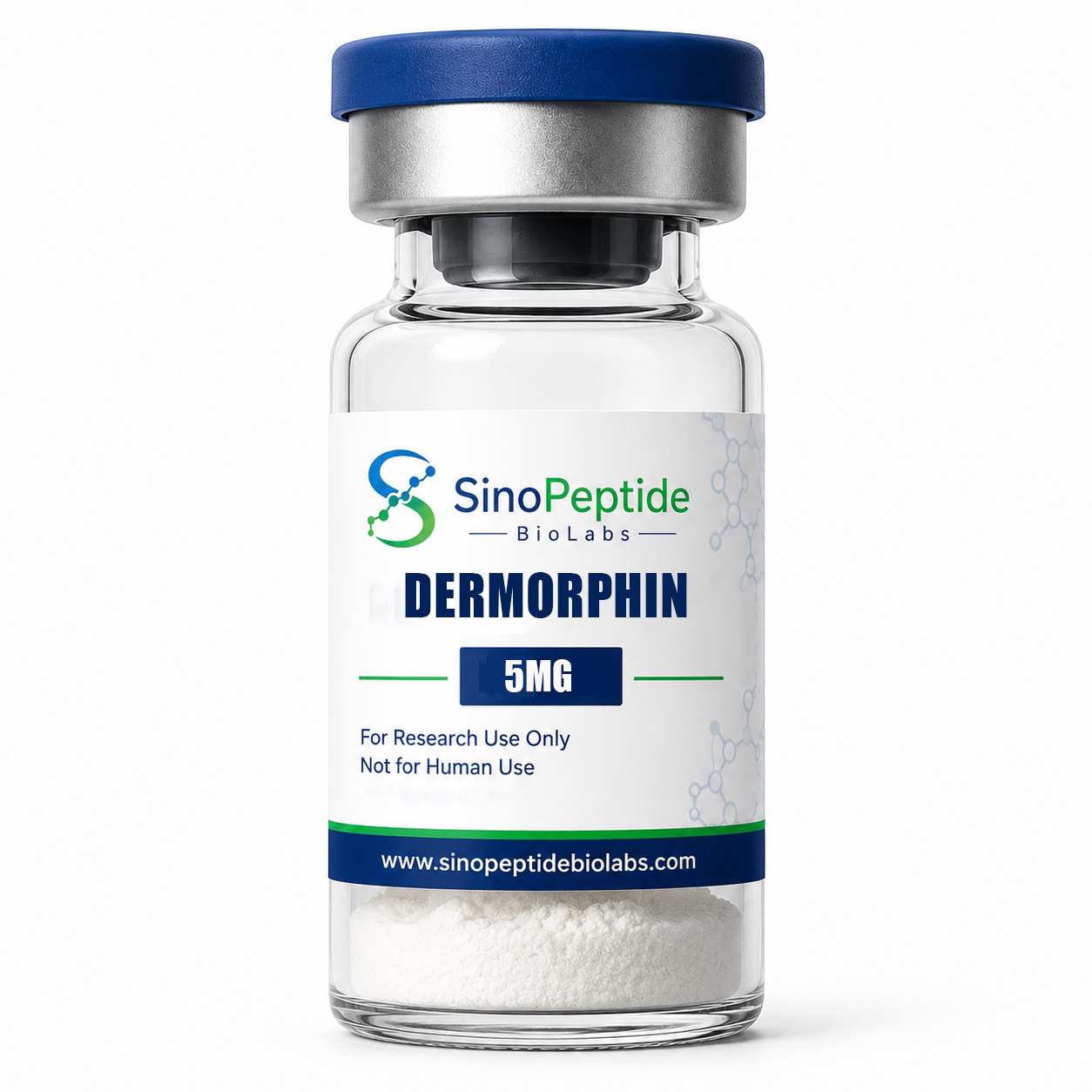
Dermophin 5mg
$70.00
10 Vials/ Kits
Dermorphin 5mg: Research, Mechanism, Opioid Receptor Activity, Safety & Uses
SEO Title: Dermorphin 5mg: Research, Mechanism, Benefits & Safety
Meta Description: Explore Dermorphin 5mg, a potent opioid peptide studied for μ-opioid receptor activity, analgesic research, neurobiology, endocrine effects, safety, regulatory status, and laboratory applications.
URL Slug: /dermorphin-5mg/
Primary Keyword: Dermorphin 5mg
Secondary Keywords:
Dermorphin 5mg, Dermorphin peptide, Dermophin 5mg, Dermorphin research, Dermorphin peptide research, Dermorphin benefits, Dermorphin mechanism, Dermorphin safety, Dermorphin opioid peptide, Dermorphin μ-opioid receptor, Dermorphin analgesic research, Dermorphin pain research, Dermorphin neuroscience, Dermorphin pharmacology, Dermorphin receptor activity, Dermorphin peptide 5mg, Dermorphin research peptide, Dermorphin human research, Dermorphin FDA status, Dermorphin animal research, Dermorphin analogues
Introduction
Dermorphin 5mg is a research quantity associated with dermorphin, a naturally occurring opioid peptide originally isolated from the skin of South American frogs in the genus Phyllomedusa.
Dermorphin is scientifically notable because it contains a D-alanine residue and has exceptionally high affinity and selectivity for the μ-opioid receptor (MOR). Its unusual structure and powerful opioid activity have made it an important subject in peptide pharmacology, opioid-receptor research, pain biology, medicinal chemistry, and neuroscience.
The canonical dermorphin sequence is generally described as:
Tyr-D-Ala-Phe-Gly-Tyr-Pro-Ser-NH₂
This seven-amino-acid structure makes dermorphin a heptapeptide. Its inclusion of D-alanine at position two is particularly important because this structural feature contributes to its resistance to enzymatic degradation and its strong interaction with opioid receptors.
Historical research has investigated dermorphin in animals and, in earlier studies, in human volunteers. Human investigations examined opioid-related effects, endocrine responses, and nociceptive reflexes. These studies provide evidence that dermorphin has substantial pharmacological activity, but they do not establish modern clinical approval or a current therapeutic indication.
This distinction is particularly important because dermorphin is not an ordinary wellness peptide. It is an opioid-active research compound.
The U.S. Food and Drug Administration has stated that it has not approved dermorphin for use in humans or animals.
The term 5mg refers to the stated quantity of material in a research product. It should not be interpreted as a recommended human dose.
This guide provides a comprehensive overview of Dermorphin 5mg, including its molecular structure, μ-opioid receptor activity, analgesic research, endocrine research, pharmacology, safety considerations, regulatory status, product-quality factors, research applications, and frequently asked questions.
What Is Dermorphin?
Dermorphin is a short opioid peptide consisting of seven amino acids.
Its commonly reported sequence is:
Tyr-D-Ala-Phe-Gly-Tyr-Pro-Ser-NH₂
The peptide was originally identified in the skin of South American frogs belonging to the Phyllomedusa genus. Research into frog skin secretions led to the discovery of several biologically active peptides, including dermorphin and related opioid peptides.
Dermorphin attracted particular attention because of its strong activity at the μ-opioid receptor.
The μ-opioid receptor is one of the principal receptor systems involved in:
- Analgesia
- Pain transmission
- Reward pathways
- Respiratory regulation
- Gastrointestinal function
- Neuroendocrine signaling
- Opioid tolerance and dependence
Dermorphin’s interaction with this receptor makes it pharmacologically distinct from many non-opioid research peptides.
Early pharmacological studies demonstrated that dermorphin could produce powerful opioid-like effects in experimental models and that these effects could be antagonized by naloxone, supporting involvement of opioid receptors.
What Does Dermorphin 5mg Mean?
The term Dermorphin 5mg generally describes a research product containing a stated quantity of dermorphin.
The 5mg designation is a product quantity, not a validated therapeutic dosage.
This distinction is important because research quantities and clinical doses are not interchangeable.
An experimental peptide may be investigated under highly controlled conditions involving specific:
- Experimental models
- Concentrations
- Exposure periods
- Pharmacological endpoints
- Receptor assays
- Animal species
- Analytical methods
Therefore, a 5mg product label should not be interpreted as evidence that 5mg is an appropriate or established amount for human administration.
A scientifically accurate product page should describe Dermorphin 5mg as a research quantity rather than a medication dose.
Dermorphin Molecular Structure
Dermorphin is a heptapeptide, meaning it contains seven amino-acid residues.
Its commonly cited structure is:
Tyr-D-Ala-Phe-Gly-Tyr-Pro-Ser-NH₂
One of its defining characteristics is the presence of D-alanine at position two.
Most naturally occurring protein amino acids are found in the L-configuration. D-amino acids can alter peptide stability, receptor interactions, and susceptibility to enzymatic degradation.
Research into dermorphin structure-activity relationships has shown that the D-Ala² residue is particularly important for opioid activity. The N-terminal portion of dermorphin also plays a major role in its interaction with μ-opioid receptors.
This unusual molecular architecture is one reason dermorphin has become an important model for studying peptide-based opioid receptor ligands.
How Does Dermorphin Work?
Dermorphin primarily acts as a μ-opioid receptor agonist.
The μ-opioid receptor belongs to the G-protein-coupled receptor family and is widely distributed throughout the central and peripheral nervous systems.
Activation of μ-opioid receptors can alter neuronal signaling involved in pain transmission and other physiological processes.
Experimental studies have demonstrated that dermorphin has very high affinity and selectivity for μ-opioid receptors.
The receptor activity helps explain why dermorphin has been studied in relation to:
- Nociception
- Analgesia
- Spinal signaling
- Neuroendocrine responses
- Hormone secretion
- Opioid pharmacology
- Receptor selectivity
- Peptide medicinal chemistry
Because dermorphin is an opioid agonist, its pharmacology must be interpreted within the broader context of opioid receptor biology.
Dermorphin and μ-Opioid Receptors
The μ-opioid receptor, often abbreviated MOR, is the principal pharmacological target associated with dermorphin.
Research comparing dermorphin with other opioid ligands has found strong μ-receptor selectivity.
A review of the dermorphin peptide family described dermorphin and related peptides as highly potent opioid agonists, with activity involving μ-opioid receptors.
Laboratory receptor-binding research has also examined dermorphin analogues to understand how modifications to individual amino acids influence receptor affinity and selectivity.
These studies are valuable for medicinal chemistry because they demonstrate how small changes in peptide structure can substantially modify receptor activity.
Dermorphin and Analgesic Research
One of the most important areas of dermorphin research is analgesia.
Experimental studies have demonstrated powerful antinociceptive effects in animals. Early pharmacological work found dermorphin to be substantially more potent than morphine in some experimental assays, although comparisons across experimental systems should not be interpreted as direct clinical equivalence.
Research has also examined dermorphin analogues.
Some modified dermorphin peptides have been investigated because they may retain strong μ-opioid receptor activity while exhibiting different pharmacological properties from traditional opioid drugs.
This has made dermorphin an important research template for developing novel opioid peptide structures.
However, potent analgesic activity in experimental models does not mean dermorphin is an approved pain medication.
Dermorphin and Human Pain Research
Dermorphin has a limited historical record of human investigation.
One human study examined the effects of dermorphin on the spinal nociceptive flexion reflex in healthy volunteers. Experimental dermorphin exposure produced a marked increase in the threshold of the nociceptive reflex, indicating suppression of spinal nociceptive transmission.
Another review of historical clinical research reported that dermorphin was investigated in postoperative pain during the 1980s.
However, these historical studies do not establish dermorphin as a currently approved or routinely used analgesic.
Modern medical development requires contemporary evidence addressing:
- Efficacy
- Dose-response relationships
- Pharmacokinetics
- Long-term safety
- Respiratory effects
- Dependence potential
- Drug interactions
- Manufacturing quality
- Reproducibility
The historical evidence therefore provides scientific context rather than a basis for modern self-treatment.
Dermorphin and Endocrine Research
Dermorphin has also been studied for effects on the endocrine system.
This is another unusual aspect of its pharmacology.
Historical human studies found that dermorphin could influence several circulating hormones.
Research involving healthy volunteers reported increases in:
- Prolactin
- Growth hormone
- Thyrotropin
It also reported changes in:
- Renin activity
- Cortisol
- ACTH
- Aldosterone
Several of these responses were altered by the opioid antagonist naloxone, supporting an opioid-receptor-mediated mechanism.
These findings demonstrate that dermorphin’s pharmacology extends beyond pain signaling.
They also highlight why dermorphin should not be treated as a simple analgesic research molecule.
Its interaction with opioid systems can influence multiple physiological pathways.
Dermorphin and Growth Hormone Research
Historical research specifically investigated the relationship between dermorphin and growth hormone secretion.
A 1983 study in healthy men reported that dermorphin infusion increased plasma growth hormone concentrations. The response was reduced by naloxone pretreatment, supporting involvement of opioid receptors. The authors emphasized that the physiological significance of this effect required further investigation.
This is an important example of how experimental observations should be interpreted.
The study demonstrates that dermorphin can influence endocrine signaling under experimental conditions.
It does not establish dermorphin as a growth hormone therapy or performance-enhancing treatment.
Dermorphin and Prolactin Research
Research has also examined dermorphin’s effects on prolactin.
A human study involving 11 volunteers found that dermorphin administration produced a significant increase in prolactin concentrations. Naloxone completely suppressed the prolactin response, supporting the involvement of μ-opioid receptor signaling.
These observations are relevant to neuroendocrinology because opioid systems can influence hypothalamic and pituitary hormone regulation.
Again, these findings represent pharmacological research rather than an approved clinical application.
Dermorphin and Thyroid-Related Research
Dermorphin has also been investigated in relation to thyroid-axis signaling.
A human study reported an increase in serum thyroid-stimulating hormone following experimental dermorphin infusion.
The findings provide additional evidence that opioid peptides can influence endocrine systems.
They also demonstrate why research involving dermorphin should consider broader physiological effects rather than focusing exclusively on analgesia.
Dermorphin and Reproductive Hormone Research
Historical research investigated the effect of dermorphin on luteinizing hormone and follicle-stimulating hormone.
One study found that dermorphin reduced plasma LH in fertile women, while the response differed depending on menopausal and hormonal status. Naloxone blocked the observed LH reduction.
These findings suggest that opioid receptor signaling can interact with the hypothalamic-pituitary-gonadal axis.
However, they do not establish dermorphin as a reproductive or hormonal therapy.
Dermorphin and Opioid Pharmacology
Dermorphin is valuable in opioid research because it differs structurally from conventional small-molecule opioids.
Its peptide structure provides a useful model for studying:
- Receptor selectivity
- Peptide stability
- Structure-activity relationships
- Opioid signaling
- Analgesic mechanisms
- Receptor-biased signaling
- Peptide drug development
Research into dermorphin analogues has produced compounds with altered receptor properties and pharmacological profiles.
This makes dermorphin relevant to medicinal chemistry and the search for alternative opioid receptor ligands.
Dermorphin Analogue Research
Researchers have created numerous synthetic dermorphin analogues.
These compounds are useful for investigating how individual structural modifications affect:
- μ-receptor affinity
- Receptor selectivity
- Metabolic stability
- Analgesic activity
- Duration of action
- Pharmacological signaling
A review of dermorphin analogues noted that structural modifications can produce compounds with very high μ-opioid receptor affinity and distinct biological profiles.
Some analogues have also been investigated for their ability to retain strong analgesic activity while potentially producing different tolerance or dependence profiles in experimental models.
Such findings remain preclinical or exploratory and should not be interpreted as proof of improved clinical safety.
Potential Research Benefits of Dermorphin 5mg
The term “Dermorphin benefits” is commonly used in online searches, but it is more scientifically accurate to discuss research applications and observed experimental effects.
Research has investigated dermorphin in several areas.
1. Opioid receptor research
Dermorphin is an important high-affinity μ-opioid receptor ligand.
2. Pain and nociception research
Animal and historical human studies have examined dermorphin’s effects on nociceptive signaling.
3. Peptide pharmacology
Its unusual D-amino-acid-containing structure makes dermorphin useful for studying peptide stability and receptor interactions.
4. Neuroendocrine research
Human studies have examined dermorphin’s influence on growth hormone, prolactin, TSH, cortisol, and other endocrine variables.
5. Medicinal chemistry
Dermorphin analogues have been investigated as potential templates for novel opioid receptor ligands.
6. Receptor selectivity
Researchers use dermorphin and related peptides to study differences among opioid receptor subtypes.
These are research areas rather than approved therapeutic indications.
Dermorphin Safety Considerations
Safety is especially important with dermorphin because it is a potent opioid-active peptide.
Opioid receptor agonism can affect multiple physiological systems.
Research involving opioid-active compounds may require consideration of:
- Respiratory effects
- Sedation
- Altered consciousness
- Cardiovascular responses
- Endocrine effects
- Gastrointestinal effects
- Tolerance
- Dependence
- Withdrawal
- Drug interactions
The exact safety profile of a particular dermorphin preparation depends on the compound’s identity, purity, formulation, exposure conditions, and route.
Consequently, a research product labeled “5mg” cannot be assumed to have a predictable safety profile for human administration.
Dermorphin and Dependence Research
Opioid receptor agonists can produce tolerance and dependence, and dermorphin has been investigated in this context.
Early animal research reported that dermorphin could produce tolerance and withdrawal phenomena, although some experimental models showed less dependence-related behavior than morphine.
These findings should not be interpreted to mean that dermorphin is non-addictive or free from opioid-related risks.
Different experimental opioids can display different profiles, but potent μ-opioid receptor agonism remains a significant pharmacological consideration.
Is Dermorphin FDA Approved?
No.
The FDA has stated that it has not approved dermorphin for use in humans or animals.
This is an important distinction for any website publishing information about Dermorphin 5mg.
A product page should not describe dermorphin as:
- FDA-approved pain medication
- FDA-approved opioid
- FDA-approved research therapy
- Approved treatment for chronic pain
- Approved treatment for postoperative pain
- Approved growth-hormone treatment
Historical clinical studies do not constitute FDA approval.
Dermorphin and Sports Regulations
Dermorphin is also relevant to sports pharmacology.
The World Anti-Doping Agency’s 2026 Monitoring Program lists dermorphin and its analogues under narcotics monitored in competition.
The Monitoring Program is distinct from the Prohibited List: substances on the monitoring program are substances WADA tracks for potential patterns of misuse and are not automatically prohibited solely because they appear in that program.
This distinction should be preserved in any sports-related SEO content.
Athletes and sports organizations should consult the current rules applicable to their competition rather than relying on a commercial product description.
Dermorphin 5mg Product Quality
For research applications, product quality is an important consideration.
A research-grade peptide should be accompanied by meaningful analytical information wherever available.
Certificate of Analysis
A batch-specific Certificate of Analysis (COA) can help researchers evaluate:
- Compound identity
- Reported purity
- Batch number
- Analytical method
- Testing laboratory
- Date of testing
A generic COA that cannot be connected to a particular batch provides less useful information than batch-specific documentation.
Identity Testing
Because dermorphin has a specific amino-acid sequence, identity testing is important.
Depending on the supplier and laboratory, analytical techniques may include chromatographic and mass-spectrometric methods.
Purity
High stated purity does not by itself prove that a research peptide is appropriate for human use.
Purity measurements should be interpreted alongside:
- Identity confirmation
- Impurity profiling
- Manufacturing controls
- Storage conditions
- Batch documentation
Research-Use Labeling
A product should be clearly identified according to its intended research status.
A research peptide should not be represented as an approved pharmaceutical product.
Dermorphin vs. Dermophin
For SEO purposes, it is worth addressing the spelling directly.
The scientifically recognized name is:
Dermorphin
The spelling “Dermophin” may appear as a search variation or commercial typo.
Therefore, a page targeting Dermophin 5mg can naturally mention the alternate spelling once or twice while maintaining Dermorphin 5mg as the primary scientific keyword.
Recommended terminology:
- Dermorphin 5mg
- Dermorphin peptide
- Dermorphin research
- Dermophin 5mg — spelling variation
Avoid making the typo the dominant scientific term.
Dermorphin vs. Morphine
Dermorphin and morphine are both associated with opioid receptor activity, but they are chemically different substances.
Dermorphin is a peptide containing seven amino acids and a D-alanine residue.
Morphine is a small-molecule alkaloid derived from the opium poppy.
Research has demonstrated that dermorphin can have extremely high potency in certain experimental opioid assays.
However, laboratory potency comparisons should not be interpreted as direct comparisons of clinical usefulness or safety.
Their pharmacokinetic properties, routes of administration, metabolism, clinical history, regulatory status, and formulations are different.
Dermorphin Research Applications
Dermorphin can be relevant to several areas of scientific investigation.
Opioid receptor biology
Researchers can use dermorphin to investigate μ-opioid receptor signaling.
Nociception
Experimental studies can examine pathways involved in pain transmission.
Neuroendocrinology
Dermorphin’s historical effects on pituitary hormones make it relevant to neuroendocrine research.
Peptide chemistry
Its D-amino-acid-containing structure provides a useful model for studying peptide stability.
Structure-activity research
Researchers can compare dermorphin with modified analogues to determine how sequence changes affect receptor activity.
Medicinal chemistry
Dermorphin-inspired compounds have been investigated as potential starting points for new opioid receptor ligands.
Common Misconceptions About Dermorphin 5mg
“Dermorphin is just another wellness peptide.”
No. Dermorphin is a potent opioid peptide with strong μ-opioid receptor activity.
“5mg is the standard dose.”
No. Five milligrams is a stated product quantity, not evidence of a clinically validated human dose.
“Dermorphin is FDA approved.”
No. FDA states that dermorphin has not been approved for use in humans or animals.
“Dermorphin is safer than morphine.”
Research has found different pharmacological characteristics between dermorphin and morphine, but this does not establish dermorphin as a clinically safer opioid.
“Dermorphin has no dependence potential.”
That conclusion is not supported. Experimental studies have documented tolerance and withdrawal phenomena.
“Dermorphin is only studied in animals.”
Not entirely. Historical human studies investigated endocrine responses and nociceptive physiology.
Frequently Asked Questions About Dermorphin 5mg
What is Dermorphin 5mg?
Dermorphin 5mg refers to a research product containing a stated quantity of dermorphin, a heptapeptide with potent μ-opioid receptor activity.
What is Dermorphin made of?
Dermorphin is commonly described by the sequence Tyr-D-Ala-Phe-Gly-Tyr-Pro-Ser-NH₂.
Is Dermorphin an opioid?
Yes. Dermorphin is a peptide opioid and a potent μ-opioid receptor agonist.
What is Dermorphin studied for?
Research has investigated dermorphin in opioid receptor pharmacology, analgesia, nociception, neuroendocrinology, peptide chemistry, and medicinal chemistry.
Is Dermorphin FDA approved?
No. FDA states that it has not approved dermorphin for use in humans or animals.
Has Dermorphin been studied in humans?
Yes. Historical human studies investigated effects on growth hormone, prolactin, TSH, LH, and nociceptive reflexes.
Does Dermorphin have analgesic activity?
Experimental studies have demonstrated strong antinociceptive activity, and historical human research investigated effects on nociceptive pathways.
Does Dermorphin affect hormones?
Historical human studies reported changes in several hormones, including prolactin, growth hormone, and TSH.
Is Dermorphin the same as morphine?
No. Dermorphin is a peptide, while morphine is a small-molecule opioid alkaloid. Both interact with opioid systems but have different chemical structures and pharmacological properties.
What does 5mg mean?
It refers to the stated quantity of material in a research product. It does not establish a recommended human dosage.
Is “Dermophin” the correct spelling?
The recognized scientific spelling is Dermorphin. “Dermophin” is best treated as a spelling variation or search term.
SEO Keywords for Dermorphin 5mg
For maximum topical relevance, the page can target a primary keyword cluster centered around Dermorphin 5mg.
Primary Keyword
Dermorphin 5mg
Secondary Keywords
- Dermorphin peptide
- Dermorphin research
- Dermorphin 5mg research
- Dermorphin opioid peptide
- Dermorphin μ-opioid receptor
- Dermorphin mechanism
- Dermorphin safety
- Dermorphin analgesic research
- Dermorphin pain research
- Dermorphin pharmacology
- Dermorphin peptide research
- Dermorphin analogue research
- Dermorphin human research
- Dermorphin animal research
- Dermophin 5mg
- Dermorphin FDA status
Long-Tail Keywords
- What is Dermorphin 5mg?
- What is Dermorphin peptide?
- How does Dermorphin work?
- Dermorphin μ-opioid receptor research
- Dermorphin peptide research applications
- Dermorphin safety research
- Dermorphin FDA approval status
- Dermorphin analgesic research
- Dermorphin vs morphine
- Dermorphin structure and mechanism
Keyword placement should remain natural. Excessive repetition can reduce readability and create an unnatural page experience.
Suggested Internal Links
A website publishing Dermorphin 5mg content can strengthen its topical authority with internal links to educational resources such as:
- What Are Research Peptides?
- Opioid Peptides Explained
- Understanding μ-Opioid Receptors
- Peptide Structure and Function
- How to Read a Peptide Certificate of Analysis
- Research Peptide Safety Guide
- Experimental Peptide Regulatory Guide
- Dermorphin vs. Other Opioid Peptides
- Peptide Structure-Activity Relationships
- Research Peptide Quality Standards
These links can create a broader topical cluster around peptide pharmacology and research.
Final Thoughts on Dermorphin 5mg
Dermorphin 5mg represents a research quantity of dermorphin, an unusual and pharmacologically powerful opioid peptide originally isolated from South American frog skin.
Dermorphin’s scientific importance comes largely from its structure and its strong activity at the μ-opioid receptor. Its sequence, Tyr-D-Ala-Phe-Gly-Tyr-Pro-Ser-NH₂, contains D-alanine at position two, a structural feature that contributes to the peptide’s distinctive pharmacological properties.
Research has investigated dermorphin extensively in experimental opioid pharmacology. Studies have examined its effects on nociception, analgesia, receptor binding, peptide stability, and the development of synthetic analogues.
Dermorphin has also been investigated in humans.
Historical studies reported effects on several endocrine systems, including growth hormone, prolactin, thyrotropin, cortisol, renin activity, and reproductive hormones. Other research examined dermorphin’s effects on nociceptive spinal reflexes.
These studies demonstrate substantial pharmacological activity, but they should not be confused with modern approval or established medical use.
The regulatory status is particularly important. FDA states that dermorphin has not been approved for use in humans or animals.
Dermorphin is also listed by WADA in its 2026 Monitoring Program under narcotics monitored in competition, alongside dermorphin analogues.
Because dermorphin is a potent opioid-active compound, safety considerations are fundamentally different from those surrounding many non-opioid experimental peptides. Opioid receptor activation can affect pain signaling, endocrine function, consciousness, respiratory physiology, and pathways associated with tolerance and dependence.
For SEO purposes, a high-quality Dermorphin 5mg page should therefore avoid unsupported claims such as “safe pain relief,” “natural morphine alternative,” “FDA-approved opioid,” or “performance-enhancing peptide.”
Instead, the strongest content strategy is to explain the science behind dermorphin, its receptor activity, historical research, potential research applications, safety considerations, regulatory status, and product-quality factors.
The 5mg designation represents product quantity rather than a validated human dosage.
Researchers evaluating an experimental dermorphin product should focus on accurate compound identification, analytical documentation, batch information, and appropriate research protocols rather than relying on marketing claims.
Research Disclaimer: Dermorphin is a potent experimental opioid peptide and is not FDA-approved for use in humans or animals. This article is provided for educational and research-information purposes only. It does not provide a dosing or administration protocol and should not be interpreted as medical advice or a recommendation for human use.
Dermorphin 5mg Dermorphin 5mg Dermorphin 5mg Dermorphin 5mg Dermorphin 5mg v v Dermorphin 5mg Dermorphin 5mg Dermorphin 5mg Dermorphin 5mg Dermorphin 5mg Dermorphin 5mg v Dermorphin 5mg Dermorphin 5mg Dermorphin 5mg Dermorphin 5mg Dermorphin 5mg Dermorphin 5mg Dermorphin 5mg Dermorphin 5mg Dermorphin 5mg v Dermorphin 5mg Dermorphin 5mg
Be the first to review “Dermophin 5mg”
Related products
Pure Peptides
Pure Peptides
Pure Peptides
Pure Peptides
Pure Peptides
Pure Peptides
Pure Peptides
Pure Peptides
Reviews
There are no reviews yet.