
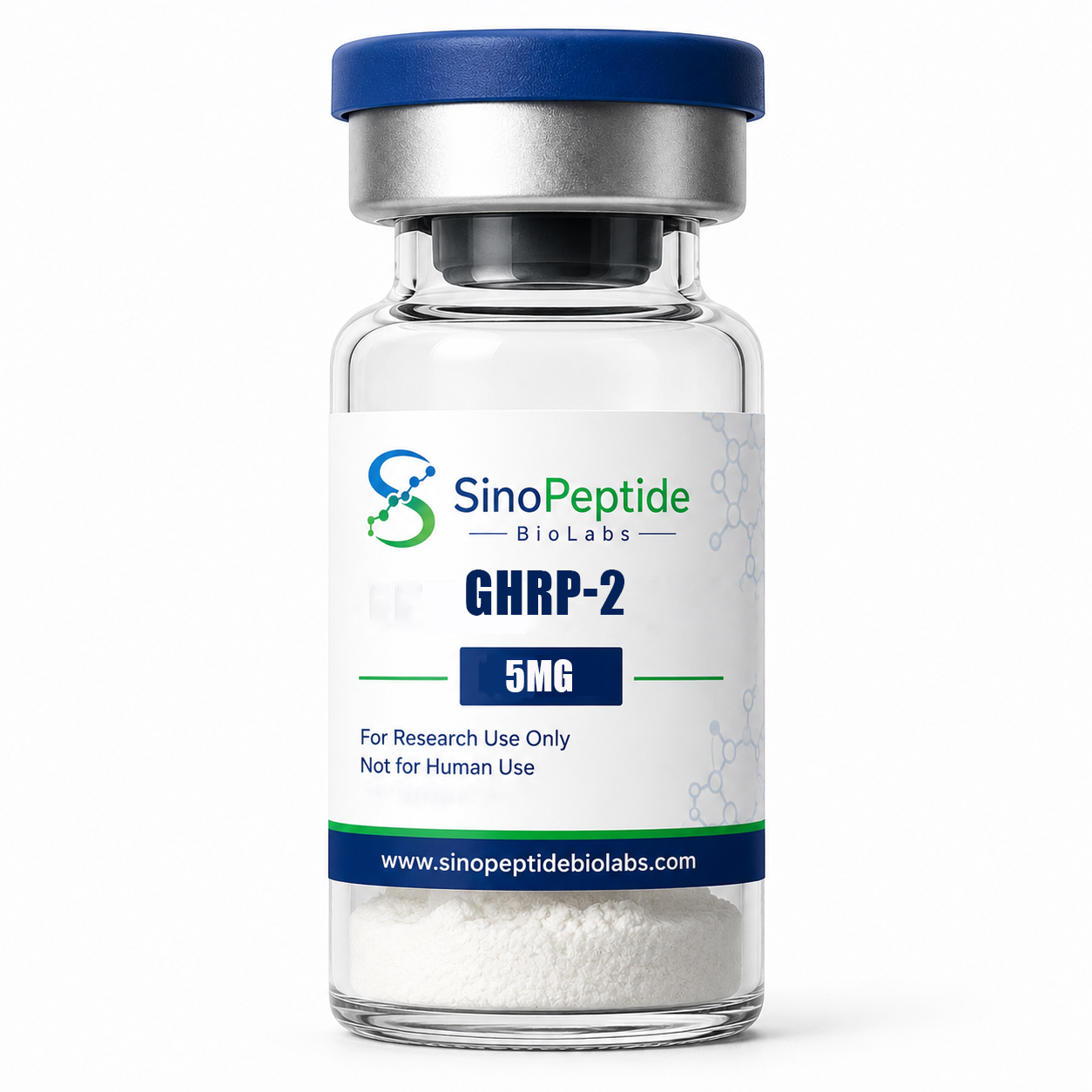
GHRP-2 Acetate 5mg
$60.00
10 Vials/Kits
GHRP-2 Acetate 5mg: Uses, Mechanism, Benefits, Safety & Research
GHRP-2 Acetate 5mg: An Evidence-Based Overview
GHRP-2 Acetate 5mg is a product description associated with growth hormone-releasing peptide-2 (GHRP-2), a synthetic peptide investigated for its ability to stimulate the body’s release of growth hormone (GH).
GHRP-2 is also known as pralmorelin and belongs to a class of compounds known as growth hormone secretagogues or growth hormone-releasing peptides. Unlike recombinant human growth hormone, GHRP-2 does not directly supply GH. Instead, it acts on the growth hormone secretagogue receptor (GHSR), stimulating endogenous GH secretion. Human studies have demonstrated that GHRP-2 can produce substantial increases in circulating GH.
The term “5mg” generally describes the stated quantity of material in a product. It should not automatically be interpreted as a recommended clinical dose.
This distinction is especially important because the amount of peptide in a vial and the dose used in a clinical study are two different concepts.
GHRP-2 has been investigated in humans for growth-hormone stimulation and diagnostic applications. In Japan, pralmorelin hydrochloride has been approved as a diagnostic agent for examining growth hormone secretory function.
At the same time, GHRP-2 should not automatically be marketed as an approved treatment for muscle growth, bodybuilding, fat loss, anti-aging, or general wellness.
This article examines GHRP-2 Acetate 5mg from a scientific and SEO perspective, covering its identity, mechanism of action, research findings, potential applications, safety considerations, and regulatory context.
What Is GHRP-2?
GHRP-2 stands for Growth Hormone-Releasing Peptide-2.
It is a synthetic peptide belonging to the GHRP family. It was developed because researchers were interested in compounds capable of stimulating endogenous growth hormone secretion.
GHRP-2 is also known as pralmorelin.
One of its major pharmacological characteristics is its ability to stimulate GH secretion through the growth hormone secretagogue receptor.
This makes GHRP-2 different from recombinant human growth hormone.
GHRP-2
GHRP-2 stimulates the body’s own GH secretion.
Recombinant human growth hormone
Recombinant GH directly supplies exogenous growth hormone.
The distinction matters because endogenous hormone release remains influenced by physiological feedback mechanisms.
Research reviews describe GHRPs as compounds capable of promoting pulsatile GH release, although long-term safety and clinical efficacy vary between individual secretagogues and clinical situations.
What Does GHRP-2 Acetate 5mg Mean?
The phrase GHRP-2 Acetate 5mg generally combines three pieces of product information:
- GHRP-2 — the active peptide
- Acetate — a designation referring to the product’s salt or formulation form when applicable
- 5mg — the stated quantity
However, product terminology can vary among suppliers.
For this reason, a website should not assume that every product labeled “GHRP-2 Acetate 5mg” has an identical formulation.
Product documentation should ideally identify:
- Active ingredient
- Chemical form
- Quantity
- Purity
- Batch number
- Manufacturer
- Certificate of analysis
- Intended use
- Storage requirements
- Regulatory status
- Sterility status, if applicable
This is particularly important when a product is presented as an injectable preparation.
GHRP-2 Acetate 5mg at a Glance
| Characteristic | Description |
|---|---|
| Product name | GHRP-2 Acetate 5mg |
| Common name | GHRP-2 |
| Alternative name | Pralmorelin |
| Category | Growth hormone-releasing peptide |
| Primary target | Growth hormone secretagogue receptor |
| Main biological effect studied | Stimulation of GH release |
| Hormonal pathway | GH/IGF-1 axis |
| Research status | Human research and diagnostic applications |
| 5mg meaning | Stated product quantity |
| Clinical dose | Must not be inferred from product quantity |
| Anti-doping status | Prohibited under WADA rules |
| Medical supervision | Important when used clinically |
GHRP-2 is specifically listed by the World Anti-Doping Agency among prohibited growth hormone-releasing peptides.
How Does GHRP-2 Work?
The primary mechanism of GHRP-2 involves stimulation of the growth hormone secretagogue receptor (GHSR).
This receptor is closely associated with the physiological actions of ghrelin and other growth hormone secretagogues.
When GHRP-2 activates this pathway, signaling promotes the release of growth hormone from the pituitary gland.
The resulting increase in GH can influence downstream biological pathways, including the production of insulin-like growth factor-1 (IGF-1), particularly with repeated exposure.
However, the magnitude and duration of hormonal effects depend on factors such as:
- Age
- Body composition
- Baseline GH secretion
- Timing
- Physiological state
- Route of administration
- Other hormones
- Underlying medical conditions
Human research has demonstrated strong GH responses following GHRP-2 administration. For example, studies evaluating GHRP-2 as a diagnostic stimulus have measured substantial differences in peak GH responses between healthy individuals and people with severe GH deficiency.
GHRP-2 and the Growth Hormone Axis
The growth hormone axis is a complex hormonal system involving the hypothalamus, pituitary gland, liver, and other tissues.
Simplified, the pathway can be described as:
Hypothalamus → Pituitary → Growth Hormone → IGF-1 and downstream effects
GHRP-2 acts primarily by stimulating GH secretion at the pituitary level.
Growth hormone subsequently influences IGF-1 production and multiple physiological processes.
These include effects on:
- Protein metabolism
- Bone growth
- Tissue metabolism
- Lipid metabolism
- Glucose regulation
- Body composition
However, stimulating GH secretion does not automatically mean that every claimed downstream benefit will occur.
For example, increasing GH temporarily does not necessarily produce clinically meaningful increases in height, muscle mass, fat loss, or physical performance.
Clinical evidence must be evaluated separately for each proposed outcome.
GHRP-2 and Growth Hormone Release
The most established pharmacological property of GHRP-2 is stimulation of GH secretion.
Early human studies of growth hormone-releasing peptides demonstrated dose-dependent increases in circulating GH. Research involving GHRP-2 specifically also demonstrated substantial GH responses in healthy adults.
In one human study evaluating GHRP-2 as a diagnostic test, peak GH concentrations occurred within approximately one hour after administration, and the response was significantly lower in participants with severe GH deficiency than in healthy participants.
These findings provide evidence that GHRP-2 is biologically active in humans.
However, demonstrating GH stimulation is not the same as demonstrating that long-term administration improves a particular disease or produces a specific body-composition outcome.
GHRP-2 and IGF-1
Growth hormone stimulates the production of insulin-like growth factor-1 (IGF-1), an important mediator of several physiological effects associated with GH.
Because GHRP-2 can stimulate GH secretion, researchers have investigated whether repeated GHRP exposure can influence IGF-1 concentrations.
The relationship is biologically plausible, but the clinical importance depends on the treatment setting, duration, baseline physiology, and the magnitude of hormonal changes.
A 2018 review of growth hormone secretagogues concluded that although these compounds can stimulate pulsatile GH release, relatively few long-term, rigorously controlled studies have established their efficacy and safety across different clinical populations. The review also highlighted concern about potential changes in glucose regulation and insulin sensitivity.
Therefore, GHRP-2 should not be described as a proven substitute for approved GH therapy.
GHRP-2 and Growth Hormone Deficiency
One important area of GHRP-2 research involves diagnostic evaluation of growth hormone secretion.
Researchers have investigated GHRP-2 as a provocative stimulus for assessing pituitary GH reserve.
A study involving healthy subjects and patients with adult GH deficiency found that intravenous GHRP-2 produced measurable GH responses and demonstrated useful diagnostic characteristics for severe GH deficiency.
This is an important distinction.
GHRP-2 has been studied not only as a potential pharmacological agent but also as a tool for evaluating the body’s capacity to release GH.
In Japan, PMDA records identify pralmorelin hydrochloride as an approved diagnostic agent used to examine growth hormone secretory function.
GHRP-2 and Children
GHRP-2 has also been studied in children with short stature and growth hormone deficiency.
One randomized, double-blind study examined an intranasal GHRP-2 formulation in prepubertal children with GH deficiency.
Although the treatment increased endogenous GH secretion, the study did not demonstrate a significant improvement in growth compared with placebo after 48 weeks. The investigators concluded that the transient GH increase produced by the treatment was insufficient to promote growth.
This finding is particularly important when evaluating marketing claims.
It demonstrates that:
Increasing GH does not necessarily translate into a clinically meaningful increase in growth.
Therefore, a website should avoid claiming that GHRP-2 automatically increases height or growth.
GHRP-2 and Muscle Growth
GHRP-2 is frequently discussed online in connection with bodybuilding and muscle development.
The biological rationale comes from its ability to stimulate GH secretion.
Growth hormone is involved in anabolic and metabolic processes, which has led researchers and athletes to investigate GH secretagogues.
However, evidence for GHRP-2 specifically producing meaningful increases in muscle mass in healthy adults is much less established than its ability to stimulate GH.
A review of growth hormone secretagogues noted that some studies have reported effects involving lean mass and body composition, but also emphasized the limited number of rigorous long-term studies.
Consequently, SEO content should use language such as:
“GHRP-2 has been investigated for its effects on growth hormone secretion and related metabolic pathways.”
It should avoid unsupported statements such as:
“GHRP-2 builds muscle quickly.”
GHRP-2 and Fat Loss
Another commonly promoted application of GHRP-2 is fat reduction.
Because GH participates in lipid metabolism, researchers have investigated whether growth hormone secretagogues may influence body composition.
However, the presence of a biological mechanism does not establish GHRP-2 as an approved weight-loss medication.
The available evidence does not justify presenting GHRP-2 Acetate 5mg as a guaranteed fat-burning product.
A medically accurate website should distinguish between:
GH-related metabolic research
and
proven weight-loss treatment.
This distinction is especially important because changes in glucose metabolism may occur with growth hormone secretagogue exposure. Reviews have identified potential concerns about insulin sensitivity and blood glucose with this class of compounds.
GHRP-2 and Appetite
GHRP-2 is pharmacologically related to the ghrelin system.
Ghrelin is a naturally occurring hormone involved in appetite regulation and energy balance.
Because GHRP-2 activates the growth hormone secretagogue receptor, appetite-related effects have been investigated alongside its GH-releasing properties.
This makes GHRP-2 scientifically interesting for metabolic research.
However, appetite stimulation is not necessarily a desirable outcome for someone seeking fat loss.
For this reason, marketing claims about GHRP-2 and body composition should be presented cautiously.
GHRP-2 and Sleep
Growth hormone secretion is naturally associated with physiological rhythms, including substantial secretion during sleep.
Because GHRP-2 can stimulate GH release, researchers have investigated growth hormone secretagogues in relation to sleep and endocrine physiology.
However, this does not establish GHRP-2 as a clinically approved sleep treatment.
Claims such as “GHRP-2 cures insomnia” or “GHRP-2 guarantees deeper sleep” are not supported by the evidence summarized here.
GHRP-2 and Aging Research
GH secretion generally changes with age.
Older adults tend to have lower spontaneous GH secretion than younger individuals.
This has contributed to scientific interest in GH secretagogues as potential tools for modifying age-related endocrine changes.
GHRP-2 has therefore been studied in different age groups.
Human studies have demonstrated that age can influence the GH response to secretagogues. For example, research comparing young and elderly participants found substantial GH responses to GHRP-2 but differences in response magnitude between age groups.
Nevertheless, this should not be translated into the claim that GHRP-2 is a proven anti-aging treatment.
GHRP-2 and Cognitive Health
Growth hormone and IGF-1 participate in numerous physiological pathways, including processes relevant to the nervous system.
This has generated interest in whether GH secretagogues could have neurological or cognitive applications.
However, evidence specifically demonstrating that GHRP-2 improves memory, cognition, or neurodegenerative disease outcomes in humans is limited.
Therefore, GHRP-2 should not be promoted as an established treatment for Alzheimer’s disease, dementia, memory loss, or other neurological disorders.
GHRP-2 Acetate 5mg Benefits
When discussing GHRP-2 Acetate 5mg benefits, it is useful to separate established biological effects from possible or speculative applications.
Established research finding
GHRP-2 stimulates growth hormone secretion.
Investigational areas
Researchers have examined GHRP-2 and related secretagogues in connection with:
- GH deficiency assessment
- Endocrine function
- IGF-1 physiology
- Body composition
- Metabolism
- Appetite
- Growth
- Aging-related hormonal changes
Claims requiring caution
Evidence does not support presenting GHRP-2 as definitively proven to:
- Build large amounts of muscle
- Produce guaranteed fat loss
- Reverse aging
- Increase adult height
- Treat obesity
- Cure metabolic disease
- Treat neurological disease
- Replace prescription GH therapy
This evidence-based distinction makes the article more credible and reduces the risk of exaggerated medical claims.
Is GHRP-2 Acetate 5mg FDA Approved?
The answer depends on the exact product and jurisdiction.
GHRP-2 itself should not be described broadly as an FDA-approved treatment for bodybuilding, anti-aging, fat loss, or general GH enhancement.
However, the regulatory history of pralmorelin is more nuanced.
Japan’s PMDA lists pralmorelin hydrochloride (GHRP Kaken 100) as an approved diagnostic agent for examination of growth hormone secretory function.
This does not mean that every product labeled “GHRP-2 Acetate 5mg” has the same regulatory status.
Regulatory approval applies to specific products, formulations, manufacturers, indications, and jurisdictions.
Therefore, a website should avoid statements such as:
“GHRP-2 Acetate 5mg is FDA approved.”
unless the specific product has verified approval from the relevant regulator.
GHRP-2 Acetate 5mg Dosage
The term 5mg describes the quantity of peptide in a product. It does not establish a medically appropriate dose.
Human research has used substantially smaller quantities of GHRP-2 for specific experimental or diagnostic purposes.
For example, published diagnostic research has used a 100 microgram intravenous dose in a specific diagnostic protocol for adult GH deficiency.
This should not be interpreted as a general recommendation.
A 5mg vial can contain multiple potential administrations depending on the formulation and intended research or clinical protocol, but calculating or recommending personal dosing requires the exact product, route, indication, patient characteristics, and medical supervision.
For safety, the product quantity should never be confused with a recommended therapeutic dose.
How Is GHRP-2 Administered?
Administration depends on the formulation and purpose.
Published research has evaluated GHRP-2 through different routes, including intravenous and intranasal administration.
The route used in a scientific study should not automatically be transferred to another product.
A product labeled GHRP-2 Acetate 5mg may have different specifications from the formulation used in a clinical study.
For injectable products, factors such as sterility, concentration, excipients, route, and storage are critical.
A website should therefore avoid publishing generic self-injection instructions for an unverified GHRP-2 product.
GHRP-2 Safety
The safety profile of GHRP-2 requires careful consideration.
The compound directly affects the endocrine system by stimulating GH secretion.
Because GH interacts with multiple metabolic pathways, altering GH secretion may have effects beyond the intended target.
Potential concerns associated with growth hormone secretagogues include:
- Changes in blood glucose
- Altered insulin sensitivity
- Changes in IGF-1
- Fluid retention
- Headache
- Appetite changes
- Hormonal effects
- Injection-related complications where applicable
The precise risk profile depends on the compound, dose, duration, route, formulation, and patient.
A review of growth hormone secretagogues emphasized that long-term, rigorously controlled safety data remain limited and identified concern about possible increases in blood glucose related to changes in insulin sensitivity.
GHRP-2 and Blood Glucose
Metabolic effects are an important consideration with growth hormone secretagogues.
Growth hormone can influence glucose metabolism and insulin sensitivity.
Consequently, compounds that substantially alter GH secretion may affect blood glucose regulation.
People with diabetes, impaired glucose tolerance, metabolic syndrome, or other endocrine conditions should not assume that GHRP-2 is metabolically neutral.
The available literature supports further study of long-term metabolic consequences rather than treating GHRP-2 as risk-free.
GHRP-2 and Prolactin
GHRP-2 can influence hormones other than GH.
Human research has investigated its effects on prolactin, ACTH, and cortisol.
In one study, GHRP-2 produced strong GH responses, while changes in prolactin and other pituitary-adrenal hormones were also evaluated.
This demonstrates why GHRP-2 should not be considered a compound that affects only one hormone.
Endocrine systems are interconnected, and pharmacological stimulation of one pathway may influence others.
GHRP-2 and Cortisol
Cortisol is another hormone investigated in studies of GHRP-2.
The endocrine response can vary according to dose, study population, and experimental conditions.
Published research has examined GH, prolactin, ACTH, and cortisol responses following GHRP-2 administration.
For that reason, claims that GHRP-2 selectively affects only GH are overly simplistic.
GHRP-2 Acetate 5mg Side Effects
Possible adverse effects associated with growth hormone secretagogue exposure can include:
- Headache
- Flushing
- Changes in appetite
- Fluid retention
- Changes in glucose regulation
- Changes in insulin sensitivity
- Hormonal fluctuations
- Injection-site problems when administered parenterally
Not every person experiences these effects, and the published evidence varies according to the formulation and study protocol.
Anyone experiencing significant or unexpected symptoms should discontinue unsupervised use and seek professional medical evaluation.
GHRP-2 Contraindications and Precautions
GHRP-2 should be approached cautiously in people with endocrine or metabolic conditions.
Professional assessment may be particularly important in individuals with:
- Diabetes
- Impaired glucose tolerance
- Pituitary disorders
- Active or suspected hormone-sensitive disease
- Significant cardiovascular disease
- Pregnancy or breastfeeding
- Unexplained abnormal hormone levels
The appropriate clinical assessment depends on the individual’s circumstances.
A research peptide product should never be assumed to have the same safety profile as an approved pharmaceutical product.
GHRP-2 vs Human Growth Hormone
GHRP-2 and recombinant human growth hormone are not the same thing.
| Feature | GHRP-2 | Recombinant GH |
|---|---|---|
| Type | Synthetic peptide secretagogue | Recombinant hormone |
| Primary action | Stimulates endogenous GH release | Supplies GH directly |
| Main target | GHS receptor pathway | GH receptor |
| GH source | Patient’s pituitary | External pharmaceutical source |
| Research use | GH stimulation and diagnostic research | Established medical treatment for defined indications |
| Regulatory status | Depends on product and jurisdiction | Multiple approved pharmaceutical products |
| Bodybuilding use | Not an approved general indication | Not an approved general indication |
This distinction is essential for accurate SEO content.
GHRP-2 vs GHRP-6
GHRP-2 and GHRP-6 belong to the same broad family of growth hormone-releasing peptides.
Both can stimulate GH release.
However, they are different peptide compounds and should not be treated as interchangeable.
Research has examined differences in hormonal responses between GHRP-2 and GHRP-6 and related secretagogues.
The precise pharmacological profile of each compound depends on its structure and interaction with the GH secretagogue receptor.
A product page should therefore use the exact compound name rather than using “GHRP” as a generic synonym.
GHRP-2 vs Ipamorelin
Ipamorelin is another growth hormone secretagogue.
Both compounds can stimulate GH secretion through pathways involving the growth hormone secretagogue receptor.
However, their pharmacological profiles are not identical.
GHRP-2 has been studied extensively as a GH stimulation and diagnostic agent, including clinical research involving human subjects.
Ipamorelin has a different research history and pharmacological profile.
Therefore, users should not assume that a dosage or safety finding for one compound applies automatically to the other.
GHRP-2 and Sports
GHRP-2 has significant relevance to anti-doping policy.
The World Anti-Doping Agency’s prohibited list specifically identifies GHRP-2 (pralmorelin) among growth hormone-releasing peptides prohibited under its S2 category.
This means athletes subject to the World Anti-Doping Code should not assume that GHRP-2 is permitted simply because it is described as a peptide rather than recombinant GH.
Anti-doping organizations have also developed analytical methods for detecting GHRP-2 and its metabolites in biological samples. Human administration studies have demonstrated that GHRP-2 and a specific metabolite can be detected in urine.
Athletes should consult their applicable anti-doping organization and current prohibited list.
GHRP-2 Research Applications
Scientific research involving GHRP-2 has included several areas.
Growth hormone physiology
Researchers use GHRP-2 to investigate how the pituitary responds to GH secretagogues.
Diagnostic testing
Pralmorelin has been used as a diagnostic stimulus for assessing GH secretory function.
Endocrine research
GHRP-2 provides a tool for studying interactions among GH, IGF-1, and other endocrine pathways.
Pharmacology
Researchers have studied receptor signaling, pharmacokinetics, and hormonal responses.
Anti-doping science
GHRP-2 is relevant to analytical detection because it is prohibited in sport.
These applications demonstrate why GHRP-2 remains scientifically relevant even though many commercial claims about the peptide exceed the available clinical evidence.
Why Product Quality Matters for GHRP-2 Acetate 5mg
Quality is especially important when evaluating a peptide product.
A high-quality product description should provide transparent information about:
Peptide identity
The exact compound should be identified as GHRP-2/pralmorelin where appropriate.
Quantity
The stated 5mg amount should correspond to the documented product quantity.
Purity
Analytical documentation should support the claimed purity.
Batch information
The product should have traceable lot or batch information.
Certificate of analysis
A COA can provide information about identity, purity, and analytical testing.
Sterility
If a product is intended for injection, appropriate sterility documentation is especially important.
Storage
Storage conditions should come from the manufacturer’s validated documentation.
Intended use
The product should clearly state whether it is an approved medicine, diagnostic product, or research material.
These factors are more useful to consumers and researchers than unsupported claims about guaranteed outcomes.
Is GHRP-2 Acetate 5mg the Same as Pralmorelin?
GHRP-2 is commonly referred to as pralmorelin.
In Japan, the approved diagnostic product is identified as pralmorelin hydrochloride.
However, the word “acetate” describes a different salt/formulation designation and should not automatically be treated as identical to pralmorelin hydrochloride.
For a specific product, the exact chemical form should be confirmed through its documentation.
This is an important SEO and pharmaceutical accuracy correction.
Is GHRP-2 Acetate 5mg a Research Peptide?
The answer depends on the specific product.
GHRP-2 itself has a history of human clinical research and diagnostic use.
However, a particular 5mg acetate product marketed online may be sold as a research-use product rather than as an approved pharmaceutical.
The regulatory status of a product should therefore be determined from:
- Manufacturer
- Jurisdiction
- Product registration
- Labeling
- Intended use
- Formulation
- Regulatory database
The existence of clinical research on GHRP-2 does not mean that every commercially available GHRP-2 product is an approved medicine.
GHRP-2 Acetate 5mg and Clinical Evidence
The clinical evidence for GHRP-2 is best understood in several categories.
Strongest evidence
GHRP-2 can stimulate GH secretion in humans.
Established specialized application
Pralmorelin has been approved in Japan as a diagnostic agent for assessing GH secretory function.
More limited evidence
Research has investigated possible effects on body composition, growth, metabolism, and related outcomes.
Uncertain areas
Long-term safety and the effectiveness of GHRP-2 for general anti-aging, bodybuilding, weight loss, or wellness remain insufficiently established.
A 2018 review specifically emphasized the limited number of long-term, rigorously controlled studies of growth hormone secretagogues.
Frequently Asked Questions About GHRP-2 Acetate 5mg
What is GHRP-2 Acetate 5mg?
GHRP-2 Acetate 5mg is a product description referring to a stated quantity of GHRP-2, a synthetic growth hormone-releasing peptide. GHRP-2 is also known as pralmorelin.
What does GHRP-2 do?
GHRP-2 stimulates growth hormone secretion through the growth hormone secretagogue receptor pathway.
Is GHRP-2 the same as human growth hormone?
No. GHRP-2 stimulates endogenous GH release, while recombinant human growth hormone supplies GH directly.
Is GHRP-2 approved?
Regulatory status depends on the product and jurisdiction. Pralmorelin hydrochloride has been approved in Japan as a diagnostic agent for examining growth hormone secretory function.
Is GHRP-2 FDA approved?
GHRP-2 should not be broadly described as an FDA-approved treatment for bodybuilding, anti-aging, muscle growth, or fat loss. The status of a specific product must be verified with the relevant regulator.
Does GHRP-2 increase growth hormone?
Yes. Human studies demonstrate that GHRP-2 can substantially stimulate GH secretion.
Does GHRP-2 increase muscle mass?
GHRP-2 has been investigated in relation to GH and body composition, but its ability to produce clinically meaningful muscle gains should not be presented as established without appropriate human evidence.
Does GHRP-2 burn fat?
GHRP-2 affects the GH axis, which is involved in lipid metabolism, but this does not establish it as an approved or guaranteed fat-loss treatment.
Can GHRP-2 increase height?
Increasing GH temporarily does not necessarily increase growth. A randomized study in children with GH deficiency found no significant growth advantage from intranasal GHRP-2 treatment despite increased endogenous GH secretion.
What is the difference between GHRP-2 and GHRP-6?
Both are growth hormone-releasing peptides, but they are different compounds with different pharmacological characteristics.
Is GHRP-2 legal in sports?
GHRP-2, also called pralmorelin, is listed by WADA among prohibited growth hormone-releasing peptides.
Is 5mg a GHRP-2 dose?
No. Five milligrams describes the stated amount of product. It should not automatically be interpreted as a recommended clinical dose.
Can GHRP-2 be used for anti-aging?
GHRP-2 has been investigated in relation to age-associated changes in GH secretion, but it should not be marketed as a proven anti-aging treatment.
Does GHRP-2 affect insulin sensitivity?
Growth hormone secretagogues may influence glucose metabolism and insulin sensitivity. Long-term metabolic effects require careful evaluation.
Final Perspective on GHRP-2 Acetate 5mg
GHRP-2 Acetate 5mg refers to a product containing a stated quantity of GHRP-2, also known as growth hormone-releasing peptide-2 or pralmorelin.
Its best-established pharmacological characteristic is stimulation of endogenous growth hormone secretion.
Human studies have demonstrated significant GH responses to GHRP-2, and pralmorelin has a documented diagnostic role in Japan for evaluating growth hormone secretory function.
At the same time, the evidence should not be overstated.
GHRP-2 should not automatically be described as a proven muscle-building agent, fat-loss treatment, anti-aging therapy, or replacement for recombinant human growth hormone.
The 5mg designation describes the amount of material in a product and does not establish an appropriate human dose.
For pharmaceutical and research websites, accurate product identification, transparent quality documentation, regulatory information, and evidence-based claims are more valuable than exaggerated promises.
The compound also has an important anti-doping consideration: WADA specifically lists GHRP-2/pralmorelin among prohibited growth hormone-releasing peptides.
Overall, GHRP-2 remains an important research compound for understanding growth hormone physiology and secretagogue signaling. Its established diagnostic history and documented biological activity provide a strong scientific foundation for educational content, while the limitations of long-term clinical evidence should remain clear.
Medical and research disclaimer: This article is intended for educational and informational purposes. It is not a substitute for medical diagnosis, prescribing information, or professional healthcare advice. Product specifications, regulatory status, formulation, and intended use should always be verified using the manufacturer’s current documentation and the applicable regulatory authority.
GHRP-2 Acetate 5mg GHRP-2 Acetate 5mg GHRP-2 Acetate 5mgGHRP-2 Acetate 5mg GHRP-2 Acetate 5mg GHRP-2 Acetate 5mg GHRP-2 Acetate 5mg GHRP-2 Acetate 5mg GHRP-2 Acetate 5mg GHRP-2 Acetate 5mg GHRP-2 Acetate 5mg GHRP-2 Acetate 5mg GHRP-2 Acetate 5mg GHRP-2 Acetate 5mg GHRP-2 Acetate 5mg GHRP-2 Acetate 5mg GHRP-2 Acetate 5mg GHRP-2 Acetate 5mg GHRP-2 Acetate 5mg GHRP-2 Acetate 5mg GHRP-2 Acetate 5mg
Be the first to review “GHRP-2 Acetate 5mg”
Related products
Pure Peptides
Pure Peptides
Pure Peptides
Pure Peptides
Pure Peptides
Pure Peptides
Pure Peptides
Pure Peptides
Reviews
There are no reviews yet.