

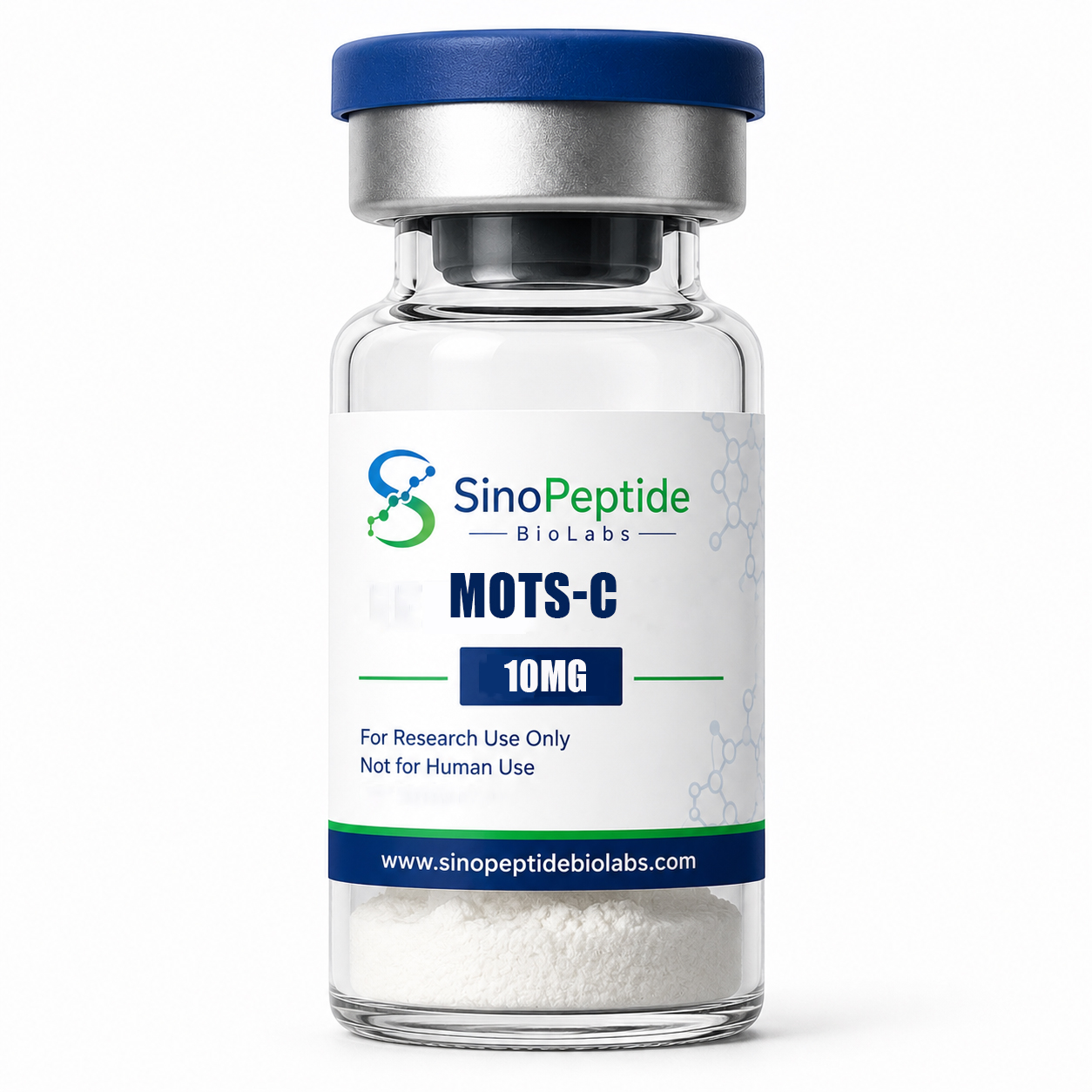
MOTS-c 10mg
$65.00
10 Vials/ Kits
MOTS-c 10mg: Research, Benefits, Mechanism, Safety & Uses
Introduction
MOTS-c 10mg is a research-oriented product designation associated with MOTS-c (mitochondrial open reading frame of the 12S rRNA-c), a small peptide encoded by mitochondrial DNA.
Unlike conventional peptides encoded by nuclear DNA, MOTS-c belongs to a relatively new group known as mitochondrial-derived peptides (MDPs). These peptides have attracted scientific interest because mitochondria are increasingly understood not only as cellular energy-producing structures but also as active signaling systems.
MOTS-c research has focused particularly on metabolism, insulin sensitivity, exercise adaptation, cellular stress responses, mitochondrial signaling, and aging biology. Early experimental research found that MOTS-c can influence metabolic pathways involving folate metabolism and AMP-activated protein kinase (AMPK), while later research has examined its relationship with exercise and metabolic stress.
However, MOTS-c remains an experimental research peptide, and its scientific potential should not be confused with an established human treatment.
This distinction is especially important because current FDA materials report a lack of human exposure data for drug products containing MOTS-c-related bulk drug substances and a lack of sufficient information to evaluate their safety, including immunogenicity.
This comprehensive guide explains what MOTS-c is, how it works, what researchers have discovered, its potential relationship with metabolism and exercise, what “10mg” means, safety considerations, regulatory status, and how to evaluate a research-grade MOTS-c product.
What Is MOTS-c?
MOTS-c is a 16-amino-acid mitochondrial-derived peptide encoded by the mitochondrial 12S ribosomal RNA region.
Its full name is:
Mitochondrial Open Reading Frame of the 12S rRNA-c
The discovery of MOTS-c expanded scientific understanding of mitochondrial genetics. Researchers had traditionally focused on mitochondrial DNA as a source of genes encoding mitochondrial proteins, but studies of mitochondrial-derived peptides revealed that short open reading frames can produce biologically active signaling molecules.
The original MOTS-c research identified the peptide as a regulator of metabolic homeostasis and investigated its effects on glucose metabolism, insulin sensitivity, obesity, and exercise-related biology.
This makes MOTS-c fundamentally different from conventional synthetic peptides that are designed independently of mitochondrial genetic sequences.
What Does MOTS-c Stand For?
The abbreviation MOTS-c refers to:
Mitochondrial Open Reading Frame of the 12S rRNA-c
The peptide is encoded within the MT-RNR1 region of mitochondrial DNA.
This genetic origin is scientifically significant because mitochondria possess their own genome and participate in cellular communication.
MOTS-c is therefore often described as a mitochondrial-derived peptide, mitokine, or mitochondrial signaling peptide.
Research suggests that MOTS-c may help communicate changes in cellular metabolic status between mitochondria and the nucleus.
What Does MOTS-c 10mg Mean?
The 10mg designation describes the quantity of material represented by the product.
It is important to distinguish:
10mg product quantity ≠ validated human dose
A product labeled MOTS-c 10mg should not automatically be interpreted as containing a clinically established dosage.
Research compounds may be evaluated under different experimental conditions depending on:
- Experimental model
- Research objective
- Concentration
- Exposure time
- Route of administration
- Species
- Formulation
- Peptide purity
Therefore, a product quantity should be presented separately from clinical dosing claims.
For a research-focused website, this distinction improves scientific accuracy and reduces the risk of presenting an experimental peptide as an approved pharmaceutical.
How Does MOTS-c Work?
MOTS-c has been investigated as a metabolic signaling peptide.
One of the best-characterized mechanisms involves the folate-AICAR-AMPK pathway.
Research suggests that MOTS-c can influence folate metabolism and purine biosynthesis, ultimately affecting AMPK signaling. AMPK is a major cellular energy sensor involved in regulating energy balance and metabolic adaptation.
A simplified model is:
MOTS-c → metabolic signaling → AMPK activation → cellular energy adaptation
The actual biology is substantially more complicated.
MOTS-c has also been reported to translocate to the nucleus under metabolic stress, where it can influence expression of genes involved in stress adaptation.
This mitochondrial-to-nuclear signaling is one of the reasons MOTS-c has become an important subject of mitochondrial research.
MOTS-c and AMPK
AMP-activated protein kinase (AMPK) is a central regulator of cellular energy metabolism.
When cells experience changes in their energy state, AMPK can help coordinate processes that restore metabolic balance.
Research has linked MOTS-c with AMPK signaling through changes in folate metabolism and purine biosynthesis.
The original experimental study reported that MOTS-c inhibited aspects of the folate cycle and associated purine biosynthesis, resulting in AMPK activation. In mouse models, MOTS-c administration was associated with protection against diet-induced metabolic dysfunction.
These findings are important for understanding MOTS-c biology.
However, results obtained in mice should not be interpreted as proof that MOTS-c treats obesity, diabetes, or metabolic disease in humans.
MOTS-c and Mitochondrial Signaling
Mitochondria are best known for producing cellular energy, but modern mitochondrial research increasingly recognizes their role in communication and stress responses.
Mitochondria can communicate with:
- The nucleus
- Cytoplasm
- Other organelles
- Metabolic tissues
- Endocrine systems
MOTS-c appears to participate in this broader signaling network.
Reviews of mitochondrial-derived peptides describe MOTS-c as part of a retrograde signaling system through which mitochondrial status can influence cellular and systemic responses.
This makes MOTS-c particularly interesting for researchers studying mitochondrial function and metabolic adaptation.
MOTS-c and Metabolism
One of the most extensively studied areas of MOTS-c research is metabolism.
Early experimental work identified MOTS-c as a peptide capable of influencing glucose metabolism and insulin sensitivity.
In mouse studies, administration of MOTS-c prevented some of the metabolic effects associated with aging and high-fat feeding, including insulin resistance and diet-induced obesity.
These findings helped establish MOTS-c as a candidate molecule for metabolic research.
Subsequent reviews have examined possible roles in:
- Glucose metabolism
- Insulin signaling
- Energy expenditure
- Fat metabolism
- Exercise adaptation
- Metabolic stress
- Aging-related metabolic changes
However, most of the mechanistic evidence remains preclinical.
MOTS-c and Insulin Sensitivity
Insulin sensitivity describes how effectively cells respond to insulin.
Reduced insulin sensitivity is associated with several metabolic disorders.
MOTS-c research has attracted attention because experimental studies suggest that the peptide may influence insulin-related pathways.
The original mouse study reported improved metabolic homeostasis and protection against insulin resistance following MOTS-c treatment.
Human observational research has also examined circulating MOTS-c.
One study involving lean and obese participants found associations between circulating MOTS-c concentrations and measures of insulin sensitivity in lean individuals, while the relationship differed in obese participants. The researchers emphasized that the implications for human metabolic homeostasis require further investigation.
This is an important distinction.
Association does not prove that MOTS-c causes improved insulin sensitivity in humans.
More controlled clinical research is required to determine whether experimental findings translate into meaningful human outcomes.
MOTS-c and Exercise Research
Exercise is one of the most interesting areas of MOTS-c research.
Exercise creates metabolic stress within skeletal muscle, requiring mitochondria to adapt to increased energy demands.
Research reviews report that exercise can increase MOTS-c expression in skeletal muscle and circulation.
Experimental research has proposed that MOTS-c participates in the body’s adaptive response to exercise by influencing:
- Energy metabolism
- AMPK signaling
- Cellular stress responses
- Mitochondrial adaptation
- Thermogenesis
- Metabolic flexibility
In animal models, exogenous MOTS-c has been associated with changes in exercise performance and metabolic adaptation.
However, these findings should not be converted into a guarantee that MOTS-c supplementation improves athletic performance in humans.
MOTS-c and Skeletal Muscle
Skeletal muscle is an important target of MOTS-c research.
Muscle has a high density of mitochondria and plays a major role in whole-body glucose disposal.
The original MOTS-c studies identified skeletal muscle as an important tissue in its metabolic effects.
Research has investigated whether MOTS-c can influence:
- Glucose uptake
- Energy metabolism
- Muscle stress responses
- Exercise adaptation
- Mitochondrial signaling
A 2023 review described MOTS-c as influencing muscle, adipose tissue, and immune-related systems through metabolic and stress-response pathways.
Nevertheless, evidence from experimental models does not establish MOTS-c as an approved treatment for muscle disorders or as a proven performance-enhancing compound.
MOTS-c and Fat Metabolism
MOTS-c has also attracted interest in adipose-tissue research.
Animal studies have suggested that MOTS-c may affect energy expenditure and adipose-tissue biology.
Exercise-related research has proposed that MOTS-c can influence thermogenesis in subcutaneous white adipose tissue and contribute to metabolic adaptation.
Some experimental studies have also investigated possible changes in white-to-brown adipose tissue characteristics.
These findings have contributed to interest in MOTS-c as a potential metabolic research target.
However, terms such as “fat-burning peptide” can oversimplify the underlying science.
Human body weight is influenced by numerous factors, including:
- Energy intake
- Energy expenditure
- Hormones
- Genetics
- Physical activity
- Sleep
- Medications
- Medical conditions
Experimental MOTS-c findings cannot establish predictable weight-loss outcomes in humans.
MOTS-c and Aging Research
MOTS-c is frequently described online as a “longevity peptide,” but this description requires careful qualification.
Research has identified relationships between mitochondrial-derived peptides, aging, metabolic stress, and cellular homeostasis.
Several reviews have reported that MOTS-c levels may change with age and that experimental administration has produced potentially beneficial metabolic effects in animal models.
Researchers have therefore investigated MOTS-c in relation to:
- Cellular aging
- Metabolic decline
- Mitochondrial dysfunction
- Exercise adaptation
- Insulin resistance
- Age-related metabolic disorders
However, MOTS-c has not been established as a human anti-aging treatment.
A scientifically accurate website should describe longevity as an area of research rather than as a guaranteed benefit.
MOTS-c and Cellular Stress
One distinctive feature of MOTS-c research is its relationship with cellular stress.
Studies suggest that MOTS-c can respond to metabolic or physiological stress and may influence gene expression associated with cellular adaptation.
A 2023 review reported that MOTS-c can translocate to the nucleus under stress and regulate genes associated with stress adaptation and antioxidant responses.
This has led researchers to investigate MOTS-c as part of a broader mitohormesis framework.
Mitohormesis refers to the idea that mild cellular stress can trigger adaptive responses that improve resilience.
Exercise is a major example of this biological concept.
MOTS-c and the Folate-AICAR-AMPK Pathway
The relationship between MOTS-c and folate metabolism is one of the peptide’s most interesting mechanistic characteristics.
The original research proposed that MOTS-c interferes with aspects of the folate cycle and purine biosynthesis.
This produces an increase in metabolites associated with AMPK activation.
This pathway provides a potential explanation for why MOTS-c has effects on cellular energy metabolism.
It also demonstrates why MOTS-c should not simply be classified as a generic “mitochondrial supplement.”
Its activity involves specific biochemical signaling pathways.
MOTS-c and Glucose Metabolism
Glucose metabolism is another major research area.
MOTS-c has been investigated for its potential role in regulating how tissues respond to changes in energy availability.
Experimental studies have reported effects involving:
- Glucose utilization
- Insulin sensitivity
- AMPK signaling
- Metabolic adaptation
- Energy homeostasis
A review of mitochondrial-derived peptides concluded that animal studies provide evidence for metabolic effects, while emphasizing that it remains uncertain whether these properties can be developed into effective therapies for metabolic disease.
This is an important limitation for SEO content.
The phrase “MOTS-c improves blood sugar” is too definitive when based primarily on preclinical research.
A more accurate phrase is:
“MOTS-c is being investigated for its potential role in glucose and metabolic regulation.”
MOTS-c and Obesity Research
Animal studies have provided some of the strongest evidence supporting MOTS-c’s metabolic potential.
The original 2015 study reported that MOTS-c treatment in mice prevented age-dependent and high-fat-diet-induced insulin resistance and diet-induced obesity.
These findings generated substantial interest in MOTS-c research.
Later reviews have continued to examine its possible role in:
- Energy expenditure
- Insulin signaling
- Adipose biology
- Exercise adaptation
- Metabolic homeostasis
However, animal evidence is not equivalent to evidence of weight-loss efficacy in humans.
MOTS-c should therefore be described as an experimental metabolic research peptide, rather than a proven obesity treatment.
MOTS-c and Mitochondrial Health
Because MOTS-c originates from mitochondrial DNA, researchers are particularly interested in its relationship with mitochondrial function.
Mitochondria must continuously respond to changes in:
- Energy demand
- Nutrient availability
- Oxidative stress
- Exercise
- Cellular damage
- Aging
MOTS-c may act as one of the signaling molecules that communicates mitochondrial status to other parts of the cell.
This concept is central to current mitochondrial-derived peptide research.
MOTS-c Safety Considerations
Safety is one of the most important sections for any MOTS-c product page.
Although preclinical research has generated interest in MOTS-c, the human safety database remains limited.
Current FDA materials are particularly important. In its 2026 review, the FDA stated that there is a lack of clinical and nonclinical safety information concerning MOTS-c-related bulk drug substances and a lack of human data on drug products containing MOTS-c-related substances administered by any route.
The FDA also reported that there is insufficient information to assess the immunogenic safety risk of MOTS-c.
This means websites should avoid presenting MOTS-c as a proven safe human therapy.
MOTS-c and Immunogenicity
Immunogenicity refers to the ability of a substance to provoke an immune response.
For peptide products, immunogenicity can be influenced by factors including:
- Molecular structure
- Aggregation
- Impurities
- Manufacturing processes
- Formulation
- Route of administration
The FDA has identified potential immunogenicity concerns associated with compounded MOTS-c products because of peptide-related impurities and challenges in characterizing the active pharmaceutical ingredient.
In its 2026 PCAC materials, FDA stated that there was insufficient information to assess the immunogenic safety risk of MOTS-c.
This reinforces the importance of analytical characterization and quality control for experimental peptide materials.
Is MOTS-c FDA Approved?
MOTS-c is not an FDA-approved human medicine.
Current FDA materials specifically identify MOTS-c among substances for which important safety information is lacking.
The FDA reported that it has not identified human exposure data for drug products containing MOTS-c-related bulk drug substances administered through any route and stated that it lacks important information about whether MOTS-c could cause harm when administered to humans.
This regulatory status should be stated clearly on an SEO product page.
MOTS-c research findings should not be used to imply FDA approval.
MOTS-c Research vs Human Treatment
It is useful to distinguish three different levels of evidence:
Cell research
Researchers can study MOTS-c in isolated cells to understand molecular pathways.
Animal research
Animal models can help investigate metabolism, exercise, aging, and physiological responses.
Human clinical research
Human trials are needed to establish safety, appropriate exposure, efficacy, and clinical usefulness.
Much of the excitement surrounding MOTS-c currently comes from the first two categories.
That does not mean the research is unimportant.
Rather, it means that conclusions should remain proportional to the evidence.
What Is MOTS-c 10mg Used for in Research?
Potential research applications include:
Metabolic research
Investigating glucose metabolism, insulin signaling, and energy homeostasis.
Mitochondrial research
Studying mitochondrial signaling and mitochondrial-to-nuclear communication.
Exercise physiology
Investigating how exercise affects mitochondrial-derived peptides and metabolic adaptation.
Aging research
Examining relationships between mitochondrial signaling, aging, and metabolic decline.
Cellular stress research
Studying stress-response pathways and adaptive cellular signaling.
AMPK research
Investigating how mitochondrial-derived signals influence AMPK and related metabolic pathways.
MOTS-c Product Quality
For a research-grade MOTS-c 10mg product, product quality should be evaluated carefully.
Important documentation may include:
- Certificate of Analysis
- Peptide identity testing
- Purity testing
- Batch or lot number
- Analytical method
- Manufacturing information
- Storage requirements
- Retest or expiration information
- Research-use labeling
A website should not claim a specific purity percentage unless it can support the statement with appropriate analytical documentation.
Why a Certificate of Analysis Matters
A Certificate of Analysis (COA) can provide important information about a particular batch.
Depending on the testing laboratory, a COA may address:
Identity
Whether the tested material corresponds to the claimed peptide.
Purity
The amount of the desired compound relative to detected impurities under the specified analytical method.
Batch information
The lot number allows researchers to connect the test results with the material being evaluated.
Testing date
Provides information about when the analysis was conducted.
Analytical methodology
Shows how identity or purity was assessed.
For research applications, batch-specific documentation is preferable to unsupported marketing statements.
MOTS-c 10mg and Research Labeling
A responsible product page should clearly distinguish research material from approved medicine.
Appropriate product information can explain:
- The scientific identity of MOTS-c
- The 10mg quantity
- Research applications
- Available analytical documentation
- Regulatory status
- Evidence limitations
The product should not be marketed with unsupported claims such as:
- Guaranteed weight loss
- Guaranteed muscle growth
- Treatment of diabetes
- Reversal of aging
- Guaranteed longevity
- Disease prevention
- Guaranteed athletic performance
This distinction is especially important because the current human evidence remains limited.
MOTS-c vs Other Mitochondrial-Derived Peptides
MOTS-c belongs to a broader family of mitochondrial-derived peptides.
Other molecules discussed in this field include:
- Humanin
- SHLP1
- SHLP2
- SHLP3
- SHLP4
- SHLP5
- SHLP6
Reviews describe these peptides as products of short open reading frames in mitochondrial DNA and discuss their potential roles in metabolic and cellular stress signaling.
MOTS-c is distinct because it is encoded by the mitochondrial 12S rRNA region, whereas humanin and the SHLP family are associated with the 16S rRNA region.
MOTS-c vs Humanin
Both MOTS-c and humanin are mitochondrial-derived peptides.
However, they have different sequences, genetic origins, and biological functions.
MOTS-c is encoded by the mitochondrial 12S rRNA region, while humanin originates from the 16S rRNA region.
Research has associated both peptides with metabolic and cellular stress pathways, but they should not be treated as interchangeable.
Common Misconceptions About MOTS-c
Myth 1: MOTS-c is an FDA-approved longevity drug
It is not.
MOTS-c is an experimental peptide, and current FDA materials highlight major gaps in human safety and exposure data.
Myth 2: MOTS-c is proven to reverse aging
Research has investigated MOTS-c in aging-related biology, but this does not establish reversal of human aging.
Myth 3: MOTS-c is a proven weight-loss treatment
Animal research has produced promising metabolic findings, but these results do not establish clinical weight-loss efficacy in humans.
Myth 4: 10mg is a recommended dose
The 10mg designation describes product quantity. It does not establish a validated human dosage.
Myth 5: Research results automatically apply to humans
They do not.
Cell and animal studies provide important mechanistic evidence but cannot substitute for appropriately controlled human trials.
How to Choose a MOTS-c 10mg Research Product
Researchers evaluating a MOTS-c 10mg product should prioritize transparency.
1. Confirm the identity
The product should clearly identify MOTS-c and its scientific designation.
2. Review analytical documentation
Look for appropriate identity and purity testing.
3. Check the batch number
Batch-specific documentation is more useful than generic certificates.
4. Review storage information
Use the manufacturer’s documented requirements rather than assuming generic peptide storage conditions.
5. Confirm research labeling
The intended research context should be clearly stated.
6. Avoid unsupported claims
Claims about weight loss, anti-aging, diabetes treatment, or athletic performance should be supported by appropriate human evidence before being presented as clinical facts.
SEO Strategy for MOTS-c 10mg
For a website targeting MOTS-c 10mg, the primary keyword should appear naturally in high-value areas.
Recommended locations include:
- SEO title
- H1
- Meta description
- Introduction
- One or two H2 headings
- URL slug
- Product description
- FAQ section
Related keywords should be distributed naturally throughout the article.
Primary keyword
MOTS-c 10mg
Scientific keywords
- MOTS-c peptide
- mitochondrial-derived peptide
- mitochondrial peptide
- MOTS-c mechanism
- MOTS-c AMPK
- mitochondrial signaling
Research keywords
- MOTS-c research
- MOTS-c peptide research
- MOTS-c metabolic research
- MOTS-c exercise research
- MOTS-c aging research
Safety keywords
- MOTS-c safety
- MOTS-c FDA status
- MOTS-c research peptide
- MOTS-c regulatory status
Avoid repeating the exact keyword unnaturally.
Frequently Asked Questions
What is MOTS-c 10mg?
MOTS-c 10mg is a product designation referring to 10mg of MOTS-c, a 16-amino-acid mitochondrial-derived peptide studied in metabolic, mitochondrial, exercise, and aging research.
What does MOTS-c stand for?
MOTS-c stands for mitochondrial open reading frame of the 12S rRNA-c. It is encoded within the mitochondrial 12S ribosomal RNA region.
Is MOTS-c a mitochondrial peptide?
Yes. MOTS-c is classified as a mitochondrial-derived peptide because it is encoded by mitochondrial DNA.
What is MOTS-c studied for?
Research has investigated MOTS-c in relation to metabolism, insulin sensitivity, mitochondrial signaling, exercise adaptation, cellular stress, obesity, and aging-related biology.
Does MOTS-c increase AMPK activity?
Experimental research has linked MOTS-c to AMPK activation through effects involving folate metabolism and purine biosynthesis.
Is MOTS-c FDA approved?
No. Current FDA materials report a lack of human exposure and safety information for drug products containing MOTS-c-related substances and insufficient information to assess immunogenicity risk.
Is MOTS-c a weight-loss peptide?
MOTS-c is being investigated for metabolic effects, and animal studies have reported effects related to obesity and insulin resistance. However, these findings do not establish MOTS-c as a proven human weight-loss treatment.
Is MOTS-c related to exercise?
Yes. Research indicates that exercise can influence MOTS-c expression, and experimental studies have investigated its potential role in exercise-related metabolic adaptation.
What does 10mg mean?
The 10mg designation generally refers to the quantity of material represented by the product. It should not be interpreted as a standardized or clinically validated human dose.
What should researchers look for in a MOTS-c product?
Researchers should consider peptide identity, batch-specific purity information, analytical testing, a Certificate of Analysis, appropriate labeling, and transparent product documentation.
Internal Link Suggestions
To strengthen topical authority around the MOTS-c 10mg keyword, consider linking this article to related educational pages:
- Mitochondrial-Derived Peptides Explained
- MOTS-c Research Guide
- Humanin Peptide Research
- AMPK and Cellular Energy Metabolism
- Peptide Research Safety Guide
- Research Peptide Quality Guide
- Certificate of Analysis Guide
- Peptide Purity Testing
- Mitochondrial Health Research
- Peptides and Metabolic Research
- Longevity Peptide Research
Use descriptive anchor text rather than linking every instance of “MOTS-c 10mg.”
Final Thoughts
MOTS-c 10mg represents a research product associated with MOTS-c, a distinctive 16-amino-acid peptide encoded by mitochondrial DNA.
Scientific interest in MOTS-c has expanded significantly since its identification because it provides a potential link between mitochondrial activity, metabolic signaling, cellular stress, and systemic physiology.
Experimental studies have connected MOTS-c with pathways involving AMPK, glucose metabolism, insulin sensitivity, exercise adaptation, adipose biology, and mitochondrial stress responses.
Animal research has produced particularly interesting findings involving insulin resistance and diet-induced metabolic changes. Exercise research has also suggested that MOTS-c may participate in physiological adaptation to exercise and metabolic stress.
However, these findings should be interpreted within their appropriate scientific context.
MOTS-c remains an experimental research peptide, not an established human therapy. Current FDA materials report that there is a lack of human exposure data for drug products containing MOTS-c-related substances and insufficient clinical and nonclinical safety information to adequately characterize its risks. The FDA has also identified a lack of information necessary to assess immunogenicity.
Therefore, a high-quality MOTS-c 10mg product page should avoid presenting experimental findings as guaranteed health benefits.
Instead, strong SEO content should explain the peptide’s mitochondrial origin, biological mechanisms, metabolic research, exercise research, current evidence limitations, regulatory status, and product-quality considerations.
The 10mg designation should also be described accurately as a product quantity rather than a validated human dose.
By combining scientifically responsible information with natural keyword placement, clear headings, useful FAQs, and transparent product documentation, a MOTS-c 10mg page can establish stronger topical relevance while providing readers with information that accurately reflects the current state of research.
Research and educational disclaimer: This article is intended for educational and research-information purposes. MOTS-c is not presented as an FDA-approved treatment for any disease or medical condition. Experimental findings from cell and animal studies should not be interpreted as proof of safety or effectiveness in humans. Individuals seeking treatment for metabolic, mitochondrial, weight-related, or other medical conditions should consult a qualified healthcare professional.
MOTS-c 10mg MOTS-c 10mg MOTS-c 10mg MOTS-c 10mg MOTS-c 10mg MOTS-c 10mg MOTS-c 10mg MOTS-c 10mg MOTS-c 10mg MOTS-c 10mg MOTS-c 10mg MOTS-c 10mg MOTS-c 10mg MOTS-c 10mg MOTS-c 10mg MOTS-c 10mg MOTS-c 10mg MOTS-c 10mg MOTS-c 10mg MOTS-c 10mg MOTS-c 10mg MOTS-c 10mg MOTS-c 10mg MOTS-c 10mg MOTS-c 10mg MOTS-c 10mg MOTS-c 10mg MOTS-c 10mg MOTS-c 10mg MOTS-c 10mg MOTS-c 10mg MOTS-c 10mg
Be the first to review “MOTS-c 10mg”
Related products
Pure Peptides
Pure Peptides
Pure Peptides
Pure Peptides
Pure Peptides
Pure Peptides
Pure Peptides
Pure Peptides
Reviews
There are no reviews yet.