
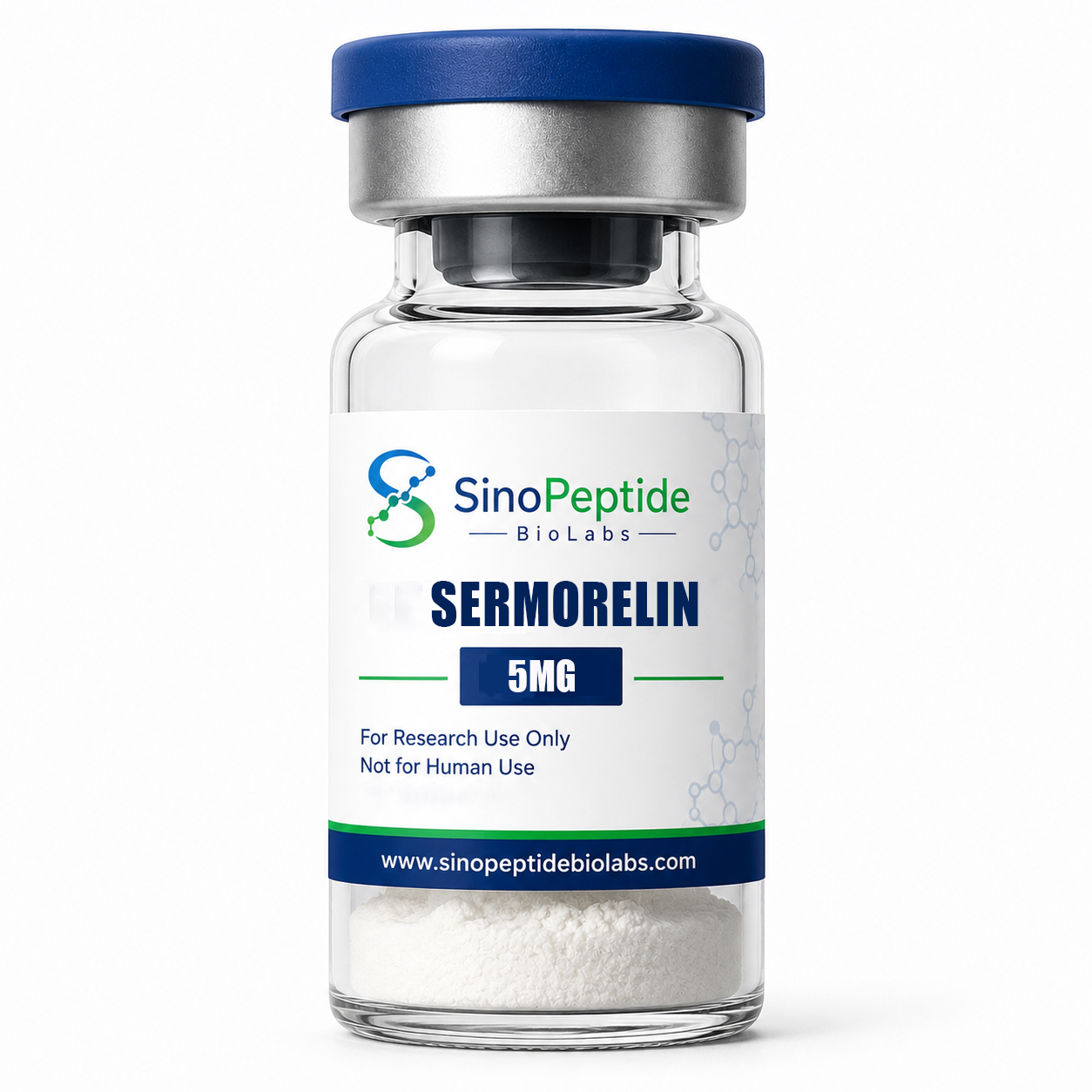
Semorelin Acetate 5mg
$70.00
10 Vials/ Kits
Semorelin Acetate 5mg: Research Peptide Overview, Uses, Mechanism, and Quality Guide
Semorelin Acetate 5mg is a peptide formulation associated with research into growth hormone–releasing hormone (GHRH) signaling and the regulation of growth hormone secretion. Semorelin is a synthetic peptide designed to mimic the activity of endogenous GHRH, making it a subject of interest in endocrinology and peptide research.
The term Semorelin Acetate 5mg generally identifies a preparation containing 5 milligrams of semorelin in its acetate form. The stated quantity describes the amount of peptide in the product and should not be interpreted as a recommended dose or evidence of clinical effectiveness.
This guide explains what Semorelin Acetate is, how semorelin relates to GHRH signaling, what researchers study, the significance of the 5mg specification, quality considerations, storage principles, and frequently asked questions.
Research and medical-use note: Experimental or research peptide information should not be interpreted as instructions for human administration or treatment. Regulatory status, formulation, and permitted uses can differ by country and product. Anyone considering a peptide for a medical condition should consult a qualified healthcare professional.
What Is Semorelin Acetate 5mg?
Semorelin Acetate 5mg is a peptide product containing semorelin acetate, with a labeled quantity of 5mg.
Semorelin is a synthetic analogue of growth hormone–releasing hormone. GHRH is a naturally occurring hypothalamic hormone involved in signaling the pituitary gland to release growth hormone.
Because semorelin is structurally related to GHRH, researchers have used it to investigate the physiological pathways involved in growth hormone regulation.
The acetate designation refers to the salt form of the peptide. Salt forms are commonly used in pharmaceutical and laboratory chemistry to improve characteristics such as handling, formulation, or stability.
The 5mg designation refers to the quantity of peptide supplied. It does not, on its own, describe concentration, purity, biological potency, or an appropriate experimental protocol.
Understanding Semorelin
Semorelin is a synthetic peptide consisting of a sequence corresponding to the biologically active portion of human growth hormone–releasing hormone.
GHRH is part of the body’s complex endocrine system. It is produced in the hypothalamus and acts primarily on the anterior pituitary to stimulate growth hormone secretion.
Semorelin research is therefore closely connected to the study of:
- Growth hormone secretion
- GHRH receptor signaling
- Pituitary endocrinology
- Growth hormone regulation
- IGF-1-related pathways
- Neuroendocrine signaling
- Hormonal feedback mechanisms
Understanding these pathways helps explain why semorelin has been studied in both clinical and laboratory contexts.
What Does Acetate Mean in Semorelin Acetate?
The word acetate describes the chemical form in which semorelin is supplied.
Peptides can exist in different salt or formulation forms. A salt form may influence characteristics such as solubility, stability, and handling.
Therefore, Semorelin Acetate and semorelin should be understood as related chemical forms rather than automatically assuming that every product carrying the name has identical formulation characteristics.
For research purposes, product documentation should clearly identify:
- Peptide name
- Chemical form
- Quantity
- Batch or lot number
- Purity information
- Analytical testing
- Storage requirements
These details are more useful for evaluating a research material than the product name alone.
How Does Semorelin Work?
The biological activity of semorelin is associated with the growth hormone–releasing hormone pathway.
Under normal physiology, GHRH is released from the hypothalamus and travels through the hypothalamic-pituitary portal circulation to the anterior pituitary. There, it interacts with GHRH receptors on somatotroph cells.
Activation of these receptors contributes to intracellular signaling that promotes growth hormone secretion.
Semorelin is designed to mimic GHRH activity, allowing researchers to study this signaling pathway.
A simplified pathway can be represented as:
GHRH-related signaling → GHRH receptor activation → pituitary signaling → growth hormone secretion
Growth hormone can subsequently influence downstream biological processes, including the production of insulin-like growth factor-1 (IGF-1), primarily through the liver and other tissues.
The overall endocrine system is more complicated than this simplified sequence because growth hormone secretion is influenced by multiple hormones, feedback mechanisms, sleep, metabolism, age, and other physiological factors.
Semorelin and Growth Hormone Research
Growth hormone is a peptide hormone produced by the anterior pituitary gland.
It plays roles in normal growth and development and influences several physiological processes in adults.
Researchers study growth hormone regulation to better understand:
- Growth and development
- Endocrine disorders
- Hormonal feedback
- Metabolism
- Body composition
- Pituitary function
- GHRH signaling
Semorelin can be useful as a research tool because it interacts with a specific upstream pathway involved in growth hormone regulation.
This makes it different from compounds that directly supply growth hormone. Semorelin instead acts through a GHRH-related signaling mechanism.
Semorelin and the GHRH Receptor
The GHRH receptor is an important component of growth hormone regulation.
It belongs to the G protein-coupled receptor family and is expressed on pituitary somatotroph cells.
When GHRH activates the receptor, intracellular signaling pathways are triggered. These pathways contribute to growth hormone synthesis and secretion.
Semorelin’s relationship with this receptor is central to its research significance.
Studying GHRH receptor signaling can help researchers investigate how the hypothalamus communicates with the pituitary gland and how hormonal signals are translated into physiological responses.
Semorelin and IGF-1 Research
One of the important downstream components of growth hormone physiology is insulin-like growth factor-1, commonly abbreviated as IGF-1.
Growth hormone stimulates IGF-1 production, particularly in the liver. IGF-1 then participates in multiple biological processes.
Because semorelin is associated with GHRH signaling and growth hormone secretion, researchers may examine the relationship between semorelin activity and changes in growth hormone or IGF-1-related signaling.
However, growth hormone and IGF-1 levels are influenced by numerous variables. An observed laboratory change should therefore be interpreted within the experimental design rather than treated as evidence of a predictable clinical outcome.
Semorelin Acetate 5mg: What Does 5mg Mean?
The 5mg in Semorelin Acetate 5mg describes the labeled amount of peptide.
It is important to distinguish the amount of peptide from concentration.
For example, a vial may contain a total quantity of 5mg, while the concentration after laboratory preparation depends on the volume used in the experimental formulation.
The 5mg label therefore does not answer questions such as:
- What concentration should be used?
- How frequently should an experiment be performed?
- What biological response should occur?
- What amount is appropriate for a human?
- How effective is the product?
Those questions require product-specific documentation, experimental protocols, and—when discussing human medicine—appropriate clinical evidence and professional supervision.
Potential Research Applications of Semorelin
Semorelin has been investigated in research connected to the endocrine system and growth hormone regulation.
Pituitary Research
Because semorelin interacts with the GHRH pathway, it can be relevant to studies of pituitary hormone secretion.
Researchers may use GHRH-related compounds to investigate how pituitary cells respond to hormonal signals.
Growth Hormone Regulation
Semorelin is particularly relevant to studies examining mechanisms controlling growth hormone release.
Researchers may evaluate hormone concentrations and signaling responses under controlled conditions.
Endocrine Signaling
Semorelin can also be studied as part of broader research into hypothalamic-pituitary communication.
The hypothalamus, pituitary gland, and peripheral endocrine organs form interconnected regulatory systems. Studying individual components can help researchers understand how these systems function.
IGF-1 Pathways
Because growth hormone and IGF-1 are physiologically connected, semorelin research may also involve downstream IGF-1 measurements.
Such measurements can help researchers characterize endocrine responses within experimental models.
Historical Clinical Context of Semorelin
Semorelin has an important history in human endocrine research and has previously been investigated clinically for growth hormone deficiency.
Historically, recombinant or synthetic GHRH-related therapies have been studied as alternatives to directly administering growth hormone because they can interact with the body’s own regulatory pathways.
However, historical clinical investigation should not be confused with current approval status for every semorelin product or formulation.
A product labeled Semorelin Acetate 5mg may be marketed as a research material, and its labeling should be examined independently of historical pharmaceutical use.
Regulatory status can also change, and rules differ between jurisdictions.
Semorelin vs Growth Hormone
Semorelin and recombinant growth hormone are not the same type of compound.
| Feature | Semorelin | Growth Hormone |
|---|---|---|
| Biological role | GHRH analogue | Growth hormone replacement hormone |
| Primary target | GHRH receptor pathway | Growth hormone receptor |
| Research focus | Regulation of endogenous GH secretion | GH-mediated physiological effects |
| Hormonal pathway | Upstream | Downstream |
| Molecular identity | Synthetic GHRH-related peptide | Recombinant human GH |
This distinction is important when interpreting research involving growth hormone secretagogues or GHRH analogues.
Semorelin vs Other Growth Hormone Secretagogues
Semorelin is sometimes discussed alongside peptides such as GHRP-2, GHRP-6, and other growth hormone secretagogues.
However, these compounds do not necessarily act through the same receptor or mechanism.
Semorelin is primarily associated with the GHRH pathway, while many other secretagogues act through different signaling systems, including pathways related to the ghrelin receptor.
Researchers may investigate these pathways individually or examine interactions between them.
The existence of different mechanisms is one reason accurate terminology is important when writing about peptide research.
Quality Considerations for Semorelin Acetate 5mg
Quality is a critical consideration when evaluating laboratory peptide products.
The appearance of a vial or label cannot confirm peptide identity or purity.
Researchers and laboratories should consider available analytical documentation.
Certificate of Analysis
A Certificate of Analysis (COA) may provide information about a particular batch.
Depending on the supplier and laboratory, documentation can include:
- Product name
- Batch number
- Purity
- Analytical method
- Test date
- Molecular weight or identity information
- Laboratory details
A COA should be considered supporting analytical documentation rather than proof of clinical safety.
HPLC Testing
High-performance liquid chromatography (HPLC) is commonly used to evaluate peptide purity.
Chromatographic data can help identify the proportion of material associated with the target peptide under the specified testing conditions.
Mass Spectrometry
Mass spectrometry can help characterize molecular mass and support peptide identity.
Using multiple analytical methods can provide a more complete picture of material quality than relying on appearance or labeling alone.
Batch Traceability
A traceable lot or batch number allows laboratory users to associate the material with its analytical documentation.
This is especially important when maintaining reproducibility between experiments.
Storage of Semorelin Acetate 5mg
Peptides can be sensitive to environmental factors including temperature, moisture, light, and repeated handling.
The appropriate storage conditions depend on the exact formulation and supplier specifications.
General research-material principles include:
- Follow the manufacturer’s stated storage conditions.
- Protect the material from unnecessary heat and light.
- Keep containers properly sealed.
- Minimize unnecessary temperature fluctuations.
- Use clean laboratory handling practices.
- Maintain batch and storage records where appropriate.
Researchers should not automatically apply the storage conditions of another peptide to Semorelin Acetate.
If the peptide has been reconstituted or placed into solution, its stability may differ from that of the original material. Product-specific stability information and validated laboratory procedures should therefore be followed.
Why Product Documentation Matters
Two products with the same advertised name may not necessarily have identical quality characteristics.
For research purposes, useful documentation can include:
- Full product identification
- Chemical form
- Net peptide quantity
- Purity results
- Batch number
- Testing methodology
- Storage instructions
- Manufacturer or supplier information
- Intended-use statement
Transparent documentation helps laboratories determine whether a material is suitable for their research requirements.
Safety and Regulatory Considerations
Semorelin-related research should be distinguished from established medical treatment.
Experimental peptide products may not have undergone the same regulatory evaluation as approved pharmaceutical medicines.
Potential concerns with inadequately characterized peptide products can include:
- Incorrect identity
- Unexpected impurities
- Contamination
- Inaccurate labeling
- Degradation
- Improper storage
- Unknown formulation characteristics
For these reasons, research materials should be handled according to appropriate laboratory standards.
Individuals considering semorelin or any other peptide for personal medical use should obtain advice from a licensed healthcare professional rather than relying on commercial product descriptions.
Common Questions About Semorelin Acetate 5mg
What is Semorelin Acetate 5mg?
Semorelin Acetate 5mg is a peptide formulation containing a labeled 5mg quantity of semorelin acetate. Semorelin is a synthetic analogue associated with GHRH signaling and growth hormone research.
What does semorelin do?
Semorelin is designed to mimic GHRH activity and has been studied for its interaction with the GHRH receptor and the regulation of growth hormone secretion.
What does the 5mg mean?
The 5mg specification indicates the labeled amount of semorelin in the product. It does not represent a recommended human dose.
What is semorelin acetate?
Semorelin acetate is the acetate salt form of semorelin, a synthetic GHRH-related peptide.
Is Semorelin Acetate 5mg FDA approved?
Regulatory status depends on the specific product, formulation, and jurisdiction. A research peptide labeled Semorelin Acetate 5mg should not automatically be considered an FDA-approved medicine.
How does semorelin relate to growth hormone?
Semorelin acts through the GHRH signaling pathway, which is involved in stimulating growth hormone secretion from the pituitary gland.
Is semorelin the same as growth hormone?
No. Semorelin is a GHRH analogue that acts upstream of growth hormone secretion, whereas growth hormone is the hormone produced by the pituitary and acts through the growth hormone receptor.
What should I look for in Semorelin Acetate 5mg?
For research purposes, examine the product’s identity, purity documentation, batch information, analytical testing, storage instructions, and intended-use information.
How should Semorelin Acetate be stored?
Storage depends on the specific formulation and manufacturer’s instructions. Researchers should follow the product-specific storage requirements rather than relying on generalized peptide-storage recommendations.
Conclusion
Semorelin Acetate 5mg is a GHRH-related peptide formulation that has attracted interest in endocrinology and peptide research.
Its scientific importance comes from its relationship with the growth hormone–releasing hormone pathway. By interacting with GHRH-related signaling, semorelin provides researchers with a tool for investigating pituitary function, growth hormone secretion, endocrine signaling, and downstream pathways such as IGF-1.
The 5mg designation identifies the labeled quantity of peptide but does not establish potency, clinical effectiveness, or an appropriate administration amount. Likewise, a research product should not automatically be equated with an approved pharmaceutical medicine.
When evaluating Semorelin Acetate 5mg for legitimate research, attention should be given to identity, purity, batch traceability, analytical testing, storage conditions, supplier transparency, and applicable regulations.
Responsible peptide content should distinguish established scientific facts from preliminary research and should avoid presenting experimental findings as guaranteed human health outcomes. This approach provides readers with useful information while maintaining scientific accuracy and credibility.
Semorelin Acetate 5mg Semorelin Acetate 5mg Semorelin Acetate 5mg Semorelin Acetate 5mg Semorelin Acetate 5mg Semorelin Acetate 5mg Semorelin Acetate 5mg Semorelin Acetate 5mg Semorelin Acetate 5mg Semorelin Acetate 5mg Semorelin Acetate 5mg Semorelin Acetate 5mg Semorelin Acetate 5mg Semorelin Acetate 5mg Semorelin Acetate 5mg Semorelin Acetate 5mg Semorelin Acetate 5mg Semorelin Acetate 5mg Semorelin Acetate 5mg Semorelin Acetate 5mg Semorelin Acetate 5mg Semorelin Acetate 5mg Semorelin Acetate 5mg Semorelin Acetate 5mg Semorelin Acetate 5mg Semorelin Acetate 5mg Semorelin Acetate 5mg Semorelin Acetate 5mg Semorelin Acetate 5mg Semorelin Acetate 5mg Semorelin Acetate 5mg Semorelin Acetate 5mg Semorelin Acetate 5mg Semorelin Acetate 5mg
Be the first to review “Semorelin Acetate 5mg”
Related products
Pure Peptides
Pure Peptides
Pure Peptides
Pure Peptides
Pure Peptides
Pure Peptides
Pure Peptides
Pure Peptides
Reviews
There are no reviews yet.